Statins: What They Are, How They Work, and What You Need to Know
When your doctor says you need a statin, a class of lipid-lowering drugs that reduce LDL cholesterol by blocking an enzyme in the liver. Also known as HMG-CoA reductase inhibitors, they’re among the most prescribed medications in the world because they don’t just lower numbers—they cut heart attacks and strokes by up to 30% in high-risk people. If you’ve ever wondered why your doctor pushed for one after a routine blood test, it’s not just about cholesterol numbers. It’s about preventing something far worse: a blocked artery, a heart attack, or a stroke you didn’t see coming.
Statins work by slowing down your liver’s production of LDL—the "bad" cholesterol that builds up in your arteries. But they don’t just lower cholesterol. They also reduce inflammation in blood vessel walls, stabilize plaque so it doesn’t rupture, and improve how your blood vessels respond to stress. That’s why even people with normal cholesterol but high inflammation (like those with diabetes or a history of smoking) often benefit. Not all statins are the same. Atorvastatin and rosuvastatin are stronger and last longer. Simvastatin and pravastatin are milder and cheaper. Your doctor picks based on your risk level, other meds you take, and how your body reacts. Some people get muscle aches—common but not always serious. Others get liver enzyme spikes or higher blood sugar. That’s why regular check-ins matter. You’re not just taking a pill; you’re managing a system.
People often confuse statins with other cholesterol drugs. Ezetimibe lowers cholesterol absorption in the gut. PCSK9 inhibitors are injectables for those who can’t tolerate statins. Fibrates and omega-3s target triglycerides, not LDL. None of them do what statins do: reduce actual cardiovascular events. That’s why guidelines keep putting them first—even for older adults and people with no symptoms. But they’re not magic. They work best with a healthy diet, regular movement, and no smoking. If you’re on a statin, you’re not off the hook—you’re just getting extra backup.
Below, you’ll find real-world comparisons, patient stories, and clear breakdowns of how statins interact with other drugs, what side effects actually mean, and when skipping them might be the right call. Whether you’re newly prescribed, worried about muscle pain, or just trying to understand why your doctor keeps bringing them up, these posts cut through the noise. No fluff. Just what you need to know to make smart choices.
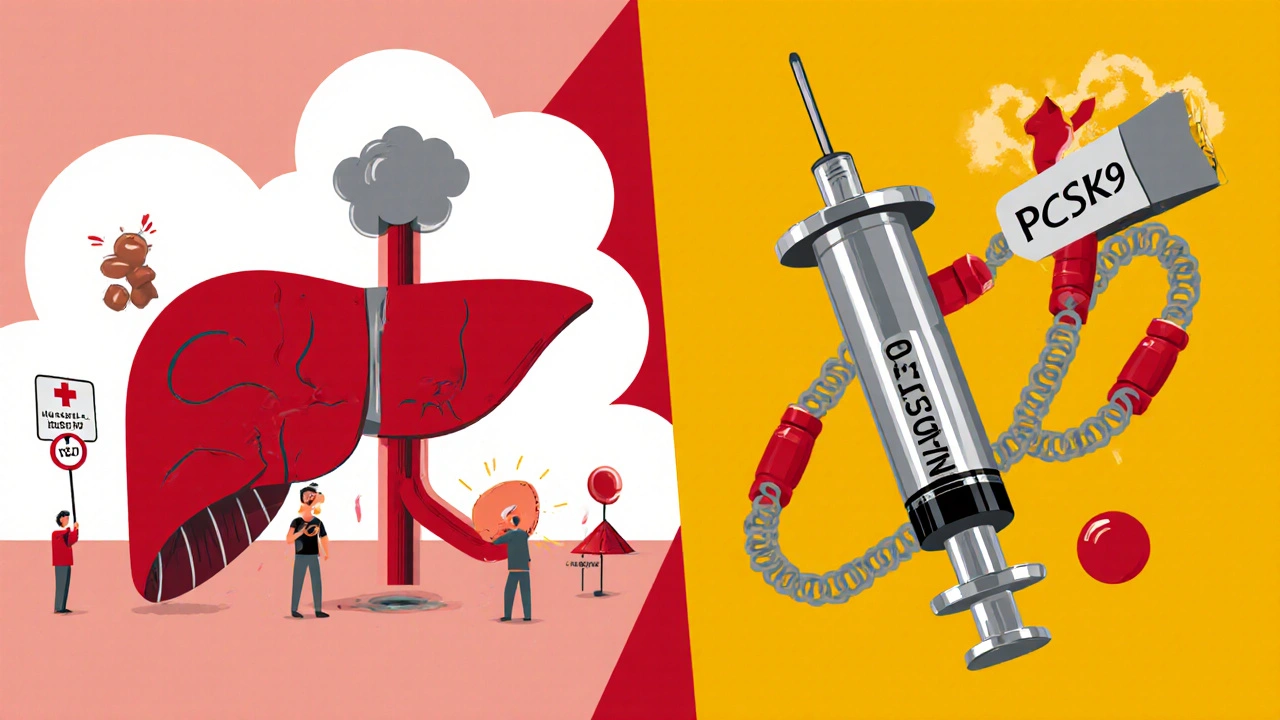
PCSK9 inhibitors and statins both lower LDL cholesterol but differ in side effects, cost, and use cases. Statins are first-line and affordable; PCSK9 inhibitors offer stronger LDL reduction with fewer muscle side effects but require injections and are expensive.
READ MORE