
Antiemetics and Parkinson’s Medications: Avoiding Dangerous Dopamine Interactions
When you have Parkinson’s disease, even a simple case of nausea can become a medical minefield. The very drugs meant to stop your vomiting might be making your tremors worse, locking your muscles, or sending you into a sudden off period. This isn’t rare. It happens every day in emergency rooms, outpatient clinics, and even after dental procedures. The problem? Many antiemetics block dopamine - the same neurotransmitter your brain is already starving for.
Why Dopamine Matters in Parkinson’s
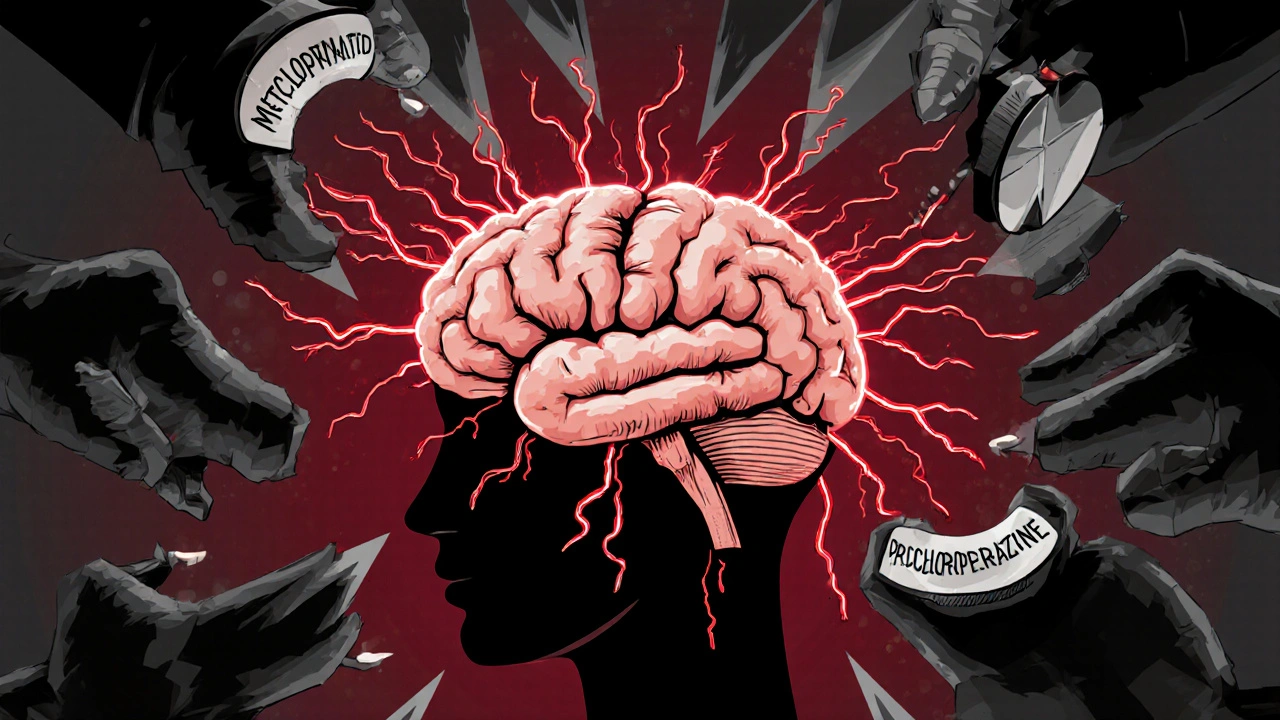
Parkinson’s isn’t just about shaking hands. It’s about a slow, steady loss of dopamine-producing neurons in a part of the brain called the substantia nigra. Without enough dopamine, movement becomes stiff, slow, and unpredictable. That’s why levodopa - a chemical your body turns into dopamine - is the gold standard treatment. But levodopa often causes nausea, especially when you first start taking it. Up to 80% of patients deal with this side effect, according to the American Parkinson Disease Association. Now here’s the catch: to treat that nausea, doctors often reach for antiemetics. But many of those drugs - like metoclopramide, prochlorperazine, and haloperidol - work by blocking dopamine receptors. In a healthy person, that’s fine. In someone with Parkinson’s, it’s like turning off the last few lights in a room that’s already almost dark.The Dangerous Class: Dopamine Antagonist Antiemetics
Not all antiemetics are created equal. The ones that cause the most trouble are the dopamine D2 receptor antagonists. These include:- Metoclopramide (Reglan, Maxalon)
- Prochlorperazine (Stemetil, Compazine)
- Haloperidol (Haldol)
- Chlorpromazine
- Promethazine (Phenergan)
- Droperidol
Metoclopramide: The Most Common Mistake
Metoclopramide is the most frequently misprescribed antiemetic for Parkinson’s patients. It’s cheap, widely available, and often used as a first-line treatment for nausea after surgery or chemotherapy. But for Parkinson’s, it’s a red flag. Dr. Alberto Espay from the University of Cincinnati calls it “the single most common medication error” he sees. Even though metoclopramide has some serotonin-boosting properties that might slightly offset its dopamine-blocking effects, the risk still outweighs the benefit. The American Parkinson Disease Association lists it as a medication to avoid. And yet - emergency room doctors still give it. A 2022 study in the Journal of Parkinson’s Disease found that only 37% of ER physicians knew it was dangerous for Parkinson’s patients. One patient on the Parkinson’s NSW Forum described how, after being given metoclopramide for post-dental nausea, his tremors spiked so badly it took three weeks to return to normal - even after increasing his levodopa dose.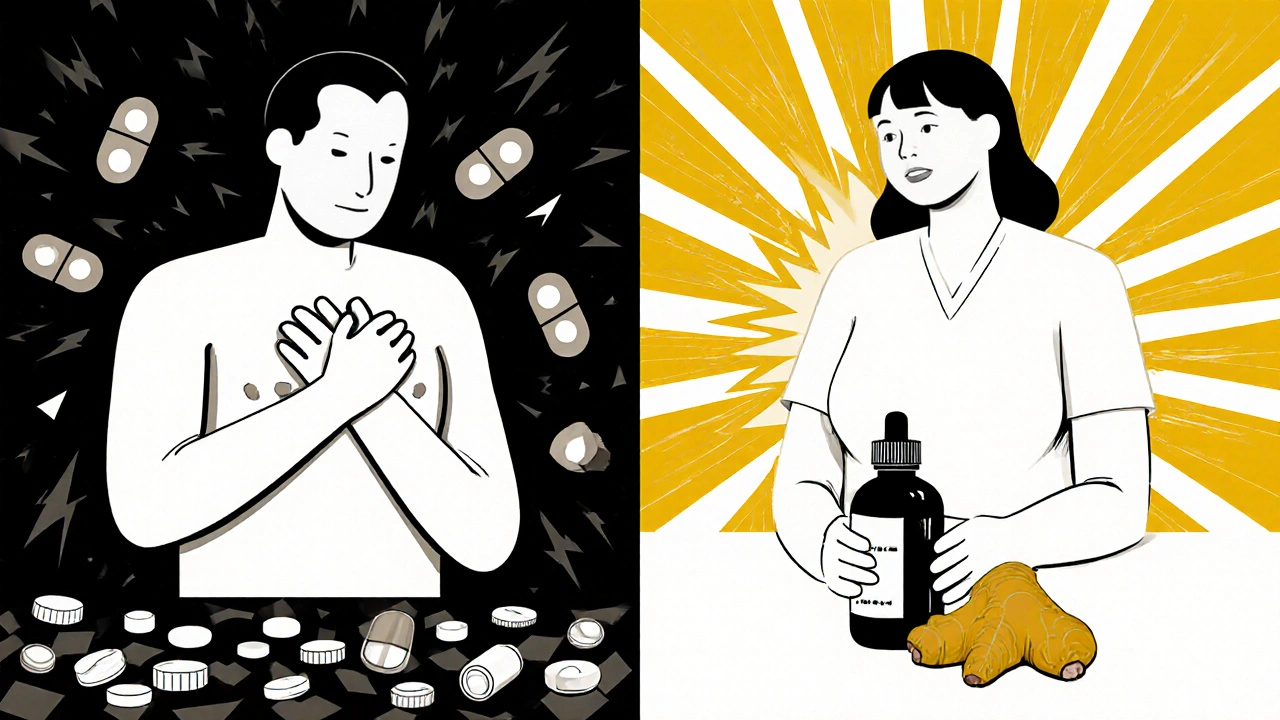
The Safer Alternatives
Good news: there are effective, safer options. The key is avoiding drugs that cross into the brain.- Domperidone (Motilium): This is the gold standard for Parkinson’s patients. It blocks dopamine in the gut - where nausea starts - but barely enters the brain because of a natural barrier called P-glycoprotein. Studies show less than 2% risk of worsening motor symptoms. The catch? It’s not available as an injection in the U.S., and the FDA restricts its oral use due to rare heart rhythm risks. But for most Parkinson’s patients, the benefits far outweigh the risks when monitored.
- Cyclizine (Vertin): This works by blocking histamine (H1) receptors, not dopamine. It’s gentle, widely available, and has only a 5-10% risk of causing motor worsening. Many patients report dramatic improvements after switching from metoclopramide to cyclizine.
- Ondansetron (Zofran): This blocks serotonin (5-HT3) receptors. It doesn’t affect dopamine at all. It’s about 15-20% risk for Parkinson’s patients - low, but not always as effective for all types of nausea. Still, it’s a solid second choice.
- Aprepitant (Emend): A newer option that blocks neurokinin-1 receptors. A 2023 trial with 120 Parkinson’s patients showed 92% effectiveness for nausea with zero worsening of motor symptoms. It’s expensive, but a game-changer for severe cases.
What About Levomepromazine?
Levomepromazine is sometimes used in palliative care for nausea. It’s a middle-ground drug - it blocks dopamine, but less strongly than haloperidol or prochlorperazine. Still, it carries a 30-40% risk of worsening Parkinson’s symptoms. The GGC Medicines Update says it should only be used after consultation with both a Parkinson’s specialist and a palliative care doctor. If used, start low: 6.25 mg twice daily, max 25 mg per day.Non-Drug Solutions First
Before reaching for any pill, try these simple, evidence-backed strategies:- Ginger: Take 1 gram daily in capsule or tea form. Multiple studies show it reduces nausea as effectively as some antiemetics, with no risk to motor function.
- Small, frequent meals: Large meals delay stomach emptying and worsen nausea. Eating smaller portions every 2-3 hours helps.
- Stay hydrated: Dehydration makes nausea worse. Sip water or electrolyte drinks slowly throughout the day.
- Timing matters: Take levodopa on an empty stomach, at least 30 minutes before meals. Protein can interfere with absorption, so avoid high-protein snacks around medication time.
What to Do If You’ve Been Given the Wrong Drug
If you or a loved one has been given metoclopramide, prochlorperazine, or another dopamine blocker:- Stop the drug immediately - don’t wait for symptoms to get worse.
- Call your neurologist or Parkinson’s specialist. Don’t rely on your primary care doctor or ER staff - they may not know the risks.
- Monitor for worsening tremor, stiffness, freezing, or confusion. These can appear within hours.
- Keep a symptom log. Note when the drug was taken and how symptoms changed over 24-72 hours.
- Ask for a safer alternative - cyclizine or domperidone if available.
How to Protect Yourself
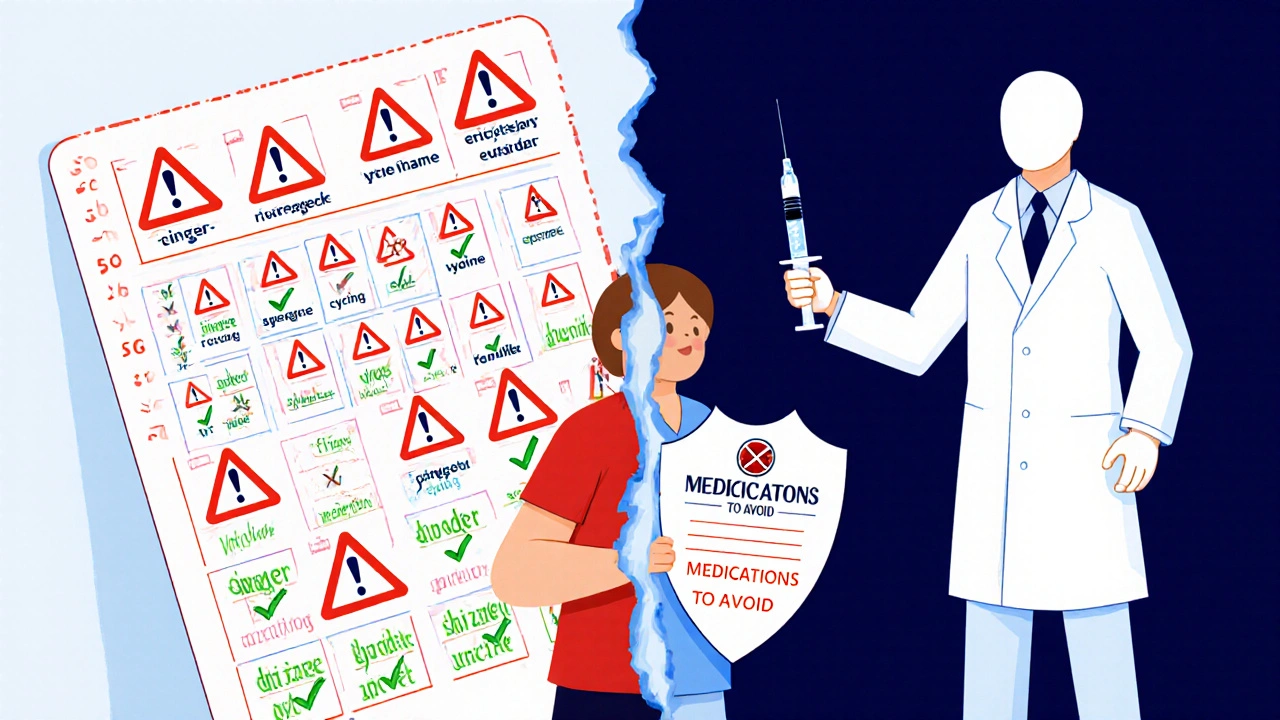
You don’t have to be caught off guard. Take control:- Carry the APDA Medications to Avoid wallet card. Over 250,000 have been distributed since 2018. Patients who carry it report a 40% drop in inappropriate prescriptions.
- Put a note in your medical records: “Parkinson’s disease: DO NOT administer dopamine antagonist antiemetics.”
- Always ask: “Is this drug going to interfere with my Parkinson’s meds?”
- Have your neurologist write a letter for your emergency contacts and primary care provider.
- Teach your family what to say if you can’t speak for yourself.
The Bigger Picture
This isn’t just about one drug or one side effect. It’s about a system that still doesn’t fully recognize the unique needs of Parkinson’s patients. A 2022 study found that 25% of Parkinson’s patients still get dangerous antiemetics during surgery - even though guidelines have warned against it for decades. But things are changing. The Parkinson’s Foundation’s 2023 Quality Improvement Initiative trained over 1,200 providers. Hospitals that participated saw a 55% drop in wrong prescriptions. New drugs like aprepitant are showing promise. Research is underway for a new peripheral serotonin modulator designed specifically for Parkinson’s nausea - no brain penetration, no risk. The message is clear: nausea in Parkinson’s is treatable - but only if you know which drugs to avoid. Your next dose of antiemetic shouldn’t make your Parkinson’s worse. It should help you live better.Can metoclopramide make Parkinson’s symptoms worse?
Yes, metoclopramide can significantly worsen Parkinson’s symptoms like tremors, stiffness, and freezing. It blocks dopamine receptors in the brain, which interferes with levodopa therapy. Studies and patient reports confirm that even short-term use can trigger severe motor decline. The American Parkinson Disease Association lists it as a medication to avoid.
Is domperidone safe for Parkinson’s patients?
Yes, domperidone is generally considered the safest antiemetic for Parkinson’s patients. It blocks dopamine in the gut but doesn’t cross the blood-brain barrier in significant amounts, so it rarely affects motor symptoms. Less than 2% of users report worsening Parkinsonism. The main drawback is that it’s not available as an injection in the U.S. and requires special access due to FDA restrictions.
What antiemetic is best for nausea in Parkinson’s?
Cyclizine is often the first-line choice because it doesn’t block dopamine at all - it works on histamine receptors. Domperidone is the next best option if available. Ondansetron is also safe and effective for many, though it may not work as well for all types of nausea. Always avoid metoclopramide, prochlorperazine, and haloperidol.
Can I take ginger instead of antiemetics for Parkinson’s nausea?
Yes, ginger is a proven, safe alternative. Taking 1 gram of ginger daily in capsule or tea form has been shown to reduce nausea as effectively as some medications - without any risk to motor function. Many neurologists recommend trying ginger before prescribing any drug.
Why do ER doctors keep giving metoclopramide to Parkinson’s patients?
Many ER doctors aren’t trained in Parkinson’s-specific drug interactions. Metoclopramide is cheap, fast-acting, and widely used for nausea in the general population. Studies show only 37% of ER physicians know it’s dangerous for Parkinson’s patients. Patient advocacy, wallet cards, and provider education are helping reduce these errors, but the problem persists.
Should I stop my Parkinson’s meds if I get nauseous?
Never stop your Parkinson’s medication without talking to your neurologist. Nausea from levodopa is common and treatable - it doesn’t mean the drug isn’t working. Instead, focus on safer antiemetics or non-drug strategies like ginger, smaller meals, and timing your doses correctly. Stopping levodopa can cause dangerous withdrawal symptoms like neuroleptic malignant syndrome.





Man, I can't believe how many ER docs still give metoclopramide to Parkinson’s patients. I had a cousin who got it after a minor surgery and spent three days locked in rigidity - couldn’t even hold a spoon. His neurologist had to rush in and reverse it. This isn’t just a ‘side effect,’ it’s a medical betrayal. Why is this still happening in 2025? We’ve had guidelines for over a decade. It’s not ignorance - it’s negligence. And don’t get me started on how little training neurology gets in med school. You’d think after 200,000 wallet cards distributed, someone would’ve gotten the memo. But nope. Still the same old script: ‘Nausea? Here’s Reglan.’ Like it’s aspirin. It’s infuriating.
Domperidone isn’t ‘safe.’ It’s a cardiac time bomb. You’re trading one risk for another. And ginger? Cute. Try telling that to someone vomiting in the ER.
Why does anyone even care? It’s just Parkinson’s. People are gonna die anyway. Just give them the drug and move on.
Metoclopramide is the opioid of antiemetics - cheap, addictive to prescribers, and devastating to patients. It’s not a treatment, it’s a lazy crutch for doctors who don’t wanna look up a damn drug interaction. And don’t even get me started on how the FDA’s red tape on domperidone turns a lifesaver into a black-market commodity. We’re treating a neurological crisis like it’s a pharmacy inventory issue.
It is indeed a matter of grave concern that dopamine antagonists continue to be administered to patients with Parkinson’s disease despite well-established clinical guidelines. The pharmacological mechanism underlying this adverse interaction is well-documented in peer-reviewed literature, including studies published in the Journal of Parkinson’s Disease and the Annals of Neurology. I would respectfully suggest that institutional protocols be revised to mandate mandatory CME modules on neuropharmacology for emergency department staff, particularly in high-volume settings.
DOMPERIDONE = LIFE SAVER 🙌 GINGER = FREE & SAFE 🌿 STOP GIVING REGLAN TO PARKINSON’S PATIENTS 😡 I’M SO MAD I COULD SCREAM. MY DAD GOT IT AFTER DENTAL WORK AND FROZE FOR 2 WEEKS. WE’RE NOT ASKING FOR MUCH - JUST DON’T KILL US WITH BAD MEDS.
This is a really important post. I’ve seen this happen in my clinic too. A lot of providers don’t realize how quickly symptoms can worsen. The key is education - not just for doctors, but for patients and families. If someone knows to ask, ‘Is this safe for Parkinson’s?’ it changes everything. Simple questions save lives.
Why are we letting foreign drugs like domperidone be used when we have perfectly good American alternatives? This is just another case of foreign pharmaceutical influence undermining U.S. medical standards. If it’s not FDA-approved for this use, it shouldn’t be recommended. Period.
As a clinical pharmacist specializing in movement disorders, I can confirm that domperidone remains the gold standard for Parkinson’s-related nausea when available. Its peripheral action minimizes CNS effects. However, cardiac monitoring is essential due to QT prolongation risk. For patients in the U.S. without access, ondansetron and cyclizine are viable alternatives. Non-pharmacologic interventions - ginger, meal timing, hydration - are underutilized and should be prioritized as first-line. Documentation of medication allergies in EMRs is critical to prevent recurrence.
Domperidone’s P-gp efflux is overhyped. Blood-brain barrier permeability is nonlinear and dose-dependent. You’re underestimating cumulative CNS exposure. Also, ‘ginger’ is placebo-tier. This is anecdotal medicine dressed in wellness packaging.
Did you know the FDA banned domperidone because Big Pharma paid them to? Reglan’s parent company owns half the ER supply chains. This isn’t about safety - it’s about profit. They want you dependent on their $200 Zofran pills instead of the $5 foreign pill that works. The Michael J. Fox Foundation? Funded by pharma too. Wake up.
Thank you for putting this together with such clarity and care. This is the kind of information that saves lives - not just in the U.S., but across the globe. In Nigeria, where specialist neurologists are scarce, this guide could be the difference between a patient recovering and suffering irreversible damage. I’ve shared it with every community health worker I know. The non-drug strategies - especially ginger and small meals - are not just helpful, they’re empowering. When people understand their own bodies, they become their own best advocates. Keep speaking up. This matters.
Wow. I read this and immediately thought of my mom. She got metoclopramide after her chemo and was basically bedridden for a week. We didn’t know why. She kept saying, ‘It’s not the chemo, it’s the medicine.’ I wish we’d had this. So thank you. And also… I’m so angry. Like, fist-clenching, cry-in-the-car angry. Why does this keep happening? Who’s signing off on these prescriptions? It’s not just a mistake - it’s a pattern. And now I’m going to print this out and tape it to my fridge.