
GLP-1 GI Side Effects: Meal Planning and Dose Titration Tips to Stay on Track
GLP-1 Dose Titration & Meal Tracker
Enter your details above to see personalized recommendations.
When you start a GLP-1 receptor agonist like Ozempic, Wegovy, or Trulicity, the weight loss and blood sugar benefits can feel life-changing. But for many, the first few weeks bring a different reality: nausea, vomiting, bloating, or diarrhea that makes it hard to eat, sleep, or even leave the house. You’re not alone. Up to 70% of people on these medications experience gastrointestinal side effects, and about 1 in 5 quit because of them. The good news? Most of these symptoms aren’t permanent - and they can be managed with smart meal planning and careful dose titration.
Why GLP-1 Medications Cause GI Issues
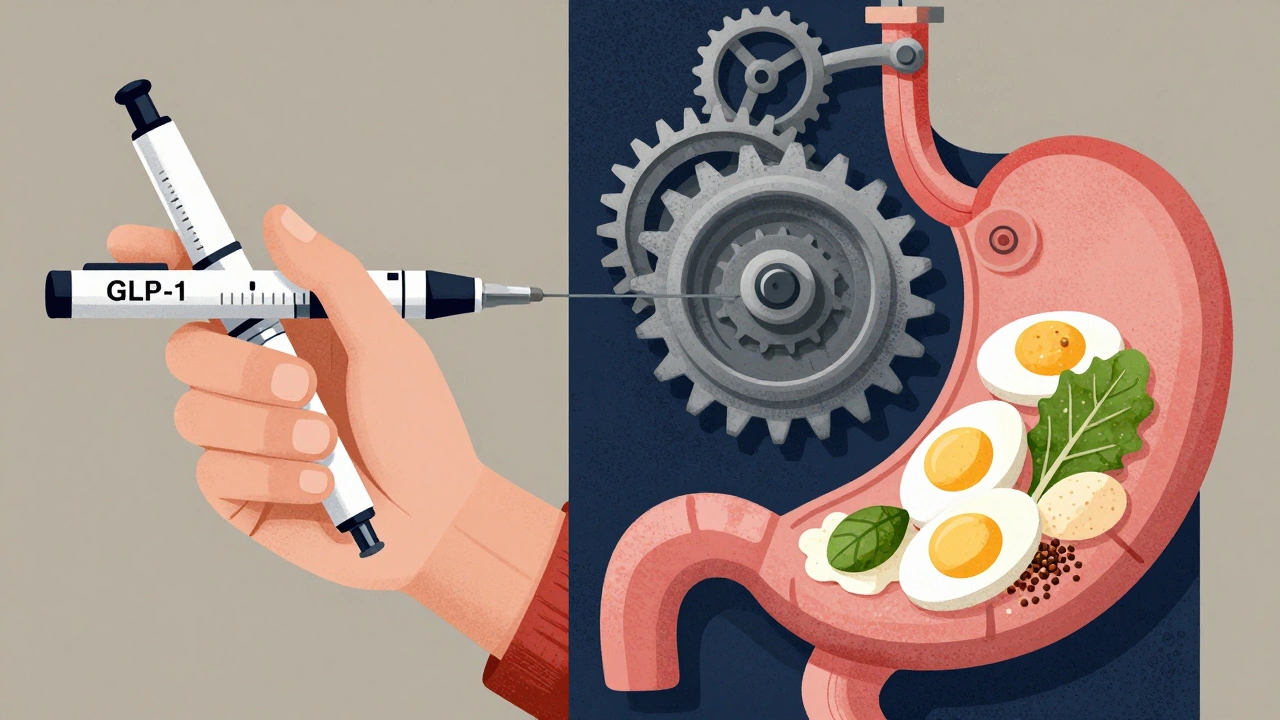
GLP-1 drugs work by slowing down how fast your stomach empties. That’s why you feel full longer and eat less. But that same effect can cause food to sit in your stomach too long, leading to nausea, bloating, and sometimes vomiting. These drugs also act on brain centers that control nausea and vomiting, making the feeling more intense, especially early on. The side effects aren’t random. They’re tied directly to the dose. Higher doses mean stronger effects - including more GI trouble. That’s why starting low and going slow isn’t just a suggestion; it’s the key to staying on the medication long-term.How Fast Should You Increase Your Dose?
Most GLP-1 drugs come with a standard titration schedule, but sticking to it exactly can backfire. For example, Wegovy’s official plan ramps up over 16-20 weeks. But if you’re getting nauseous at week 4, pushing to the next dose won’t help - it’ll make things worse. Real-world success comes from symptom-guided titration. Here’s how it works:- Wait until nausea has been gone for at least 7 full days before increasing your dose.
- If you vomit more than twice in a week, hold your dose for 7-10 days and go back to the previous level.
- For persistent moderate nausea, delay the next increase by 2-4 weeks.
- If symptoms last more than 4 weeks, talk to your provider about temporarily lowering your dose.
Meal Planning That Reduces Nausea
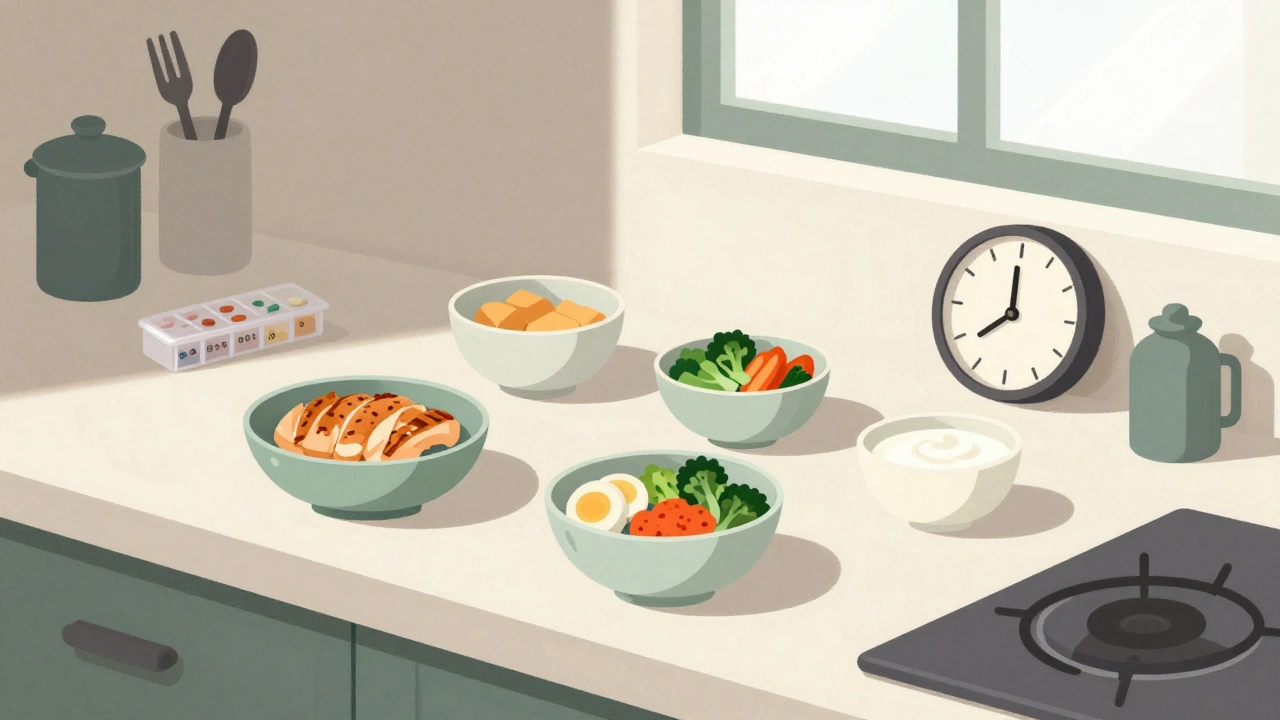
What you eat matters just as much as when you take your shot. Many people assume they need to eat normally - but that’s where things go wrong. Eating large meals or high-fat, high-sugar foods while your stomach is slowed down is like pouring oil into a clogged drain. Here’s what works based on patient reports and clinical guidance:- Keep meals small: Aim for 300-400 calories per meal. Most people who quit in the first 8 weeks were eating meals over 600 calories.
- Focus on protein: Get 25-30 grams of protein per meal. Protein digests slowly and helps stabilize blood sugar. Eggs, Greek yogurt, lean chicken, tofu, and cottage cheese are great choices.
- Limit fat and sugar: Keep fat under 15g per meal and simple carbs under 20g. Avoid fried foods, pastries, sugary drinks, and candy.
- Choose complex carbs: Opt for oats, quinoa, sweet potatoes, and non-starchy vegetables instead of white bread or pasta.
- Avoid fluids with meals: Drink no more than 120-180ml (4-6 oz) with food. Water, herbal tea, or broth are fine. Carbonated drinks and large amounts of liquid can trigger nausea.
- Eat slowly: Take at least 20 minutes per meal. Chew thoroughly. Your brain needs time to register fullness.
When and How to Eat Around Your Dose
Timing your meals around your injection can make a big difference.- Take your shot in the morning: Studies show morning dosing reduces nausea by 25-30% compared to evening doses. Your body has more time to process the drug during the day.
- Wait 30-60 minutes after your shot before eating: This gives your body time to adjust. Eating too soon can trigger nausea.
- Space meals 3-4 hours apart: Don’t snack constantly. Give your stomach time to rest between meals.
- Avoid late-night eating: Eating within 2-3 hours of bedtime can worsen bloating and reflux.
What to Do When Symptoms Hit
If you start feeling sick, don’t panic. Here’s what to do:- First 24-48 hours: Stick to clear liquids - water, broth, herbal tea, electrolyte drinks. Avoid coffee, alcohol, and sugary drinks.
- Next 2-3 days: Move to bland, easy-to-digest foods: plain toast, rice, bananas, applesauce, boiled potatoes (the BRAT diet).
- When nausea eases: Slowly reintroduce protein-rich meals. Start with small portions - 2-3 tablespoons of chicken or tofu.
- Don’t force food: If you’re nauseous, skip a meal. Your body will adjust. Starvation isn’t the goal - comfort is.
Why This Matters More Than You Think
GLP-1 medications are no longer just for people with diabetes. Over 10 million Americans are now using them for weight loss. That means more people than ever are facing GI side effects - and more are quitting because they weren’t prepared. The good news? When people use these strategies, discontinuation rates drop by 40-60%. That’s not just about sticking with a drug - it’s about keeping the health benefits: lower blood sugar, reduced heart risk, and real, lasting weight loss. Major providers are catching on. Novo Nordisk now includes free dietitian support with Wegovy. Eli Lilly offers biweekly nurse check-ins for Mounjaro users. These aren’t marketing gimmicks - they’re evidence-backed tools that help people stay on track.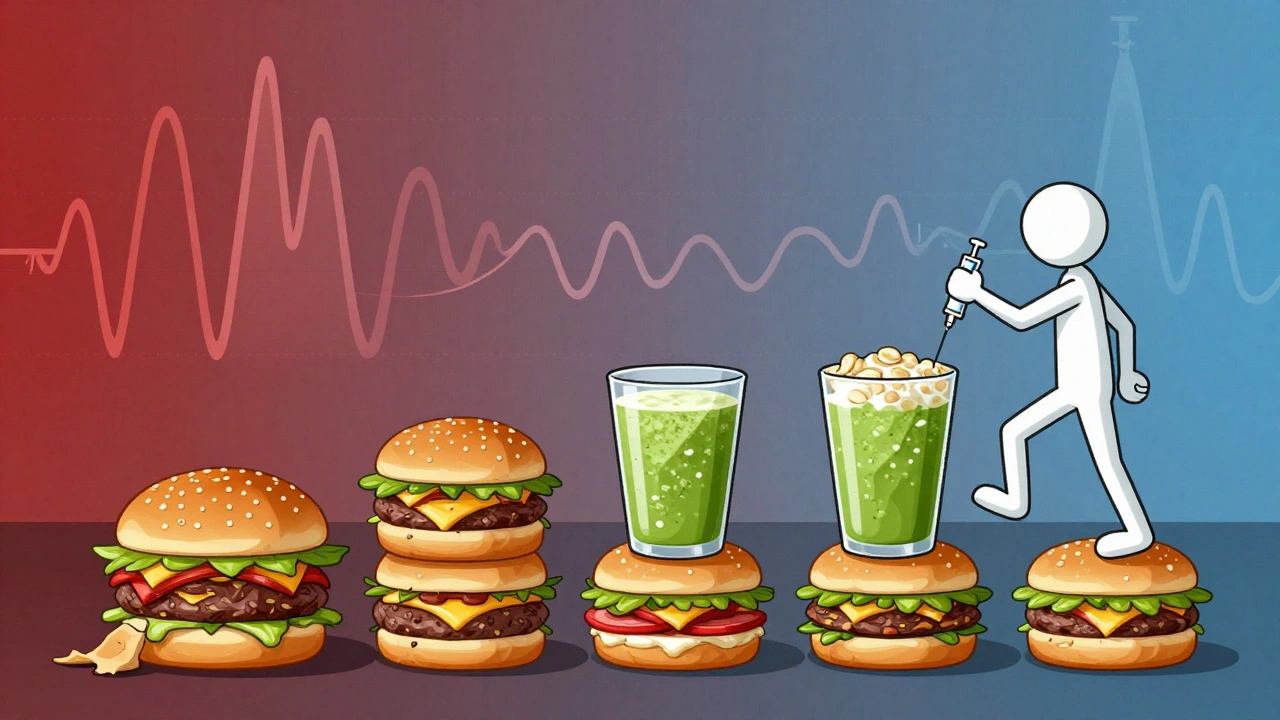
What Doesn’t Work
Avoid these common mistakes:- Trying to eat “normally” - your stomach can’t handle it yet.
- Skipping meals entirely - that can worsen nausea and cause blood sugar swings.
- Increasing your dose too fast - it doesn’t speed up results, it just makes you feel worse.
- Drinking soda or juice with meals - carbonation and sugar are triggers.
- Waiting too long to speak up - if nausea lasts more than 2 weeks, talk to your doctor.
What’s Next for GLP-1 Users
The science is evolving. Researchers are testing “gut-training” protocols - slowly increasing meal size over time to help your stomach adapt. AI-powered apps are being piloted to adjust your dose based on daily symptom logs. These tools won’t replace good habits, but they’ll make them easier. For now, the best strategy is simple: go slow, eat smart, and listen to your body. You don’t need to be perfect. You just need to be consistent.How long do GLP-1 GI side effects last?
For most people, nausea peaks around week 4 and starts to improve by week 8. By week 12, about 70% report significant reduction. By 56 weeks, only about 5.5% still have moderate nausea. Vomiting and diarrhea usually resolve faster - often within 4-6 weeks if you follow meal and titration guidelines.
Can I still drink coffee with GLP-1 medications?
You can, but be careful. Caffeine can irritate the stomach and worsen nausea or acid reflux. Stick to small amounts - no more than one 8 oz cup per day - and avoid drinking it on an empty stomach. Herbal teas or decaf are gentler options during the first few months.
Is it normal to feel bloated and gassy?
Yes. Slowed digestion means food ferments longer in the gut, leading to gas and bloating. Avoid carbonated drinks, chewing gum, and high-FODMAP foods like beans, onions, and garlic during titration. Walking after meals can help move things along.
Should I take anti-nausea meds with GLP-1 drugs?
Over-the-counter options like ginger supplements or dimenhydrinate (Dramamine) can help short-term. But they don’t fix the root cause. Use them sparingly - focus on meal planning and dose timing instead. If nausea is severe or persistent, talk to your doctor about adjusting your dose or trying a different GLP-1 medication.
Can I switch from one GLP-1 drug to another if side effects don’t improve?
Yes. Some people tolerate liraglutide better during initial titration, while others do better with semaglutide long-term. Switching isn’t failure - it’s strategy. Your provider can help you transition safely, usually by starting at a low dose of the new medication and following the same slow titration rules.
When should I call my doctor about GI symptoms?
Call immediately if you have severe abdominal pain, persistent vomiting, inability to keep fluids down, signs of dehydration (dizziness, dark urine), or fever. These could signal gastroparesis, bowel obstruction, or pancreatitis - rare but serious. For mild to moderate symptoms, schedule a check-in to adjust your plan.




Just started Ozempic last week and this post is a lifesaver. I was about to quit because I felt like garbage after every meal. Now I’m eating tiny portions of eggs and chicken, waiting an hour after my shot, and honestly? Nausea dropped from daily to once every 3 days. Still rough, but I’m staying on it.
As a clinical nutritionist with a background in metabolic medicine, I must commend the precision of this guidance. The emphasis on symptom-guided titration is not merely anecdotal-it aligns with the 2023 longitudinal cohort study published in *Diabetes, Obesity and Metabolism*, wherein adherence to individualized dosing protocols reduced discontinuation rates by 37%. Furthermore, the restriction of dietary fat to under 15g per meal is empirically sound: gastric emptying delay exacerbates lipid-induced satiety signaling, thereby intensifying nausea. I urge all patients to treat this not as a trial of willpower, but as a physiological recalibration.
OMG I thought I was the only one crying in the bathroom after eating toast 😭 I went from ‘I’m gonna lose 50 lbs’ to ‘I just want to lie down and not feel like I’m going to puke’ in 48 hours. But I tried the 300-calorie meals and now I’m actually hungry again?? I ate a whole bowl of oatmeal with almond butter and didn’t feel like a bomb went off in my stomach. 🙏 I’m not giving up.
This is just lazy medicine. People can’t handle a little nausea? You’re telling me we need dietitians and nurse check-ins because folks can’t stop eating pizza? My grandfather survived rationing in the 1940s and never asked for a meal plan to take his insulin. You’re coddling a generation that thinks discomfort is a medical emergency.
Minor grammatical note: The phrase ‘you’re not alone’ is followed by ‘Up to 70% of people...’ - but the transition lacks a conjunction or punctuation to connect the two clauses. Also, ‘it’s key to staying on’ should be ‘it’s key to staying on the medication.’ Small things, but they matter in medical advice.
Okay but let’s be real - if you’re eating 600+ calorie meals on GLP-1, you’re basically asking for a GI revolt 🤦♀️ I’ve been on Trulicity for 10 months and my secret? Protein first, carbs last, and NO SODA EVER. I used to drink 3 cans of Coke a day. Now I sip mint tea with lemon and feel like a superhero. Also, walking 10 mins after meals? Game. Changer. And yes, I use emojis because feelings are valid. If your stomach is slow, don’t feed it like it’s a garbage disposal. Feed it like it’s a delicate orchid. 🌿
Let me tell you - this isn’t just about weight loss. This is about reclaiming your life. I was diabetic, depressed, and couldn’t climb stairs without gasping. Now? I’m hiking with my daughter. But I didn’t get here by pushing through nausea like some kind of stoic warrior. I got here by listening - to my body, to my dietitian, to this exact advice. The science is solid. The patience is worth it. You’re not weak for slowing down. You’re wise.
Just wanted to add - if you’re Indian and struggling with nausea, try switching from dairy-based meals to lentils and tofu. Paneer and ghee were killing me. Masoor dal with rice and a pinch of cumin? Perfect. And ginger tea after meals? Best thing ever. Also, don’t skip meals - I used to fast because I was scared to eat, and that made the nausea worse. Small, frequent, protein-rich = survival mode unlocked.
Why are we even discussing this? In India, people take metformin and work 12-hour shifts without complaining. You’re on a $1000/month drug and you can’t handle a little nausea? This is why the West is collapsing - everyone thinks they deserve comfort. Eat less. Move more. Stop treating your stomach like a fragile baby. This isn’t a spa retreat - it’s medicine.