LDL Cholesterol: What It Is, Why It Matters, and How to Manage It
When doctors talk about LDL cholesterol, a type of lipoprotein that carries cholesterol through your bloodstream and is linked to artery-clogging plaque. Also known as bad cholesterol, it’s not the villain everyone thinks—but it’s the one you can’t ignore if you care about your heart. Unlike HDL, which cleans up excess cholesterol, LDL drops it off where it shouldn’t be: in the walls of your arteries. Over time, that builds up into plaque, narrowing blood vessels and increasing your risk of heart attack or stroke. It’s not about having zero LDL—it’s about keeping it in a range that keeps your arteries clear.
What pushes LDL levels up? For most people, it’s not dietary cholesterol like eggs or shrimp. It’s saturated fats from fried foods, fatty meats, and processed snacks. Sugar and refined carbs also play a big role, turning into fat in your liver and boosting LDL production. Genetics matter too—if your parents had high LDL, you’re more likely to. But here’s the good news: lifestyle changes work. Moving more, eating more fiber, and cutting out trans fats can drop LDL by 20% or more. Some people need meds like statins, but even then, diet and exercise make those drugs work better.
LDL cholesterol doesn’t exist in a vacuum. It’s part of your lipid profile, a blood test that measures total cholesterol, HDL, LDL, and triglycerides. Doctors look at all these numbers together. A high LDL with low HDL is worse than a high LDL with high HDL. Triglycerides? They’re another fat marker that often climbs when you eat too much sugar or alcohol. And if you have diabetes or high blood pressure, your LDL target gets stricter—because those conditions already damage your blood vessels, and LDL just adds fuel to the fire.
You won’t feel high LDL. No chest pain, no dizziness, no warning signs. That’s why testing matters. Most adults should get a lipid panel every 4–6 years. If you’re over 40, have a family history of heart disease, or are overweight, get checked sooner. And if your doctor says your LDL is high, don’t panic. Start with small changes: swap white bread for whole grain, take a 20-minute walk after dinner, skip sugary drinks. These aren’t extreme fixes—they’re daily habits that add up. The posts below cover real-world strategies: how certain meds affect LDL, what foods actually help, how thyroid issues or hormones can mess with your numbers, and why some people need more than just diet to get control. You’ll find clear comparisons, practical tips, and no fluff—just what works.
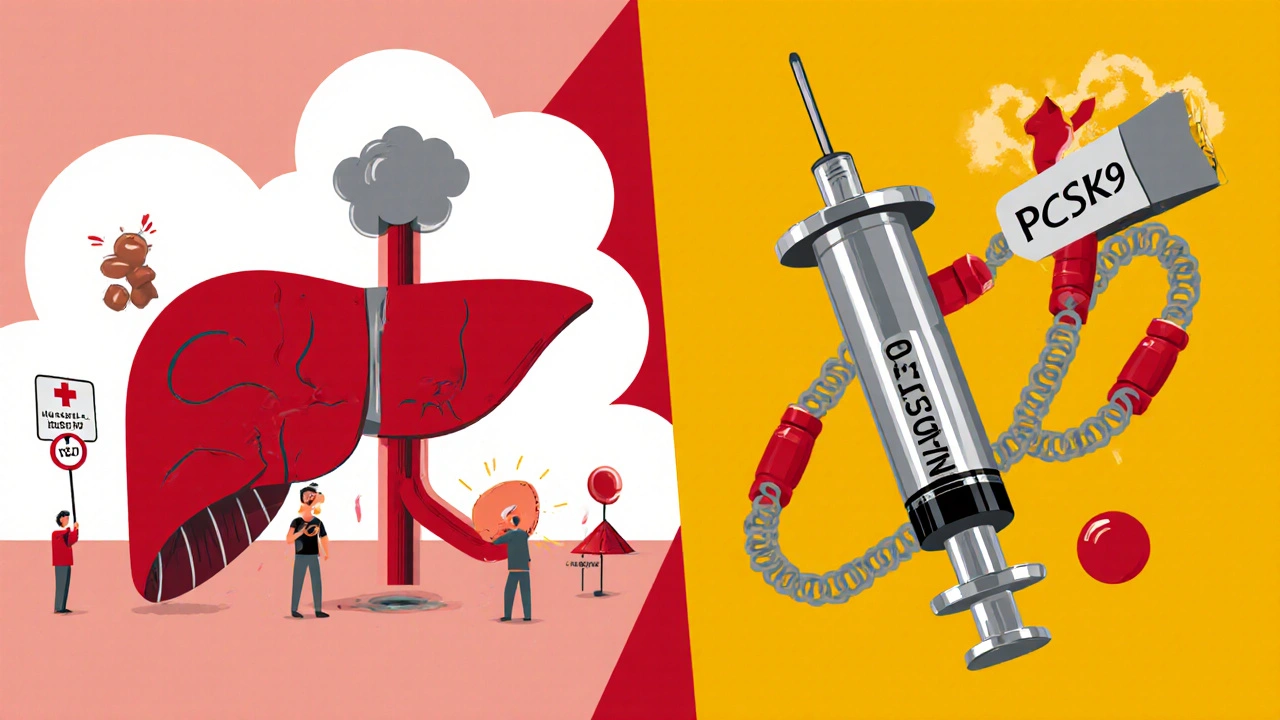
PCSK9 inhibitors and statins both lower LDL cholesterol but differ in side effects, cost, and use cases. Statins are first-line and affordable; PCSK9 inhibitors offer stronger LDL reduction with fewer muscle side effects but require injections and are expensive.
READ MORE