Prescription Label: What You Need to Know About Safety, Instructions, and Common Mistakes
When you pick up a prescription, the prescription label, a printed guide attached to your medicine bottle that tells you how, when, and why to take the drug. Also known as medication label, it's not just a formality—it's your personal safety manual. Most people glance at it once and put it away. That’s a mistake. A single misread instruction can lead to overdose, dangerous interactions, or treatment failure. The prescription label is where pharmacy rules, doctor intent, and your daily life meet—and where things often go wrong.
The label doesn’t just say "take one pill daily." It includes the drug name, the exact chemical or brand name of the medication, often listed in both generic and brand form, the dosage, how much of the drug you’re supposed to take at once, measured in milligrams, units, or drops, and the directions, the specific timing, food rules, and special warnings like "avoid alcohol" or "take on empty stomach". These aren’t suggestions. They’re based on clinical data, your health history, and how your body processes the drug. For example, taking phenytoin with a different generic version without checking blood levels can trigger seizures. Or mixing metformin with contrast dye without knowing your kidney function? That’s how lactic acidosis starts. The label exists to prevent exactly those kinds of surprises.
But labels aren’t perfect. Pharmacies make errors. Doctors change doses without updating the label. Patients forget to ask about new side effects. That’s why you need to read it every time you refill—even if it’s the same medicine. The refill date, the date when you can legally get your next supply might be wrong. The pharmacy contact, the number to call with questions about your meds might be outdated. And the warning symbols, like the black box warning for certain antibiotics that can cause heart rhythm problems, are there for a reason. Ignoring them because "it’s just a label" is like ignoring a car’s check engine light because the light looks "normal."
What You’ll Find in This Collection
Below, you’ll find real-world guides that unpack exactly what your prescription label hides in plain sight. From how to space magnesium with thyroid meds to why generic phenytoin needs blood tests, these posts show you how to read between the lines. You’ll learn how to spot dangerous interactions, understand why some labels say "take with food" and others say "on an empty stomach," and what to do when the label doesn’t match what your doctor told you. This isn’t about memorizing jargon. It’s about turning a piece of paper into a tool that keeps you safe, informed, and in control.
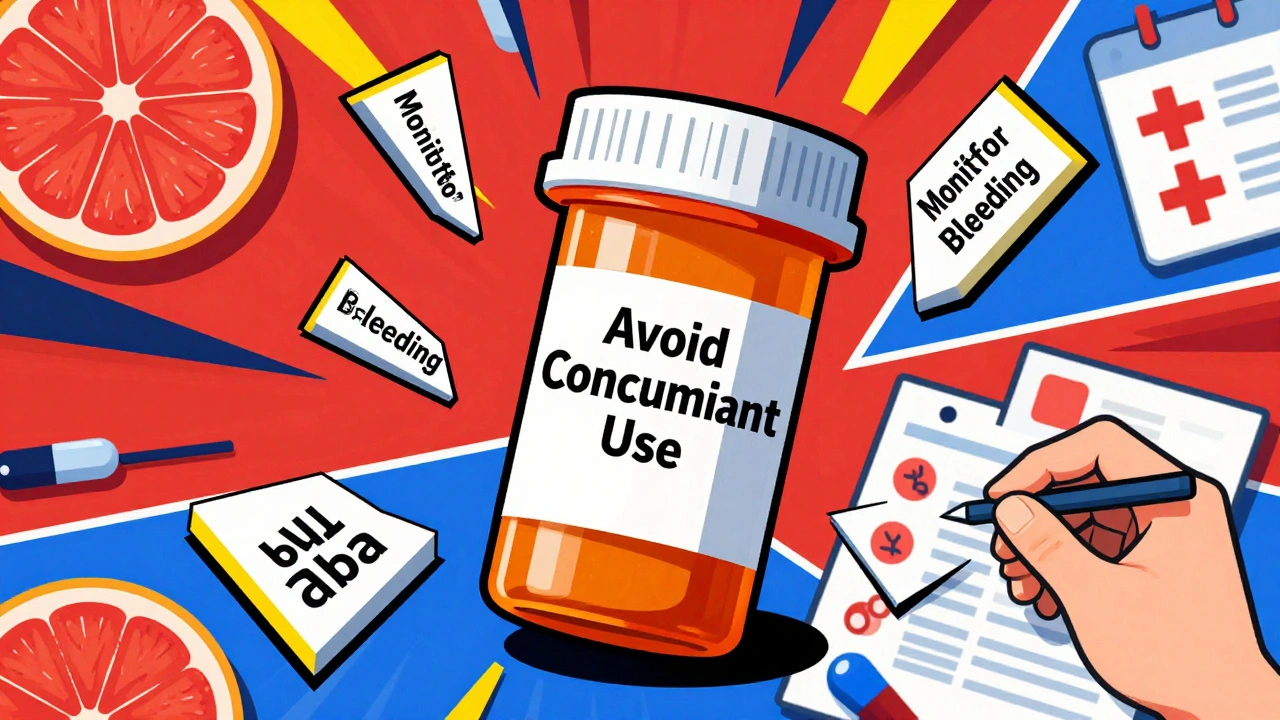
Learn how to read prescription label warnings to avoid dangerous drug interactions that can lead to hospitalization. Find out where to look, what phrases mean, and how to protect yourself from hidden risks with supplements and OTC meds.
READ MORE
Prescription labels vary wildly across pharmacies and states because there's no national standard. This inconsistency causes confusion, errors, and even dangerous mistakes. Here's why your pill bottle looks different every time - and what you can do about it.
READ MORE