
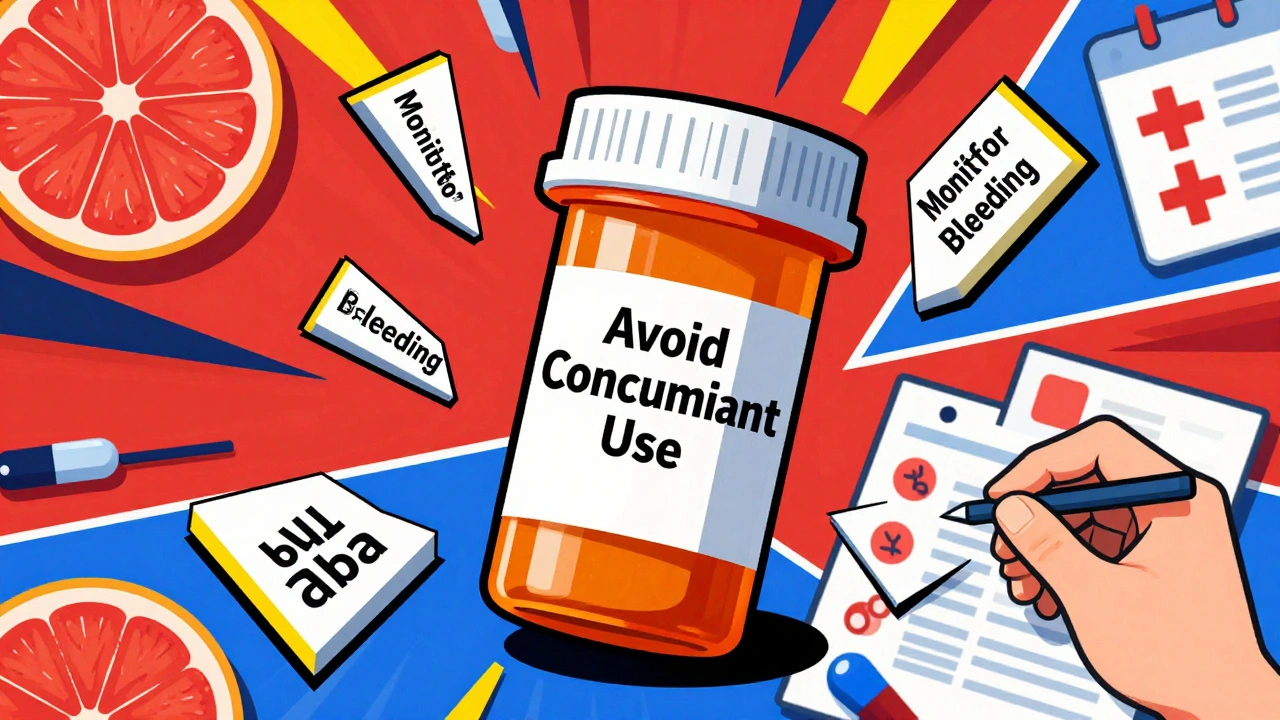
How to Read Prescription Labels to Avoid Dangerous Drug Interactions
Every time you pick up a prescription, the small paper label on the bottle holds life-or-death information. But most people glance at it long enough to see their name and the dosage - then put it away. That’s a mistake. Prescription labels aren’t just reminders. They’re your first line of defense against dangerous drug interactions that can send you to the hospital - or worse.
Every year in the U.S., around 2 million adverse drug events happen because of unexpected interactions between medications, supplements, or even foods. About 100,000 of those lead to hospital stays. And the worst part? Most of them are preventable. The FDA requires drug manufacturers to include clear, detailed interaction warnings on every prescription label. But if you don’t know where to look or what to look for, that information might as well not be there.
Where to Find Drug Interaction Warnings on Your Prescription Label
Prescription labels follow a strict format set by the FDA. The most important section for avoiding interactions is Section 7: Drug Interactions. This isn’t buried in fine print - it’s a dedicated part of the label, usually near the middle or end. You’ll also find critical warnings in Section 5: Warnings and Precautions. These are the red flags that mean: stop, don’t mix, or call your doctor immediately.
Look for phrases like:
- “Avoid concomitant use of [Drug A] with [Drug B]”
- “Reduce dosage of [Drug A] when used with [Drug B]”
- “Monitor for [symptom, e.g., bleeding, dizziness, rapid heartbeat]”
These aren’t vague suggestions. They’re clinical instructions based on real data. For example, if you’re taking warfarin (a blood thinner), the label will warn you not to take it with certain antibiotics, NSAIDs like ibuprofen, or even supplements like ginkgo biloba. That’s because mixing them can cause internal bleeding - a real risk that’s led to deaths.
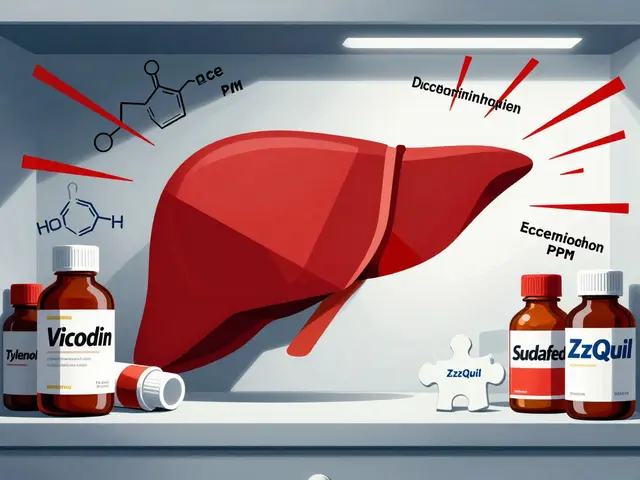
Over-the-counter meds matter too. Check the “Warnings” section on pain relievers, sleep aids, or cold medicines. Many contain acetaminophen or antihistamines that can clash with your prescriptions. A 2023 study found 98% of OTC products list interaction risks - but only 57% of people actually read them.
What the Label Isn’t Telling You (And What You Need to Know)
Prescription labels are thorough - but not perfect. They focus on interactions with other prescription drugs and some common OTCs. What they often miss? Herbal supplements, vitamins, and even foods.
Take grapefruit. It’s not on your label, but if you’re on a statin like atorvastatin or a blood pressure med like felodipine, eating grapefruit can cause toxic levels of the drug to build up in your blood. Same with St. John’s Wort - it can make antidepressants, birth control, and even heart meds stop working. These interactions aren’t always listed because supplements aren’t regulated like drugs. But they’re responsible for 32% of serious drug interactions.
That’s why you need to keep a full list of everything you take - not just prescriptions. Include:
- All vitamins and minerals
- Herbal teas and supplements (turmeric, fish oil, melatonin)
- Recreational substances (alcohol, marijuana)
- Even over-the-counter remedies like Tums or NyQuil
Bring this list to every doctor visit and pharmacy pickup. A 2023 study of 10,000 pharmacy consultations found that 22% of patients had at least one hidden interaction their doctor didn’t know about - simply because they didn’t mention their daily fish oil or magnesium pill.
How to Decode the Jargon
“Concomitant use.” “Pharmacokinetic interaction.” “CYP450 enzyme inhibition.”
These terms sound like medical code - and that’s intentional. But you don’t need a degree to understand them. Here’s how to translate them:
- “Avoid concomitant use” = Don’t take these two together. Period.
- “Reduce dosage” = Your dose might need to be lowered if you’re taking both. Don’t guess - ask your pharmacist.
- “Monitor for [symptom]” = Watch for this sign. If it happens, call your doctor. Don’t wait.
- “May increase risk of bleeding” = This includes NSAIDs (ibuprofen, naproxen), aspirin, and even garlic supplements.
On Reddit’s r/Pharmacy community, 78% of users said they ignored warnings because they didn’t understand the language. That’s not your fault - the labels are written for doctors, not patients. But now you know how to read between the lines.
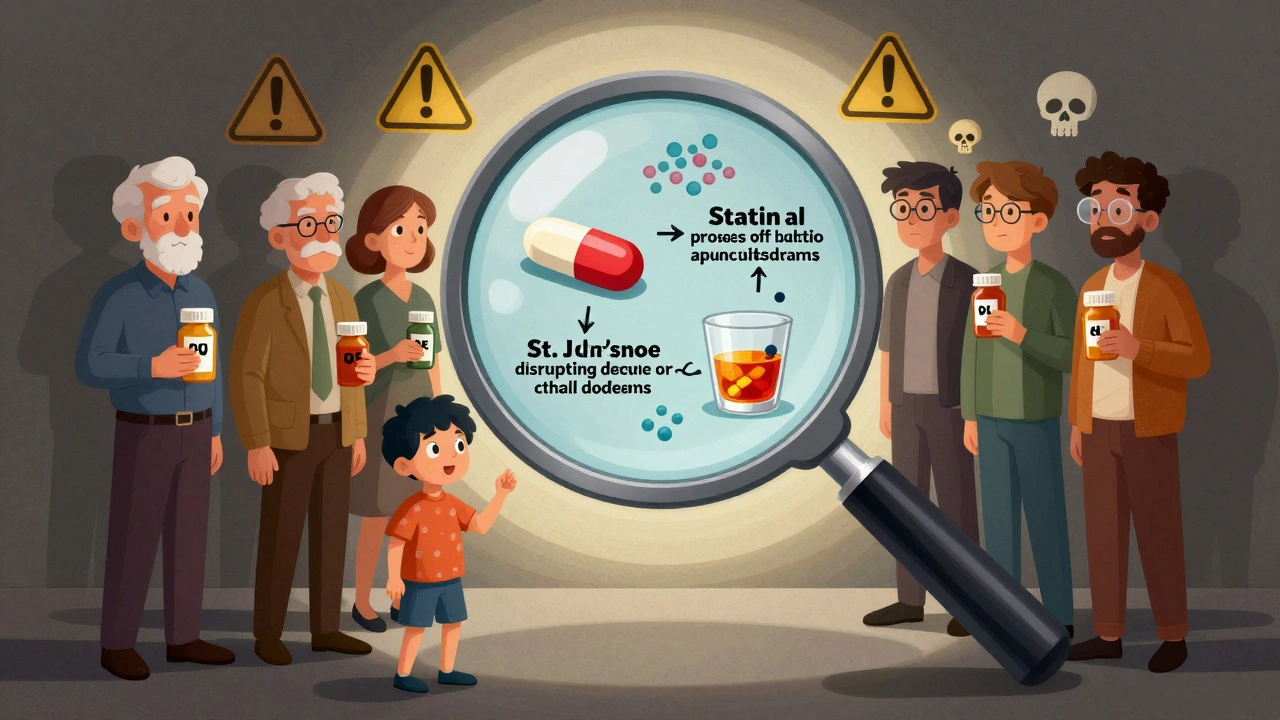
Use Technology - But Don’t Rely on It
Apps like Drugs.com Drug Interactions Checker are useful. They process over a million queries a month and cover 92% of prescription drugs. But they’re not perfect. They don’t know your full medical history. They don’t know if you’ve been taking that supplement for six months. And they can’t replace a pharmacist’s advice.
Use apps as a second check - not your first. Enter every medication you take, including supplements. If the app flags something your label doesn’t, bring it up with your pharmacist. You might be surprised. A 2023 survey found that 83% of users who used the “Ask a Pharmacist” feature on Drugs.com felt more confident about their meds after the chat.
And here’s a pro tip: Some pharmacies are testing QR codes on prescription bottles. Scan it, and you’ll get a video explanation of your interactions - in plain language. Pilot programs started in early 2025 across 150 pharmacies. Ask yours if they offer it.
What to Do When You Pick Up Your Prescription
Don’t just walk out with the bottle. Make this a habit:
- Bring all your medications - prescriptions, OTCs, supplements - to the pharmacy.
- Ask the pharmacist: “Is there anything here that could interact with what I’m already taking?”
- Ask: “What’s the most important thing I need to watch out for?”
- Write down the reason for each pill on the bottle. Example: “Klonopin - for anxiety,” not just “Klonopin.” This cuts down mix-ups by 12%, according to Harvard Medical School.
- Read the label again at home. Don’t trust your memory.
This takes about 2.7 minutes per medication - according to a BeMedWise time-motion study. But it could save you a trip to the ER.
Special Cases: Kids, Seniors, and Multiple Medications
If you’re giving meds to a child, the CDC’s “Check the Label” rule is simple: Read the label. Follow directions. Use the measuring tool that came with it. Not a kitchen spoon. Not a medicine cup from last year. That one tool is calibrated for that exact dose. Misreading labels causes 67% of pediatric dosing errors.
Seniors are at higher risk too. Two-thirds of older adults take five or more medications daily. That’s a recipe for interaction chaos. Labels don’t always show how combinations affect the elderly. Your liver and kidneys process drugs slower as you age. What’s safe at 40 might be dangerous at 70. Always ask: “Does this dose make sense for someone my age?”
If you take five or more meds, you’re in the 28% of people who don’t even read their labels. That’s not laziness - it’s overwhelm. Start small. Pick one pill a day. Read its label. Ask one question. Build the habit.
What’s Changing in 2025 and Beyond
The FDA just updated its labeling rules in June 2024. The big change? Clearer bottom-line warnings. No more burying the lead. Now, labels must say:
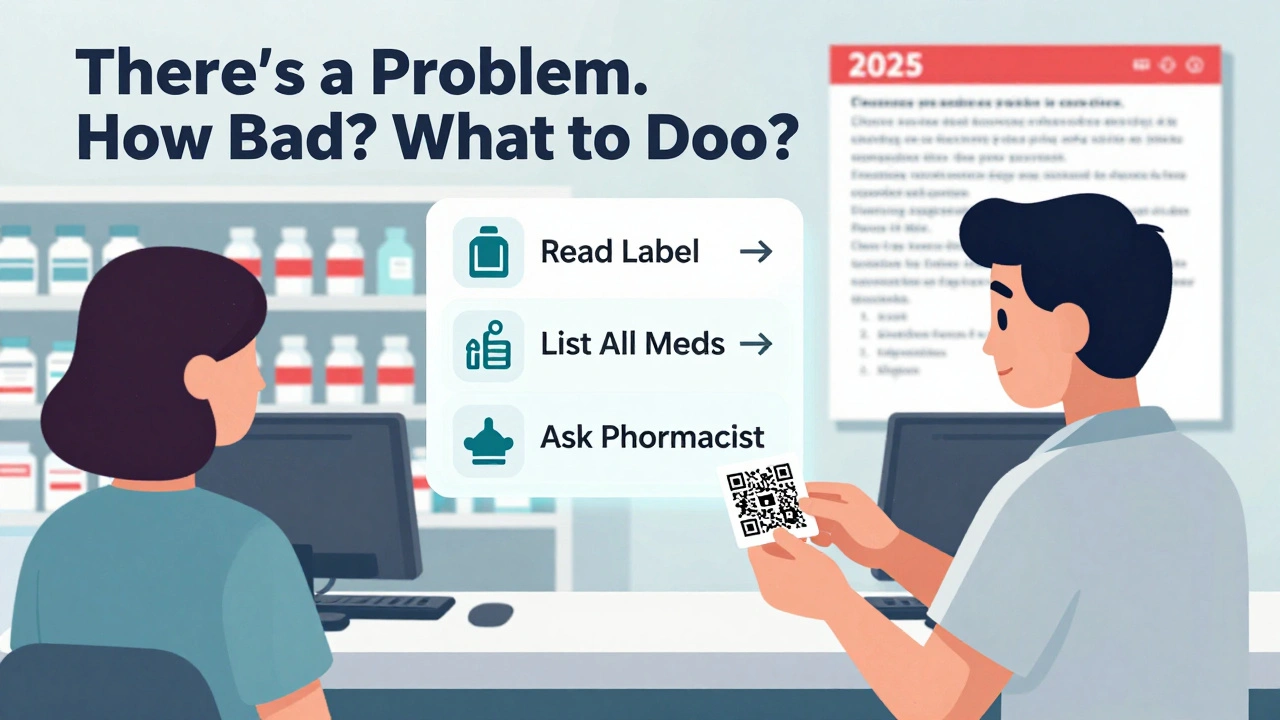
- “There’s a problem.”
- “How bad is it?”
- “What do you do about it?”
Manufacturers have until Q3 2025 to update labels. You’ll start seeing bold text, clearer headings, and simple language. This is a big deal. Right now, only 38% of doctors can find critical interaction info in under 30 seconds. That’s going to improve.
By 2026, electronic health records will be required to pull in FDA interaction data. That means your doctor’s system will flag risks before they write a prescription. But until then - you’re still the most important safety net.
Final Checklist: Your 5-Minute Drug Interaction Defense
Before you take any new medication, do this:
- ✅ Read the entire label - not just the dosage.
- ✅ Look for Section 7: Drug Interactions and Section 5: Warnings.
- ✅ Write down every supplement and OTC drug you take.
- ✅ Bring that list to your pharmacist every time you pick up a new script.
- ✅ Ask: “Is there anything here I shouldn’t mix with my other meds?”
That’s it. No apps needed. No PhD required. Just attention.
Medication errors are the third leading cause of death in the U.S. - after heart disease and cancer. Most of them happen because someone didn’t read the label. Don’t be one of them.
What should I do if I miss a dose because of a drug interaction warning?
Don’t guess. Call your pharmacist or doctor. Missing a dose can be just as risky as taking a dangerous combination. They’ll tell you whether to skip it, take a half-dose, or resume normally. Never double up unless instructed.
Can I trust the interaction info on my pharmacy’s website instead of the label?
No. The label is the legally required, manufacturer-approved source. Pharmacy websites may be outdated or incomplete. Always compare what’s on the bottle with what you see online. If they differ, trust the label - and call your pharmacist to confirm.
Why don’t prescription labels mention alcohol interactions?
They should - and many do, especially for meds like antibiotics, painkillers, or antidepressants. But some manufacturers still leave it out. Alcohol can increase drowsiness, lower blood pressure, or damage the liver when mixed with certain drugs. Always ask your pharmacist: “Is it safe to drink while taking this?” Don’t assume it’s okay.
I take supplements. Do I really need to tell my doctor?
Yes. Supplements aren’t regulated like drugs, so their interactions aren’t always on labels. But they can be dangerous. Ginkgo biloba, garlic, and vitamin E can thin your blood. St. John’s Wort can make birth control fail. Your doctor needs to know everything - even if you think it’s “natural” or “harmless.”
What if I can’t read the label because the print is too small?
Ask your pharmacist for a large-print version. Most pharmacies offer this for free. You can also request an audio version or a summary sheet. Some pharmacies now offer QR codes that link to audio explanations. If yours doesn’t, ask them to start. Your safety matters more than their convenience.


people dont read labels because theyre exhausted. not because theyre dumb. i work two jobs, raise a kid, and still have to decipher this stuff. the system is designed to overwhelm you, not protect you.
lol so now we’re supposed to become pharmacists just to not die? next they’ll make us memorize the cyp450 pathway. this is government overreach wrapped in a ‘safety’ blanket. i’m not paying for a drug if i have to sign a waiver just to swallow it.
you know what’s more dangerous than drug interactions? trusting a label written by a corporation that makes billions off your dependency. if they really cared, they’d make the warnings bigger than the drug name. they don’t. they want you to keep buying.
It is profoundly concerning that the average patient is expected to interpret pharmacokinetic data without formal training. The FDA’s labeling conventions, while technically compliant, are not patient-centric by any meaningful standard. One must consult peer-reviewed literature or engage a clinical pharmacist to adequately contextualize the risks enumerated on the label - a privilege not universally accessible. This is not negligence; it is systemic epistemic violence.
grapefruit kills. i had a friend on statin. ate one grapefruit. ended up in ICU. no joke. always ask pharmacist. simple.
i read every label now. even my turmeric. even my tea. i used to think natural meant safe. now i know natural can kill too. we just gotta pay attention. its not hard. just slow down. breathe. read.
why do we let big pharma write our labels? america lets corporations decide what kills us. in india we dont trust pills unless grandma made them. this is why we dont need your broken system
you think this is about safety? this is about control. they want you scared. they want you dependent. they want you coming back every month. if you really want to be safe? stop taking pills. go outside. walk. eat real food. thats the real interaction warning.