
Colesevelam GI Side Effects: How to Manage Constipation and Bloating
Colesevelam Constipation Risk Assessment
This tool helps you assess your risk of developing constipation while taking colesevelam based on your bowel habits, medications, and lifestyle factors. Your results will provide personalized recommendations for managing side effects.
When you start taking colesevelam (brand name Welchol) for diabetes or high cholesterol, you might expect better blood sugar control or lower LDL. But for many, the real challenge isn’t the medicine’s effectiveness-it’s the gut. Constipation and bloating aren’t just annoyances; they’re common enough to make people quit the drug. About 1 in 10 people on colesevelam end up dealing with constipation. Bloating and gas hit nearly the same number. And if you already struggle with slow digestion, this drug can turn a mild issue into something serious.
Why Does Colesevelam Cause Constipation?
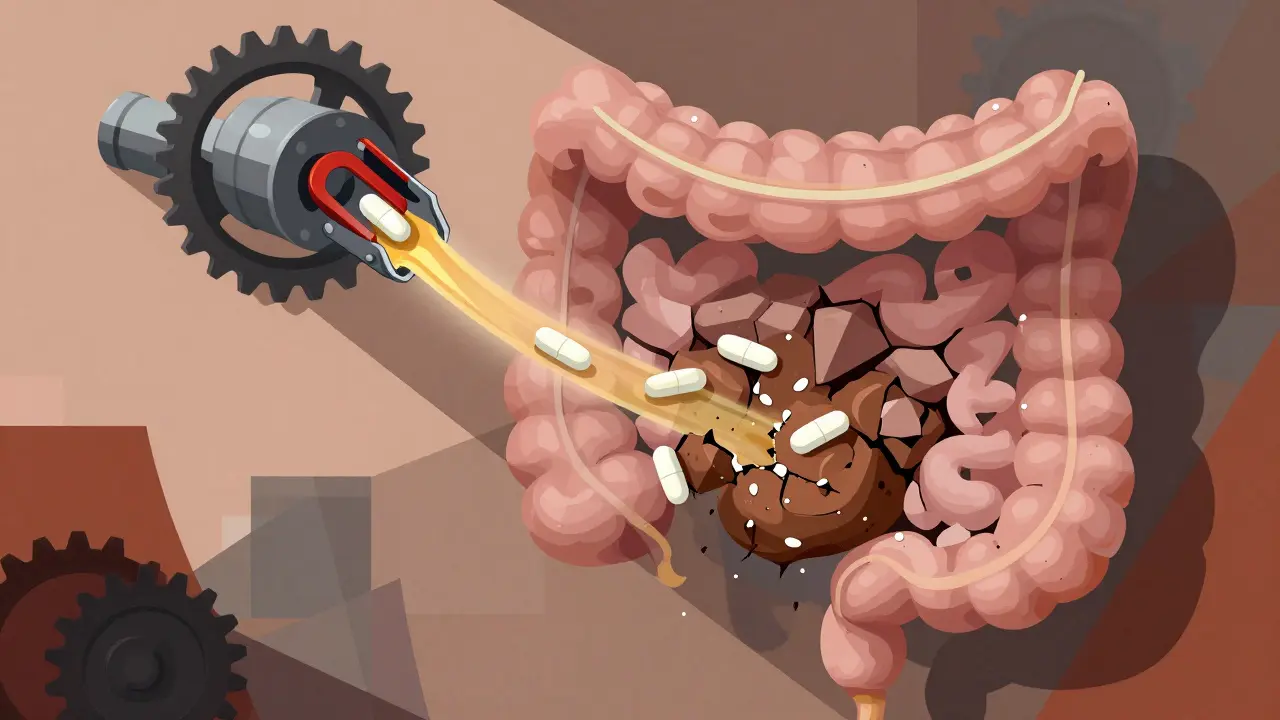
Colesevelam works by binding bile acids in your intestines. That’s how it lowers cholesterol and helps with bile acid diarrhea. But here’s the catch: when bile acids are pulled out of your digestive system, your stool loses its natural lubricant. That’s why your poop gets harder, slower, and more difficult to pass. It’s not a random side effect-it’s built into how the drug works. Unlike older bile acid sequestrants like cholestyramine, colesevelam was designed to be gentler. It forms a soft gel instead of a gritty paste. But even that gentle form can overwhelm your gut if you’re not careful. Studies show that while cholestyramine caused constipation in up to 39% of users, colesevelam keeps it around 10-15%. That’s better, but still significant. And if you already have slow bowel movements, this drug can push you into a medical emergency. There are documented cases of people needing ER visits for fecal impaction after starting colesevelam without telling their doctor about their history of constipation.Who’s at Highest Risk?
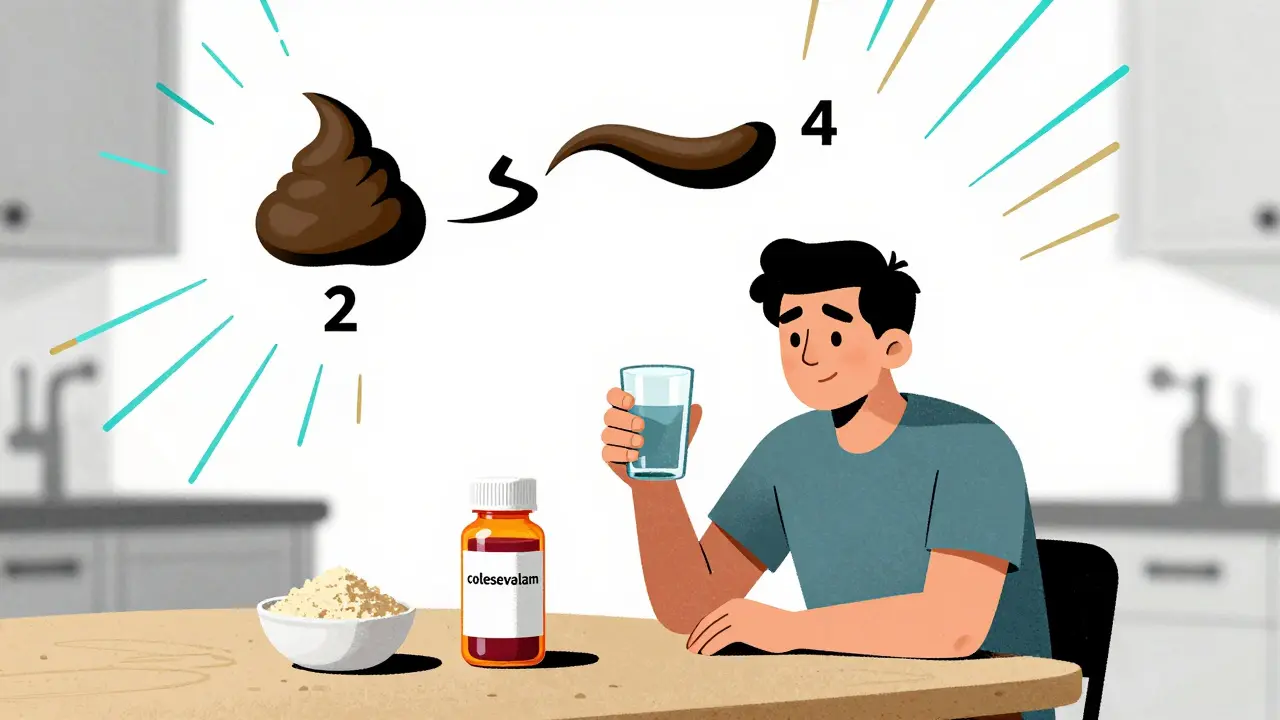
Not everyone reacts the same way. Your risk depends on your gut health before you start. If your stools are already hard or infrequent (Bristol Stool Scale score of 3 or lower), you’re more than three times as likely to develop severe constipation. People with conditions like slow transit constipation, opioid-induced constipation, or pelvic radiation damage are especially vulnerable. A 2024 study found that patients with baseline stool scores under 3 had a 3.2-fold higher risk of treatment-limiting constipation. Also watch out if you’re taking other medications that slow digestion-opioids, certain antidepressants, or iron supplements. These can team up with colesevelam to make constipation worse. And if you’re not drinking enough water, the gel-like material colesevelam forms in your gut can become too thick, like cement in your intestines.How to Prevent and Manage Constipation
The key isn’t stopping the drug-it’s managing it smartly. Here’s what works:- Start low, go slow. Don’t jump to the full dose (3.75g daily). Begin with 1.25g once a day with your biggest meal. After 7 days, increase to 2.5g. Wait another 7 days before going to 3.75g. This gives your gut time to adjust.
- Drink more water. Aim for at least 8-10 glasses a day. Water keeps the gel soft and helps move things along. If you’re not hydrating well, no amount of fiber will help.
- Add soluble fiber. Psyllium husk (Metamucil) or ground flaxseed are ideal. They absorb water and add bulk without irritating your gut. One patient with bile acid malabsorption after radiation therapy said they needed 17g of psyllium daily to avoid constipation while staying on colesevelam.
- Use stool softeners if needed. Docusate sodium (Colace) is safe to use with colesevelam. It helps water get into your stool. Avoid stimulant laxatives like senna or bisacodyl-they can cause electrolyte imbalances and don’t fix the root problem.
- Try prune juice. A small glass (4-6 oz) in the morning can be enough to keep things moving. It’s natural, safe, and works for many people.
One big mistake? Taking colesevelam on an empty stomach. Always take it with food. It reduces bloating and helps the drug bind bile acids more evenly. But remember: you must wait at least 4 hours before or after taking other meds like thyroid medicine, birth control, or diabetes drugs. Colesevelam binds to them too, making them less effective.
What About Bloating and Gas?
Bloating and flatulence affect about 11% of users. It’s usually mild and improves over time. But if it’s bothering you:- Take colesevelam with meals-it helps reduce gas buildup.
- Try simethicone (Gas-X) if bloating is sharp or painful. It breaks up gas bubbles.
- Avoid carbonated drinks, chewing gum, and eating too fast. These add air to your gut.
- Some people find that probiotics help. While not proven in trials, many report less bloating after taking Lactobacillus strains for a few weeks.
Don’t assume bloating will go away on its own. If it’s constant, painful, or getting worse, talk to your doctor. It could signal something else-like small intestinal bacterial overgrowth (SIBO)-that needs different treatment.
When to Call Your Doctor
You don’t need to suffer in silence. Call your provider if:- You haven’t had a bowel movement in 3 days.
- Your stomach feels swollen, hard, or tender.
- You feel nauseous, vomit, or stop passing gas.
- You notice blood in your stool or severe rectal pain.
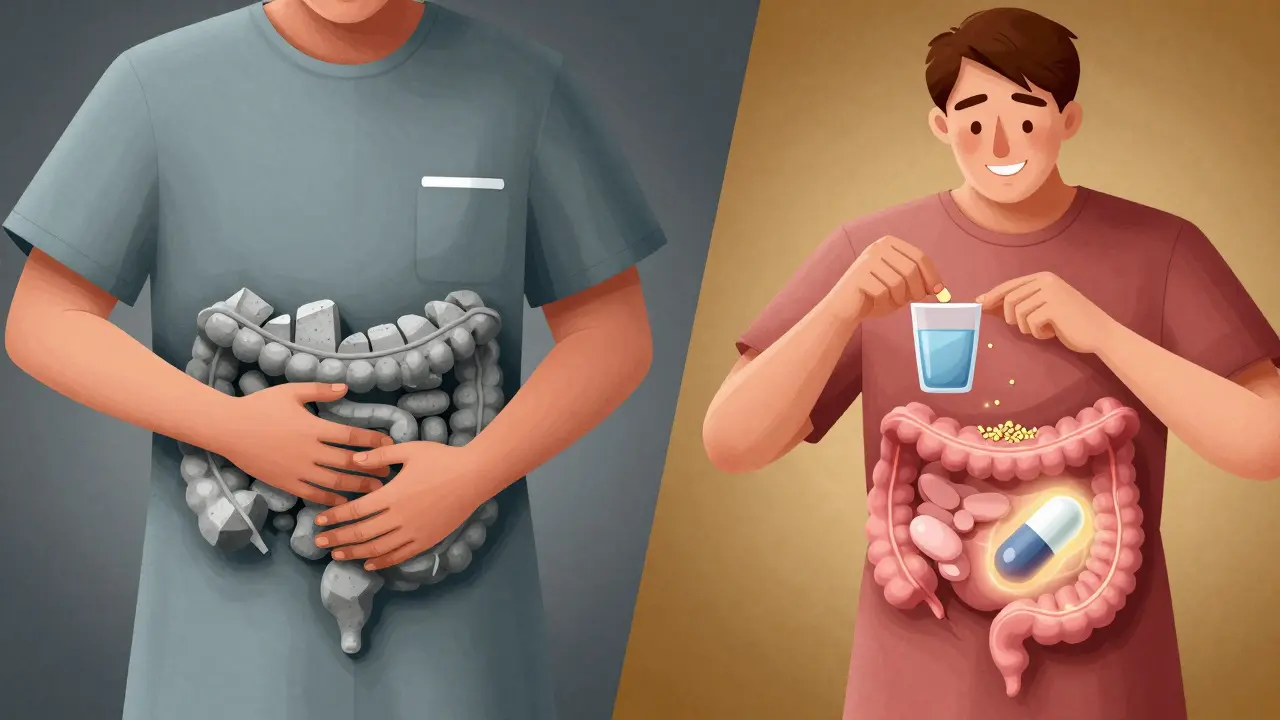
These could be signs of a blockage or impaction. Emergency treatment might be needed. One patient described their ER visit after 5 days without a bowel movement: “I felt like my insides were turning to stone.” That’s not normal-and it’s preventable.
Alternatives If Colesevelam Doesn’t Work for You
If you’ve tried everything and still can’t tolerate the side effects, you have options:- Cholestyramine (Questran): Cheaper, but harder on the gut. Constipation rates are higher. Only consider if cost is a major barrier and you have no history of constipation.
- Rifaximin (Xifaxan): An antibiotic sometimes used off-label for bile acid diarrhea. Less likely to cause constipation, but not FDA-approved for this use. Short-term use only.
- Elobixibat: A newer drug approved in Europe and Japan that works differently-by increasing bile acid movement in the gut. Not available in the U.S. yet, but could be an option in the future.
- Dietary changes: For some, reducing fat intake helps lower bile acid production. A low-fat diet (under 40g per day) can reduce diarrhea and the need for high-dose colesevelam.
Don’t switch without talking to your doctor. Each alternative has trade-offs. But if constipation is ruining your quality of life, there are other paths.
The Bigger Picture: Why This Drug Still Matters
Despite the side effects, colesevelam is a valuable tool. It’s one of the few drugs that helps both diabetes and cholesterol at the same time. And compared to older bile acid sequestrants, it’s much better tolerated. Real-world data shows only 12% of people stop colesevelam due to side effects-compared to 29% for cholestyramine. New research is making it even smarter. Doctors are now using blood tests (serum C4 levels) to predict who’s likely to develop constipation. If your C4 level is below 15 ng/mL, your risk jumps to 40%. That means you can start with half the dose or choose a different drug before problems begin. A new delayed-release version of colesevelam is in development, set to begin trials in early 2025. It’s designed to release the drug farther down the gut, where it’s less likely to cause constipation. That could change everything.Final Takeaway: It’s Manageable, But You Must Be Proactive
Colesevelam isn’t a drug you take and forget. It requires attention. Your gut will tell you what it needs-if you listen. Start low. Drink water. Add fiber. Track your bowel movements. Don’t wait until you’re stuck to call your doctor. And if your history includes slow digestion, tell your prescriber before you even fill the prescription.For many, this drug is a game-changer. It stops 10 watery stools a day. It lowers A1C. It cuts cholesterol. But those benefits only matter if you can stick with it. And that means managing the side effects-not ignoring them.
Can colesevelam cause fecal impaction?
Yes, especially in people with a history of chronic constipation or slow bowel movements. Colesevelam can harden stool to the point where it becomes impacted, requiring medical intervention. If you haven’t had a bowel movement in 3 days or feel bloated and unable to pass gas, contact your doctor immediately.
Is it safe to take fiber supplements with colesevelam?
Yes, soluble fiber like psyllium (Metamucil) is not only safe but often recommended. Take it at least 4 hours apart from colesevelam to avoid binding interactions. Fiber helps soften stool and counteracts constipation without reducing the drug’s effectiveness.
Why does colesevelam help diarrhea but cause constipation?
It depends on your condition. In bile acid malabsorption (BAM), too much bile acid causes watery diarrhea. Colesevelam binds that excess bile, firming up stool. But if you don’t have BAM and your gut already moves slowly, removing bile acids reduces natural lubrication, leading to constipation. The same mechanism helps one person and hurts another.
Should I stop colesevelam if I get constipated?
Not always. Many people can continue taking it by adjusting their dose, drinking more water, and adding fiber. But if constipation is severe or lasts more than 3 days, talk to your doctor. You may need to lower your dose or switch medications. Never stop abruptly without medical advice.
Can colesevelam cause weight gain?
No, colesevelam itself doesn’t cause weight gain. But if constipation leads to bloating or you reduce activity due to discomfort, you might notice temporary weight fluctuations. Long-term weight changes are more likely tied to diet and blood sugar control than the drug.
How long does it take for bloating and constipation to improve?
For most people, bloating improves within 1-2 weeks as the gut adjusts. Constipation may take longer-up to 4 weeks-with proper hydration and fiber. If symptoms persist beyond a month, talk to your doctor. You may need a dose adjustment or alternative treatment.


Colesevelam doesn’t cause constipation-it just reveals how broken your gut already was.
It’s not the drug’s fault. It’s the body’s way of saying, ‘Hey, you’ve been ignoring this for years.’
Starting at 1.25g and going slow is the only smart move here. I did the full dose on day one and spent three days in a war with my colon.
Also-psyllium husk is magic. Not the kind of magic that sparkles, but the kind that makes you feel human again.
And yes, drink the water. I know you hate it. But your stool doesn’t care about your preferences.
I took this for three weeks. No bowel movement. No warning. Just… silence.
My stomach swelled like I was pregnant. I cried in the bathroom. No one told me this could happen.
I’m still scared to take anything again.
They say it’s ‘gentler’ than cholestyramine. But what’s ‘gentler’ when your colon feels like it’s been stuffed with concrete?
This isn’t medicine. It’s a slow-motion punishment disguised as a treatment.
And don’t get me started on the ‘C4 blood test’-that’s just corporate jargon to make you feel like you’re being ‘personalized’ while they profit off your suffering.
OMG I JUST REALIZED I’M TAKING COLESEVELAM WITH MY VITAMINS 😭
AND I’VE BEEN DRINKING TEA INSTEAD OF WATER AND I THINK I’M TURNING INTO A ROCK??
WHY NO ONE TOLD ME??
MY DOCTOR JUST SAID ‘IT’S COMMON’ LIKE THAT’S ENOUGH??
MY GUT IS A TOMB AND I’M THE GHOST
It’s wild how the same mechanism-binding bile acids-helps someone with diarrhea and destroys someone else’s digestion.
I had bile acid malabsorption after surgery, and this drug saved me. But my sister, who’s otherwise healthy, couldn’t even finish a week.
It’s not about being ‘strong’ or ‘weak.’ It’s about your biology. And honestly, we need more of these personalized warnings.
Most patients aren’t given the full picture until it’s too late.
Let’s be honest: this entire narrative is a pharmaceutical marketing ploy.
They designed a drug that causes constipation, then sold you a ‘management plan’ to keep you buying their product.
Psyllium? Docusate? Prune juice? All cheap, generic, and available since the 1970s.
Why not just tell people to eat more vegetables and stop taking a drug that turns their intestines into a brick factory?
Because they’d lose billions.
i took this for 2 weeks and my bloat was so bad i couldnt sit down
but i was too scared to stop because my doc said it was ‘normal’
then i started drinking coconut water and it got better??
is that a thing? or did i just get lucky?
I’ve been on colesevelam for nine months now. I used to dread mornings. Now? I wake up, drink my 10 glasses of water, swallow my psyllium with a spoonful of flaxseed, and go about my day like a normal human.
It’s not glamorous. It’s not sexy. But it’s freedom.
This drug didn’t break me-it forced me to finally listen to my body.
And if you’re reading this while curled up in pain? You’re not alone. You’re just early in the journey.
Start low. Drink like your life depends on it. And for god’s sake, don’t wait until you’re stuck to ask for help.
You’ve got this. Even if your colon feels like a desert right now-it can still bloom.