

First-Episode Psychosis: Why Early Intervention and Family Support Save Lives
When someone experiences their first episode of psychosis, it’s not just a mental health crisis-it’s a turning point. Hallucinations, delusions, confusion, and withdrawal don’t just come out of nowhere. They’re signals that the brain is struggling to process reality. And if no one responds quickly, the damage can become permanent. The truth is, first-episode psychosis isn’t a life sentence. It’s a window-a narrow, urgent window-to change the course of someone’s life forever.
What Happens During a First Episode of Psychosis?
First-episode psychosis (FEP) means the first time someone experiences symptoms like hearing voices that aren’t there, believing things that aren’t true (delusions), speaking in ways that don’t make sense, or acting in ways that seem strange or withdrawn. It usually hits between ages 15 and 30. Young adults, students, people just starting careers-these are the ones most often affected.
It’s not schizophrenia, not yet. It’s the beginning. And here’s the critical part: the brain is still flexible during this early stage. Neuroscientists call it a “neuroplastic period.” That means the right kind of help now can literally reshape how the brain responds to stress, emotion, and thought. But if you wait-even just a few months-that chance shrinks. Research shows that after 3 to 6 months without treatment, people start losing the ability to hold jobs, keep friendships, or even live independently. And that loss? It doesn’t always come back.
Why Timing Is Everything
The World Health Organization says treatment should start within 12 weeks of the first symptoms. That’s not a suggestion-it’s a medical deadline. The RAISE project, a major U.S. study led by the National Institute of Mental Health, found that people who got help within 6 months had 45% better symptom improvement than those who waited longer. Those who waited over a year? Their recovery rates dropped sharply.
Why? Because psychosis doesn’t just sit in the mind-it rewires behavior. People start avoiding friends. They drop out of school. They stop showering. They get scared of going outside. Each day without treatment makes it harder to rebuild. The longer the delay, the more the brain adapts to the delusions and hallucinations as “normal.” That’s why early intervention isn’t just helpful-it’s life-saving.
The Gold Standard: Coordinated Specialty Care
Forget the old model of “meds and a therapist once a month.” That doesn’t work for FEP. The only approach proven to make a real difference is Coordinated Specialty Care (CSC). It’s not one thing-it’s five things working together, all focused on the person, not just the symptoms.
- Case management: A dedicated care coordinator helps with appointments, housing, transportation, and navigating insurance. They call twice a week during the worst times.
- Medication management: Doctors use low doses of antipsychotics-never high doses. The NICE guidelines say doses above 400mg chlorpromazine equivalent offer no extra benefit but double the side effects. Weight gain, diabetes risk, and movement disorders are real concerns, so monitoring starts day one.
- Recovery-focused therapy: Cognitive behavioral therapy (CBT) tailored for psychosis helps people understand their experiences without being overwhelmed. It’s not about “fixing” them-it’s about building coping skills.
- Family psychoeducation: This is where most programs fail… and where the best ones succeed. Families get 8 to 12 structured sessions over 6 months. They learn what psychosis is, how to respond without panic, and how to reduce stress at home. Studies show this cuts relapse rates by 25%.
- Supported employment and education: The goal isn’t just to feel better-it’s to live again. Programs use Individual Placement and Support (IPS), which helps people get back to school or work within weeks, not years. At 85% of CSC programs, 50-60% of participants land competitive jobs or return to school. In traditional care? Only 20-30%.
These teams meet every week. Everyone talks. Everyone is trained. And every program is measured using the Quality Assessment Tool for CSC (QAT-CSC). To be certified, they must hit at least 70% adherence. That’s accountability.
Family Support Isn’t Optional-It’s the Backbone
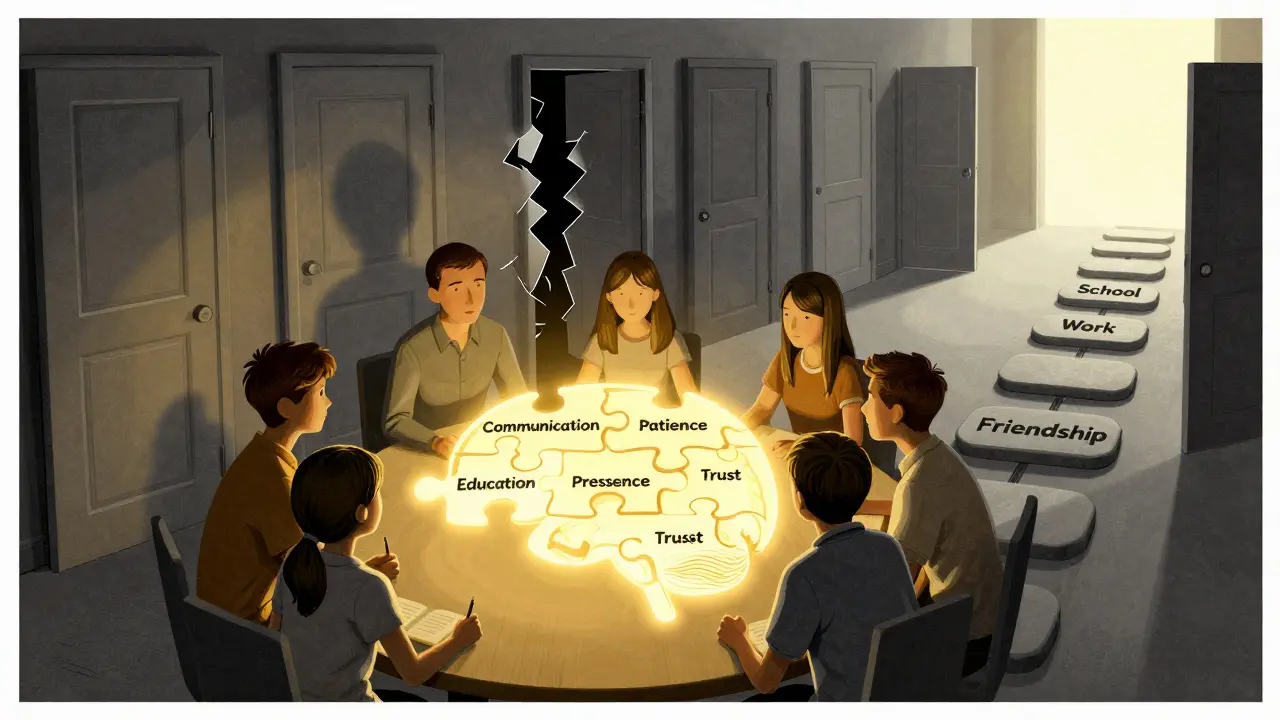
Too often, families are told to “stay out of it” or “let the professionals handle it.” That’s wrong. When a young person goes through psychosis, the whole family does. Parents feel guilt. Siblings feel scared. Relationships break down. But when families are included, everything changes.
Family sessions teach people how to respond to delusions without arguing. Instead of saying, “That’s not real,” they learn to say, “I don’t see it that way, but I know it feels real to you.” That simple shift reduces conflict and builds trust. And trust means the person stays in treatment.
One study found that only 55% of eligible family members consistently joined psychoeducation sessions. That’s a huge gap. But programs like Louisiana’s FEP Treatment Programs solved this by offering telehealth options. During the pandemic, family participation jumped 35%. Mobile crisis teams brought care to homes instead of waiting for people to come in. These aren’t luxuries-they’re necessities.
The System Is Broken-But Fixable
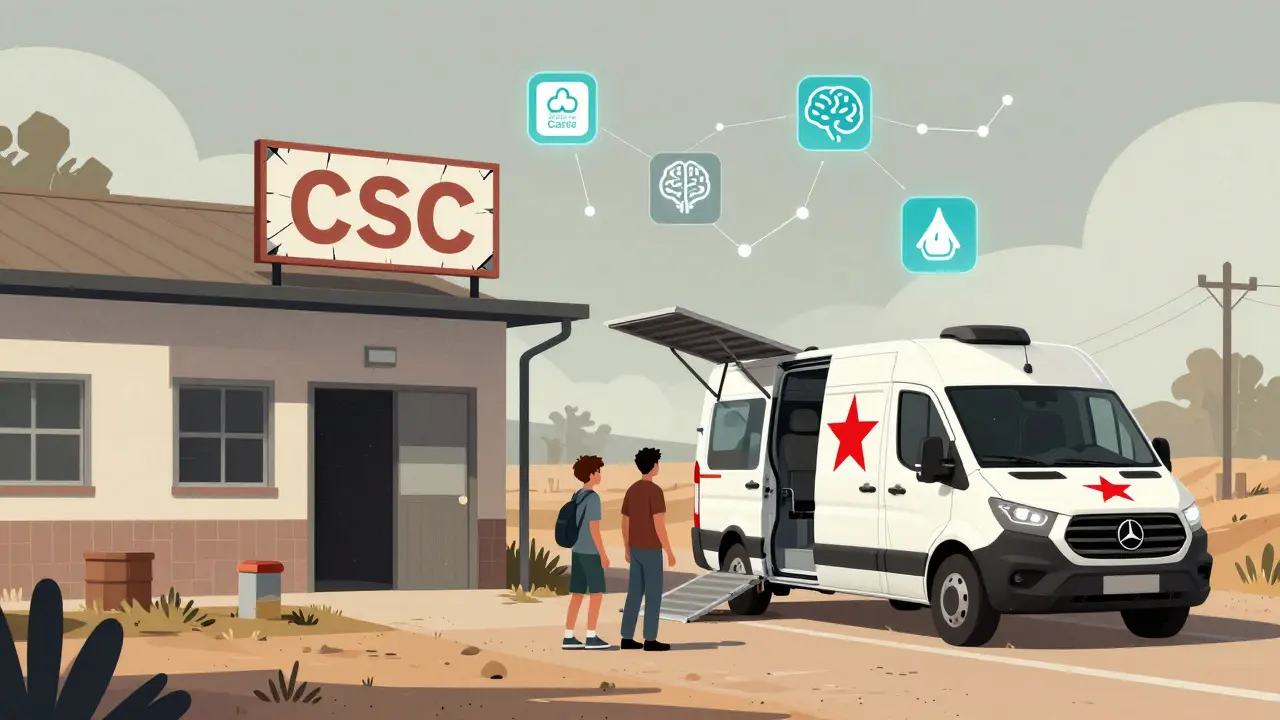
Here’s the hard truth: only 35% of U.S. counties have a certified CSC program. In rural areas, it’s worse-62% have zero access. Medicaid covers CSC components, but only 31 states have waivers that pay for all five parts. That means families often hit walls: no therapist, no case manager, no job coach.
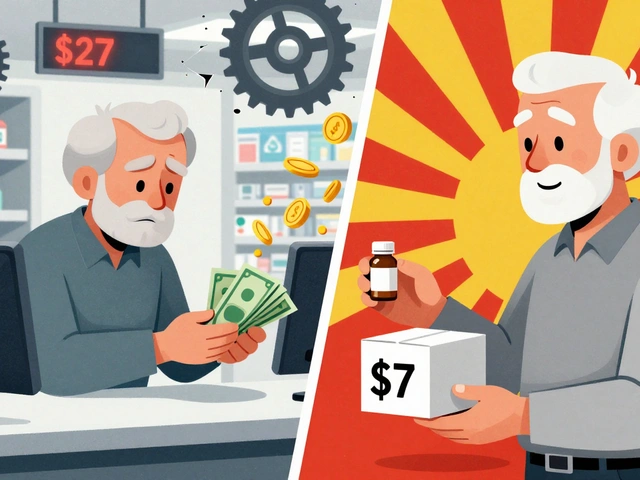
Cost is another myth. CSC costs $8,000-$12,000 per person per year. Standard care? $5,000-$7,000. But untreated psychosis costs the U.S. $155 billion a year-mostly from lost jobs, homelessness, and emergency care. CSC cuts that cost by 80%. It’s not expensive. It’s underfunded.
Workforce shortages are real. CSC teams need specialists trained in psychosis. But turnover is 22% a year. Training programs like Massachusetts’ MAPNET are fixing that-training over 300 clinicians since 2018 with 40 hours of classroom work and 120 hours of hands-on supervision. Washington State’s New Journeys program now has 95% of its teams hitting high fidelity scores. They’re proof it can work.
What’s Next? Digital Tools and Bigger Funding
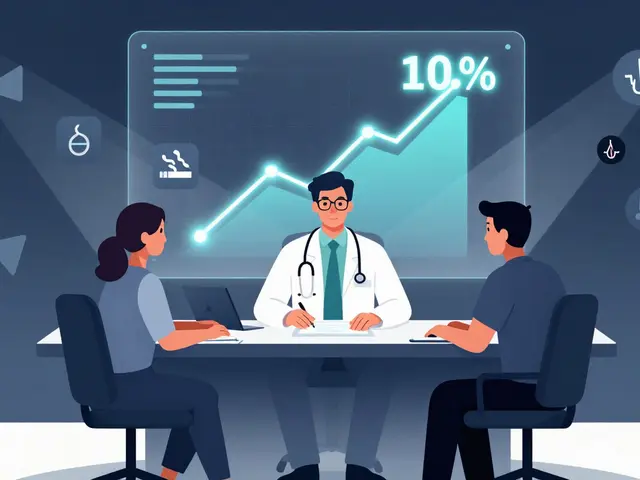
Technology is helping. The PRIME Care app, used in 22 CSC programs, lets people log moods, sleep, and symptoms daily. It alerts their care team if things start slipping. Early results show a 30% drop in hospital visits. That’s huge.
The National Institute of Mental Health just pledged $50 million through 2026 to find biological markers for early psychosis-think blood tests or brain scans that catch risk before symptoms appear. That’s the future. But right now, we still need to get people into CSC.
Right now, only 18% of people with first-episode psychosis get help within the WHO’s 12-week window. That means 82% are falling through the cracks. Dr. Lisa Dixon from the University of Maryland warns that without sustainable funding, 80% of FEP cases won’t have access to evidence-based care by 2027.
What You Can Do
If you’re worried about someone-your child, sibling, friend, student-don’t wait. Don’t assume it’s “just stress” or “teenage mood swings.” Look for these signs:
- Sudden drop in grades or job performance
- Withdrawal from friends or hobbies
- Strange beliefs or paranoia (“The government is watching me”)
- Hearing whispers or voices when no one’s there
- Disorganized speech or writing
Call a local mental health clinic. Ask if they offer Coordinated Specialty Care for first-episode psychosis. If they don’t, ask who does. Contact the National Alliance on Mental Illness (NAMI) or the Early Psychosis Intervention Network (EPINET). They can point you to programs.
And if you’re a family member: show up. Learn. Be patient. Don’t try to fix it. Just be there. Your presence is the strongest medicine they have.
What are the first signs of psychosis?
Early signs include social withdrawal, trouble concentrating, unusual beliefs (like thinking someone is controlling your thoughts), hearing faint voices, or expressing ideas that don’t connect logically. Mood changes, sleep disruption, and a drop in performance at school or work often come before full-blown hallucinations or delusions.
Is psychosis the same as schizophrenia?
No. Psychosis is a symptom, not a diagnosis. Schizophrenia is one possible diagnosis after multiple psychotic episodes over time. Many people who have one episode of psychosis never develop schizophrenia. Early intervention can prevent progression.
Can medication alone treat first-episode psychosis?
No. Medication helps reduce symptoms, but it doesn’t restore function. People need therapy, family support, and help returning to school or work. Studies show that without these, people still struggle to live independently-even if their hallucinations are gone.
How long does coordinated specialty care last?
Most programs offer care for 2 to 4 years. The RAISE-2 study found that extending care to 4 years helped people keep their jobs and stay in school. The goal isn’t to be in treatment forever-it’s to build skills so they don’t need it anymore.
Are there alternatives to Coordinated Specialty Care?
Standard care-like seeing a psychiatrist once a month and getting a prescription-is the most common alternative. But research shows it’s far less effective. People drop out more often, relapse sooner, and struggle more with daily life. CSC is the only model proven to improve long-term outcomes.
Can family members be forced to participate in therapy?
No. Participation is always voluntary. But programs use creative ways to encourage involvement: flexible hours, virtual sessions, childcare during meetings, and even meals provided. The goal is to make it welcoming, not mandatory.
How do I find a CSC program near me?
Visit the Early Psychosis Intervention Network (EPINET) website or call the National Alliance on Mental Illness (NAMI) helpline at 1-800-950-NAMI. You can also ask your primary care doctor, school counselor, or local mental health department. Many states now have FEP programs funded by Medicaid or federal grants.





My brother went through this last year and honestly, we almost lost him to the system. No one told us about CSC until he was six months in - by then, he’d dropped out of college and stopped talking to anyone. We found a program through NAMI and it changed everything. He’s back in school now, working part-time, and actually laughing again. If you’re reading this and worried about someone - don’t wait. Call today.
It’s staggering how many clinicians still treat psychosis like a chronic condition to be managed - not an acute window to be seized. The neuroplasticity window is real, and yet, many providers default to high-dose antipsychotics because it’s faster, cheaper, and easier. Coordinated Specialty Care isn’t a luxury; it’s the bare minimum standard of care. We’re failing young people by normalizing delay.
Why is this even a debate?? People are dying because we’re too lazy to fund proper care! My cousin got diagnosed and the clinic said ‘come back in 3 months’ - three months!! He ended up in the ER after trying to jump off a bridge because he thought the TV was talking to him. This isn’t mental health - it’s a national disgrace. Someone needs to burn down the system.
I’m a social worker in rural Ohio. We don’t have a CSC program. The nearest one is 90 miles away. Families drive for hours, miss work, and still get turned away because ‘they don’t qualify.’ I’ve seen kids cry in the waiting room because their mom couldn’t afford gas. This isn’t healthcare - it’s a lottery. And the worst part? We all know how to fix it. We just won’t.
Let’s be real - most of these CSC programs are just glorified case management with extra paperwork. The meds are still the main treatment. And don’t get me started on family psychoeducation - most families don’t want to ‘learn’ they’re part of the problem. This is feel-good policy dressed up as science. The data is cherry-picked. The outcomes are inflated. Wake up.
So if someone hears voices but doesn’t act out are they still eligible for CSC or do they have to be screaming at the wall first
Just saw this and cried 😭 My sister got help through a CSC program in Portland and now she’s teaching yoga and writing poetry. I used to think psychosis meant ‘lost forever’ - turns out it just meant ‘waiting for the right help.’ 🙏❤️ #FirstEpisodeNotAFate
The economic argument for Coordinated Specialty Care is compelling, but it is not sufficient. The moral imperative is clearer: a young person’s capacity to form relationships, pursue meaning, and experience joy should not be contingent upon county funding or Medicaid waivers. We are not merely treating symptoms - we are preserving personhood. And that, above all, is non-negotiable.
CSC costs too much. People should just take their meds and get a job.
Psychosis is like a storm in the mind - you don’t fix the storm by yelling at the clouds. You give the person a roof, a blanket, and someone who sits with them in the dark. That’s what CSC does. It doesn’t cure - it holds space. And sometimes, holding space is the only cure we’ve got. I’ve seen it. I’ve lived it. And I’m still here because someone didn’t look away.
Why are we spending money on this when India has millions without clean water or education This is a rich country problem