
First-Mover Advantage: How Generic Drug Makers Win Big by Launching First
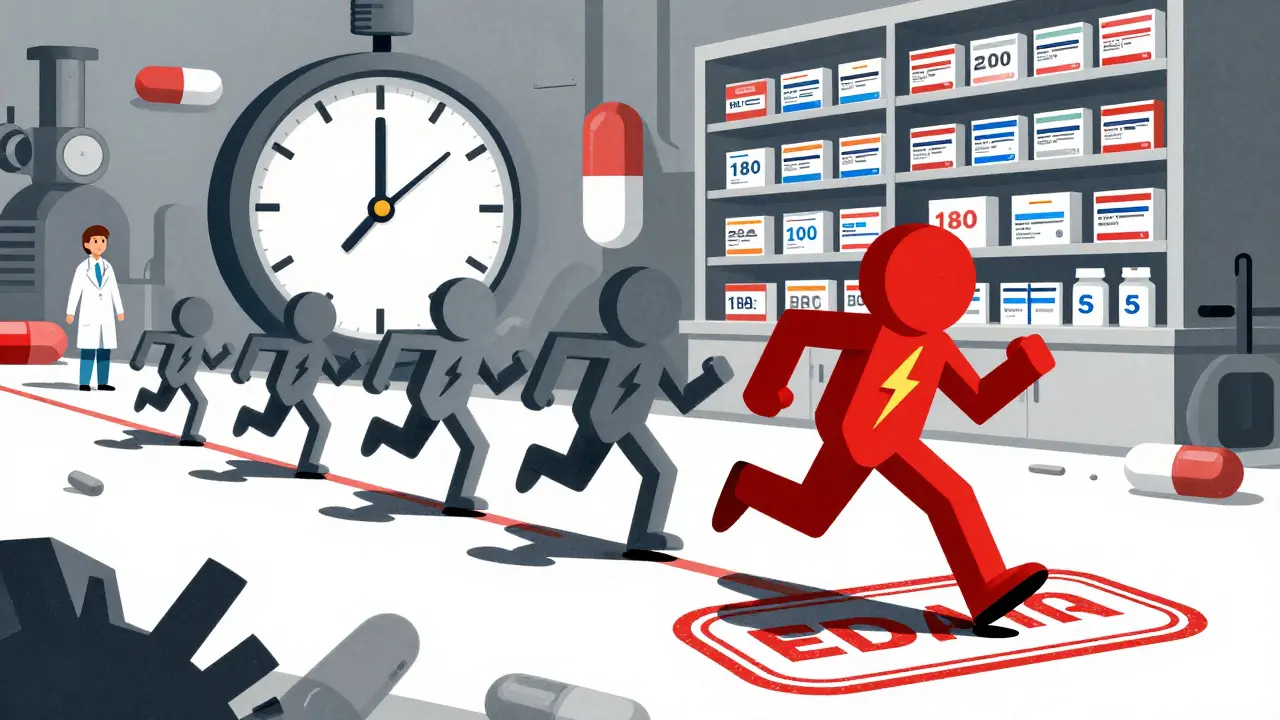
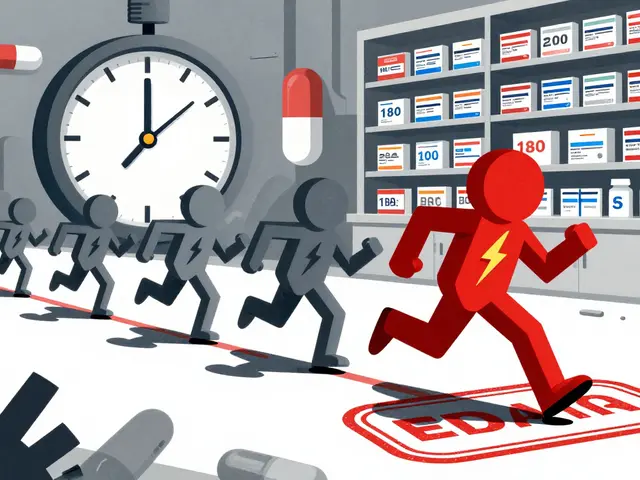
When a brand-name drug loses its patent, the race is on. Not for who makes the best pill, but who gets to the market first. The company that launches the first generic version doesn’t just get a head start - it often walks away with 80% of the market. And that lead? It doesn’t vanish after six months. It sticks. For years.
Why Being First Matters More Than You Think
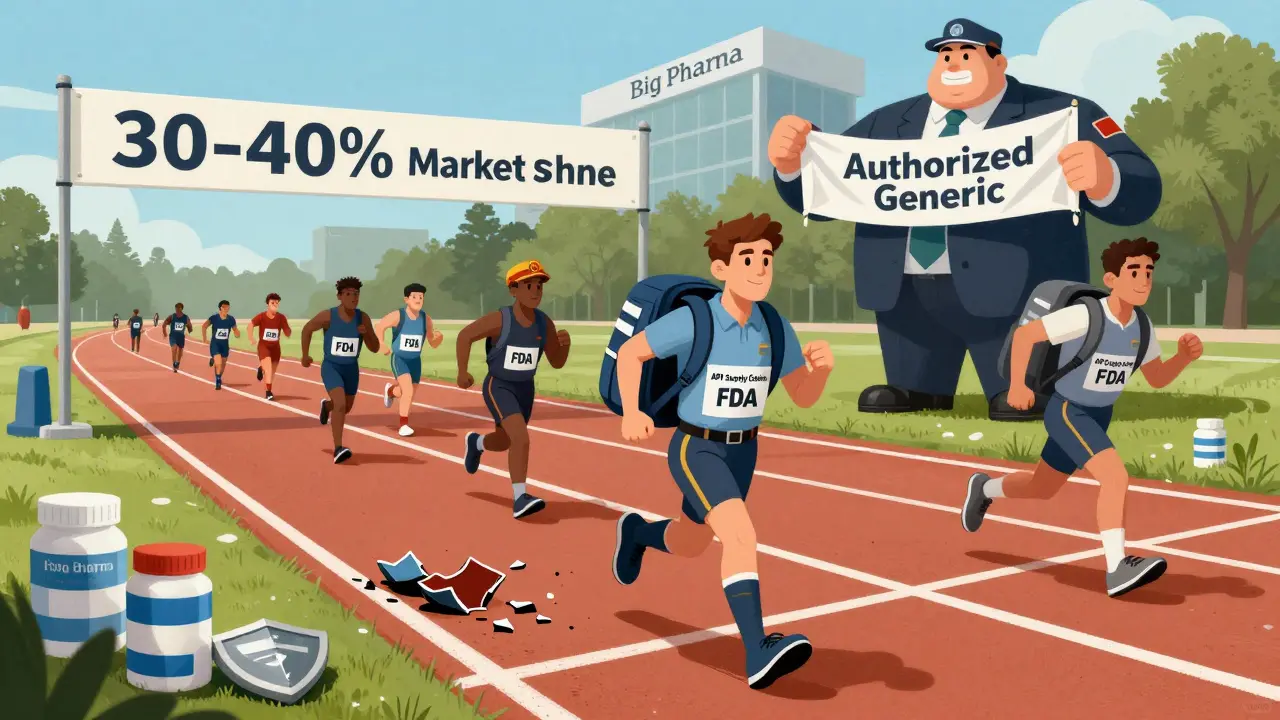
The U.S. generic drug market is worth over $150 billion a year. But it’s not a free-for-all. Thanks to the Hatch-Waxman Act of 1984, the first company to file for approval to sell a generic version of a brand drug gets 180 days of exclusive rights. No other generic can legally enter during that time. That’s not just a bonus - it’s a monopoly. But here’s the real secret: the advantage doesn’t end when the 180 days are up. By then, pharmacists have already stocked that generic. Doctors have already written prescriptions for it. Patients have already picked it up - and kept taking it. Switching to a different generic? Most won’t. Not unless forced. That’s because pharmacies prefer to carry just one version of each drug to cut down on inventory chaos. Once a first-mover is in, it’s hard to displace.Look at the numbers. First-movers capture 70-80% of the generic market during their exclusivity window. Even after three or four other generics show up, they still hold 30-40% of sales. Second-place companies? They’re lucky to get 10-15%. Third? Maybe 5%. The gap doesn’t shrink evenly - it collapses fast for everyone except the pioneer.
It’s Not Just About Speed - It’s About Timing
You might think the first company to file wins. But that’s not always true. The real winner is the one who gets to market first - and that’s not the same thing.Some companies file early just to lock in the exclusivity window. But if they’re not ready to produce the drug at scale, they get stuck. Meanwhile, a competitor with better manufacturing, better supply chains, or better regulatory prep can leapfrog them. The FDA doesn’t care who filed first - it cares who gets approved and ships product first.
Studies show that if the second generic enters within a year of the first, the advantage fades. But if the gap is three years or more? The first mover locks in dominance. That’s because prescribers don’t just remember the first brand - they remember the first generic. And once a pharmacist’s system is set to auto-substitute one brand, it’s rarely changed.
Even a one-month lead matters. A 2023 analysis from DrugPatentWatch found that first-movers who launched just 30 days ahead of the next competitor ended up with 10-12% more market share than those who were tied. That’s not luck. That’s system inertia.
Therapy Area Matters - A Lot
Not all drugs are created equal when it comes to first-mover advantage. The bigger the patient base, the harder it is to hold onto dominance. But in specialty areas? It’s a goldmine.Injectable drugs - like cancer treatments or autoimmune therapies - have far stronger first-mover effects than oral pills. Why? Fewer prescribers. Fewer pharmacies. More reliance on established protocols. In these markets, the first generic can capture 15-20 percentage points more market share than later entrants. Compare that to a common blood pressure pill, where the advantage might be just 6-8 points.
Same goes for complex generics: inhalers, eye drops, transdermal patches. These are harder to copy. Fewer companies even try. So the first one to crack it? They own the category. That’s why companies like Teva, Sandoz, and Mylan spend millions on R&D just to be first on these tricky formulations.
Big Players Win - But Not Because They’re Big
You’d think the biggest generic manufacturers always win. And sometimes they do. But it’s not about size - it’s about experience.McKinsey’s 2023 analysis found that first-movers with deep experience in a therapeutic area - say, oncology or diabetes - gain over 10 percentage points more market share than newcomers, even if those newcomers are larger companies. Why? Because they know the regulatory hurdles. They’ve already built relationships with suppliers. They’ve already navigated FDA inspections for similar drugs.
Companies that jump into a new therapeutic area just to chase exclusivity? They often lose. Their manufacturing is slower. Their quality control isn’t as tight. Their supply chains aren’t optimized. And the FDA notices. Delays happen. And in this game, a six-month delay can mean losing the entire advantage.
Domestic manufacturers also have an edge. A 2023 NIH study found U.S.-based first-movers achieve 22% higher market saturation than overseas manufacturers. Why? Faster logistics. Easier FDA oversight. Less risk of supply chain disruption. In a high-stakes race, reliability beats cost every time.
The Hidden Killer: Authorized Generics
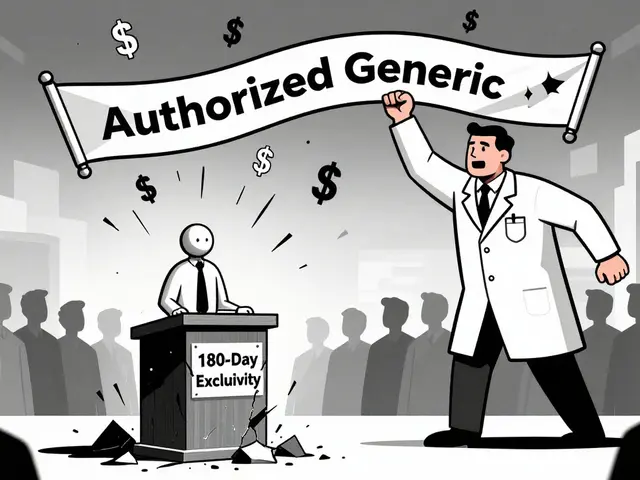
There’s one move that can destroy a first-mover’s plan before it even starts: the brand company launching its own generic version during the 180-day exclusivity window. These are called Authorized Generics - same drug, same factory, same packaging, just sold under a different label.This isn’t illegal. It’s built into the system. But it’s brutal. Instead of facing one competitor, the first generic now faces two: the original brand and its own copycat. The FTC found that Authorized Generics reduce first-filer revenue by 4-8% at retail and 7-14% at wholesale. That’s not a small hit - it’s a financial gut punch.
Top generic companies now plan for this. They build relationships with multiple active pharmaceutical ingredient (API) suppliers. They lock in pricing deals that save them 12-15% on raw materials. They keep backup manufacturing lines ready. Because if the brand pulls this move, the first-mover needs to survive long enough to outlast the AG.
What Happens After the Exclusivity Ends?
After 180 days, the floodgates open. Competitors pour in. Prices drop. Margins shrink. But the first-mover doesn’t vanish. They don’t even slow down much.Why? Because they’ve already built trust. Prescribers know the drug works. Pharmacists know it’s reliable. Patients know it’s affordable. The first generic becomes the default - not because it’s the cheapest, but because it’s the one everyone already uses.
And here’s the kicker: the first-mover often keeps pricing slightly higher than later entrants. Not because they can - but because they don’t need to slash prices to compete. They’re already the market leader. The others? They’re fighting over scraps.
The Future: Will This Advantage Last?
Some say the first-mover advantage is fading. The FDA is speeding up reviews. More companies are entering the space. Complex generics are becoming easier to copy.Maybe. But the core drivers haven’t changed. Prescribers don’t change habits. Pharmacies don’t want to stock 12 versions of the same pill. Patients don’t want to switch unless their insurance forces them.
And with the FTC cracking down on "pay-for-delay" deals - where brand companies pay generics to delay entry - more first-movers are hitting the market faster than ever. A 2023 analysis from Charles River Associates found that these enforcement actions are accelerating generic launches by 6-9 months on average.
The real winners? The ones who combine speed, experience, and operational discipline. Not the biggest. Not the loudest. The ones who get it right - and get there first.
What It Takes to Win
If you’re a generic manufacturer aiming for that first-mover slot, here’s what you need:- Deep expertise in the therapeutic area - don’t guess, know.
- Strong relationships with API suppliers - lock in cost savings early.
- Manufacturing capacity ready to scale - no last-minute scrambles.
- A plan for Authorized Generics - assume they’ll come.
- A regulatory team that speaks FDA fluently - delays cost millions.
- Patience. This isn’t a sprint. It’s a 2-3 year marathon.
The first-mover advantage isn’t magic. It’s mechanics. It’s systems. It’s inertia. And in a market where 90% of prescriptions are filled with generics, the company that gets there first doesn’t just win a race - they own the track.
What is the Hatch-Waxman Act and how does it help generic manufacturers?
The Hatch-Waxman Act of 1984 created a legal framework that lets generic drug makers challenge brand-name drug patents and enter the market faster. In exchange, the first generic company to successfully challenge a patent gets 180 days of exclusive marketing rights - no other generic can sell the same drug during that time. This gives them a huge head start to capture market share before competition arrives.
Why do pharmacists prefer to stock only one generic version of a drug?
Pharmacies stock only one generic per drug to simplify inventory, reduce errors, and cut costs. Managing multiple versions of the same medication requires extra training, tracking, and storage space. Once a first-mover generic is in place, switching to another requires reconfiguring systems and educating staff - so most pharmacies stick with the first one they adopted.
What are Authorized Generics and how do they hurt first-movers?
Authorized Generics are brand-name drugs sold under a generic label by the original manufacturer during the first generic’s 180-day exclusivity period. They’re identical in quality but undercut the first-mover’s price. This turns what should be a two-player market (brand vs. generic) into a three-player race (brand, first generic, and authorized generic), often cutting first-mover revenue by 4-14%.
Do first-mover advantages last beyond the 180-day exclusivity period?
Yes. Even after other generics enter, the first-mover often keeps 30-40% of the market share, while later entrants fight for 10-15%. This is because prescribers and patients stick with the first generic they tried. Pharmacies keep stocking it. Insurance systems default to it. The advantage isn’t just legal - it’s behavioral.
Is being first always the best strategy for generic manufacturers?
Not always. If a company rushes into a drug area it doesn’t understand, or lacks manufacturing readiness, it can lose money or face regulatory delays. The advantage is strongest for experienced manufacturers with strong supply chains and a track record in complex therapies. For simple, low-margin drugs, being second or third can be more profitable if you avoid the upfront risks.
How has the FDA’s recent policy changes affected first-mover advantage?
The FDA’s GDUFA III initiative aims to speed up generic reviews, which could reduce the time-to-market gap between first and second entrants. But it’s also raised the bar for application quality, favoring companies with deep regulatory experience. Meanwhile, FTC crackdowns on "pay-for-delay" deals are pushing more generics to market faster - making the race tighter but also more valuable for those who win.


bro this is wild-i work in pharma logistics in bangalore and the first-mover thing is real as hell. once a generic hits the system, even if it’s 5 cents more expensive, docs keep scribblin’ it. pharmacies dont wanna deal with 3 diff versions of metformin. its chaos. also, the 180-day exclusivity? more like a 3-year moat if you got the supply chain locked down. 🤯
AMERICA FUCK YEAH 🇺🇸🔥 first-mover advantage? more like AMERICAN INNOVATION DOMINATING THE WORLD. those foreign generics can kiss my ass-our FDA’s got standards, our manufacturers got grit, and our companies don’t wait for permission to win. if you’re not first, you’re already dead. 💪💊
so let me get this straight-you’re telling me the entire $150B generic market runs on pharmacy laziness and prescriber habit? no wonder healthcare costs are insane. we built a system where the winner isn’t the best drug, but the one that showed up first and nobody bothered to switch. brilliant. 🙃
It’s not just about market share. It’s about moral hazard. The Hatch-Waxman Act was supposed to lower prices, but now it’s a weaponized loophole for corporate greed. The first-mover isn’t rewarded for innovation-it’s rewarded for gaming a system designed to help patients. This isn’t capitalism. It’s feudalism with pill bottles.
you think this is about drugs? think deeper. the FDA, the FTC, the big pharma lobby-they’re all in cahoots. authorized generics? that’s the brand companies quietly buying off the first-mover to keep prices high. and the ‘180-day exclusivity’? total scam. they’re just letting one company profit while the rest suffer. it’s all controlled by the same 3 corporations. you’re being played. 🕵️♀️👁️
This is a beautiful case study in institutional inertia. Human behavior doesn’t change because of logic-it changes because of friction. The first generic reduces cognitive load for everyone: the pharmacist, the doctor, the patient. Once that path is paved, even a better option feels like a detour. The real question isn’t ‘who wins?’-it’s ‘why do we let systems lock in mediocrity?’
lol u think u can beat the first-mover? try it. i’ve seen some dumbass startup try to undercut teva on a diabetes med. they got approved, shipped 3 pallets, and then the FDA flagged their API source as ‘questionable.’ meanwhile, teva’s been making that same damn pill since 2018 with the same factory in new jersey. the system’s rigged-but the rigging’s LEGAL. and that’s the scariest part.
just wanted to say-this post made me feel so much better about my job. i’m a quality control tech at a small generic lab and we’re trying to be first on a new injectable. it’s a nightmare-18 months of paperwork, 3 FDA inspections, and we still got delayed because of a typo in the label. but when we finally launch? it’ll be worth it. we’re not just making pills-we’re building trust. keep going, team. 💪
Thank you for this comprehensive analysis. I would like to offer a formal correction regarding the NIH study cited: the 22% market saturation differential was observed only in Class II and III medical device generics, not oral solid dosage forms. Additionally, the term ‘authorized generics’ is a misnomer-they are legally classified as ‘brand-name drugs sold under a generic label,’ per 21 CFR 314.3. The implications of this distinction are material for regulatory compliance.