180-Day Exclusivity and Authorized Generics: Legal Considerations in U.S. Drug Markets
When a generic drug company challenges a brand-name drug’s patent, it’s not just a legal battle-it’s a high-stakes financial gamble. The 180-day exclusivity period under the Hatch-Waxman Act is supposed to reward that gamble with a monopoly on the generic market. But here’s the twist: the brand-name company can still launch its own version of the generic drug-called an authorized generic-and undercut the very company that spent millions to get there. This isn’t a loophole. It’s built into the law. And it’s reshaping how generics compete in the U.S. drug market.
What Is the 180-Day Exclusivity Period?
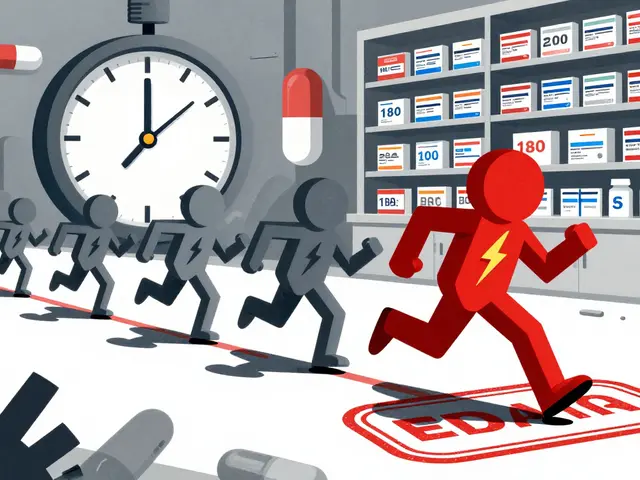
The 180-day exclusivity rule comes from the Drug Price Competition and Patent Term Restoration Act of 1984, better known as the Hatch-Waxman Act. Its goal? Encourage generic drugmakers to challenge weak or overreaching patents on brand-name drugs. If a generic company files what’s called a Paragraph IV certification-a legal notice that it believes the patent is invalid or not infringed-and wins the court battle, it gets 180 days of exclusive rights to sell its version of the drug. During that time, the FDA can’t approve any other generic versions.
This isn’t just a formality. It’s worth hundreds of millions of dollars. For example, when Teva challenged Eli Lilly’s patent on Humalog, the diabetes drug, it estimated losing $287 million in revenue because Lilly launched its own authorized generic during Teva’s exclusivity window. That’s not rare. Between 2005 and 2015, brand-name companies launched authorized generics in about 60% of cases where 180-day exclusivity was granted.
How Authorized Generics Work
An authorized generic is not a separate product. It’s the exact same drug, made in the same factory, with the same ingredients and quality controls as the brand-name version-except it’s sold without the brand name, logo, or fancy packaging. No extra testing. No new FDA approval. Just a different label.
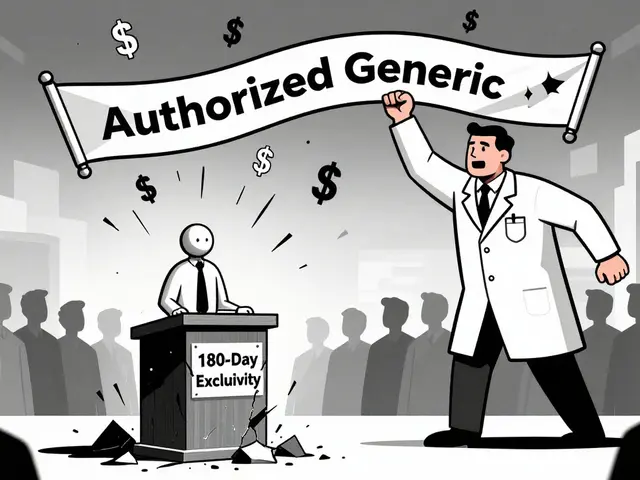
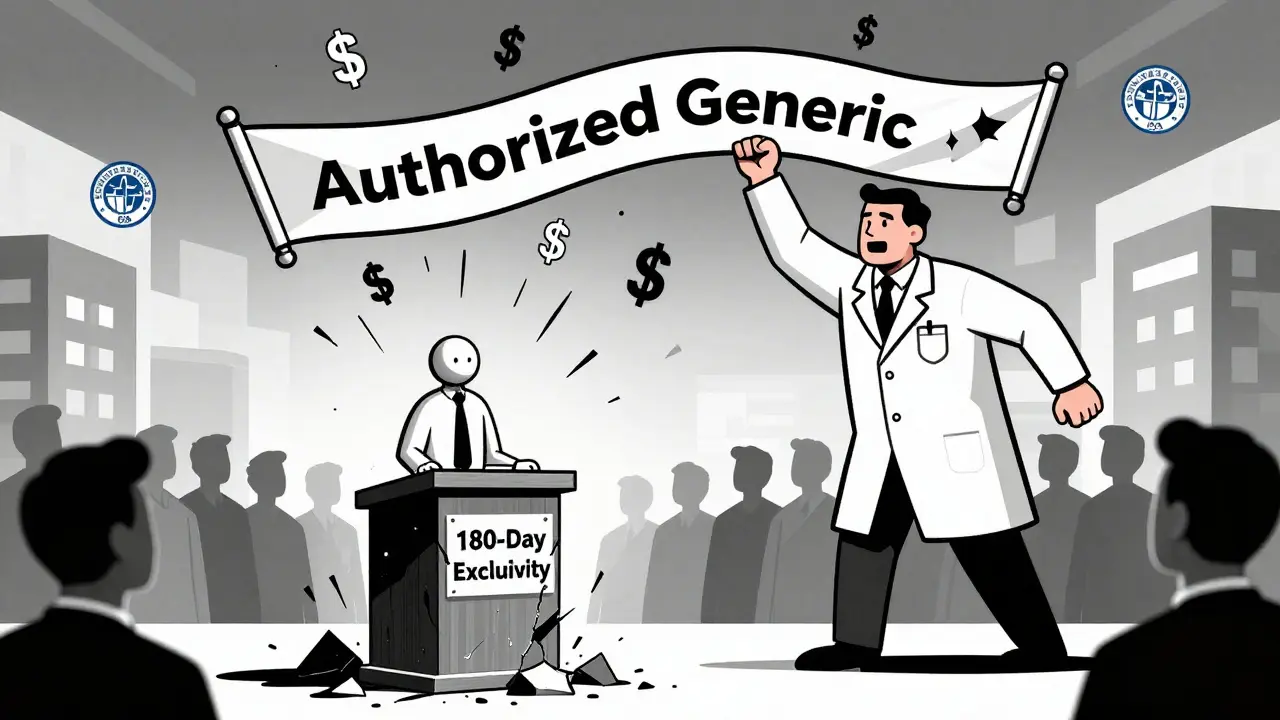
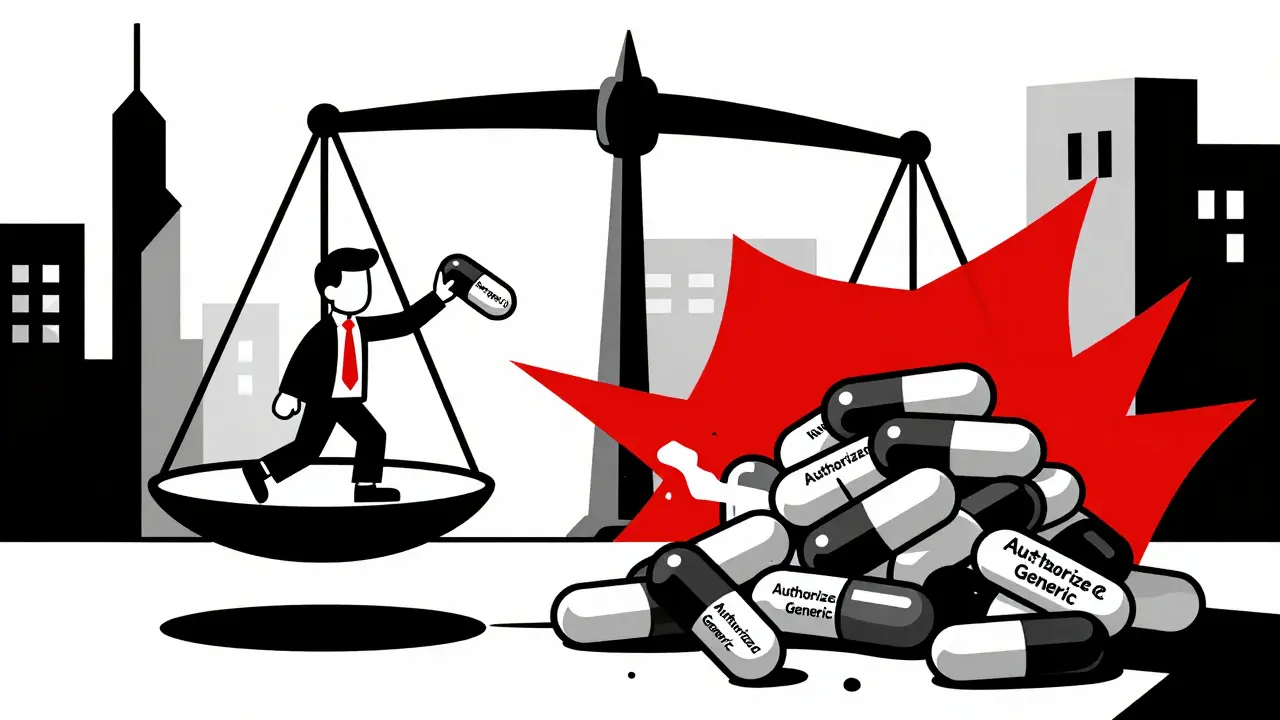
Here’s why it’s so powerful: while the first generic company waits for its 180-day clock to start, the brand-name company can immediately launch its own generic version. It doesn’t have to wait. It doesn’t have to file anything. It just rebrands its existing supply and sells it at a discount. The result? The first generic company doesn’t get a monopoly. It gets competition from the company it was trying to beat.
Studies show that when an authorized generic enters the market during the exclusivity period, the first generic’s market share drops from around 80% to 50%. That’s a 30-50% revenue hit. For smaller generic manufacturers, that’s often enough to wipe out profits from a multi-million-dollar legal fight.
Legal Gray Zones and Industry Tactics
The law doesn’t say brand-name companies can’t launch authorized generics. So they do. And they’ve gotten very good at it. In fact, many generic companies now build the risk of authorized generics into their business plans. According to Drug Patent Watch, 78% of first generic applicants negotiate clauses in patent settlement agreements that delay or block the brand’s authorized generic launch.
These settlements aren’t always fair. Sometimes, the brand-name company pays the generic company to delay its own entry-called a "pay-for-delay" deal. The FTC has filed 15 antitrust lawsuits since 2010 over these arrangements. But authorized generics are legal. Even when they’re used to undermine competition, they’re not technically illegal.
The FDA has tried to clarify things. In 2017, it issued guidance saying exclusivity begins only when the generic company starts shipping the drug to customers-not when it gets approval. But that doesn’t stop the brand from flooding the market with its own version. The result? A race to the bottom. The first generic company wins the legal battle but loses the market.
Who Benefits? Who Loses?
Consumers often see lower prices when authorized generics enter the market. A 2021 RAND Corporation study found that drug prices dropped 15-25% more when an authorized generic competed with the first generic than when only one generic was available. That’s a win for patients paying out-of-pocket or on high-deductible plans.
But the system is rigged against innovation in generic competition. Smaller generic companies, which can’t afford $3-5 million in legal fees, are walking away from patent challenges. A Reddit thread from pharmaceutical professionals in early 2023 revealed that many now see Paragraph IV certifications as too risky. "Why spend millions to get a 50% cut?" one user wrote.
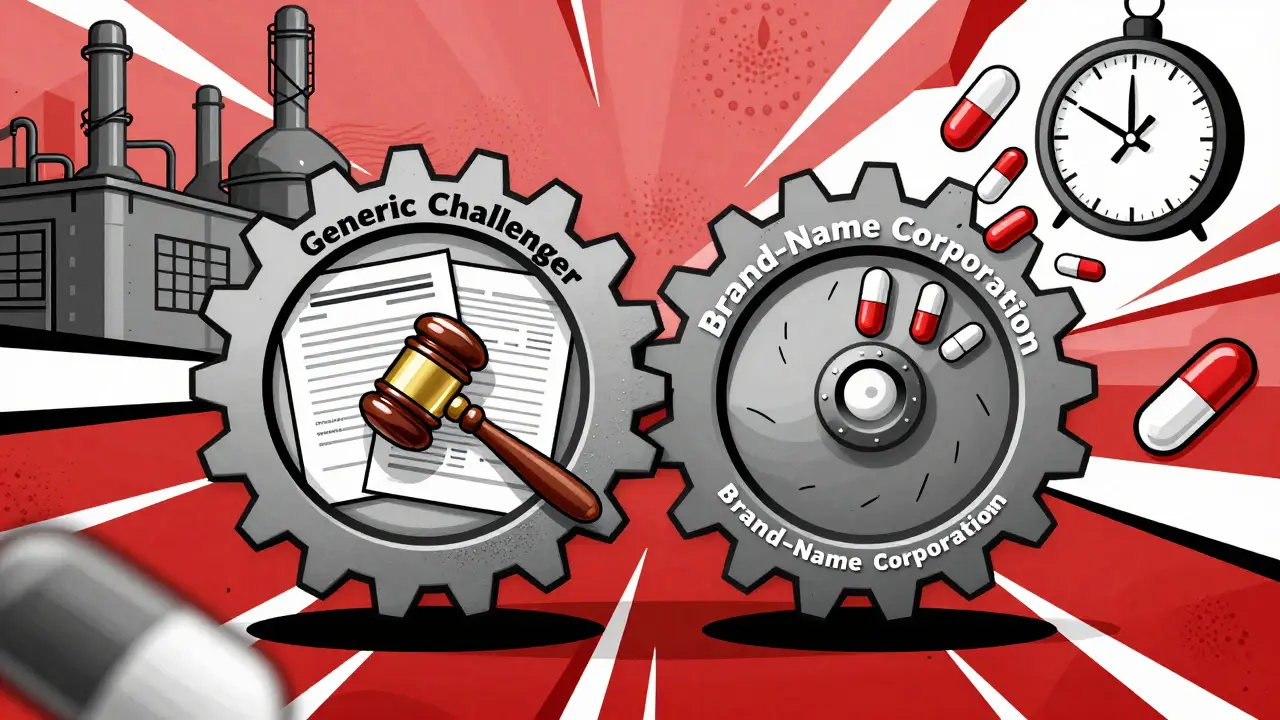
Meanwhile, brand-name companies benefit twice: they keep revenue from their branded product, and they capture market share with their authorized version. The generic company that did the hard work-filing the challenge, going to court, risking everything-gets squeezed.
What’s Being Done About It?
The Federal Trade Commission and FDA leaders like Commissioner Robert Califf have publicly called for changes. In 2023, Califf told Congress that the current system creates "unintended disincentives for timely generic entry." The FTC recommends amending the Hatch-Waxman Act to explicitly ban authorized generics during the 180-day window. That change would increase first-generic revenues by an estimated 35% on average.
Legislation has been introduced multiple times-most recently as the Preserve Access to Affordable Generics and Biosimilars Act (S. 1665/H.R. 3928)-but it hasn’t passed. The pharmaceutical industry, through groups like PhRMA, argues that authorized generics help consumers. And they’re not wrong. But they’re ignoring the bigger picture: the law was meant to create a strong incentive for generic companies to challenge patents. Right now, that incentive is broken.
Real-World Impact
The numbers tell the story. Since 1984, the Hatch-Waxman Act has saved the U.S. healthcare system over $2.2 trillion. But the value of that 180-day exclusivity has dropped sharply. In 2000, it took an average of 28 months for multiple generics to enter the market after the first one. By 2022, that time dropped to just 9 months. Why? Because authorized generics and other market tactics have fragmented competition before the first generic even gets its full advantage.
Generic manufacturers now spend $500,000 to $1 million on specialized consultants just to manage the exclusivity window. They need teams of lawyers, regulatory experts, and commercial strategists to avoid missteps. The FDA reports that 28% of first applicants between 2018 and 2022 lost part of their exclusivity due to procedural errors-like shipping too early or too late. One wrong move, and millions vanish.
The Future of Generic Competition
The 180-day exclusivity period was designed to be a powerful tool. But it’s been hollowed out by a loophole the law never intended. Authorized generics aren’t evil. They’re a clever, legal response to a system that gave brand-name companies too much control. Until Congress acts, the system will keep favoring companies with deep pockets-those who can afford to launch their own generics and outmaneuver the challengers.
For now, the only way for generic companies to survive is to either negotiate deals with brand-name firms or avoid high-risk challenges altogether. That’s not competition. It’s surrender.
Can a brand-name company legally launch an authorized generic during the 180-day exclusivity period?
Yes. The Hatch-Waxman Act does not prohibit brand-name manufacturers from selling their own drug under a generic label during the 180-day exclusivity period. Authorized generics are not subject to the same regulatory restrictions as other generics because they are identical to the original brand product. This practice is legal, widespread, and has been upheld in multiple court cases and FDA guidance documents.
How does the FDA define "first commercial marketing" for triggering the 180-day exclusivity clock?
According to the FDA’s 2017 Guidance for Industry, "first commercial marketing" means the first shipment of the generic drug to customers after FDA approval. Simply receiving approval is not enough. The drug must be physically distributed and sold. This rule prevents companies from "triggering" the exclusivity period early and then sitting on the approval without selling, which could artificially extend their market advantage.
What is a Paragraph IV certification, and why is it important?
A Paragraph IV certification is a legal statement included in an Abbreviated New Drug Application (ANDA) that challenges the validity or enforceability of a patent listed in the FDA’s Orange Book. Filing this certification is the only way a generic company can qualify for the 180-day exclusivity period. It triggers a 45-day window for the patent holder to sue for infringement, which can delay generic approval by up to 30 months. Successfully winning this challenge is what grants exclusivity.
Do multiple generic companies ever share the 180-day exclusivity period?
Yes. The Medicare Prescription Drug, Improvement, and Modernization Act of 2003 (MMA) allows multiple applicants to share the 180-day exclusivity if they all file substantially complete ANDAs with Paragraph IV certifications on the same day. This is rare but possible. The key is timing: all applicants must be "first to file" on the same calendar day, and none can have previously failed to market the drug after receiving approval.
Why don’t more generic companies challenge patents if the exclusivity is so valuable?
Because the cost and risk have skyrocketed. Challenging a single patent can cost $2-5 million in legal fees. If the brand-name company launches an authorized generic, the first generic’s revenue can drop by 30-50%. For smaller companies, the financial risk often outweighs the reward. Many now avoid Paragraph IV challenges unless they have a strong patent case or a deal in place to block the brand’s authorized generic.