
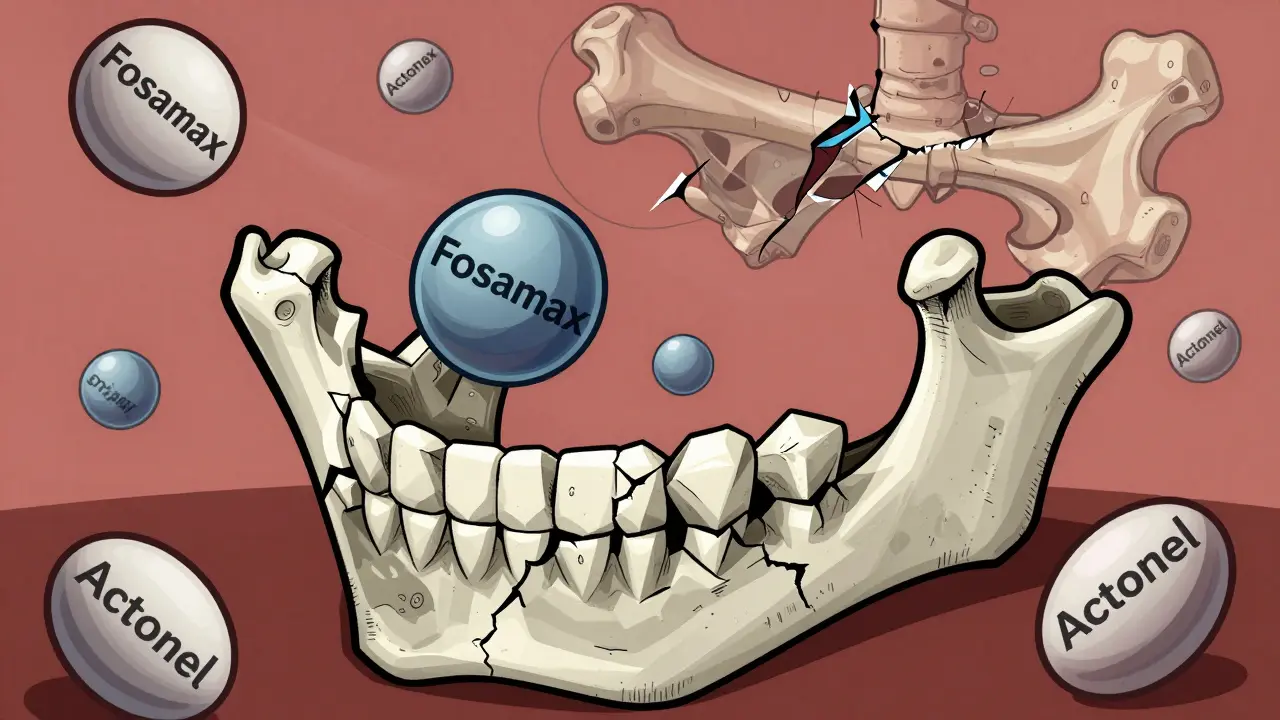
Osteoporosis Medications: Bisphosphonates and Jaw Necrosis Risks
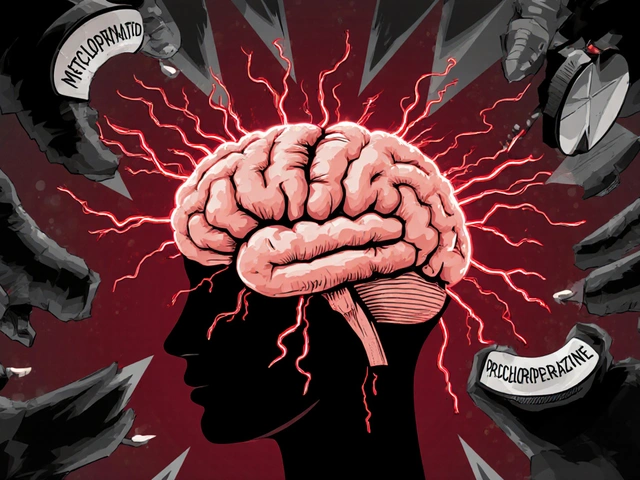
When you’re told you have osteoporosis, the goal is simple: keep your bones strong so you don’t break a hip, spine, or wrist. For millions of people, that means taking a daily or weekly pill like alendronate (Fosamax), risedronate (Actonel), or ibandronate (Boniva). These are bisphosphonates - drugs that slow down bone loss and cut fracture risk by up to 70%. But somewhere in the fine print, there’s a warning: jaw necrosis. It sounds scary. And it’s real. But how real is it for you?
What Exactly Is Jaw Necrosis?
Medication-related osteonecrosis of the jaw, or MRONJ, is when part of the jawbone dies and becomes exposed through the gums. It doesn’t happen overnight. It usually shows up as a patch of bone sticking out after a tooth extraction, denture irritation, or even a routine cleaning. The area won’t heal. It might hurt. It might get infected. And it lasts more than eight weeks. That’s the official diagnosis.
This isn’t radiation damage. It’s not cancer. It’s caused by drugs that stop your body from breaking down old bone - a process called resorption. Bisphosphonates lock onto bone tissue and shut down the cells (osteoclasts) that do the cleanup. That’s great for your spine and hips. But your jaw? It’s different. It’s constantly moving. It’s full of bacteria. It heals slower. And it’s the only bone in your body that’s exposed to the outside world through your mouth.
How Common Is This Really?
Let’s get numbers out of the way. If you’re taking oral bisphosphonates for osteoporosis, your risk of jaw necrosis is about 0.7 in 100,000 people per year. That’s less than one case per 140,000 patients annually. To put that in perspective: you’re more likely to be struck by lightning than develop MRONJ from Fosamax.
Compare that to cancer patients getting high-dose IV bisphosphonates. For them, the risk jumps to 1 in 100, or even higher with denosumab (Prolia). But osteoporosis patients? The data is clear: the risk is tiny. A 2011 study of 260,000 people found no increased risk of jaw necrosis in those taking oral bisphosphonates compared to those who didn’t.
Still, it happens. And when it does, it’s serious. One woman on the National Osteoporosis Foundation forum spent 18 months dealing with antibiotics and surgery after a cleaning exposed bone. But another man took Fosamax for 22 years, had multiple extractions and implants, and never had a problem. There’s no one-size-fits-all outcome.
Why Does the Jaw Get Hit So Hard?
It’s not random. Your jawbone turns over 10 times faster than your thigh bone. That means it absorbs more of the drug. Bisphosphonates cling to bone like glue - and they stick around for years, even decades. Once you take them, they’re in your skeleton for life.
On top of that, the jaw has thin gum tissue, constant bacterial exposure, and mechanical stress from chewing. A small cut from a toothbrush, a loose crown, or a tooth pulled without proper care can trigger a chain reaction. The bone can’t heal because the drugs are blocking the cells that rebuild it. The infection sets in. The bone dies.
That’s why dentists stress prevention. If you’re about to start bisphosphonates, get a full dental exam first. Fix cavities. Pull rotten teeth. Get your gums healthy. Don’t wait until you’re on the drug. Once you’re on it, your mouth becomes a minefield.
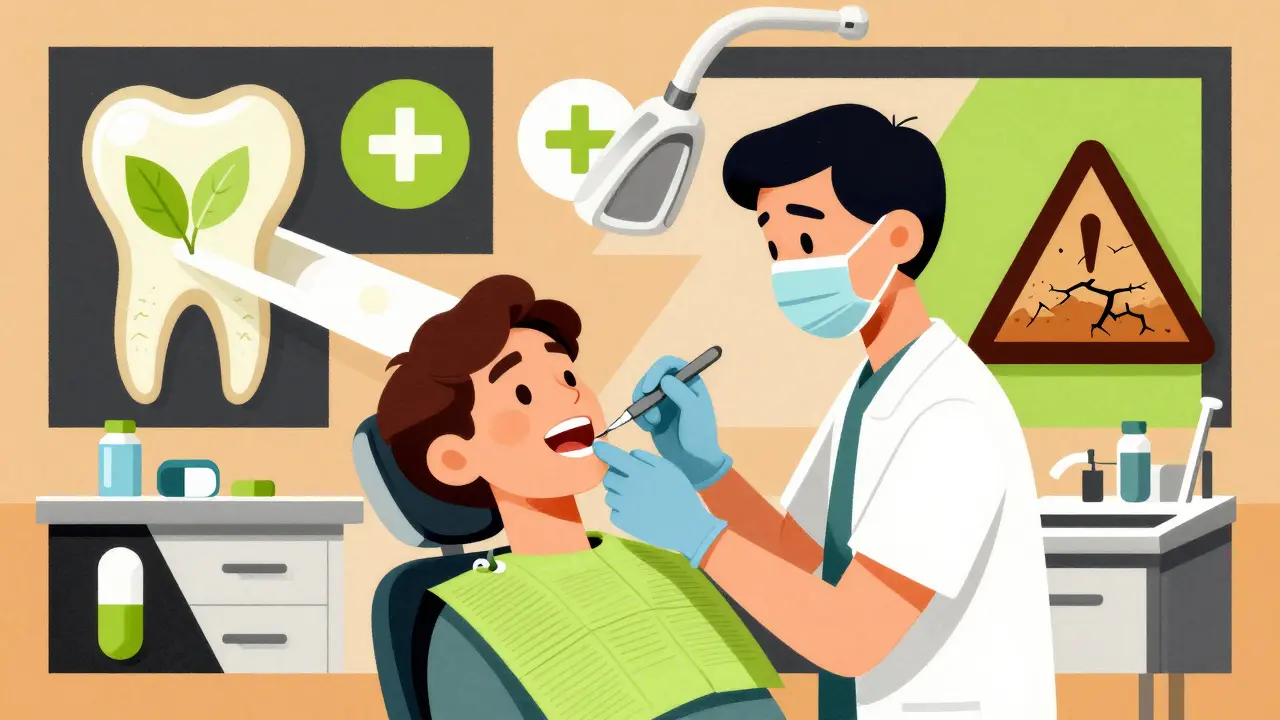
Oral vs. IV: Big Difference in Risk
Not all bisphosphonates are created equal. Oral pills (alendronate, risedronate) are low-dose and barely absorbed. Less than 1% of what you swallow actually reaches your bones. That’s why the risk is so low.
But IV versions like zoledronic acid (Reclast) are a different story. You get a full 5-milligram dose dumped straight into your bloodstream once a year. That’s way more drug hitting your bones. And yes, the risk of jaw necrosis goes up - but still only to about 1 in 100,000 per year for osteoporosis patients. That’s still far lower than cancer patients who get 4mg monthly.
And then there’s denosumab (Prolia). It’s not a bisphosphonate - it’s a monoclonal antibody. It works differently, but it also stops bone breakdown. And guess what? Studies show it carries a 1.7 to 2.5 times higher risk of jaw necrosis than oral bisphosphonates. Yet many doctors still choose it because it’s easier to take (just two shots a year) and works just as well at preventing fractures.
What About Stopping the Drug?
Here’s the tricky part. If you’re worried about jaw necrosis, maybe you think: “I’ll just stop taking it.” But that’s not a simple fix.
A 2024 study in Nature Communications looked at over 600 patients. They found that if you stop IV bisphosphonates for more than a year, your risk of jaw necrosis drops by 82%. Sounds great, right? But here’s the catch: stopping also raises your fracture risk by 28%. That’s a big trade-off. One woman in her 70s stopped zoledronic acid because she was scared of jaw problems - then broke her hip six months later.
For oral bisphosphonates, the data isn’t as clear. There’s no proven “drug holiday” window. The drug stays in your bones for years anyway. So stopping won’t erase the risk - it just removes the benefit.
What Should You Do?
If you’re on bisphosphonates:
- Keep your mouth healthy. Brush, floss, and see your dentist every six months.
- Tell your dentist you’re on a bisphosphonate or denosumab. Don’t assume they know.
- Don’t delay needed dental work. A root canal or crown is safer than pulling a tooth after you’ve been on the drug for years.
- Avoid invasive procedures if you can. But if you need an extraction, do it early - before you’ve been on the drug for more than three years.
- Don’t panic over a small sore. Most mouth ulcers aren’t MRONJ. But if something doesn’t heal in two weeks, get it checked.
If you’re thinking about starting bisphosphonates:
- Get a dental checkup first. Fix everything you can.
- Ask your doctor: “Is this the best option for me?” There are alternatives like romosozumab or teriparatide, especially if you have a history of dental issues.
- Understand the trade-off: You’re trading a tiny risk of jaw necrosis for a huge drop in fracture risk.
The Bigger Picture
Over 8 million Americans take bisphosphonates for osteoporosis. About 72% of eligible patients are on treatment. But 38% quit within a year - mostly because of stomach upset, not jaw problems. That tells you something. The real barrier isn’t fear of necrosis. It’s the side effects you feel every day.
And here’s what doctors know: the risk of breaking a hip at 75 is far worse than the risk of jaw necrosis. A broken hip means months in the hospital, loss of independence, and a 20% chance of dying within a year. Bisphosphonates cut that risk by over half.
The American Dental Association, the American Association of Oral and Maxillofacial Surgeons, and the National Osteoporosis Foundation all agree: the benefits outweigh the risks. For most people.
But “most” doesn’t mean “all.” If you have severe gum disease, are a smoker, or have diabetes, your risk goes up. If you’ve had radiation to your head or neck, you’re in a different category entirely. That’s why personalized care matters.
What’s Next?
Doctors are starting to look at biomarkers - like urine tests that measure bone turnover - to see who’s at highest risk for MRONJ. In the next few years, we may be able to say: “You’re low risk. Stay on the drug.” Or: “You’re high risk. Switch to something else.”
Until then, the advice is simple: don’t let fear stop you from protecting your bones. But do protect your mouth. Stay on top of dental care. Talk to both your doctor and your dentist. And remember: you’re not alone. Millions are on these drugs. Very few ever face jaw necrosis. But those who do? They’re the reason we pay attention.
Can bisphosphonates cause jaw necrosis even if I’ve never had dental work?
Yes, but it’s extremely rare. Most cases occur after a dental procedure like an extraction or implant. However, a small number of patients develop exposed bone without any known trigger - often due to underlying gum disease or infection that went unnoticed. Regular dental checkups help catch problems early.
Is MRONJ reversible?
In early stages (Stage 1), MRONJ can often be managed with antibiotics, mouth rinses, and careful cleaning. Some cases heal over time, especially if the drug is stopped and the patient avoids trauma to the jaw. But once the bone is exposed and infected for months (Stage 2 or 3), surgery is often needed. Full recovery is possible, but it takes months and isn’t guaranteed.
Should I stop taking alendronate before a tooth extraction?
For oral bisphosphonates, stopping the drug is not routinely recommended. The drug stays in your bones for years, so pausing it won’t lower your risk much. Instead, the focus is on timing: get dental work done early, ideally before you’ve been on the drug for more than three years. For IV bisphosphonates, a drug holiday of 3-6 months may be considered - but only after discussing fracture risk with your doctor.
Does denosumab (Prolia) have a higher risk than bisphosphonates?
Yes. Studies show denosumab carries a 1.7 to 2.5 times higher risk of jaw necrosis compared to oral bisphosphonates. This is likely because it works more powerfully and rapidly to suppress bone turnover. However, its fracture prevention is just as strong. The choice between them depends on your dental health, overall risk, and ability to maintain regular dental care.
How do I know if I’m at higher risk for MRONJ?
You’re at higher risk if you have: gum disease or tooth infections, diabetes, poor oral hygiene, smoke, take steroids, or have had radiation to the head/neck. Also, if you’ve been on IV bisphosphonates for more than three years, or are on denosumab, your risk increases. Talk to your dentist and doctor about your full medical history before starting any treatment.
Final Thought
You’re not choosing between perfect safety and danger. You’re choosing between two risks: the risk of a broken bone, and the risk of a rare jaw problem. For most people, the broken bone is the bigger threat. But that doesn’t mean you ignore the other. Stay informed. Stay proactive. And never let fear keep you from protecting what matters most - your ability to move, stand, and live without pain.




I’ve been on Fosamax for 5 years and never had a single dental issue-but I also went to the dentist every 6 months like clockwork. My hygienist knew my med history cold. I think people panic because they don’t talk to their dentist. It’s not the drug-it’s the silence.
Also, my grandma broke her hip at 78. She never took anything. Now she’s in a wheelchair. I’ll take my tiny jaw risk over that any day.
Wow. Another ‘trust your doctor’ piece. Let me guess-you’re also pro-vaccines, anti-gun, and think fluoride is a miracle? The FDA didn’t even require a black box warning for this? Pathetic. And you call 0.7 per 100,000 ‘tiny’? That’s 200+ Americans a year losing their jaw. That’s not a side effect-it’s a scandal. And you’re downplaying it like it’s a stubbed toe.
There exists a profound asymmetry in risk perception: we fear the visible, the grotesque-the exposed bone-while dismissing the silent, systemic collapse of the skeleton. The jaw necrosis is a symptom of a deeper dissonance: we treat the body as a collection of isolated systems, when in truth, it is an ecosystem. Bisphosphonates do not merely inhibit osteoclasts; they disrupt the choreography of bone remodeling-a dance that has evolved over millennia.
To reduce this to a statistical gamble is to misunderstand the very nature of biological integrity. The body does not negotiate with probabilities. It endures.
Hey everyone, just wanted to say I’ve been on Actonel for 7 years now and my teeth are still good! I’m from India and here, a lot of people don’t even have regular dental checkups, so I was scared too. But I started going every 6 months, flossing daily, and avoiding sugary drinks. My dentist said my jawbone looks better than most 30-year-olds. So yeah, it’s possible. Don’t stress, just be smart. And if you’re on these meds, tell your dentist. Seriously. They need to know.
Also, I read somewhere that if you smoke, your risk goes up like 5x. So if you smoke, maybe try to quit? Not because of the jaw thing-because your lungs will thank you. 😊
You got this. Your bones matter. Your mouth matters. Do the work. Stay consistent. You’re stronger than your fear. 💪🦷
Oh, so now we’re supposed to be grateful that the pharmaceutical industry gave us a drug that turns our jaw into a haunted house-*but only if we’re unlucky enough*? How very generous of them. I’m sure the shareholders are just thrilled you’re so rational about losing your teeth to a pill that lingers in your bones longer than your ex’s texts.
And yes, I know-I’m the ‘drama queen.’ But when the fine print is longer than the main text, maybe the drama is the point.
0.7/100k? That’s 1 in 140k. So if you live in a city of 1 million, you’re more likely to get hit by a bus than lose your jaw. Chill. But also, stop taking it if you’re scared. Your hip will thank you less than your dentist will.
This is the most disingenuous piece of corporate propaganda I’ve read this week. You cite a 2011 study as if it’s gospel-yet ignore the 2020 meta-analysis from the Journal of Oral Maxillofacial Surgery that showed a 3.2x increased risk in patients with periodontal disease. You omit the fact that bisphosphonates accumulate in bone for over a decade. You call it ‘tiny’-but when it happens, it’s a lifetime of pain, surgery, and social isolation. This isn’t risk assessment. It’s victim-blaming dressed as science.
And yes-I’m a physician. I’ve seen it. And I won’t let you sanitize it.
My aunt had this. Took her 2 years to heal. 😢
Go to the dentist. Don’t wait. 💬🦷
Why isn’t the FDA forcing warnings on the pill bottles? Why aren’t pharmacies required to hand out pamphlets? Why do we just trust doctors who get paid by pharma? This is a cover-up. I’ve got 12 friends on these drugs and 3 of them had jaw issues. You’re lying if you say it’s rare. It’s happening. And you’re ignoring it because you don’t want to admit the system failed.
Guys, I work in a dental clinic in Delhi and we’ve seen 4 cases of MRONJ in the last 3 years-all from patients on oral bisphosphonates who didn’t tell us. One guy had a tooth pulled, then didn’t come back for 6 months. Bone exposed. Infection everywhere. He thought it was just a canker sore. Big mistake. Bottom line: if you’re on these meds, tell your dentist. No exceptions. Even if you think it’s ‘not a big deal.’ We’ve got tools now-lasers, PRF, antibiotics-that can help if caught early. Don’t wait till it’s stage 3. And if you’re scared, ask your doc about teriparatide. It’s pricier but no jaw risk. Worth it.
My mate’s mum took Fosamax for 10 years. Had a root canal. No issues. Now she’s 82, walks daily, no fractures. Simple. Dental care + common sense. No need for panic. Just don’t be lazy.
They’re hiding the truth. The drug companies know this happens. They just don’t want you to stop taking it. I read a whistleblower report once-there’s a whole internal email chain about how to ‘reposition’ MRONJ as ‘rare and manageable.’ But my cousin lost half her jaw. They gave her a titanium plate. Now she can’t eat solid food. This isn’t science. It’s profit.