
Long-Term Solutions for Building Resilience into the Drug Supply
Every year, hospitals in the U.S. face sudden, life-threatening gaps in essential medicines. A simple antibiotic, a life-saving injection for heart attacks, or even basic IV fluids disappear without warning. These aren’t accidents. They’re the result of a drug supply system built for efficiency, not safety. The truth is, we’ve been lucky so far. But luck isn’t a strategy. And when a critical drug runs out, it’s not the CEO who suffers-it’s the patient in the ICU, the elderly person on dialysis, the child needing chemotherapy. The question isn’t whether we can afford to fix this. It’s whether we can afford not to.
Why the Drug Supply Is So Fragile
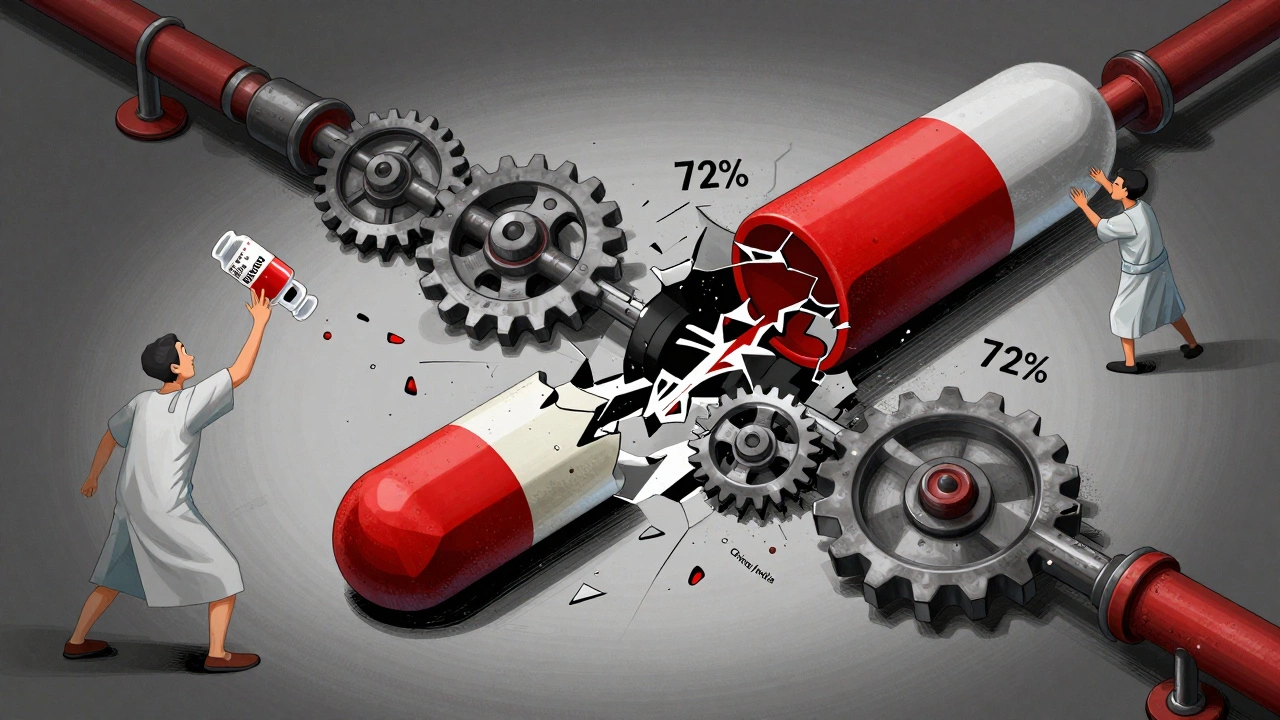
The modern pharmaceutical supply chain was designed to cut costs, not prevent disasters. Over the last 30 years, manufacturers shifted production overseas to save money. Today, 72% of the active ingredients in U.S. drugs come from foreign factories, mostly in China and India. That sounds efficient-until a flood shuts down a single plant in India, or a shipping port in China closes due to political tensions. Suddenly, 30 different drugs vanish from U.S. shelves because they all relied on the same tiny supplier for the same raw chemical. The FDA recorded 245 drug shortages in 2022. More than half of them were sterile injectables-medicines used in emergency rooms, surgeries, and cancer treatment. These aren’t optional. When they’re gone, doctors improvise. They use less effective alternatives. They delay procedures. Patients die. The cost? Over $216 million extra in healthcare spending every year just to manage the fallout. The system was never meant to handle shocks. It runs on just-in-time inventory. That means warehouses hold only a few days’ worth of medicine. No buffers. No backups. One disruption, and the whole chain snaps.What Resilience Actually Means
Resilience isn’t about panic buying or emergency stockpiles. It’s about building systems that don’t break when things go wrong. The National Academies of Sciences laid out a clear framework: resilience is built on three pillars-anticipation, planning, and risk management. Anticipation means knowing where your risks are. Most companies don’t even know who supplies their raw materials. Only 12% of pharmaceutical firms have visibility past their third-tier suppliers. That’s like trying to fix a car without knowing where the engine comes from. You can’t manage what you can’t see. Planning means designing your supply chain to survive disruption. That includes having multiple suppliers, not just one. For critical drugs, experts recommend at least three geographically separate manufacturers. If one fails, the others can pick up the slack. Risk management means putting real tools in place: buffer stocks, alternative formulations, and backup manufacturing lines. For the most essential drugs, keeping 6 to 12 months of inventory isn’t excessive-it’s basic insurance.The Cost of Doing Nothing vs. Doing Something
Some argue that fixing this is too expensive. But the real cost isn’t what you spend-it’s what you lose when drugs disappear. Reshoring all API production to the U.S. would raise costs by 25-40%. That sounds steep. But it’s not the only option. A smarter approach combines targeted domestic production for the most critical drugs with diversified international suppliers. This hybrid model, according to Duke-Margolis Center analysis, prevents 85% of critical shortages at a cost of just $1.2-1.8 billion per year. Compare that to stockpiling alone. Building massive national reserves for every drug would cost $3.5-4.2 billion annually-and still only prevent 45% of shortages. That’s like buying a giant umbrella for every rainstorm, but still getting soaked because you didn’t fix the roof. The most cost-effective investment? Supply chain visibility. Companies that map their entire supply chain-from raw materials to final packaging-see 32% fewer disruptions. And it only makes up 8% of total resilience spending. That’s a 4:1 return on investment.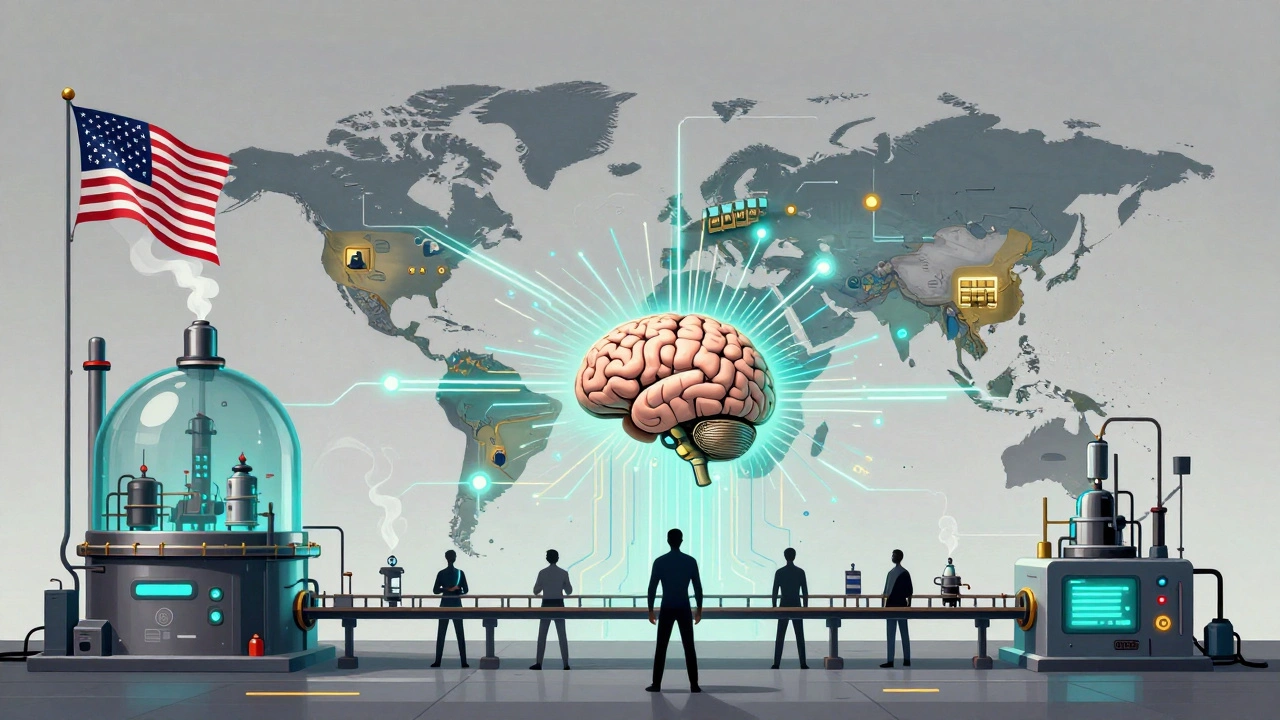
Real-World Examples of Success
Pfizer spent $220 million over 18 months to install AI-powered forecasting across 150 distribution centers. Result? A 38% drop in stockouts. That’s not magic. It’s data. They now predict where shortages will happen before they do. Merck took a different route. With $85 million in federal support, they rebuilt domestic manufacturing for 12 key antibiotics. They now source 95% of those drugs from U.S. factories. Yes, costs went up 31%. But they didn’t lose a single dose during the pandemic. Patients got their medicine. Hospitals didn’t scramble. That’s the value. Even distributors are innovating. Some are using drones to deliver critical drugs to rural pharmacies. Delivery time dropped from 72 hours to 4. It’s not sci-fi-it’s happening in Arizona and North Carolina. Regulatory hurdles remain, but the proof is in the outcome: lives saved.The Hidden Threat: Cyberattacks
No one talks about this enough. Cybercriminals are targeting drug supply chains. Between 2020 and 2023, attacks on healthcare logistics jumped 214%. Hackers don’t just steal data-they lock down production systems, halt shipments, and demand ransom. One attack on a major API supplier in 2022 delayed production of six life-saving drugs for over six weeks. The solution? Full adoption of the NIST Cybersecurity Framework across every partner in the chain. That means encryption, access controls, threat monitoring, and regular drills. The Healthcare Distribution Alliance found that companies using coordinated threat intelligence reduced response times by 47%. In a crisis, that’s the difference between a delay and a disaster.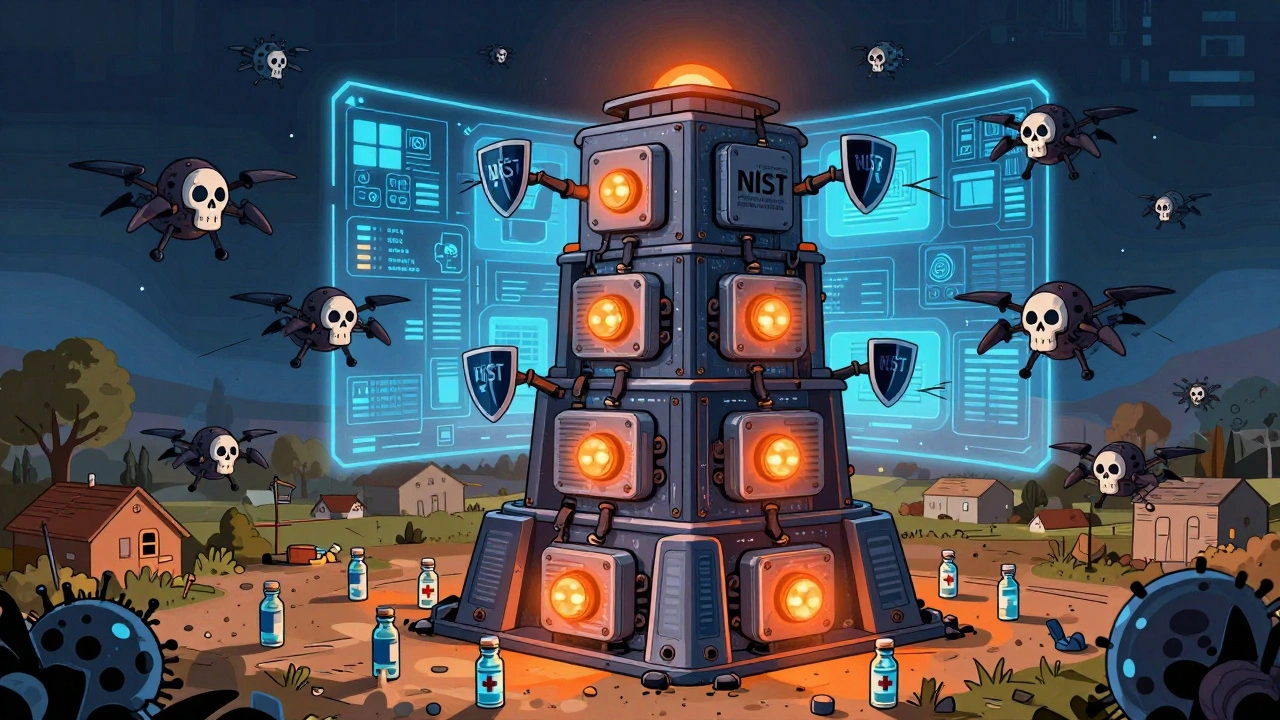
What’s Changing Right Now
The government is finally stepping in. The FDA’s new draft guidance, required by Q3 2025, forces manufacturers to conduct annual vulnerability assessments. If you can’t prove you’ve mapped your supply chain and identified risks, you’re out of compliance. The HHS 2024 Resilience Plan is allocating $520 million to build domestic production for 50 critical medicines. Goal? 40% domestic API production for those drugs by 2027. That’s not a guarantee-but it’s a start. And then there’s the CMS rule coming in 2026: Medicare reimbursement will be tied to supply chain transparency. If you don’t disclose where your drugs come from, you won’t get paid. That’s a powerful incentive. It shifts the burden from hospitals to manufacturers. And it forces accountability.What Needs to Happen Next
This isn’t about one big fix. It’s about layered, coordinated action:- Map your supply chain-down to the raw material level. If you don’t know where your ingredients come from, you’re flying blind.
- Diversify suppliers-at least three, spread across different countries and continents. No single point of failure.
- Build strategic buffers-for the top 50 life-saving drugs, keep 6-12 months of inventory. Not for every drug. Just the ones that can’t be replaced.
- Invest in AI and data tools-predictive analytics cost less than crisis response. Use them to see disruptions before they happen.
- Require cybersecurity standards-every supplier, every vendor, every logistics partner must meet NIST baseline controls.
- Reform procurement-hospitals and insurers must stop choosing drugs solely on price. A $0.10 cheaper antibiotic that causes a shortage isn’t a savings-it’s a liability.
What Patients Can Do
You can’t fix the supply chain alone. But you can push for change. Ask your doctor: "Is this drug in short supply? Do we have alternatives?" Ask your pharmacy: "Do you know where this medication is made?" Talk to your state representatives. Demand transparency. Pressure insurers to reward companies that prioritize resilience over low prices. The system won’t change because it’s the right thing to do. It will change because people demand it. And when the next shortage hits-and it will-you’ll be glad you did.What causes drug shortages in the U.S.?
Drug shortages are caused by a combination of factors: single-source manufacturing, overseas production with no backup, lack of supply chain visibility, manufacturing quality issues, and sudden spikes in demand. The biggest risk is geographic concentration-72% of active pharmaceutical ingredients come from just two countries, China and India. When one plant shuts down, dozens of drugs vanish.
How many drugs are currently in short supply?
The FDA tracks shortages in real time. In 2022, there were 245 active shortages. While that number fluctuates monthly, the trend hasn’t improved. About 62% of shortages involve sterile injectables-medicines used in hospitals for emergencies, surgeries, and cancer treatment. These are the most dangerous to lose.
Is reshoring drug manufacturing the best solution?
Reshoring helps, but it’s not the only answer. Bringing all production back to the U.S. would raise drug prices by 25-40%. A smarter approach is a hybrid model: domestic production for the most critical drugs (like antibiotics and anesthetics) and diversified international suppliers for others. This prevents 85% of shortages at a fraction of the cost of full reshoring.
Why don’t drug companies just stockpile more medicine?
Stockpiling sounds simple, but it’s expensive and inefficient. Building national reserves for every drug would cost $3.5-4.2 billion a year and only prevent 45% of shortages. The real solution is targeted stockpiling-for the top 50 life-saving drugs-and combining it with supplier diversification and predictive analytics. That’s how you get maximum protection with minimum cost.
How does cybersecurity affect drug supply chains?
Cyberattacks on pharmaceutical suppliers have increased 214% since 2020. Hackers can shut down production lines, block shipments, or steal sensitive data. One attack in 2022 delayed six critical drugs for six weeks. Companies using NIST cybersecurity standards and coordinated threat-sharing reduced response times by 47%. Cybersecurity isn’t optional-it’s part of drug safety.
What’s being done by the government to fix this?
The FDA now requires manufacturers to conduct annual supply chain vulnerability assessments by Q3 2025. HHS has allocated $520 million to build domestic production for 50 critical drugs, aiming for 40% U.S.-made API by 2027. CMS is also proposing to tie Medicare payments to supply chain transparency-forcing manufacturers to disclose where drugs come from by 2026.
Can AI really help prevent drug shortages?
Yes. Companies using AI for supply chain forecasting have reduced stockouts by up to 38%. AI analyzes global events-weather, politics, shipping delays, production issues-and predicts disruptions 30 days in advance with 83% accuracy. It doesn’t replace human judgment-it gives decision-makers the data they need to act before a crisis hits.
What can I do as a patient to help?
Ask your doctor and pharmacist if your medication is in short supply. Ask where it’s made. If alternatives exist, ask about them. Contact your state and federal representatives to support policies that fund domestic production and require supply chain transparency. Your voice pushes the system to change.



Honestly, this is the most level-headed take I've seen on this mess. No panic, no grandstanding. Just facts. We've been running on fumes for decades and now we're surprised when the engine dies?
I've worked in hospital logistics for 22 years. The 6-12 month buffer for critical injectables? Non-negotiable. I've seen kids on chemo wait 11 days because a single factory in Hyderabad had a power outage. It's not theoretical. It's Tuesday.
China and India make the ingredients? Of course they do. The same people who made your phone and your sneakers. You think the FDA cares? They're too busy approving new weight-loss drugs that cost $12,000 a month. This is all intentional. Let the poor die quietly.
You say 'resilience' like it's a buzzword... but you know what's NOT resilient? Relying on a country that doesn't even have rule of law to make your insulin. And now you want to 'diversify'? Ha! You think a second factory in Vietnam changes anything? The entire system is rigged. The FDA's 'guidance'? A joke. They're still approving drugs made in sheds with no QA.
I LOVE that Pfizer used AI to cut stockouts by 38%!! That’s the future!! We’re not just talking about medicine here-we’re talking about saving lives with algorithms!! Who’s with me?! Let’s fund this NOW!!
I had my mom on dialysis last year when they ran out of heparin. We were told to 'wait and see'. I sat in that hospital for 72 hours while they tried to find a substitute. She cried. I cried. And the CEO of the pharma company? Probably on a yacht in the Med. This isn’t policy. It’s negligence dressed up in PowerPoint.
Let’s be real-this entire conversation is performative. You want 'resilience'? Then stop outsourcing to nations with zero intellectual property protections. But you won’t, because your iPhone 15 Pro Max was made in the same factory that makes your penicillin. The truth? We’re all complicit. We want cheap everything-and then we scream when the system collapses. Wake up. The rot is in the consumer, not the supply chain.
Life is suffering. The drugs will come. Or they won't. Either way, the universe doesn't care.
So... let me get this straight. We're gonna spend $1.8B to prevent 85% of shortages? But if we just stockpile everything, it's $4B for 45%? That math doesn't add up unless you're on a committee that gets paid to make things complicated. Why not just make the damn drugs here? And pay people a living wage? Too radical?
I work in a rural ER. Last month we ran out of epinephrine. We used a 1/4 dose from a vial that expired 6 months ago. The kid lived. But that’s not luck-that’s trauma. We need buffers. We need backup. We need to stop pretending this is a cost problem. It’s a moral one.
Interesting. So AI predicts disruptions 30 days out with 83% accuracy? That’s huge. But how many hospitals actually have the bandwidth to act on that? Most are still using spreadsheets from 2012. Maybe the real bottleneck isn’t the supply chain-it’s the people trying to manage it.
The fact that we’re even having this conversation is a tragedy. We’ve outsourced the very foundation of public health to countries that don’t share our values. And now we’re shocked when they weaponize it? This isn’t capitalism-it’s surrender. The FDA’s 'guidance'? A PR stunt. Real change requires nationalizing critical API production. And yes-I mean it. The market failed. Time for the state to step in.
I appreciate the depth here. But I wonder-how many of these solutions actually get implemented? I’ve seen the same reports for 15 years. The real problem isn’t the supply chain. It’s the lack of political will. We’ll spend billions on defense but balk at $2B to keep people alive. That’s the real crisis.
The NIST framework adoption is non-negotiable. Without zero-trust architecture across Tier 3+ suppliers, you’re just moving deck chairs on the Titanic. Cyber-resilience isn’t an add-on-it’s the new GMP. If your vendor can’t pass a CMMC audit, they shouldn’t be touching your API.
I’ve reviewed supply chain maps for three major manufacturers. Less than 5% track beyond Tier 2. The rest rely on 'trust'. That’s not a business model. It’s a liability waiting for a headline. The CMS reimbursement rule is the only thing that might force change. Money talks.
Oh wow. So we’re going to fix the drug shortage crisis by... making hospitals pay more? Brilliant. Next you’ll tell me we should put a tax on oxygen. At least the drones in Arizona are cool. Maybe we can use them to deliver pizza to the ICU while we wait for the next shortage.