

How to Wear a Medical Alert Bracelet for Severe Drug Allergies
When you have a severe drug allergy, the worst moment isn’t when you react-it’s when you can’t tell someone what’s happening. If you’re unconscious, confused, or in shock, no one will know you’re allergic to penicillin, morphine, or sulfa drugs unless you have a clear, visible warning on your body. That’s where a medical alert bracelet or necklace isn’t just helpful-it’s life-saving.
Why a Medical Alert Is Non-Negotiable
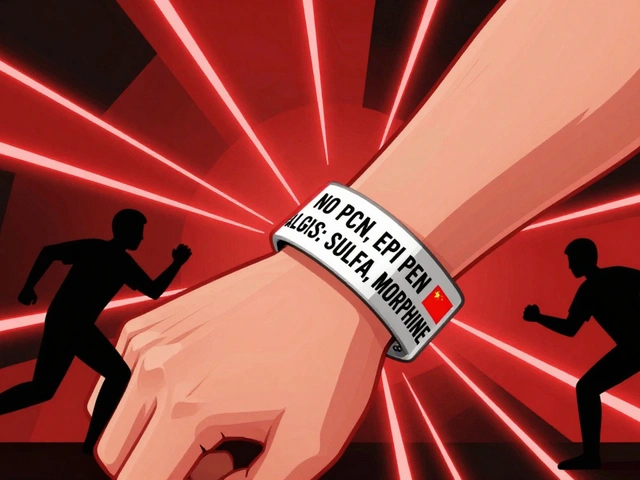
Emergency responders don’t guess. They look. In 95% of cases, paramedics and ER staff check for medical alert jewelry within seconds of arriving at the scene. And 95% of them check the wrist first. A bracelet on your dominant hand is the most reliable way to get your allergy info into their hands before they give you the wrong drug. The American College of Allergy, Asthma, and Immunology says wearing a medical ID is standard care if you’ve ever had anaphylaxis from a medication. That’s not a suggestion. It’s a medical protocol. And it’s backed by real cases. One patient in Florida, unconscious after an appendectomy, had a bracelet that read: NO PCN, EPI PEN, ALGYS: SULFA, MORPHINE. The ER team saw it, skipped all penicillin-based antibiotics, and avoided a deadly reaction. That bracelet saved his life.What to Put on Your Medical Alert
Space is limited. You can’t write a novel. So you use the language first responders know. Here’s what works:- Your full name (so they know who they’re treating)
- Primary drug allergy in standard abbreviations: NO PCN (penicillin), NO MORPHINE, NO SULFA, NO NSAIDS
- Other allergies: ALGYS: CEPHALOSPORIN, CODEINE
- Emergency meds: EPI PEN if you carry one
- Key medical conditions: DIABETIC, ASTHMA, HEART DISEASE
- Emergency contacts: ICE: MOM 555-0123 (In Case of Emergency)
Where to Wear It
Wear it where it’s visible-and where they look.- Bracelets: Always on your dominant wrist. If you’re right-handed, wear it on your right wrist. That’s where 95% of responders check first.
- Necklaces: Wear it high on your neck, just below your collarbone. Don’t tuck it under your shirt. It needs to be visible even if you’re wearing a turtleneck.
- Don’t wear it on your ankle. No one checks there.
- Don’t wear it under a watch. Cover it up, and it’s useless.

What Material to Choose
Your jewelry can’t cause another reaction. That means no nickel, no cheap alloys, no latex. Stick to these materials:- Surgical stainless steel (most common, durable, hypoallergenic)
- Titanium (lighter, great for sensitive skin)
- Medical-grade silicone (flexible, silent, great for kids or active lifestyles)
What to Avoid
Many people make these mistakes-and they’re dangerous:- Using non-standard abbreviations. “Allergy to amoxicillin” sounds clear to you. To a nurse rushing to save you? It’s not. Use NO AMOX.
- Not updating your info. If you develop a new allergy or stop taking a drug, update your ID. 33% of ER errors come from outdated IDs.
- Only wearing it sometimes. “I only wear it when I’m going to the doctor.” That’s not enough. Allergic reactions don’t wait for appointments.
- Using a charm or decorative ID. If your bracelet looks like fashion jewelry, responders might miss it. Keep it simple. Professional. Clear.
Digital vs. Physical: Which One Do You Need?
You’ve probably seen QR codes on medical IDs or NFC chips that store your full health record. Sounds fancy, right? Here’s the truth: digital is a backup. Not a replacement. In a car crash, your phone might be broken. In a power outage, hospital systems might be down. In an allergic reaction, you might be seizing or unconscious. No one’s going to fumble with your phone to scan a code. But they will look at your wrist. That’s why every expert recommends both: a physical ID with clear engraving, plus a digital profile linked to it. MedicAlert and American Medical ID now offer free online profiles where you can store your full medical history, medications, doctor contacts, and even a photo. First responders scan the QR code on your bracelet, and they get your full record in seconds. Think of it like this: your bracelet is your voice. Your digital profile is your full story.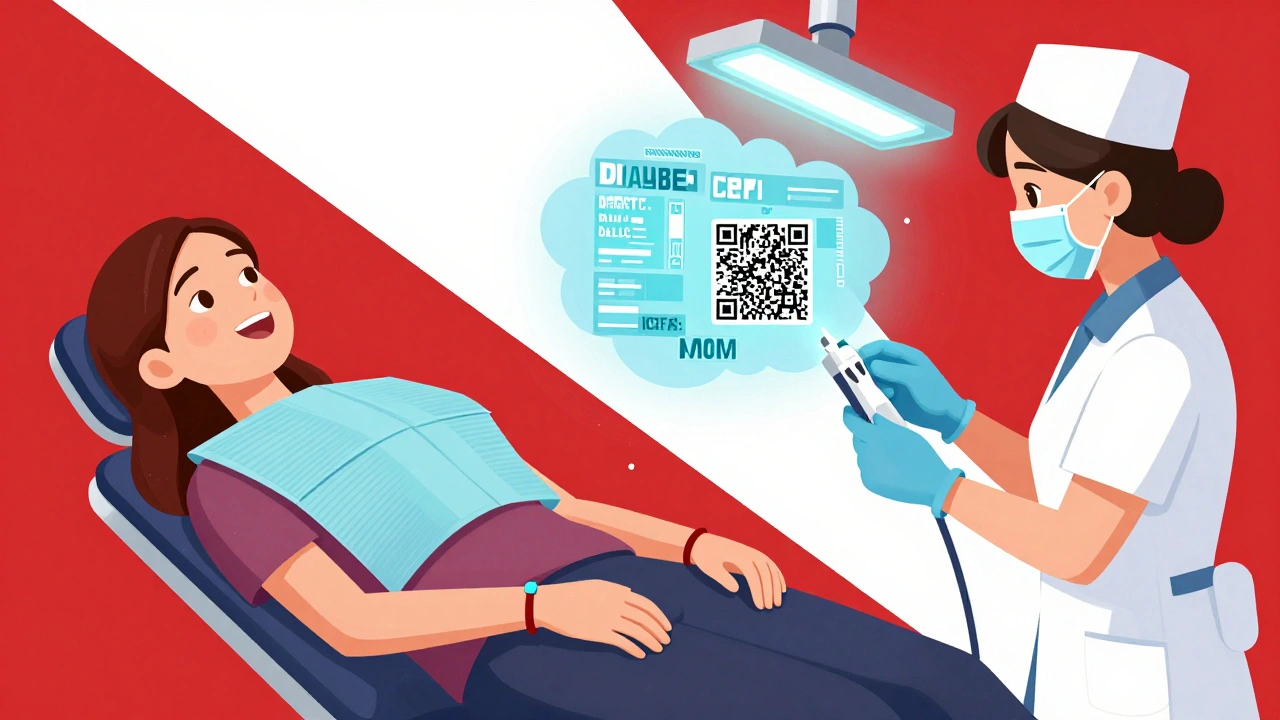
Real People, Real Results
One woman in Ohio had a severe reaction to cephalosporins. Her bracelet said: ALGYS: CEPHALOSPORIN, DIABETIC, EPI PEN. When she collapsed from low blood sugar, the ER team almost gave her a cephalosporin antibiotic for a suspected infection. The bracelet stopped them. She survived. Her story was documented by Kaiser Permanente in 2023. On Reddit, users share similar stories: a man who avoided morphine during surgery, a teen who skipped sulfa drugs after a UTI, a grandmother whose bracelet kept her from getting a dangerous antibiotic during a hospital stay. The reviews tell the same story: 87% of users praise clear engraving. 76% say the material lasts. Only 18% complain the text is too small-so choose a bracelet with at least 0.75-inch width for readability.How to Get One
You don’t need a prescription. You can buy one online or through your allergist. Top trusted brands:- MedicAlert Foundation - Offers free membership with 24/7 emergency response coordination. Their IDs are used in over 90% of U.S. hospitals.
- American Medical ID - Strong focus on clarity, quick shipping, and silicone options.
- Lauren’s Hope - Popular for stylish yet medical-grade designs. Great for teens and young adults.



I can't believe people still don't wear these. It's not 1995. You're not 'too cool' for a lifesaving bracelet. If you don't wear one, you're literally gambling with your life-and everyone around you has to clean up the mess. I've seen it. I've been there. Don't be that person.
this is so true 😔 i got my bracelet after my anaphylaxis to amoxicillin last year... i used to think it was nerdy but now? it's my favorite accessory. titanium one, silent, no one even notices it's medical unless they look close. kinda like a secret superpower 🛡️
why do we even need this in america? in europe they just ask you. here we need to wear a damn metal tag like a prisoner? this is just another way the medical-industrial complex profits off fear. if you're allergic, just tell people. stop buying overpriced jewelry.
the 95% stat on responders checking the wrist is critical but underdiscussed. most training protocols prioritize wrist > neck > ankle because of biomechanical access during trauma triage. also the abbreviation standardization is non-negotiable-EMS systems use lookup tables based on pre-validated codes like NO PCN, not full terms. this isn't semantics, it's cognitive load reduction under stress
just wear one. why make it so complicated?
The fetishization of physical IDs in the digital age is a fascinating anthropological artifact. One might argue that the reliance on epidermal inscription reflects a deeper epistemological crisis in emergency medicine-where visibility supersedes accessibility. Still, the QR code synergy is elegantly postmodern. 🤓
this is exactly the kind of info that saves lives. i work in ER and i can tell you-when someone’s got a clear bracelet, it cuts minutes off the response time. every second counts. seriously, if you’ve had anaphylaxis before, this isn’t optional. get one. wear it. no excuses.
Let’s be real: 87% of users praise 'clear engraving'? That’s because they’re not comparing it to the 12% who got cheap knockoffs from Amazon that faded after three months. The real issue isn’t the bracelet-it’s the predatory pricing of medical ID companies. MedicAlert charges $45 for a stainless steel band that costs $8 to produce. They’re exploiting fear. And you’re paying for it.
My mom wears hers every day. Even when she’s gardening. Even when she’s at the pool. She says it’s not about being dramatic-it’s about being prepared. I used to think it was overkill. Now I get it. No emojis. No drama. Just quiet readiness.
bro just get a silicone one they dont make noise and you forget its there 🤙 also dont forget to update it when you get new allergies i did that once and almost got a sulfa med by accident lol
They want you to buy this. They want you to think you’re safe. But what if the system fails? What if the hospital doesn’t have the scanner? What if the QR code is fake? This is all part of the control grid. Don’t trust the system. Trust yourself.
It’s wild how something so small-a band of metal or silicone-becomes a vessel for autonomy. You’re not just labeling your body, you’re reclaiming agency from the chaos of emergency medicine. It’s poetry in titanium. The fact that we need this at all? That’s the tragedy. But the fact that it works? That’s the revolution.
In my country, many patients rely on handwritten notes in wallets. But this standardization you describe is truly professional. The use of abbreviations like NO PCN and ICE is universally understood across cultures. I have recommended this system to my colleagues in Delhi. It is both simple and profound.
i got mine from lauren’s hope. looks like a regular bracelet, but the engraving is crisp. my mom cried when she saw it. not because she was scared-but because she finally felt like i was protected. no drama. just peace.
If you have a history of anaphylaxis, wearing a medical alert bracelet is not a choice-it is a moral obligation. You owe it to yourself, your family, and the EMTs who might have to save you. This isn’t about fear. It’s about responsibility. Get one. Update it. Wear it. Always.