
Safe Use of Multiple Medications: Avoiding Double Ingredients
Every year, tens of thousands of people end up in the emergency room not because they took too much of one drug, but because they took the same drug twice-under different names. This isn’t rare. It’s common. And it’s entirely preventable.
Think about this: you’re taking a prescription painkiller for arthritis. Your doctor prescribed it. You follow the instructions. But when your cold hits, you grab a bottle of store-brand cold medicine off the shelf. It says "relieves pain and congestion." You don’t think twice. Until you start feeling dizzy, nauseous, or worse. You didn’t overdose on one thing. You overdosed on two versions of the same active ingredient-acetaminophen. And you had no idea.
This is what happens when medications overlap. It’s called a double ingredient error. And it’s one of the most dangerous-and preventable-mistakes people make with multiple medications.
What Exactly Is a Double Ingredient?
A double ingredient happens when you take two or more medications that contain the same active chemical. It doesn’t matter if one is prescription and the other is over-the-counter (OTC). It doesn’t matter if they have different brand names. If they both have the same active ingredient, you’re at risk.
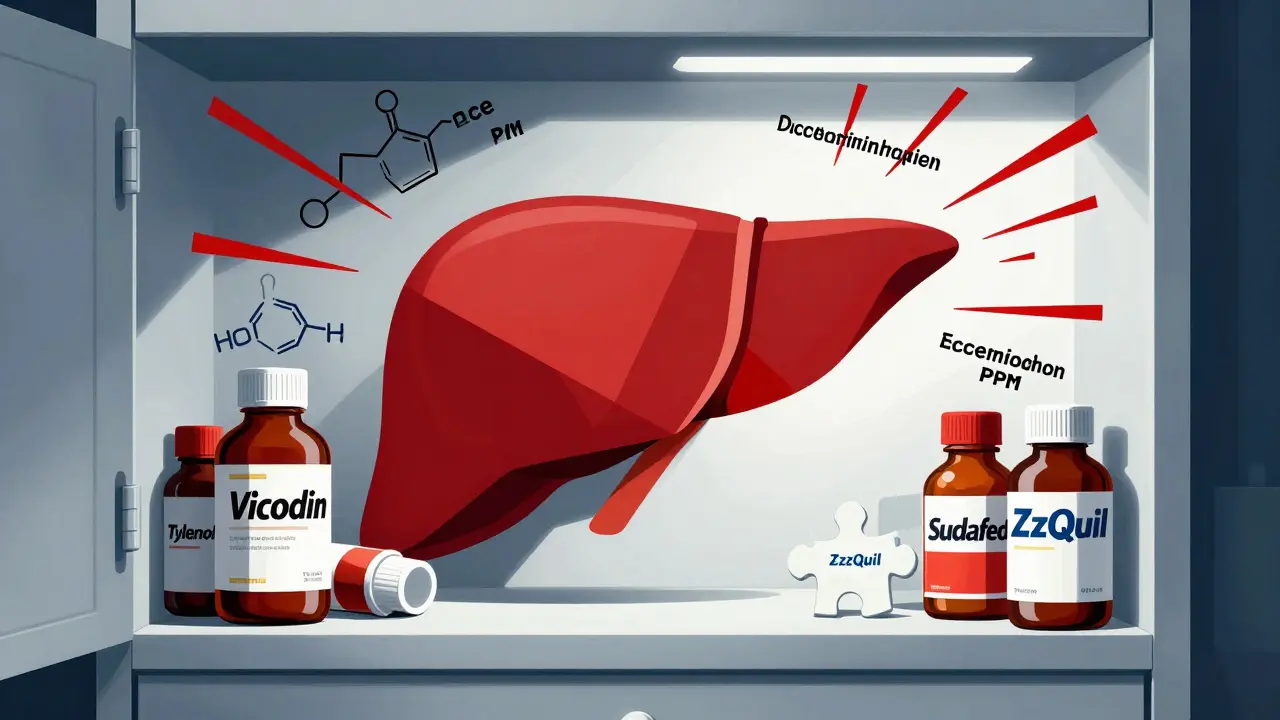
Acetaminophen is the biggest culprit. It’s in more than 600 different products-from prescription painkillers like Vicodin and Percocet to OTC sleep aids, cold medicines, and even some allergy tablets. The National Institutes of Health reports that acetaminophen causes over 56,000 emergency room visits every year in the U.S. alone. Most of those cases are accidental. People don’t realize they’re doubling up.
Other common offenders include:
- Diphenhydramine-found in Benadryl, Tylenol PM, ZzzQuil, and many store-brand sleep aids
- Pseudoephedrine-in Sudafed, Claritin-D, and other decongestants
- NSAIDs like ibuprofen and naproxen-in Advil, Aleve, and some prescription pain meds
- Anticholinergics-in medications for overactive bladder, Parkinson’s, and even some OTC stomach remedies
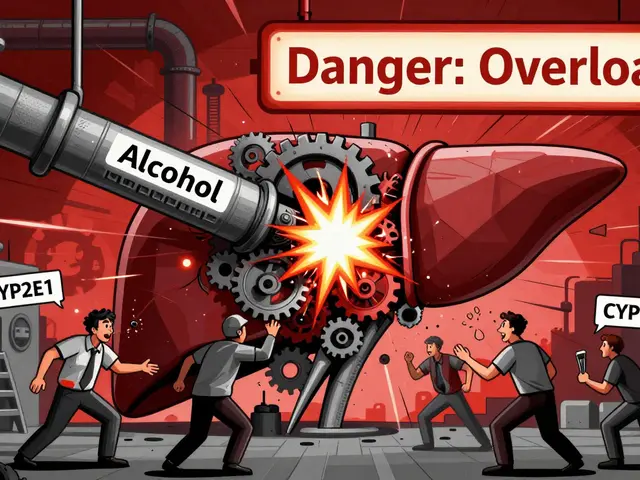
The danger isn’t just about taking too much at once. It’s about the slow build-up. One pill here, one tablet there. Over days, the dose adds up. Your liver doesn’t warn you. Your stomach doesn’t scream. By the time you feel sick, it’s often too late.
Why Older Adults Are at Highest Risk
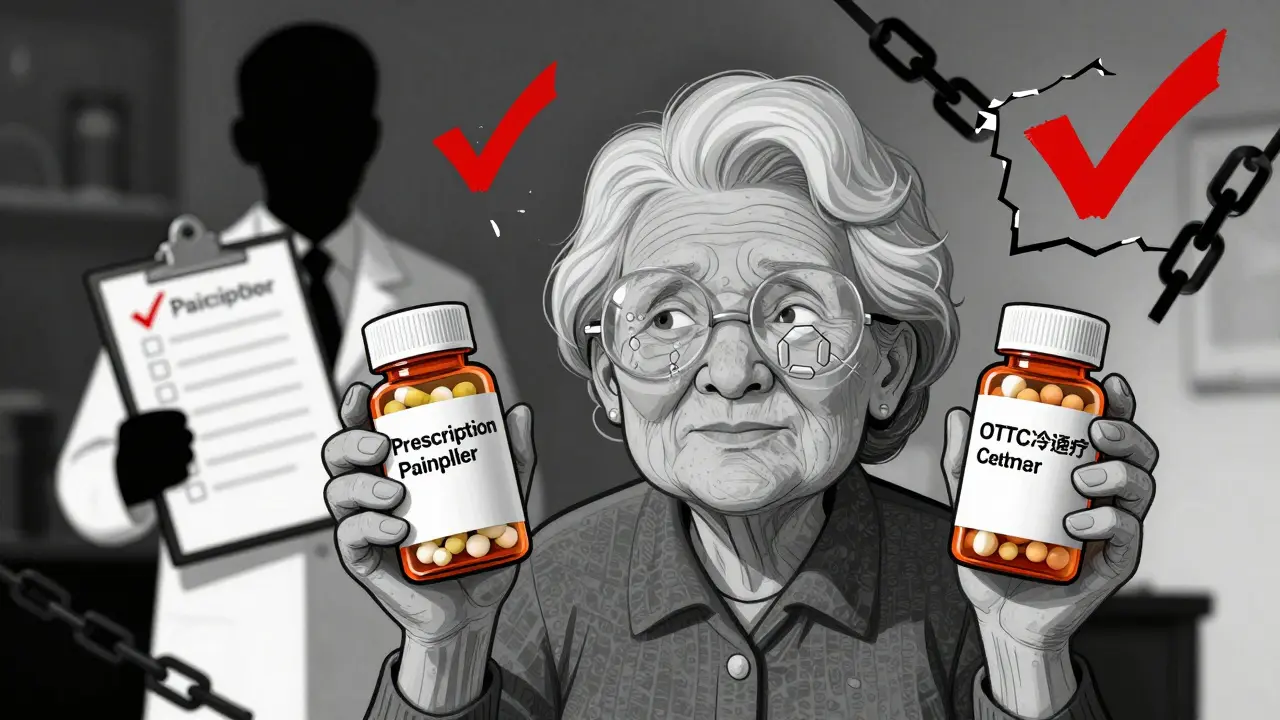
If you’re 65 or older, you’re four times more likely to have a double ingredient problem than someone younger. Why? Because you’re more likely to be taking multiple medications.
According to the American Geriatrics Society, about 40% of older adults in the U.S. take five or more medications regularly. This is called polypharmacy. And it’s growing. Since 2010, the number of older adults with multiple chronic conditions has jumped by 27%. Each condition brings its own prescriptions. Each prescription adds another pill to the pile.
And here’s the kicker: doctors often don’t ask about OTC meds. A 2021 study in the Journal of the American Geriatrics Society found that 67% of older adults who had a double ingredient incident said their doctor never asked what they were taking from the drugstore. They didn’t think it mattered. But it does.
Seniors also tend to use multiple pharmacies. One for prescriptions. Another for OTCs. One for supplements. Each pharmacy sees only part of the picture. And if you’re filling prescriptions at three different stores? Your risk of a hidden overlap skyrockets.
The Hidden Risks You Can’t See
Most people assume that if a drug is sold over the counter, it’s harmless. That’s a dangerous myth.
OTC labels are getting better since the FDA required standardized "Drug Facts" labels in 2020. But a 2023 Government Accountability Office report found that 41% of people still can’t find or understand the active ingredients on those labels. They see "for sinus relief" or "helps you sleep," but they don’t scan the fine print.
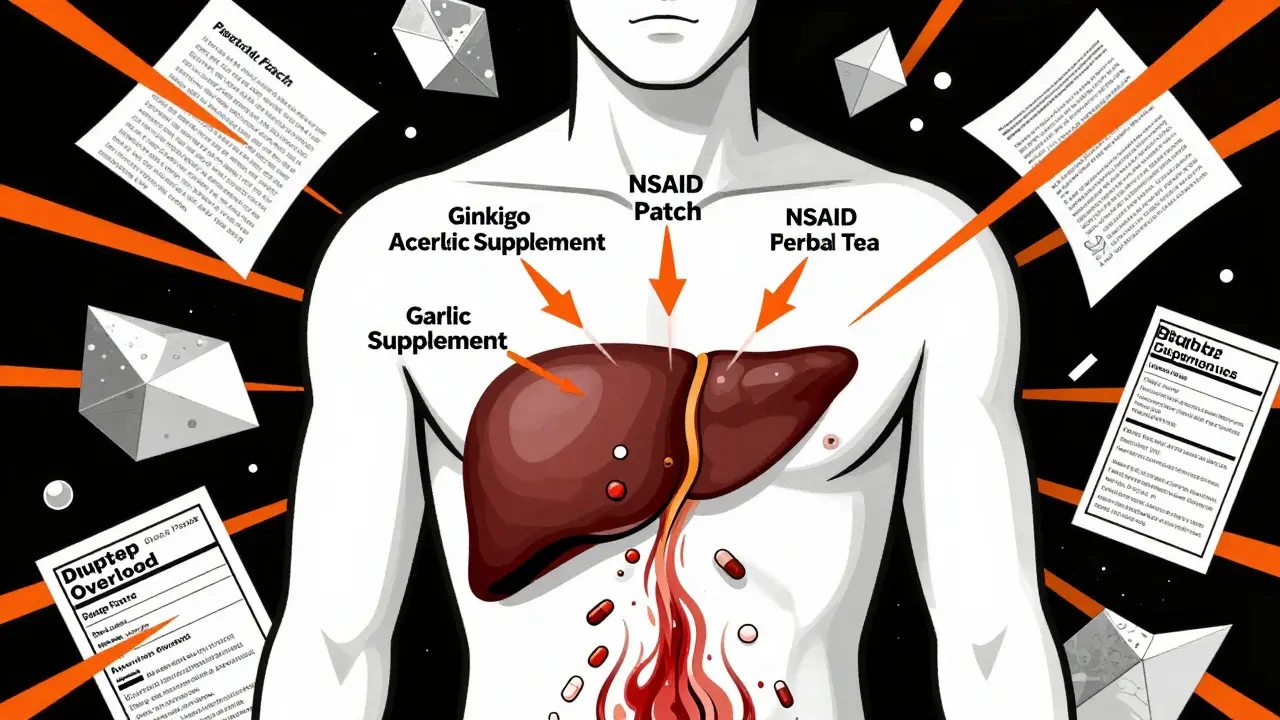
And then there are the supplements. Herbal remedies, vitamins, and traditional medicines aren’t tracked in medical records. A 2019 WHO report found that 68% of patients don’t tell their doctors about these. So if you’re taking ginkgo biloba, garlic supplements, or a Chinese herbal tea for blood pressure, your doctor has no idea. And neither does your pharmacist.
One patient told UCLA Health’s Dr. Ghada Ashkar: "I didn’t realize both my prescription pain medicine and the store-brand cold medicine had acetaminophen until I ended up in the ER with liver damage." That’s not a one-time mistake. It’s a pattern.
How to Protect Yourself
There’s no magic app or system that will save you. But there are simple, powerful steps you can take right now.
1. Make a Complete Medication List
Write down every pill, liquid, patch, and supplement you take. Include:
- Brand name and generic name
- Dosage (e.g., 500 mg)
- How often you take it (e.g., once daily)
- Why you take it (e.g., "for high blood pressure")
- Who prescribed it (if applicable)
Don’t forget OTCs. Don’t forget vitamins. Don’t forget the herbal tea you’ve been drinking for years. Put this list in your wallet. Keep a copy at home. Update it every time you start or stop something.
2. Use One Pharmacy
Fill all your prescriptions at the same pharmacy. Not just the ones your doctor prescribes. All of them. Including OTCs if you can.
Pharmacies have systems that flag dangerous combinations. A 2021 study in JAMA Internal Medicine found that using one pharmacy reduces double ingredient errors by 63%. Why? Because the pharmacist sees everything you’re taking. They can catch overlaps your doctor never knew about.
3. Ask Your Pharmacist
When you pick up a new medication-prescription or OTC-ask: "Could this interact with anything else I’m taking?" Don’t wait for them to ask you. Ask them.
Community pharmacists catch double ingredient issues in 87% of medication therapy consultations, according to Pharmacy Times. They’re trained for this. They want to help. But they can’t if you don’t tell them what you’re using.
4. Review All Medications Once a Year
Set a date. Every year, sit down with your doctor-or your pharmacist-and go through your entire list. Ask: "Do I still need all of these?" "Are any of these doing the same thing?" "Is there a safer option?"
The American Geriatrics Society’s Beers Criteria lists 30 medication classes that older adults should avoid or use with extreme caution. Many of them are high-risk for double ingredients. Don’t assume your doctor knows what’s on your shelf. Bring the list. Talk about it.
5. Use Technology-But Don’t Rely on It
Apple Health, Epic EHR, and Cerner systems now flag duplicate ingredients. The FDA partnered with Apple to add this feature to iOS 17. But here’s the catch: these tools only work if you enter your meds correctly. If you type "Tylenol" instead of "acetaminophen," or skip your supplements, the system won’t catch it.
Technology helps. But your brain still has to do the work.
What to Do If You’ve Already Had a Problem
If you’ve ever felt unusually drowsy, dizzy, or nauseous after taking a new OTC med, stop. Don’t ignore it. That’s your body warning you.
Check your list. Compare every product you took in the last 48 hours. Look for matching active ingredients. If you’re unsure, call your pharmacist. They can look it up in seconds.
And if you’re ever in doubt-don’t take it. Wait. Ask. Get it checked. Better safe than in the ER.
The Bigger Picture
This isn’t just about pills. It’s about how we think about medicine. We treat prescriptions as serious. OTCs as harmless. Supplements as harmless. But the chemicals don’t care what label they’re on. Acetaminophen is acetaminophen. Diphenhydramine is diphenhydramine. And too much of either can damage your liver, your brain, or your lungs.
The healthcare system is slowly catching up. Medicare Part D plans now screen for drug interactions. Pharmacies are improving their software. But until you take control of your own list, you’re still at risk.
You don’t need to be a medical expert. You just need to be informed. And proactive.
Start today. Write down what you take. Bring it to your next appointment. Ask one question: "Could any of these be doing the same thing?"
That’s how you avoid the double ingredient trap. And that’s how you stay safe.
Can I take two different brands of the same OTC medicine?
No. Taking two different brands of the same OTC medicine-like two different cold remedies-can easily lead to double ingredients. Many products contain the same active ingredients (like acetaminophen or pseudoephedrine) under different brand names. Always check the "Drug Facts" label for the active ingredient before combining products.
Do I need to tell my doctor about vitamins and supplements?
Yes. The World Health Organization reports that 68% of patients don’t disclose supplement use to their providers. But supplements can contain active ingredients that interact with prescription drugs or cause double dosing. For example, some herbal products contain hidden NSAIDs or sedatives. Always list everything you take-even if you think it’s "natural."
How do I know if my OTC medicine has the same ingredient as my prescription?
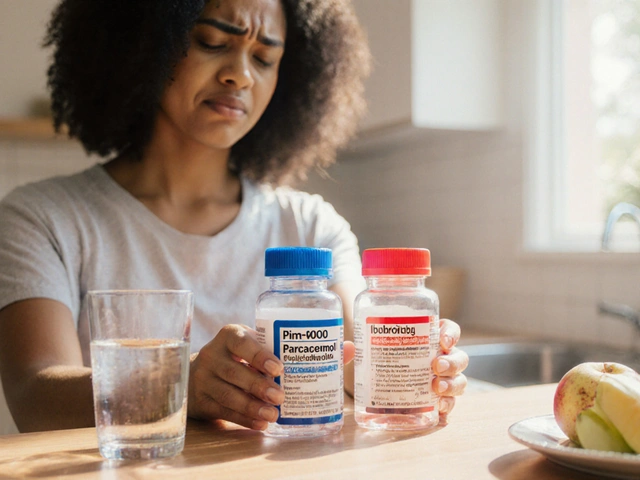
Look at the "Active Ingredients" section on the Drug Facts label. Compare it to the list your doctor gave you. If you see acetaminophen, ibuprofen, diphenhydramine, or pseudoephedrine on both, you’re at risk. Don’t rely on brand names-they’re designed to confuse. Focus on the chemical names.
Is it safe to take OTC pain relievers with my prescription painkiller?
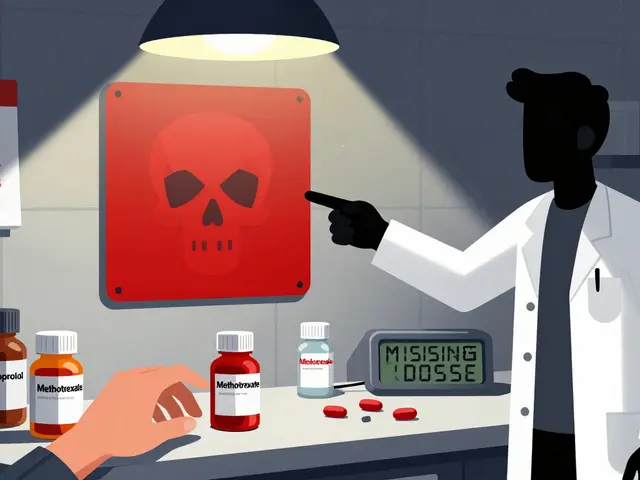
Only if your doctor or pharmacist says yes. Many prescription painkillers already contain acetaminophen or NSAIDs. Adding more OTC pain relievers can push your total dose past the safe limit. For example, taking Vicodin (which has acetaminophen) and Extra Strength Tylenol together can cause liver damage. Always check before combining.
Can pharmacies help me avoid double ingredients?
Yes. Pharmacists are trained to spot drug overlaps. A 2022 study found that community pharmacists identify double ingredient risks in 87% of medication therapy consultations. Fill all your prescriptions at one pharmacy and ask them to review your full list every time you pick up a new medication. They’re your best defense.



It's funny how we treat prescriptions like sacred texts and OTC meds like candy. I've seen friends stack cold meds like they're building a tower of pills-no idea what's in each one. The real tragedy? It's not ignorance. It's design. Labels are intentionally confusing. Brand names distract. The system doesn't want you to understand. It wants you to keep buying.
I started keeping a little notebook after my mom had a scare. Wrote down everything-even that ginger tea she swears by. Turned out, it was thinning her blood like aspirin. Now I carry it to every appointment. Simple. No app needed. Just pen and paper. You don't need to be tech-savvy to stay safe.
Why is this even a thing? Seriously. People can't read labels? And they wonder why they're in the ER? I mean, it's not rocket science. The word 'acetaminophen' is right there. In bold. On the front. It's not a mystery. It's negligence.
In India we call this 'mixing potions'-and it's common because doctors don't ask about OTC. We use turmeric, ashwagandha, even home remedies with hidden NSAIDs. No one tracks it. No one warns you. But I've seen liver failure from one herbal tea. This isn't American problem. It's human problem.
I work in pharmacy. I’ve seen this happen 12 times this month. One guy took 3 different cold meds because he thought 'Day' and 'Night' were different. They both had 650mg acetaminophen. He didn’t know. I checked his list. He’d been taking it daily for 10 days. Liver enzymes were sky-high. We saved him. But it shouldn’t have gotten that far.
They're hiding this on purpose. The pharmaceutical companies know people will double up. It means more sales. More ER visits. More prescriptions. It's a cycle. And the FDA? They're in bed with them. They changed the labels just enough to look like they care. But they don't force the ingredients to be in bigger font. They don't require a warning sticker. Why? Because profit > safety.
Man I used to do this all the time. Tylenol for headache. NyQuil for sleep. Didn't even blink. Then I got a fever and took another dose of NyQuil. Woke up puking green. Thought I was dying. Turns out I hit 4,000mg of acetaminophen in 12 hours. My liver looked like a burnt pancake. Now I read every label like it's a contract. And I don't trust brands. I trust chemicals.
Oh, how darling. A public service announcement disguised as a blog post. How quaint. You’ve somehow managed to make acetaminophen sound like a villain from a horror movie. Next you’ll be warning us about water. Two glasses? Danger. Three? Death. Honestly, if you can’t read a label, maybe you shouldn’t be taking pills at all. Or perhaps you need a babysitter.
You Americans think you're so advanced. But your healthcare system is a joke. You let people die because they can't afford to go to one pharmacy? In India, we have local healers who know every herb, every tablet, every drop. They don't need apps. They don't need labels. They know your body. You think your 'Drug Facts' is science? We call it corporate theater. And you're falling for it.
One pharmacy. Full list. Ask the pharmacist. That's it. No app. No complexity. Just three steps. Do them.
It is indeed a matter of considerable public health significance. The proliferation of polypharmacy among elderly populations, coupled with the absence of standardized pharmacovigilance across dispensing venues, creates a systemic vulnerability. One might posit that the onus ought to rest not solely upon the individual, but upon the regulatory apparatus to enforce a unified pharmacological database accessible across all providers and outlets.
The metaphysical dilemma here is not merely pharmacological, but epistemological: we have constructed a world where substances are defined not by their chemical essence, but by their branding. Acetaminophen is no longer a molecule-it is Tylenol, or Excedrin, or store-brand. We have fetishized the container over the content. And in doing so, we have divorced knowledge from action. The body does not care about logos. It only responds to dosage. We have forgotten that.
I’ve been thinking about this for weeks. It’s not just about pills. It’s about how we’ve outsourced our own awareness. We don’t read labels because we’ve been taught to trust systems. Doctors. Pharmacies. FDA. But those systems are fragmented. They don’t talk to each other. And they don’t care about you as a person-they care about liability, revenue, compliance. So you’re left alone with a drawer full of bottles and a brain that’s been trained to assume everything’s safe. That’s not negligence. That’s a design flaw in modern life. We’ve made health so complicated that the only way to survive is to become your own pharmacist. And that’s not fair. But it’s necessary.
I love that you mentioned supplements. My sister takes a 'natural joint support' that has hidden ibuprofen. She didn’t know. Her doctor didn’t ask. Her pharmacist didn’t flag it. She ended up with stomach bleeding. Now we all carry our lists. I even made a QR code that links to a Google Doc with everything I take. I scan it at the pharmacy. It’s saved me twice. It’s not glamorous. But it works.
Mate, I used to take two different painkillers because one was 'for daytime' and the other 'for night.' Turned out they were both the same chemical. Ended up in a hospital with a liver scare. Now I just take one. And I read the damn label. Turns out, common sense isn't that common. But it's free.