
Alcohol and Medication Interactions: What Patients Need to Know
More than 1 in 3 adults in the U.S. take at least one medication that can react dangerously with alcohol. Yet most people have no idea their evening glass of wine could turn into a medical emergency. It’s not just about getting drunk faster-it’s about your body struggling to process two substances that fight for the same pathways inside you. And the consequences? They’re not theoretical. People end up in the ER every day because they didn’t know mixing alcohol with their blood pressure pill, painkiller, or antibiotic could be life-threatening.
How Alcohol and Medications Fight Inside Your Body
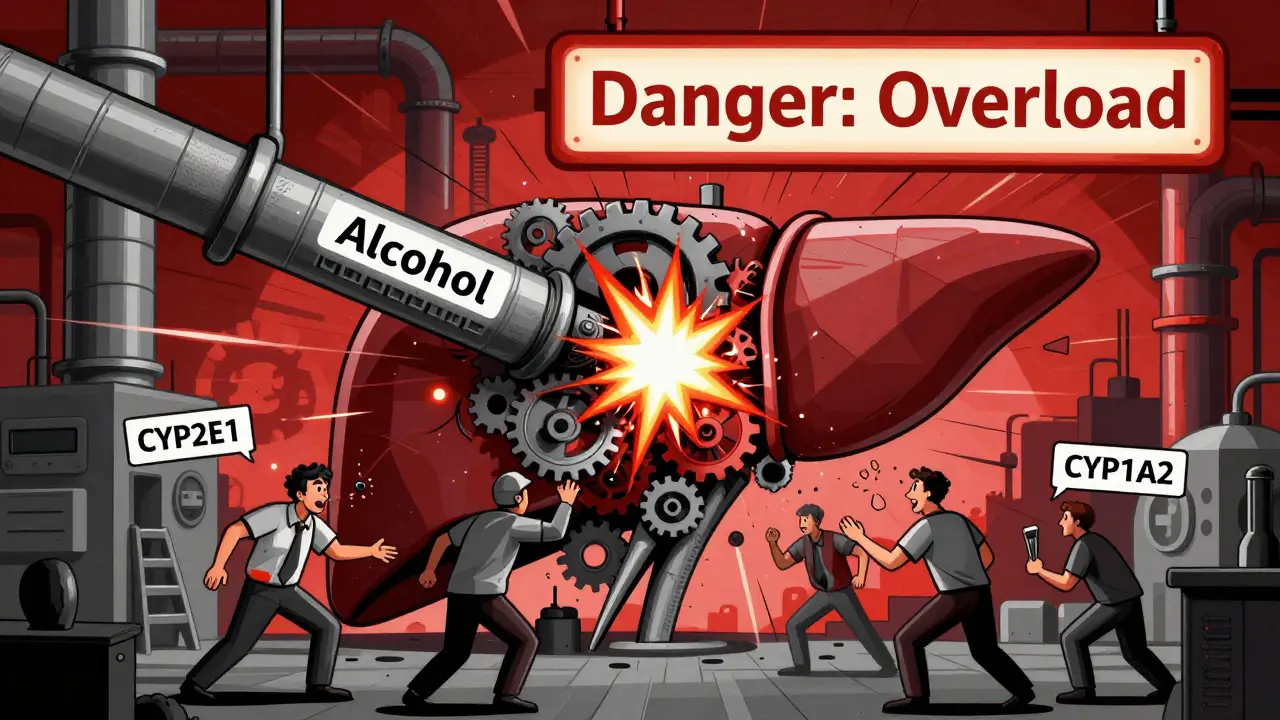
Your liver is the main battlefield. It uses special enzymes-mainly CYP2E1, CYP3A4, and CYP1A2-to break down both alcohol and most prescription drugs. When you drink while taking medication, they compete. Think of it like two cars trying to use the same narrow road at the same time. One blocks the other, and things get messy. There are two main ways this plays out. The first is pharmacokinetic-alcohol changes how fast your body absorbs or breaks down the drug. If you drink right after taking a pill, alcohol can slow down its breakdown. That means the drug stays in your system longer, building up to dangerous levels. For example, mixing alcohol with diazepam (Valium) can extend its half-life from 20-100 hours to 35-150 hours. That’s not just feeling sleepy-it’s risking breathing problems. The second kind is pharmacodynamic. Here, alcohol and the drug don’t fight-they team up. Both hit the same part of your brain. Benzodiazepines, opioids, and sleep aids all calm your nervous system. Alcohol does the same. Together, they can turn a mild drowsiness into total respiratory shutdown. Studies show combining alcohol with benzodiazepines can boost GABA receptor activity by 400%. At a blood alcohol level as low as 0.05%-less than one drink for many people-that’s enough to stop breathing.Medications That Are Especially Dangerous with Alcohol
Not all drugs react the same way. Some are quietly deadly when mixed with even a single drink.- Metronidazole (Flagyl): This antibiotic causes a brutal reaction in 92% of people who drink while taking it. Within minutes, you get flushing, vomiting, racing heart, and crushing headaches. It’s not a side effect-it’s your body flooding with toxic acetaldehyde because alcohol blocks its breakdown. One beer can land you in the ER.
- Benzodiazepines (alprazolam, diazepam, lorazepam): These are the most common cause of alcohol-medication deaths. The CDC reports they’re involved in 32% of fatal combinations. Even one drink with Xanax can make you pass out, choke on your tongue, or stop breathing.
- Opioids (oxycodone, hydrocodone, morphine): Alcohol doubles or triples the risk of fatal respiratory depression. The CDC found the danger increases up to 8-fold when alcohol is involved.
- Antidepressants (SSRIs like fluoxetine, sertraline): While they don’t cause immediate toxicity, alcohol makes depression symptoms worse and increases dizziness, drowsiness, and poor coordination. Studies show it extends alcohol’s effects by over 3 hours.
- Acetaminophen (Tylenol): Taking more than three drinks a day while using this common painkiller can trigger sudden liver failure. In 2023, Hepatology reported 18% of acute liver failure cases linked to this combo-even when people took the recommended dose.
- NSAIDs (ibuprofen, naproxen): These hurt your stomach lining. Alcohol does too. Together, they increase the risk of internal bleeding by 300-500%. That’s not a stomach ache-it’s a bleeding ulcer.
- Antihistamines (diphenhydramine, hydroxyzine): Found in sleep aids and allergy meds, they already make you drowsy. Alcohol multiplies that effect by 300%. You could fall asleep behind the wheel or choke on your own saliva.
What’s Considered a ‘Standard Drink’? (Most People Get It Wrong)
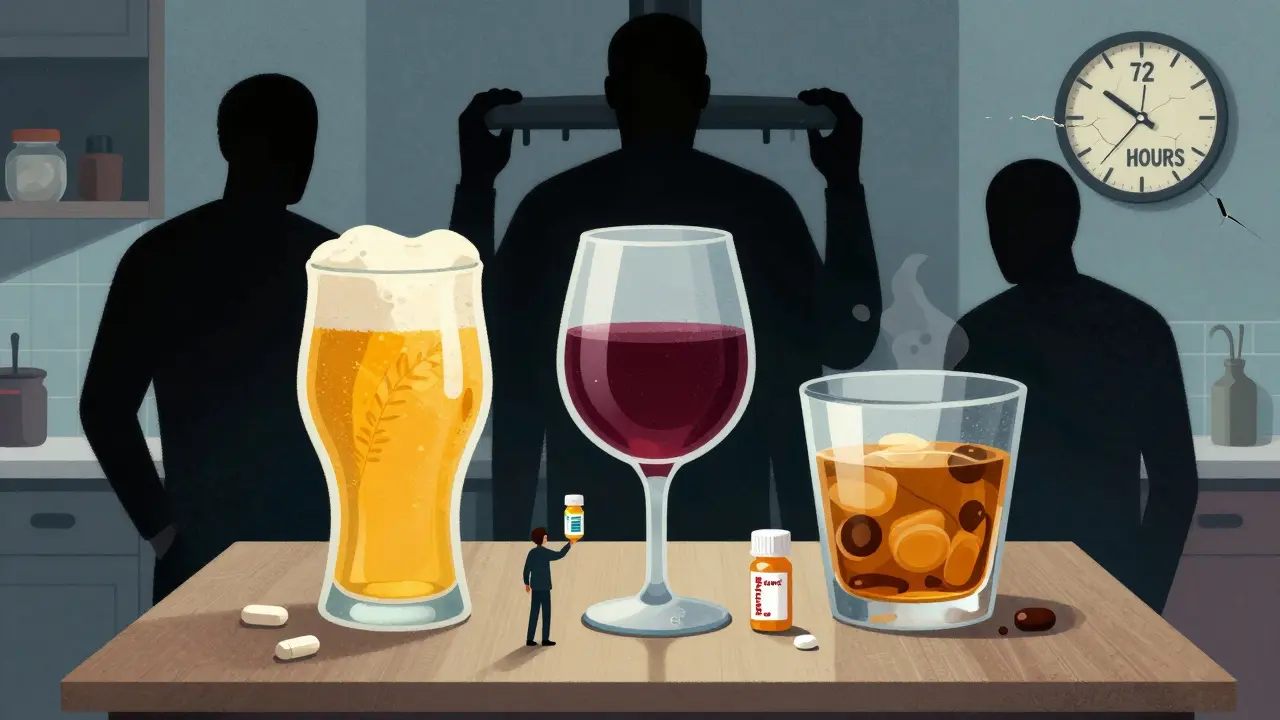
When doctors say “one drink,” they don’t mean a pint of beer or a large glass of wine. A standard drink contains exactly 14 grams of pure alcohol:- 12 ounces of regular beer (5% alcohol)
- 5 ounces of wine (12% alcohol)
- 1.5 ounces of distilled spirits (40% alcohol)
Why Most Patients Don’t Know the Risks
You’d think your doctor or pharmacist would warn you. But here’s the truth: 68% of patients say they were never told about alcohol interactions when they got their prescription. Only 42% of prescription bottles have clear alcohol warnings on the label. Even when they do, most people don’t read them. Pharmacists are often the last line of defense. Walgreens data shows that when a pharmacist actually talks to a patient about alcohol risks, 89% of them change their behavior. But most pharmacies are rushed. The average consultation lasts under 90 seconds. You have to ask. Don’t wait for them to bring it up.How to Stay Safe: A Simple Action Plan
You don’t need to memorize every drug interaction. Just follow these steps:- Ask your pharmacist every time you get a new prescription: “Is it safe to drink alcohol with this?” Don’t say “a little.” Say “any amount.”
- Check your meds using trusted tools like the NIAAA’s Alcohol-Medication Interaction Risk Calculator (AMIRC) or GoodRx’s interaction checker. But don’t rely on random websites-stick to FDA-backed sources.
- Know your meds’ half-life. If you’re on diazepam or fluoxetine, the drug stays in your body for days. One drink on day 3? Still risky.
- Wait 72 hours before drinking if you’re starting metronidazole, tinidazole, or disulfiram. That’s not optional-it’s life-saving.
- If you do drink, wait at least 2-3 hours after taking your medication. Eat food first. It slows alcohol absorption by 25-30%. Limit yourself to one standard drink. No more.
- Watch for warning signs: Flushing, nausea, rapid heartbeat, extreme drowsiness, confusion, trouble breathing. If you feel any of these, stop drinking and get help.
Special Risks for Older Adults
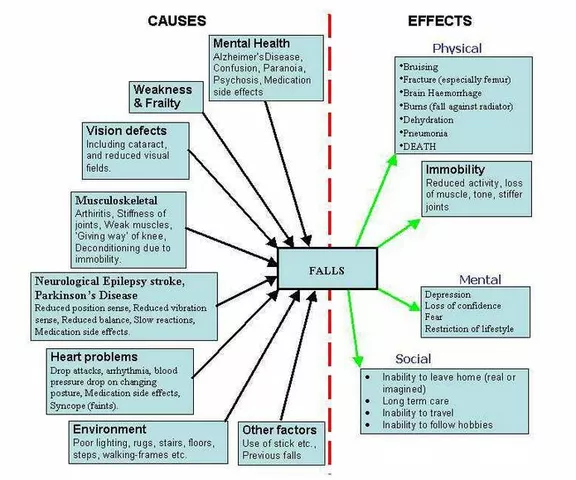
If you’re over 65, your liver processes alcohol 35% slower than it did at 25. Your brain is also more sensitive to sedatives. The American Geriatrics Society lists 17 medications with high-risk alcohol interactions just for older adults. Many of them are common-sleep aids, painkillers, heart meds. Yet doctors rarely adjust warnings for age. A 70-year-old on a low dose of a blood pressure pill might feel fine with a glass of wine. But that same glass could drop their blood pressure too far, cause a fall, or trigger a stroke. The risk isn’t just about the drug-it’s about your aging body’s reduced ability to handle the stress.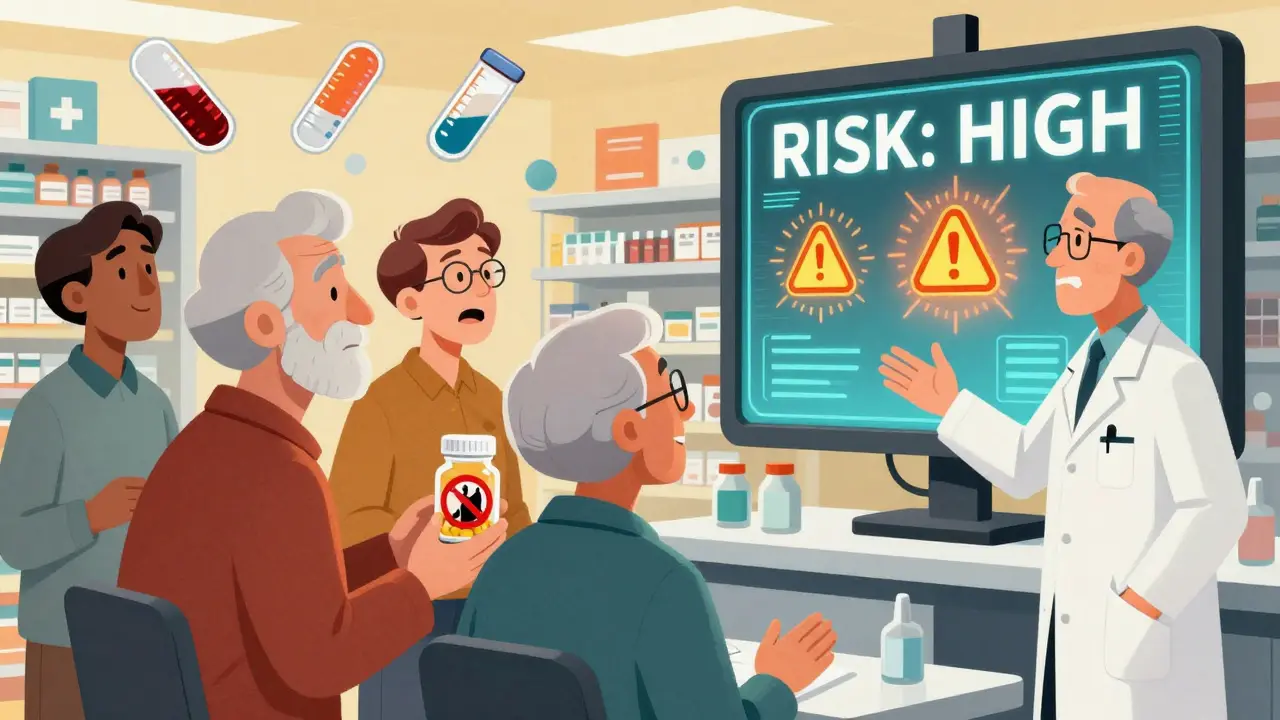
What’s Changing in 2026
New rules are starting to take effect. As of January 2024, the FDA requires manufacturers of high-risk medications to include pictograms on labels showing alcohol interaction risks. Telehealth platforms now automatically screen for alcohol use when prescribing sedatives or opioids. Medicare Part D plans must flag potential alcohol-medication conflicts by December 2024. Still, the biggest barrier isn’t policy-it’s awareness. Only 39% of medical schools teach alcohol-medication interactions as a dedicated topic. Most doctors learned about it in passing. That means you can’t rely on them to know every risk. You have to be your own advocate.Real Stories, Real Consequences
One woman took metronidazole for a bacterial infection. She had one glass of wine at dinner. Within 20 minutes, she was vomiting, her heart was pounding at 180 beats per minute, and she ended up in the ER. She didn’t know the warning was that serious. Another man took ibuprofen for back pain and drank two beers every night. He didn’t feel sick-until he passed out from internal bleeding. He didn’t know NSAIDs and alcohol could cause that. On the other side, a grandmother took hydroxyzine for anxiety. Her pharmacist told her not to drink with it. She skipped wine at her granddaughter’s wedding. She said it was the best decision she ever made.Final Advice: When in Doubt, Skip It
There’s no safe amount of alcohol if you’re on a high-risk medication. Period. Even if you’ve had a drink with your pill before and felt fine, that doesn’t mean it’s safe. Your body changes. Your liver changes. Your meds change. If you’re unsure, don’t guess. Call your pharmacist. Check the NIAAA website. Wait 72 hours after starting a new drug. If you’re on multiple medications, assume alcohol is off-limits unless you get a clear green light from a medical professional. Alcohol isn’t just a social drink. When it meets medication, it becomes a silent threat. You don’t need to be an expert to protect yourself. Just be careful. And if you’re not sure? Don’t drink.Can I have one drink with my medication?
It depends on the medication. For some, like metronidazole or benzodiazepines, even one drink can cause a life-threatening reaction. For others, like SSRIs or occasional acetaminophen, one drink might be low-risk-but only if you’re healthy, not taking other drugs, and don’t drink regularly. When in doubt, skip it. There’s no benefit to risking your health.
How long after taking medication can I drink alcohol?
For most medications, wait at least 2-3 hours after your dose. But for drugs with long half-lives-like diazepam (up to 100 hours) or fluoxetine (up to 16 days)-you need to wait days or weeks. Always check the drug’s half-life and ask your pharmacist. Never assume it’s safe just because the pill is gone from your stomach.
Do over-the-counter meds interact with alcohol too?
Yes, and often more dangerously than prescriptions. Cold and allergy meds with diphenhydramine, sleep aids with doxylamine, and painkillers like acetaminophen or ibuprofen all have serious interactions. Many people don’t realize these are drugs too. Always read the label and assume alcohol isn’t safe unless it says otherwise.
What if I forget and drink accidentally?
Stop drinking immediately. Monitor yourself for symptoms: dizziness, nausea, rapid heartbeat, confusion, trouble breathing. If you feel any of these, call 911 or go to the ER. Even if you feel fine, contact your pharmacist or doctor. Some reactions are delayed. It’s better to be safe than sorry.
Can alcohol make my medication less effective?
Yes, especially if you drink regularly. Chronic alcohol use can speed up how fast your liver breaks down certain drugs-like some antidepressants, blood thinners, or seizure medications. That means the drug doesn’t work as well, and your condition might get worse. You might think your pill isn’t working, but it’s the alcohol making it ineffective.


Just had my first glass of wine since starting my antidepressant and I’m fine, but now I’m second-guessing everything. Maybe I should’ve just stuck with tea.
OMG I knew this was a thing but I didn’t realize it was THIS bad 😱 I used to mix Xanax and whiskey like it was a cocktail. I’m lucky I’m still breathing. 🤦♂️
Alcohol and pharmaceuticals are merely two competing ontological forces vying for hegemony within the hepatic dialectic - a neoliberal pharmacopoeia’s grotesque commodification of somatic autonomy. The CYP450 system isn’t a ‘battlefield’ - it’s a metaphor for late-stage capitalist biocontrol. Your liver isn’t processing substances - it’s negotiating surrender to institutionalized toxicity. 🌱
I just asked my pharmacist about my blood pressure med and she said no alcohol at all. I didn’t even know to ask. Thanks for the reminder to actually talk to someone instead of just googling it.
Of course the FDA is only now adding pictograms. They waited until 2024 because Big Pharma didn’t want you to know your meds are basically poison unless you’re sober. Also, did you know your doctor gets kickbacks from pharma reps who sell the very drugs that kill you with alcohol? 😏
Reading this made me realize how much I’ve been taking my body for granted. I used to think ‘one drink’ was harmless. Turns out my body’s been doing backflips just to keep me alive. Time to show it some love - and skip the wine.
You know what? I used to drink every night with my pain meds. Thought I was fine. Then I woke up one morning and realized I hadn’t slept through the night in months. That’s when I stopped. Not because I was scared - because I started caring. You’re worth more than a buzz.
I work in a pharmacy and see this every day. People think ‘I’ve had this combo before’ means it’s safe. It’s not. Your liver doesn’t get used to it - it just gets tired. And then it quits. Please don’t wait for that moment.
!!!ALERT!!! THE FDA IS LYING TO YOU!!! THEY ONLY ADDED PICTOGRAMS BECAUSE 12 PEOPLE DIED IN A SINGLE WEEK IN TEXAS AND THE MEDIA GOT HOLD OF IT!!! THEY’RE COVERING UP THE FACT THAT ANTIBIOTICS + ALCOHOL CAUSE DEMONIC POSSESSION!!! I KNOW BECAUSE MY COUSIN’S FRIEND’S NEPHEW HAD A NIGHTMARE AFTER DRINKING FLAGYL AND HIS EYES TURNED BLACK!!! DON’T TRUST THE SYSTEM!!!
Oh please. In the UK we’ve known this since the 70s. You Americans treat medicine like candy and alcohol like a religion. We have NHS pharmacists who actually talk to you for more than 90 seconds. You think your ‘one drink’ is harmless? Try having a pint with your statins in London - you’d be on the floor before the pub closed.
I’m a nurse and I’ve seen too many ER visits from this. One time a guy came in after mixing ibuprofen and two beers for his back pain. He had a bleeding ulcer. He didn’t even know ibuprofen was a drug. We had to explain that ‘Advil’ is medicine, not ‘just a pill.’
bro i took metronidazole and had a beer and thought i was gonna die. heart racing, sweating, felt like my head was gonna explode. i called my pharmacist at 2am and she was like ‘yep that’s normal, now go to the er.’ so i did. saved my life. dont be like me. just dont drink.