
Beers Criteria: Potentially Inappropriate Drugs in Older Adults
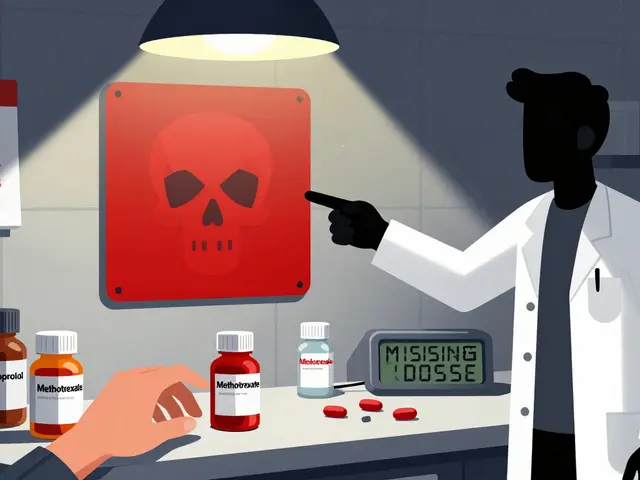
Every year, thousands of older adults end up in the hospital-not because of a fall or infection, but because of a pill they were told to take. It’s not always obvious. A sleep aid. A muscle relaxer. A heartburn medicine. These aren’t dangerous drugs for a 30-year-old. But for someone over 65, they can be a silent threat. That’s where the Beers Criteria come in.
What Are the Beers Criteria?
The Beers Criteria are a list of medications that doctors should avoid prescribing to adults aged 65 and older, unless there’s no other option. Developed in 1991 by Dr. Mark Beers, the list has been updated regularly since 2011 by the American Geriatrics Society (AGS). The most recent version came out in 2023 and includes 131 specific drug recommendations.It’s not a blacklist. It’s a warning system. These drugs don’t always cause harm, but they carry risks that often outweigh the benefits in older bodies. Aging changes how your body handles medicine. Your liver and kidneys don’t work as fast. Your brain becomes more sensitive. What was a safe dose at 50 can become dangerous at 75.
How the Criteria Are Organized
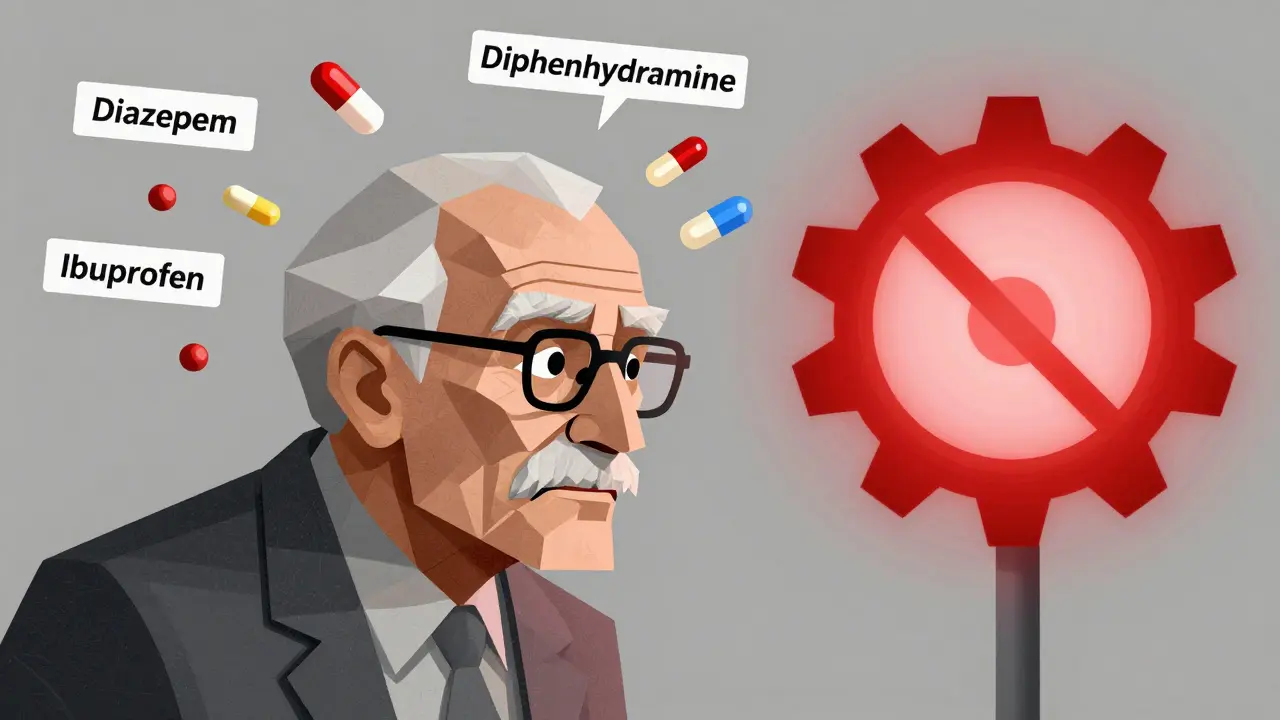
The 2023 Beers Criteria break down risky medications into five clear groups:- Drugs to avoid in most older adults - These are the big red flags. Think benzodiazepines like diazepam, antipsychotics like haloperidol for dementia-related agitation, and nonsteroidal anti-inflammatories (NSAIDs) like ibuprofen for chronic pain.
- Drugs to avoid with specific conditions - For example, anticholinergics like diphenhydramine (Benadryl) can worsen confusion in people with dementia. Calcium channel blockers like diltiazem can be risky if someone already has low blood pressure.
- Drugs to use with caution - These aren’t banned, but they need close monitoring. Examples include metformin in people with kidney issues, or warfarin if someone has a history of falls.
- Drugs to avoid with kidney problems - Many medications are cleared by the kidneys. In older adults, kidney function often declines. Drugs like certain antibiotics or NSAIDs can build up to toxic levels.
- Drug interactions to avoid - Some combinations are deadly. For example, combining an SSRI antidepressant with an NSAID increases bleeding risk. Or mixing a sedative with an opioid can slow breathing to dangerous levels.
The 2023 update added new warnings for drugs that increase fall risk-like certain antihypertensives-and strengthened guidance against using antipsychotics in dementia patients, which can double the risk of stroke or death.
Why These Drugs Are Risky
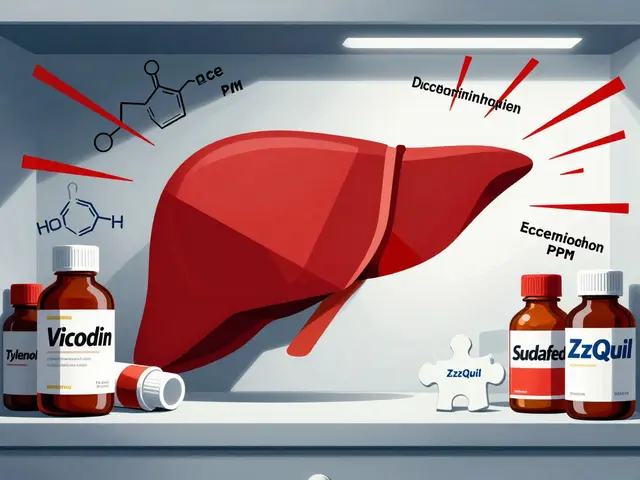
Take diphenhydramine, the active ingredient in many over-the-counter sleep aids and allergy pills. It’s cheap, easy to get, and seems harmless. But it’s a strong anticholinergic. In older adults, it blocks acetylcholine-a brain chemical critical for memory and focus. Studies show even short-term use can cause confusion, dizziness, and urinary retention. Long-term use is linked to higher dementia risk.Another example: NSAIDs like naproxen. They’re common for arthritis pain. But in older adults, they raise the risk of stomach bleeding, kidney failure, and heart attacks. A 2012 study found that older adults taking NSAIDs were 40% more likely to be hospitalized for gastrointestinal bleeding than those not taking them.
And then there’s the issue of polypharmacy. Nearly 40% of older adults take five or more medications daily. That’s not unusual. But when you stack drugs, the risk of bad interactions grows. One study showed that over 20% of older adults were prescribed at least one medication on the Beers list. Many of them didn’t even know it was risky.
Who Uses the Beers Criteria?
The criteria are used everywhere: hospitals, nursing homes, primary care clinics, and even Medicare’s own quality programs. The Centers for Medicare & Medicaid Services (CMS) include Beers Criteria metrics in their nursing home quality reports. Pharmacies use them to flag risky prescriptions before they’re filled.Pharmacists are often the first to spot a problem. A 2014 study found that in patients waiting for long-term care placement, nearly half were taking at least one Beers-listed drug. With a simple review, pharmacists helped reduce those numbers by switching to safer alternatives.
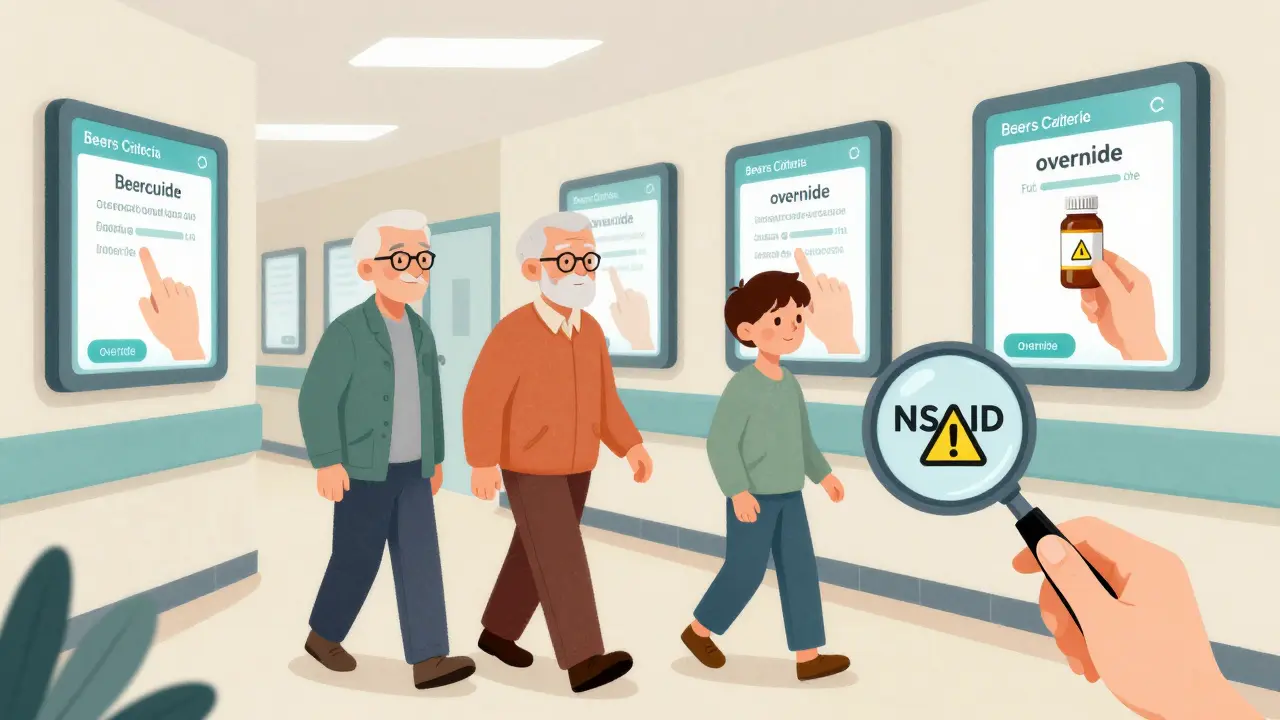
Electronic health records (EHRs) now often have Beers Criteria built in as alerts. When a doctor types in “diazepam” for an 80-year-old with dementia, the system pops up: “Avoid per AGS Beers Criteria. Consider non-drug alternatives.”
What the Beers Criteria Are Not
This is critical: the Beers Criteria are not rules. They’re guidelines. The American Geriatrics Society is clear: “They should never be used to deny care or restrict coverage.”There are exceptions. A person with severe, treatment-resistant insomnia might need a short-term benzodiazepine. A patient with advanced Parkinson’s might require an antipsychotic that’s on the list-because nothing else works. The goal isn’t to eliminate all risk. It’s to reduce unnecessary risk.
As one geriatric pharmacist in the VA system says, “Think of the Beers Criteria like a warning light on your car’s dashboard. It doesn’t mean you can’t drive. It means you need to check under the hood.”
What Comes Next: Deprescribing
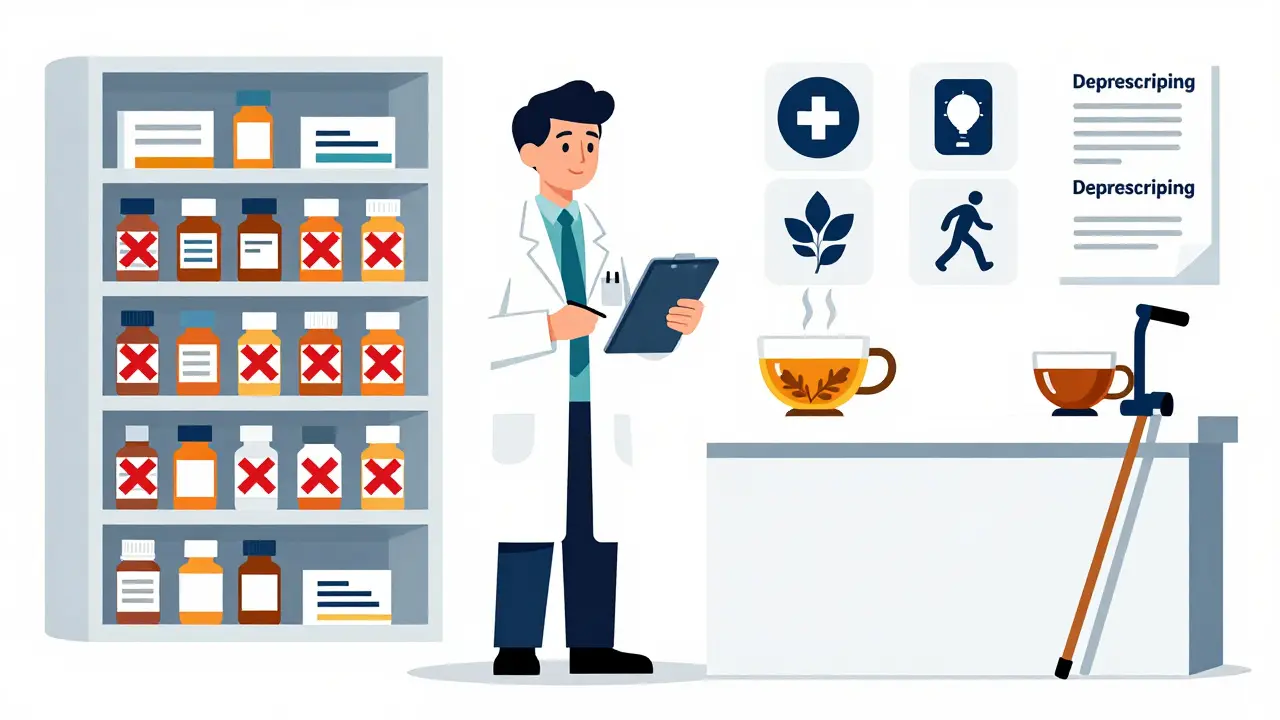
Finding risky drugs is only half the battle. The real challenge is stopping them. That’s where deprescribing comes in.Deprescribing means safely reducing or stopping medications that are no longer helping-or are hurting. It’s not just about removing pills. It’s about having honest conversations: “Is this still helping you? What are you hoping it will do? Are you feeling worse since you started it?”
Studies show that when deprescribing is done properly-with patient input and careful monitoring-people feel better. Their confusion lifts. Their balance improves. They sleep better. They have fewer falls.
The AGS has a five-step framework for deprescribing: assess, prioritize, plan, implement, and follow up. It’s not fast. It’s not easy. But it works.
Alternatives to Beers Criteria
The Beers Criteria aren’t the only tool. The STOPP-START criteria are another widely used system. While Beers focuses on inappropriate prescriptions, STOPP-START also looks at missed opportunities-like not prescribing a statin for someone with heart disease, or not giving a bone-strengthening drug after a fracture.Some clinics use both. Others rely on Beers because it’s simpler, more widely recognized, and built into Medicare’s reporting systems. But the truth? No single tool catches everything. That’s why the best care combines guidelines with clinical judgment.
What Patients and Families Can Do
If you or a loved one is over 65 and taking multiple medications, ask these questions:- Why am I taking this drug?
- What is it supposed to do?
- Are there safer alternatives?
- Can we try stopping one to see how I feel?
- Is this on the Beers Criteria list?
Bring a full list of all medications-prescription, over-the-counter, vitamins, supplements-to every appointment. Don’t assume the doctor knows everything. Many older adults get prescriptions from multiple specialists who don’t talk to each other.
Use the free Beers Criteria app from the American Geriatrics Society. Or check healthinaging.org for plain-language guides. Knowledge is power.
The Bigger Picture
Medication safety for older adults isn’t just about avoiding bad drugs. It’s about recognizing that aging isn’t a disease. It’s a state of being. And treating it like one leads to overmedication.The Beers Criteria help shift the focus from “more is better” to “less is often more.” They remind us that older adults aren’t just smaller versions of younger people. Their bodies respond differently. Their goals are different. They may care less about living longer-and more about living well.
When done right, the Beers Criteria don’t limit care. They make it smarter. They help people stay out of the hospital. They help them keep their independence. They help them sleep better, think clearer, and walk without fear.
It’s not about eliminating risk. It’s about choosing the right risks-and avoiding the ones that don’t need to be there.
Are all drugs on the Beers Criteria list completely unsafe for older adults?
No. The Beers Criteria list medications that carry higher risks than benefits for most older adults-but exceptions exist. For example, a benzodiazepine might be used short-term for severe anxiety if no other treatment works. The key is individualized care. Doctors should weigh the risks, consider alternatives, and involve the patient in the decision.
Can the Beers Criteria be used to deny someone medication coverage?
No. The American Geriatrics Society explicitly states that the Beers Criteria should never be used to restrict health coverage or justify denying care. They’re meant to guide clinical decisions, not serve as insurance policy rules. Some insurers misuse them, but that goes against the official guidelines.
How often are the Beers Criteria updated?
The American Geriatrics Society updates the Beers Criteria every few years, based on new research. The most recent version was published in 2023, replacing the 2019 edition. Each update reviews over 1,500 new studies and involves a panel of geriatric experts who use a rigorous consensus process to revise recommendations.
What’s the difference between Beers Criteria and STOPP-START?
The Beers Criteria focus only on potentially inappropriate medications to avoid. STOPP-START looks at two sides: inappropriate prescriptions (STOPP) and important medications that are missing (START). So while Beers says “don’t give this drug,” STOPP-START also says “you should give this drug.” Many providers use both together for a fuller picture.
Is it safe to stop a medication just because it’s on the Beers list?
No. Never stop a medication on your own. Some drugs on the list may still be necessary for your condition. Stopping suddenly can cause withdrawal, rebound symptoms, or worsening of the original problem. Always talk to your doctor or pharmacist. They can help you taper safely if it’s the right move.
How do I know if a medication I’m taking is on the Beers Criteria list?
You can check the official list at GeriatricsCareOnline.org or use the free Beers Criteria mobile app from the American Geriatrics Society. You can also ask your pharmacist to review your medications. Bring a complete list of everything you take-including vitamins and OTC drugs-and ask, “Are any of these on the Beers list for older adults?”





The Beers Criteria are just the tip of the iceberg. We’re living in a pharmaceutical oligarchy where profit dictates prescribing, not physiology. Every drug on that list was approved because someone had a patent, not because it was safe. The real scandal? The FDA lets these drugs stay on the market for decades while geriatric data is ignored. This isn’t medicine-it’s corporate risk management disguised as science.
My grandma was on 12 meds until her pharmacist flagged 4 from the Beers list. She started sleeping better, stopped falling, and even remembered my name again. Sometimes less really is more.
It’s important to emphasize that the Beers Criteria are intended as clinical guidance, not rigid protocols. Their value lies in prompting thoughtful discussion between clinicians and patients, especially when polypharmacy is involved. The emphasis on individualized care is both ethical and evidence-based.
I’ve seen this play out in my community. Older folks from different backgrounds often don’t know they can ask about their meds. Some are afraid to challenge their doctors. Others don’t have anyone to help them navigate the system. The Beers Criteria are useless if we don’t pair them with patient education and cultural humility.
Let’s be real-this isn’t about safety. It’s about control. The AGS, Big Pharma, and CMS are all in bed together. The Beers list is a tool to push deprescribing, which is just step one of a larger agenda: reducing elderly healthcare spending by making seniors ‘less of a burden.’ They call it ‘smart medicine.’ I call it eugenics with a stethoscope.
In India, we don’t have fancy apps or EHR alerts. But we have families. We watch. We ask. We notice when Grandpa stops eating or starts nodding off after his pills. Sometimes the best guideline is love.
so like… benadryl is bad??? 😳 but it’s just a sleep aid?? i’ve been taking it for years… is my brain melting?? 🤯
My aunt just got off her nightly valium and now she’s dancing in the kitchen at 10pm. No more foggy mornings. No more falls. She says she feels like herself again. Who knew the fix was just… stopping something?
The Beers Criteria represent a paradigmatic shift in geriatric pharmacotherapy from quantity to quality of life. Their implementation necessitates a reorientation of clinical priorities toward patient-centered outcomes.
It’s fascinating how the medical community has spent decades optimizing for acute interventions while neglecting the chronic, subtle erosion caused by polypharmacy. The Beers Criteria don’t just list dangerous drugs-they expose a systemic failure to understand aging as a physiological state, not a pathology to be medicated into submission. We treat elderly patients like broken machines that need more parts, when what they often need is fewer parts and more presence. The real tragedy isn’t the drugs on the list-it’s that we didn’t question them sooner. We didn’t ask what the patient truly needed. We didn’t listen to their fatigue, their confusion, their quiet desire to just feel normal again. The Beers Criteria are a mirror. And what they reflect isn’t bad prescribing-it’s our collective unwillingness to see the elderly as people, not problems.
Deprescribing is the future. Stop the pills start the life. My dad cut 5 meds and now he walks his dog every morning. No more dizzy spells. No more hospital trips. Just him and the dog. Simple. Real. Good.
so i just found out my mom is on a beer's criteria drug and i had no clue 😳 she's been on it for 3 years… i'm gonna take her to the pharmacist tomorrow. thanks for the heads up!! 🙏
I’ve reviewed the Beers list with my elderly patients for years. The most powerful moment isn’t when we remove a drug-it’s when they say, ‘I didn’t realize I was supposed to feel better.’ They’d been living with fog for years and thought it was normal. That’s the real cost of overmedication.