
Out-of-Pocket Costs: How Generics Slash Your Medication Bills
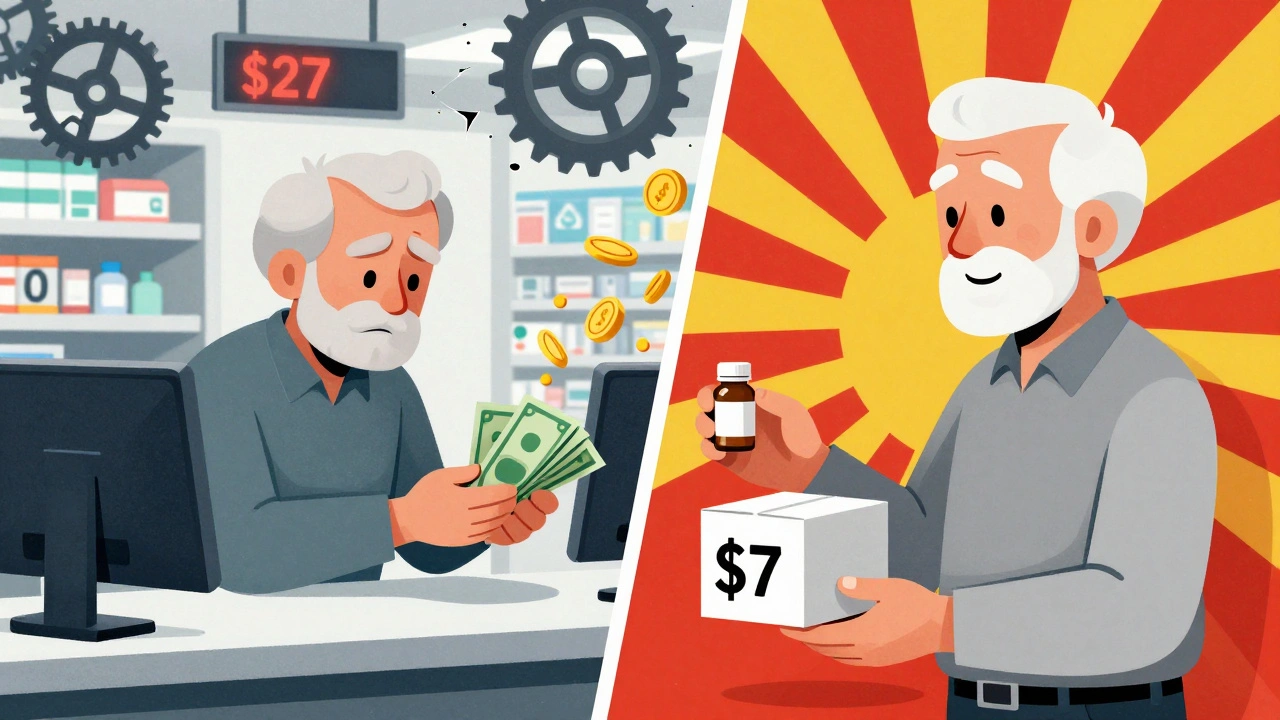
Imagine needing a pill every day to manage your blood pressure, diabetes, or cholesterol. Now imagine paying $27 for it. Then imagine paying $7 for the exact same medicine. That’s the difference between brand-name drugs and generics-and it’s not a trick. It’s reality.
Generics Are the Silent Heroes of Your Wallet
In 2023, 9 out of every 10 prescriptions filled in the U.S. were for generic drugs. That’s not a small trend. It’s the backbone of affordable healthcare. But here’s what most people don’t realize: even though generics make up 90% of prescriptions, they only cost 13% of what brand-name drugs do. That’s not a rounding error. That’s a $445 billion savings over the last decade, according to the Association for Accessible Medicines.Let’s break that down. The average out-of-pocket cost for a generic prescription in 2023 was $7.05. For a brand-name drug? $27.10. That’s almost four times more. And it’s not just a little cheaper-it’s life-changing for people on fixed incomes, chronic conditions, or no insurance at all.
Real-World Examples: How Much You’re Really Paying
Numbers are one thing. Real prices are another.Take Sildenafil Citrate-the generic version of Viagra. Before generics hit the market, a single pill cost nearly $50. Today? You can get it for $3.07 at a direct-to-consumer pharmacy. That’s a 94% drop.
Or consider the HIV drug Truvada. When its patent expired, the 30-day cost fell from $1,000 to $65. That’s not a discount. That’s a rescue.
Even common meds like Pantoprazole (for acid reflux) or Rosuvastatin (for cholesterol) show the same pattern. At Albertsons, a 30-day supply of Pantoprazole 20mg costs $44. At a direct-to-consumer pharmacy? $9.20. Rosuvastatin at Walgreens? $110. At Health Warehouse? $7.50. That’s 93% less.
And here’s the kicker: 93% of all generic prescriptions cost $20 or less. More than 82% cost under $20. Nearly all-98.8%-are under $50. If you’re paying more than that for a generic, you’re likely not shopping around.
Why Are You Paying So Much? The Hidden System
You’d think if generics are so cheap, everyone would pay that price. But the system doesn’t work that way.Medicare Part D, the federal program for seniors, overspent by $2.6 billion in 2018 alone because it paid more than Costco did for the same drugs. In fact, over half of all 90-day generic fills under Medicare cost more than what Costco charges its members. And Costco doesn’t even have insurance. They just sell drugs at cost.
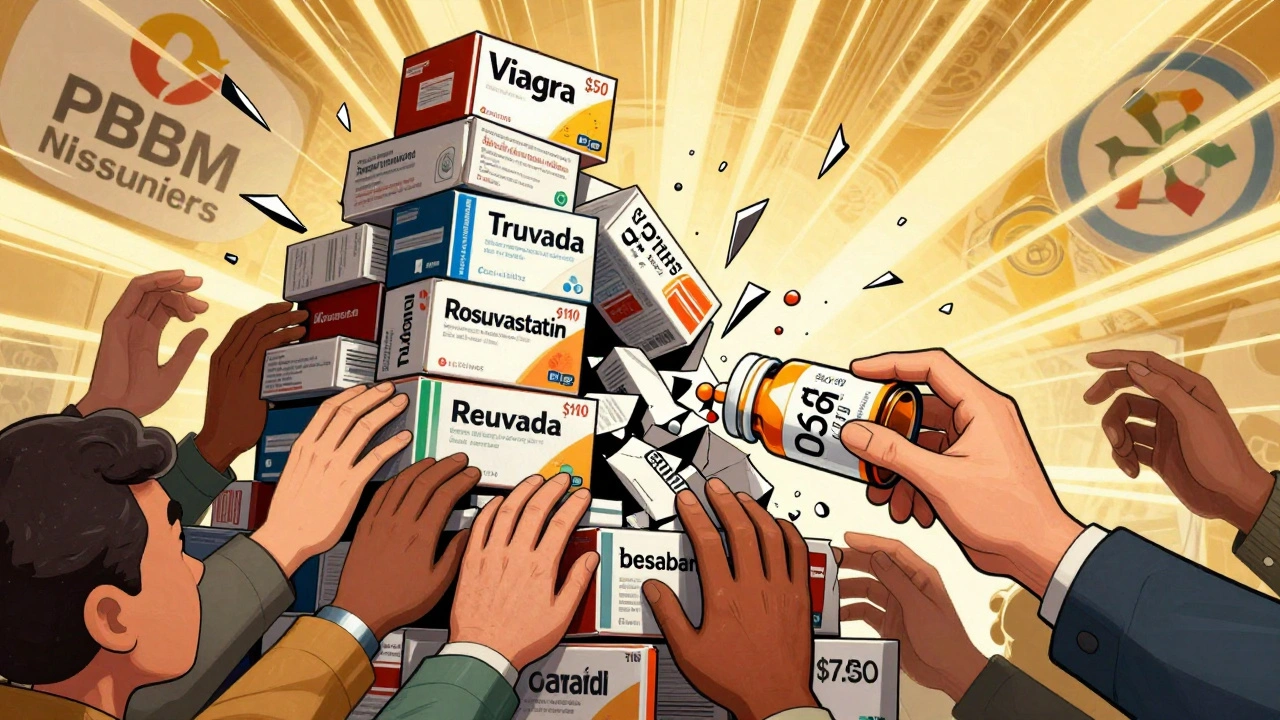
Even more confusing: people with insurance sometimes pay more than people without it. That’s because insurance companies negotiate rebates with drug manufacturers, but those savings don’t always reach the patient. Instead, the money gets buried in middlemen-pharmacy benefit managers (PBMs), insurers, and distributors. You’re left paying list prices while they pocket the difference.
One study found that when insurers moved generics to higher cost tiers-like putting them in the same category as expensive brand-name drugs-patients ended up paying 135% more annually, even though drug prices were falling. That’s not a mistake. That’s a business model.
The Direct-to-Consumer Advantage
There’s a simple fix: skip the pharmacy counter and go straight to the source.Direct-to-consumer (DTC) pharmacies like HealthWarehouse, Blink Health, or GoodRx Mail cut out the middlemen. They don’t deal with insurance networks, formularies, or rebates. They buy in bulk and sell at cost. Their average savings? 76% for expensive generics, 75% for common ones.
That means if your local pharmacy charges $110 for Rosuvastatin, you can get the exact same pills from a DTC pharmacy for $7.50. Same manufacturer. Same FDA approval. Same active ingredients. Just no extra fees.
And it’s not just for the uninsured. Even people with Medicare or private insurance can use these services. Many plans don’t cover DTC purchases, but if you pay out-of-pocket, you’re still saving hundreds per year.
Generics Aren’t the Problem-The System Is
Some people worry that generics are lower quality. They’re not. The FDA requires them to be identical in dosage, safety, strength, and effectiveness to brand-name drugs. They’re not knockoffs. They’re the same medicine, just without the marketing budget.The real issue? Pricing opacity. You can’t compare prices like you would for groceries. A pill that costs $7 in one place might cost $110 in another, and your insurance card won’t tell you which is cheaper. That’s not a flaw in the system-it’s how it’s designed.
Even worse, when insurers shift generics to higher tiers, they make patients pay more even though the drug itself hasn’t changed. That’s like charging more for the same loaf of bread just because it’s no longer under a brand name.
What You Can Do Today
You don’t need to wait for policy changes. You can start saving right now.- Ask your pharmacist: “Is there a generic version?” If they say no, ask again. Sometimes they don’t know.
- Use GoodRx or SingleCare. Enter your drug name and zip code. You’ll see prices at nearby pharmacies-and often, the lowest price is at a DTC pharmacy.
- For 90-day supplies, check Costco or Sam’s Club. Even without a membership, you can often buy there as a guest.
- Ask your doctor for a 90-day prescription. It’s cheaper per pill and reduces trips to the pharmacy.
- If you’re on Medicare, compare your Part D plan’s formulary. Some plans charge more for generics than others.
And if you’re paying over $20 for a generic-especially if you’re on a fixed income-you’re almost certainly overpaying.
The Bigger Picture: Why This Matters
This isn’t just about saving a few bucks on pills. It’s about whether people take their medicine at all.Studies show that when out-of-pocket costs rise, people skip doses, split pills, or stop taking them entirely. That leads to hospital visits, emergency care, and worse outcomes. For someone with diabetes, skipping insulin because it costs $30 instead of $7 can be deadly.
Generics keep people alive. They keep people working. They keep families from bankruptcy. And yet, the system still makes it hard to access them at their true price.
The good news? The market is working. Generics dominate prescriptions because they’re effective and cheap. The bad news? The system hasn’t caught up. The savings aren’t flowing to the people who need them most.
If you’re paying more than $20 for a generic, you’re not being smart-you’re being exploited. And you don’t have to be.
Are generic drugs as safe and effective as brand-name drugs?
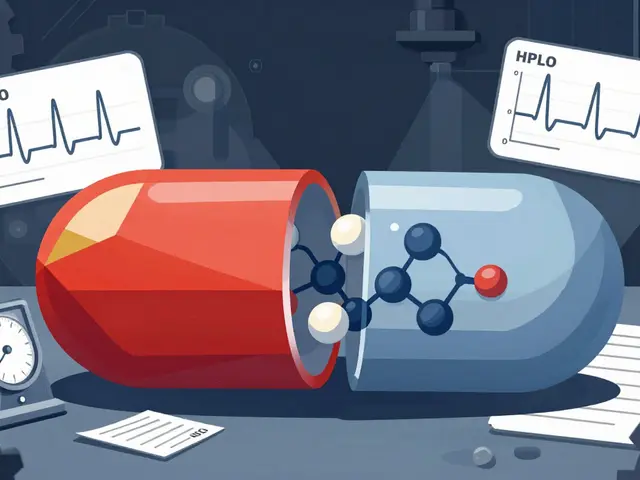
Yes. The FDA requires generic drugs to have the same active ingredients, strength, dosage form, and route of administration as the brand-name version. They must also meet the same strict standards for quality, purity, and performance. The only differences are in inactive ingredients (like fillers or dyes) and packaging. Generics are not cheaper because they’re lower quality-they’re cheaper because they don’t have to repeat expensive clinical trials.
Why do some pharmacies charge so much more for the same generic drug?
It’s because of how the system is built. Pharmacies get paid through insurance rebates, not by selling at cost. Many retail pharmacies charge list prices that include hidden markups, while direct-to-consumer pharmacies sell at wholesale prices. Insurance networks also create price confusion-what your plan covers doesn’t always reflect what the drug actually costs. That’s why you can pay $110 at Walgreens and $7.50 online for the same pill.
Can I use GoodRx with my insurance?
You can’t combine GoodRx with insurance, but you can choose which is cheaper. Sometimes GoodRx offers a lower price than your insurance copay. If your copay is $30 and GoodRx says the cash price is $8, pay cash. Your insurance won’t cover it, but you’ll save money. Always compare before you pay.
Why do Medicare Part D plans cost more than Costco for generics?
Medicare Part D plans pay based on negotiated rebates and formularies, not actual market prices. Pharmacy benefit managers (PBMs) take a cut, and the savings don’t always reach the patient. Costco, on the other hand, sells drugs at cost-no rebates, no middlemen. In 2018, Medicare paid 29.4% more than Costco for 90-day generic fills. That’s billions in wasted money.
Should I always choose the cheapest generic?
Generally, yes-if it’s FDA-approved. But if you notice a difference in how you feel after switching (like side effects or reduced effectiveness), talk to your doctor. Sometimes, different inactive ingredients affect absorption. But for 99% of people, the cheapest generic is just as good.



omg this is life changing i had no idea generics could be this cheap 😭 i was paying $80 for my cholesterol med and just switched to goodrx now it’s $6.50 like bro what even is the system??
you’re not alone!! i used to skip my diabetes meds because i couldn’t afford them-then i found blink health and now i pay less than my coffee. this isn’t just savings, it’s survival. please share this with someone who’s struggling 💪
GENERIC DRUGS ARE THE REAL MVPs 🏆💯 i used to think they were ‘lesser’-turns out they’re just unbranded. same pills. same results. just no fancy ads. the system is rigged but now i know how to beat it 😎
people still pay retail for generics?? how are you even alive?? the fact that you need a website to find out what a pill costs should be illegal. pharmacy benefit managers are thieves and the FDA should shut them down
This is not a revelation-it is an indictment. The pharmaceutical-industrial complex has weaponized medical necessity against the vulnerable. The fact that a $7 drug can be priced at $110 is not market efficiency-it is moral bankruptcy.
It’s funny how we’ve been conditioned to believe that price equals quality. We buy expensive skincare, luxury cars, organic kale-and then we assume a $27 pill must be better than a $7 one. But medicine isn’t fashion. It’s chemistry. And chemistry doesn’t care about branding. The active ingredient doesn’t wear a logo. The molecule doesn’t know if it’s in a fancy bottle or a plain one. We’ve been sold a myth. And the myth is expensive. So expensive that people die because they can’t afford the same molecule that someone else gets for pennies. The real tragedy isn’t the price difference-it’s that we accept it. We shrug. We say ‘that’s just how it is.’ But it’s not. It’s theft. And we’re all complicit when we don’t ask ‘why?’
Oh wow. So the solution to America’s healthcare crisis is… to shop like a Costco member? Brilliant. Let’s just turn every patient into a price-obsessed bargain hunter. Meanwhile, the system continues to extract, obscure, and exploit. Congratulations-you’ve turned healthcare into a grocery aisle.
It is not merely a matter of cost reduction, but a systemic failure of equity. The pharmaceutical industry, under the guise of innovation and research, has constructed a labyrinthine structure wherein the patient, often the most vulnerable, is rendered financially hostage. The existence of generics is not a concession-it is a moral imperative. That their savings are deliberately obstructed by intermediaries who operate beyond public scrutiny is not an oversight-it is a calculated design. The FDA approves the drug, yes, but the PBM controls the access. The patient pays the cost. The system profits. And we call this healthcare.
Let me tell you something about America. We celebrate innovation. We cheer for startups. We fund space rockets. But when it comes to a woman in Ohio who needs her blood pressure pills-she’s told to ‘shop around.’ That’s not capitalism. That’s cruelty dressed up as choice. This isn’t about GoodRx. It’s about dignity. And dignity shouldn’t require a spreadsheet.
everyone’s acting like this is news but it’s been obvious for years. people just don’t wanna admit they’ve been scammed. also the fact that you need a degree in insurance jargon just to buy aspirin is ridiculous. stop acting shocked. the system was built to rip you off
The disparity between retail pricing and direct-to-consumer pricing raises significant questions regarding transparency and market integrity. If identical pharmaceutical products can vary by over 1,400% in cost based solely on distribution channel, then the notion of a free and informed market becomes untenable. The role of pharmacy benefit managers in obscuring true cost structures merits regulatory intervention. Furthermore, the psychological burden placed on patients who must navigate this pricing labyrinth cannot be overstated.
One must ask: is the democratization of pharmaceutical access truly a triumph, or merely the inevitable collapse of artificial scarcity? The fact that generics are cheaper does not ennoble them-it merely exposes the hollow fiction of brand-name value. The real issue is not price, but the cultural reverence for corporate branding in medicine. We have fetishized the logo over the molecule. This is not progress. It is the death of pharmaceutical mystique.
OMG I JUST SAVED $1,200 A YEAR ON MY MEDS 😱 I WAS PAYING $90 AT WALGREENS NOW I PAY $7.50 ON HEALTHWAREHOUSE. WHY DID NO ONE TELL ME THIS BEFORE??
if you're on Medicare or have insurance always check GoodRx first. i used to think my copay was the best price until i saw $5 for my generic. your insurance doesn't always work for you. sometimes it's just a middleman taking a cut. just pay cash and save. no one's gonna tell you this but it's true