
Pharmaceutical Equivalence for Generics: What It Really Means When You Pick a Generic Drug
When you pick up a prescription and see a generic pill instead of the brand-name one, you might wonder: is this really the same thing? It’s not just about saving money. It’s about safety, effectiveness, and trust. The answer lies in a regulatory term most people never hear: pharmaceutical equivalence.
What pharmaceutical equivalence actually means
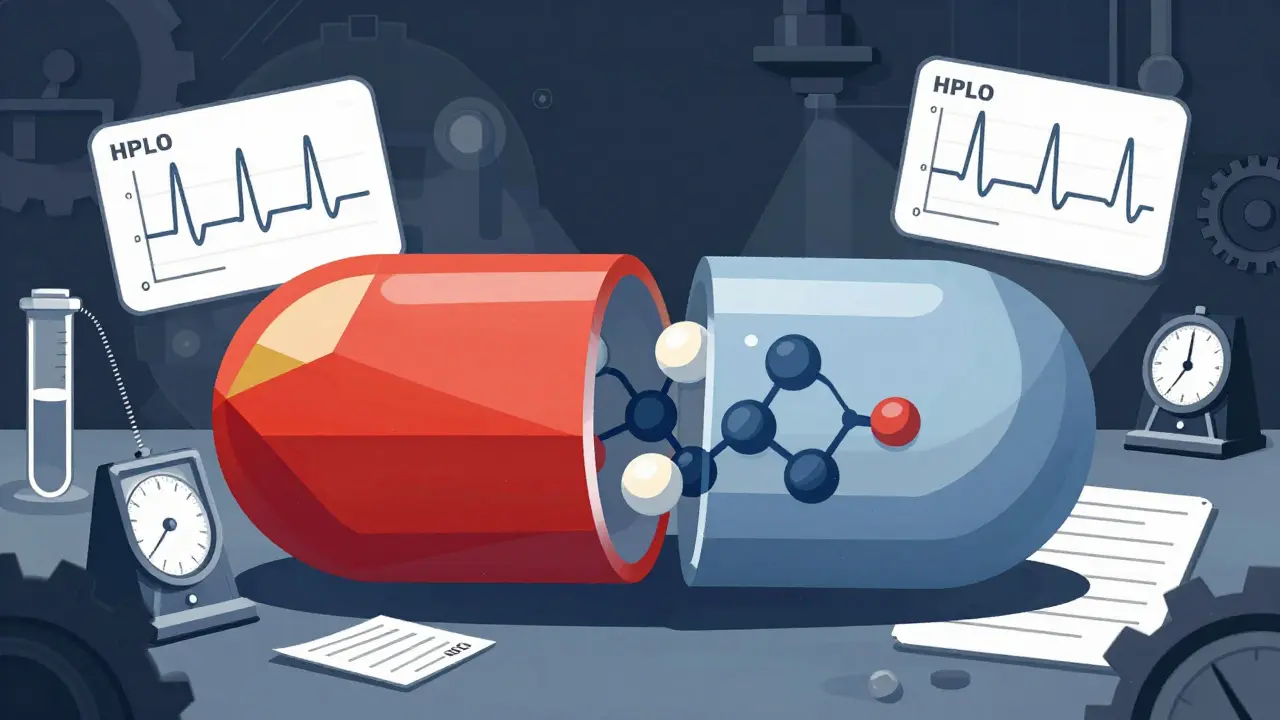
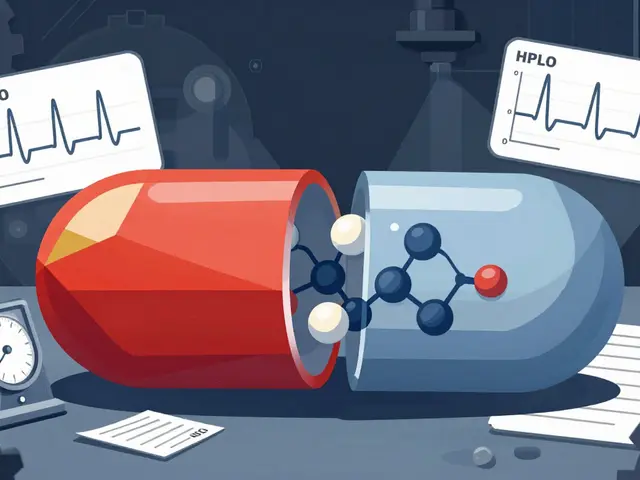
Pharmaceutical equivalence isn’t marketing jargon. It’s a strict scientific standard set by the U.S. Food and Drug Administration (FDA). If two drugs are pharmaceutical equivalents, they contain the exact same active ingredient, in the exact same amount, delivered the exact same way. That means the same chemical compound, same dosage form (tablet, capsule, injection), same strength, and same route of administration (oral, topical, IV, etc.).For example, if your doctor prescribes 20 mg of omeprazole in a capsule, a generic version must also contain 20 mg of omeprazole in a capsule. No more, no less. The FDA requires this through analytical testing-usually high-performance liquid chromatography (HPLC)-to confirm the active ingredient is within ±5% of the labeled amount. That’s tighter than most grocery store weight labels.
But here’s what pharmaceutical equivalence doesn’t require: identical color, shape, taste, or inactive ingredients. A generic omeprazole might be blue instead of purple, oval instead of round, and use cornstarch instead of lactose as a filler. Those differences are allowed, as long as they don’t change how the drug works inside your body. The FDA calls these non-active ingredients “excipients,” and while they’re not part of the therapeutic effect, they can still matter-for some people.
Why pharmaceutical equivalence is the first step, not the finish line
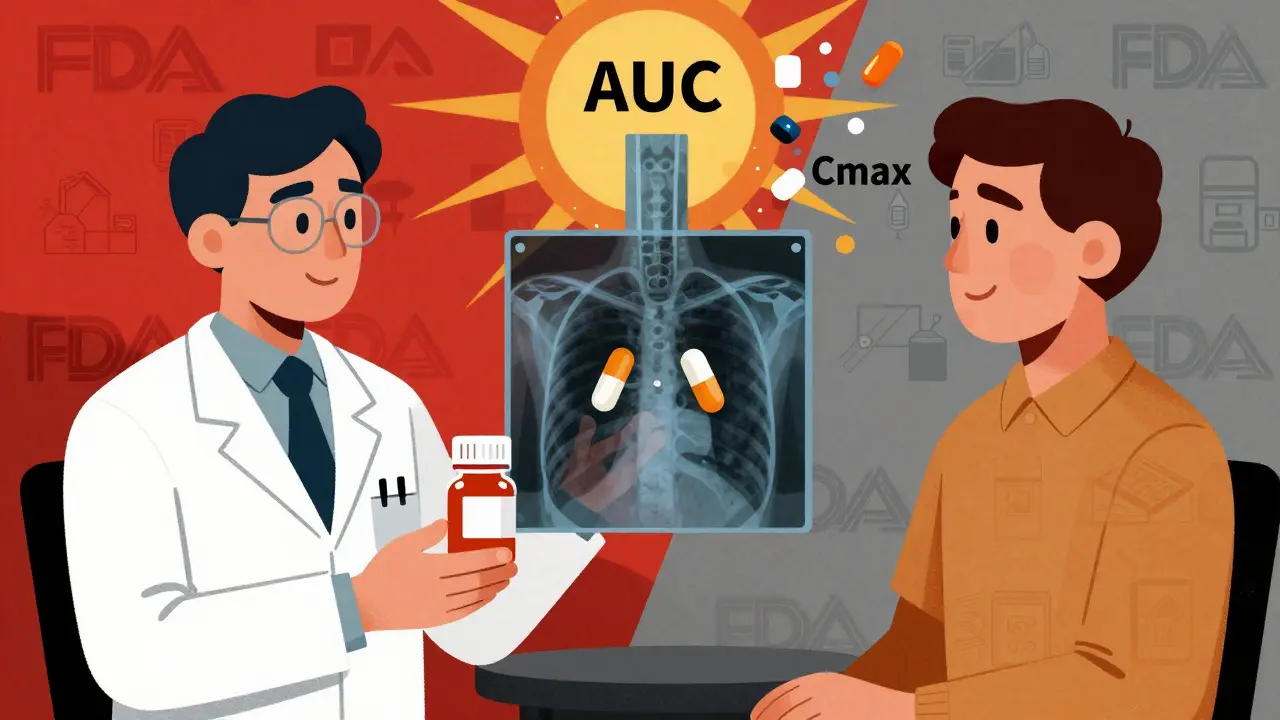
Think of pharmaceutical equivalence as the starting line. The real race is bioequivalence. Just because two pills have the same active ingredient doesn’t mean your body absorbs them the same way. That’s where bioequivalence comes in.The FDA requires generic manufacturers to prove their drug delivers the same amount of active ingredient into your bloodstream at the same rate as the brand-name version. They do this by measuring two key numbers: AUC (area under the curve) and Cmax (maximum concentration). The generic’s values must fall between 80% and 125% of the brand’s. That’s not a loophole-it’s a scientifically validated range that accounts for normal biological variation between people.
But here’s the catch: pharmaceutical equivalence doesn’t guarantee bioequivalence. A generic can meet all the chemical requirements and still fail the absorption test. That’s why the FDA doesn’t approve generics based on pharmaceutical equivalence alone. It’s the foundation, not the whole building.
Therapeutic equivalence: the final check
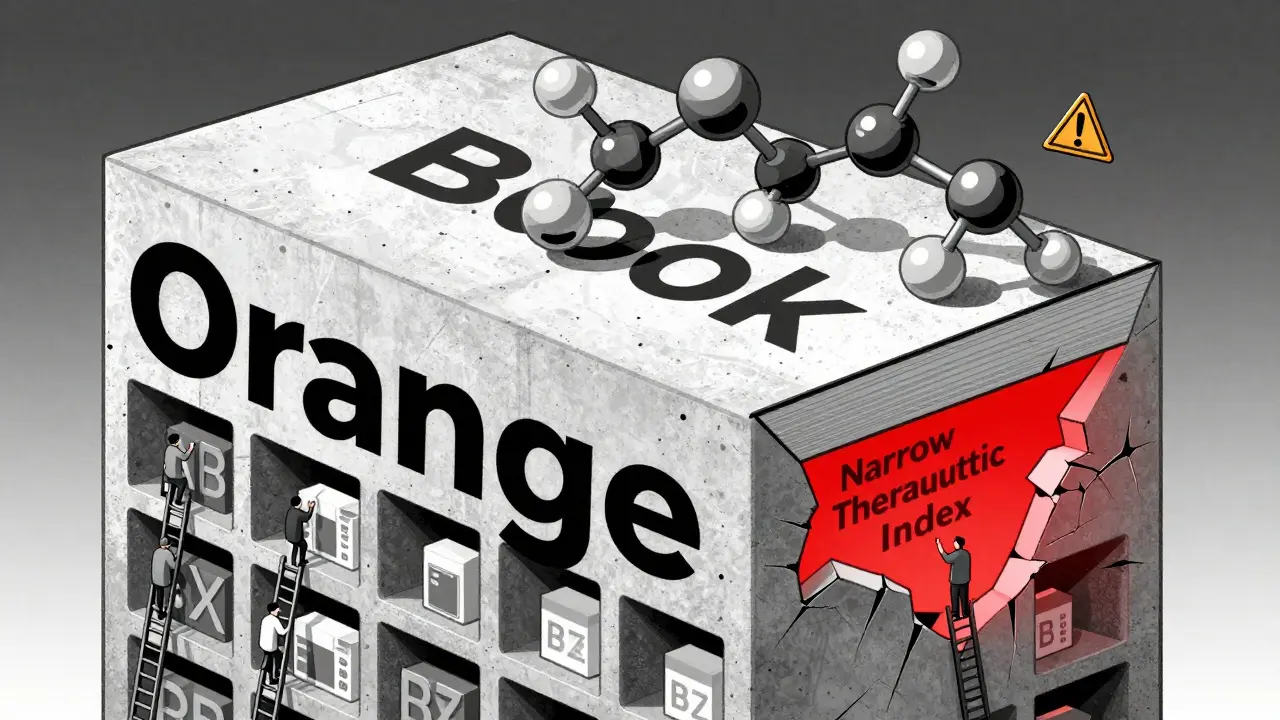
Even if a generic is bioequivalent, that doesn’t automatically mean it’s safe to swap in every situation. That’s where therapeutic equivalence comes in. The FDA rates drugs in its “Orange Book” with codes like AB, BX, or BZ. An “AB” rating means the drug is both pharmaceutical and bioequivalent-and clinically interchangeable with the brand. That’s what most pharmacists rely on when substituting.But for drugs with a narrow therapeutic index-like warfarin, lithium, or levothyroxine-tiny differences in absorption can lead to big problems. Too little, and the drug doesn’t work. Too much, and it becomes toxic. For these, the FDA and medical groups like the American College of Clinical Pharmacy urge extra caution. Even if a generic is rated AB, some doctors prefer to stick with one brand to avoid any risk of fluctuation.
Dr. Janet Woodcock, former head of the FDA’s drug center, put it plainly: “Pharmaceutical equivalence ensures the same active ingredient in the same amount. But it’s bioequivalence that ensures the drug gets to the site of action in the same way.”
What you might not know about inactive ingredients
Most people assume generic drugs are just cheaper copies of the brand. But the real hidden variable? Excipients. These are the fillers, dyes, preservatives, and coatings that make the pill hold together, taste better, or dissolve properly. They’re not active, but they can still cause reactions.A 2022 survey in the Journal of the American Pharmacists Association found that 87% of pharmacists had encountered at least one patient with a minor side effect-like stomach upset or rash-linked to a change in excipients when switching to a generic. Only 2.3% of those cases required switching back to the brand. Still, for people with allergies (say, to gluten, lactose, or certain dyes), this matters.
Right now, manufacturers aren’t required to list all excipients on the pill bottle. The FDA’s 2024 Strategic Plan for Generic Drugs is pushing for better disclosure, especially for complex drugs where excipients might affect how the drug releases over time. Some experts argue this transparency could prevent avoidable reactions.
How the system works in real life
In the U.S., 90% of prescriptions are filled with generics. That’s not because they’re cheaper (though they are-on average $1,008 less per prescription). It’s because the system works. The Hatch-Waxman Act of 1984 created the framework that lets generics enter the market without repeating expensive clinical trials. All they need to prove is pharmaceutical and bioequivalence.Pharmacists use the FDA’s Orange Book daily to decide what to substitute. As of June 2024, over 12,800 generic drugs had an “AB” rating-meaning they’re approved for automatic substitution. Hospitals have formal policies: 68% require pharmacists to verify the rating before switching. Most pharmacies auto-substitute unless the doctor writes “dispense as written.”
But patient confusion is still common. A 2023 Kaiser Family Foundation survey found that 42% of patients thought generics contained only 80% of the active ingredient. That’s not true. The 80-125% range applies to how the body absorbs the drug-not what’s in the pill. The pill has 100%. The body just processes it slightly differently from person to person.
What’s changing-and what’s next
The FDA isn’t resting. Complex generics-like inhalers, topical creams, or injectables with special delivery systems-are harder to copy. For these, the 2023 Complex Generic Drug Product Development program requires more advanced testing: Raman spectroscopy, X-ray diffraction, and other tools to match not just the chemical makeup, but the physical structure of the drug.The Generic Drug User Fee Amendments (GDUFA III), launched in 2022, cut approval times from 24 months to 18. That means more generics hit the market faster. And with $15 million in new funding for analytical research, expect better standards for complex drugs by 2027.
Meanwhile, the American Society of Health-System Pharmacists is pushing for clearer labeling of excipients. If you’ve ever had an unexplained reaction after switching generics, you’re not imagining it. Better disclosure could save lives.
What you should do
If you’re prescribed a generic: it’s almost always safe. For most drugs, pharmaceutical and bioequivalence ensure you get the same effect as the brand. But if you’re on a narrow therapeutic index drug-like thyroid meds, seizure drugs, or blood thinners-stick with the same manufacturer if possible. Talk to your pharmacist if you notice a change in how you feel after switching.Don’t assume all generics are identical. Two “AB” rated versions of the same drug can have different excipients. If you have allergies or sensitivities, ask your pharmacist for the manufacturer name and check the inactive ingredients list.
And if you’re worried about quality: remember this. The FDA inspects generic manufacturing plants just as often as brand-name ones. In fact, many brand-name companies make their own generics. The difference isn’t in the science-it’s in the price.
Pharmaceutical equivalence isn’t magic. It’s math. It’s chemistry. It’s regulation. And when done right, it saves billions without sacrificing safety. You’re not getting a second-rate drug. You’re getting a scientifically proven equal.
Are generic drugs really the same as brand-name drugs?
Yes, if they’re rated "AB" by the FDA. Generic drugs must contain the same active ingredient, in the same amount, and in the same dosage form as the brand-name version. They’re tested to ensure they deliver the same amount of medicine into your bloodstream at the same rate. The only differences are in color, shape, taste, or inactive ingredients-none of which affect how the drug works for most people.
Why do some people say generics don’t work as well?
Sometimes, it’s not the drug-it’s the excipients. A few patients report side effects like stomach upset or rashes after switching to a generic because of a change in fillers or dyes. This is rare, but real. For drugs with a narrow therapeutic index-like warfarin or levothyroxine-even small differences in how the body absorbs the drug can matter. That’s why some doctors prefer to keep patients on the same brand. Always report changes in how you feel after a switch.
Do generics have less active ingredient?
No. The pill contains exactly the same amount of active ingredient as the brand. The 80-125% range you hear about refers to how much of that ingredient enters your bloodstream, not what’s in the pill. That range accounts for normal differences in how people’s bodies absorb medicine. The FDA requires the active ingredient to be within ±5% of the labeled amount-much stricter than many people realize.
Can I trust generics from different manufacturers?
Yes, if they’re rated "AB" by the FDA. All approved generics must meet the same standards, regardless of who makes them. However, two different "AB" generics of the same drug may use different inactive ingredients. If you’ve had a reaction to one generic, you might react to another with different fillers. Ask your pharmacist for the manufacturer name if you’re switching and notice changes.
Why are some generics not interchangeable?
Some drugs are rated "BX" or "BZ" in the FDA’s Orange Book. That means they’re not considered therapeutically equivalent-usually because they’re complex products like inhalers, injectables, or topical creams where small differences in formulation can affect how the drug works. For these, your doctor may need to specify "dispense as written" to ensure you get the exact product they prescribed.





i switched to generic omeprazole last year and my stomach felt weird for a week. thought i was dying. turned out it was just a new filler. my pharmacist said it had cornstarch instead of lactose. i didn’t even know that mattered. now i ask for the brand name on the bottle. just to be safe.
Let me tell you something, and I mean this with all the gravity of a person who has spent 14 years in pharmacy tech: pharmaceutical equivalence is NOT the same as therapeutic equivalence. And if you think it is, you’re dangerously misinformed. The FDA doesn’t just slap an AB rating on a pill because it looks the same. They test absorption, dissolution, bioavailability-every single variable. And yet, people still panic when the pill changes color. It’s not magic. It’s science. And science doesn’t care if you’re scared.
people who complain about generics are the same people who buy organic kale for $12 a bag but won’t pay $5 extra for a brand-name pill. you want cheap? fine. but don’t act like you’re being scammed when your new blue pill doesn’t make you feel like a superhero. it’s the same damn drug. get over it.
As someone who’s been on levothyroxine for 12 years, I can say this: I switched generics 3 times. Each time, I felt off for a few weeks. Not dramatically. Just… off. Like my brain was wrapped in cotton. I finally asked my endo to stick me with one brand. Now I’m stable. It’s not about being paranoid-it’s about being informed. The FDA’s 80-125% range? That’s fine for most drugs. But for thyroid meds? Small changes = big consequences. Ask your pharmacist for the manufacturer. It’s your health.
Also, I love that the FDA is pushing for better excipient labeling. 🙌 We need this. People deserve to know what’s in their pills-even the boring stuff.
so like… if i take a generic and feel weird, is it the drug or am i just weird? 🤔 also why do generics always look like they were designed by a 1997 Windows screensaver?
you people are so naive, honestly. the FDA is not your friend. they are owned by big pharma. the generics are made in india and china, and the labs are dirty, the workers are underpaid, and the quality control is a joke. i read a report that said 70% of generic pills have impurities that are not even tested for. and you think it’s the same? please. my cousin’s aunt’s neighbor’s son died because of a bad generic. it was never reported. because no one cares. you think the system is fair? it’s rigged. and you’re just part of the machine.
my dad’s on warfarin. switched generics once. INR spiked. went to the ER. turned out the new maker used a different binder that slowed absorption. took 3 weeks to stabilize. now he’s locked into one brand. doesn’t cost more-insurance covers it. just ask your doc to write ‘dispense as written’ if you’re on something critical. it’s not a big ask.
bro, generics are the real MVP. i saved $800 last year just switching to generic metformin. and i feel better than ever. no side effects, no drama. the system works. stop overthinking it. if your body can’t handle a pill because it’s blue instead of purple, maybe you need to chill. 💪
the fact that people still think generics are inferior is hilarious. i work in a hospital pharmacy. we stock 12 brands of generic lisinopril. every single one is AB-rated. none of them are ‘lesser.’ the only difference? some are round, some are oval, one has a little ‘P’ on it. if you’re still scared, just pick the one with the ‘P.’ problem solved. 😎
you know what’s really scary? that 42% of people think generics have 80% less active ingredient. that’s not ignorance. that’s a cultural failure. we’ve been lied to for decades. and now we’re scared of pills because we don’t understand chemistry. maybe we should teach science in high school instead of letting TikTok explain medicine. 🤡
generic = savings. no drama. just science. 💊