
Diabetes Medication Interactions: Dangerous Drug Combinations to Avoid
Diabetes Medication Interaction Checker
Check Your Medications for Dangerous Interactions
Enter your current diabetes medications and other medications to see if dangerous combinations exist.
Dangerous Interactions Found
Recommended Alternative:
No dangerous interactions found. However, always discuss medication changes with your doctor.
Important Safety Information
This tool is for informational purposes only. Always consult your healthcare provider before making any changes to your medication regimen. Dangerous interactions may require immediate medical attention.
Combining diabetes medications can save lives-but it can also land you in the hospital. Too many people assume that if one drug helps lower blood sugar, adding another must make it better. That’s not true. Some combinations push glucose levels too low, too fast. Others cancel each other out or strain your heart, kidneys, or liver. The diabetes drug interactions you don’t know about could be silently wrecking your health.
Why Some Drug Mixes Are Dangerous
Not all diabetes drugs work the same way. Some force your pancreas to pump out more insulin. Others help your body use insulin better. A few make your kidneys flush out sugar. When you mix them, things get messy. The biggest risks? Hypoglycemia (dangerously low blood sugar) and hyperglycemia (dangerously high blood sugar). Both can cause seizures, coma, or even death if not caught in time.
Many interactions happen because of how your liver processes drugs. Enzymes like CYP3A4, CYP2C8, and CYP2C9 break down medications. If another drug blocks those enzymes-like an antifungal or antibiotic-the diabetes drug builds up in your blood. That’s when your sugar crashes. Other times, a drug harms your kidneys. That’s bad news for metformin, which needs healthy kidneys to be cleared safely.
High-Risk Combinations You Must Avoid
Some drug pairs are so risky, doctors won’t prescribe them together unless there’s no other choice. Here are the worst offenders:
- Insulin + Rosiglitazone: Rosiglitazone (Avandia) increases fluid retention. Add insulin, and you get swelling in the legs, weight gain, and a much higher chance of heart failure. The American Diabetes Association warns against this combo for anyone with existing heart issues.
- Meglitinides + Azole Antifungals: Drugs like repaglinide (Prandin) and nateglinide (Starlix) are cleared by liver enzymes. Ketoconazole, itraconazole, or even certain antibiotics like clarithromycin can block those enzymes. Blood sugar can drop below 40 mg/dL within hours-no warning, no time to react.
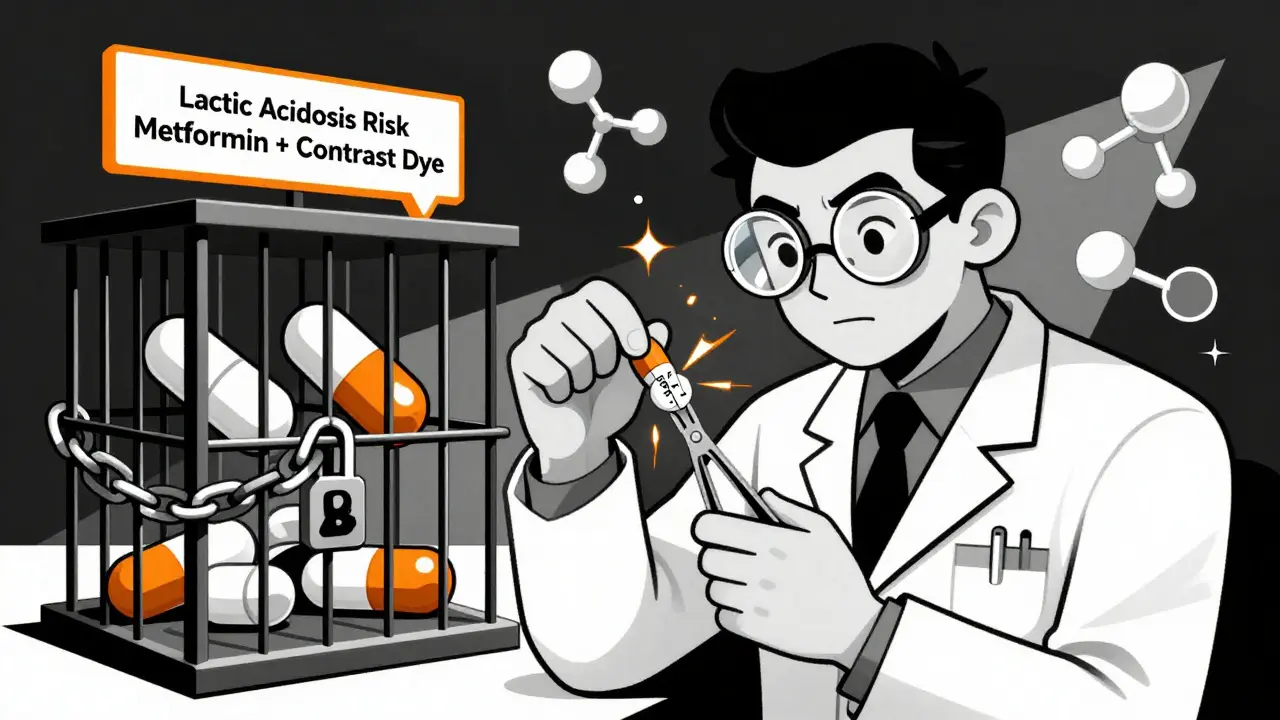
- Metformin + Contrast Dye: If you’re getting a CT scan or angiogram with iodine-based dye, stop metformin 48 hours before and after. The dye can temporarily wreck kidney function. Metformin builds up. Lactic acidosis follows. It’s rare-but deadly.
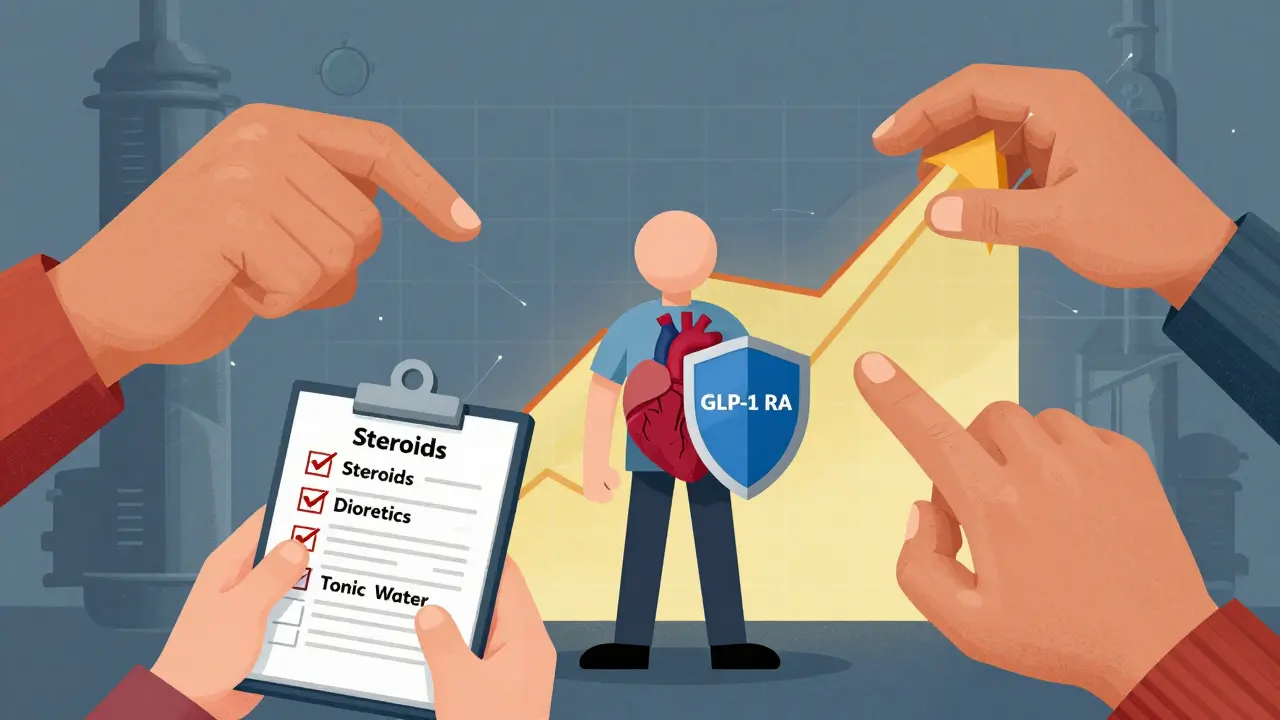
- Insulin + Quinine: Quinine (found in some malaria meds and tonic water) can trigger severe hypoglycemia. It’s not just prescription drugs. Even a glass of tonic water with your gin can cause trouble if you’re on insulin.
Why GLP-1 RAs and SGLT-2 Inhibitors Are Safer
Not all newer diabetes drugs play nice with others-but some do. GLP-1 receptor agonists (like semaglutide and liraglutide) and SGLT-2 inhibitors (like empagliflozin and dapagliflozin) are much less likely to cause dangerous interactions. Why? They don’t rely on liver enzymes the same way older drugs do. They also don’t force your pancreas to overproduce insulin. That means fewer crashes.
Doctors now prefer combining GLP-1 RAs with insulin over insulin alone. Why? The GLP-1 RA helps your body use insulin better, reduces appetite, and lowers the chance of low blood sugar. Studies show people on this combo lose weight, have fewer hypoglycemic episodes, and see better long-term glucose control.
What About DPP-4 Inhibitors?
DPP-4 inhibitors (like sitagliptin and linagliptin) are often used with metformin. That’s fine. But never combine them with GLP-1 RAs. They do the same job-boosting natural incretin hormones. Adding both is like turning up the same radio station on two speakers. You get no extra benefit, just more side effects: nausea, pancreatitis risk, and higher cost. The ADA explicitly says this combo should be avoided.
Other Surprising Triggers
It’s not just other diabetes drugs that cause trouble. Common medications can mess with your glucose control too:
- Corticosteroids (prednisone, dexamethasone): These raise blood sugar fast. If you’re on insulin or sulfonylureas, your dose may need to jump by 30-50% during a short course.
- Diuretics (hydrochlorothiazide, furosemide): These can spike glucose levels. They’re often used for high blood pressure-but they make diabetes harder to manage.
- Somatostatin analogues (octreotide): These are used for tumor treatment. They’re weird-they can cause either hypoglycemia or hyperglycemia, depending on your dose and timing. Monitoring is non-negotiable.
- Statins: Some, like simvastatin and atorvastatin, may slightly raise blood sugar. Not a deal-breaker, but worth watching if you’re on the edge of prediabetes.
What You Should Do Right Now
If you take more than one diabetes medication-or any other regular drugs-do this today:
- Make a full list of everything you take, including supplements and OTC meds. Don’t forget herbal teas or CBD oil-some interfere with liver enzymes.
- Bring that list to your doctor or pharmacist. Ask: "Could any of these cause my blood sugar to drop too low or spike too high?"
- Check your glucose more often for the next week, especially before meals and at bedtime. Look for patterns.
- If you’ve had unexplained lows or highs lately, don’t assume it’s your diet. Ask about drug interactions.
Many people don’t realize their blood sugar swings aren’t their fault. They blame themselves for eating carbs or skipping workouts. But sometimes, it’s a drug combo they never knew was risky.
When to Call Your Doctor Immediately
Don’t wait. Call right away if you experience:
- Shaking, sweating, confusion, or dizziness-especially if it happens suddenly
- Blood sugar below 60 mg/dL twice in one day
- Unexplained weight gain, swelling in legs, or shortness of breath
- Dark urine, muscle pain, or extreme fatigue (signs of lactic acidosis with metformin)
These aren’t "wait and see" symptoms. They’re red flags.
The Bottom Line
Managing diabetes isn’t just about pills and insulin. It’s about understanding how those drugs work together-or against each other. Newer medications like GLP-1 RAs and SGLT-2 inhibitors are safer, more predictable, and often better for your heart and kidneys. Older drugs like sulfonylureas and meglitinides? They’re still useful, but they need more careful handling.
There’s no one-size-fits-all plan. What works for one person might be dangerous for another. That’s why knowing your exact meds, your kidney function, and your other health conditions matters more than ever. Don’t assume your doctor knows every interaction. Bring the list. Ask the question. Stay alert.
Can I take metformin with ibuprofen?
Yes, but with caution. Ibuprofen doesn’t directly interact with metformin, but both can affect your kidneys. If you take ibuprofen regularly, especially in high doses, your kidney function may decline over time. That increases the risk of metformin building up in your system. Get your kidney levels checked every 6 months if you use NSAIDs long-term.
Is it safe to combine insulin with a GLP-1 RA?
Yes, and it’s often recommended. Combining insulin with a GLP-1 RA like semaglutide improves blood sugar control better than insulin alone. It also reduces the amount of insulin you need, lowers your risk of low blood sugar, and helps with weight loss. This combo is now a first-line option for many people with type 2 diabetes who aren’t reaching targets on metformin alone.
Do herbal supplements interact with diabetes drugs?
Many do. St. John’s wort can lower blood sugar too much when taken with sulfonylureas. Ginseng and bitter melon can have similar effects. On the flip side, licorice root can raise blood sugar. Always tell your doctor about supplements-even if you think they’re "natural" or "safe."
Why can’t I take two DPP-4 inhibitors together?
You can’t-and you shouldn’t. DPP-4 inhibitors all work the same way: they block an enzyme that breaks down natural incretin hormones. Taking two is like doubling the volume on one speaker. It doesn’t improve control, but it increases side effects like nausea, joint pain, and pancreatitis risk. The American Diabetes Association specifically advises against this.
How do I know if a new medication will interact with my diabetes drugs?
Ask your pharmacist. They have tools that check every drug you take against new prescriptions. If you’re seeing a new doctor, bring your full medication list-every pill, patch, and supplement. Don’t rely on memory. Even a small change, like starting a new antibiotic, can trigger a dangerous drop in blood sugar.
Next Steps for Safe Management
Start by reviewing your current meds. If you’re on sulfonylureas or meglitinides, ask if switching to a GLP-1 RA or SGLT-2 inhibitor makes sense. If you’re on insulin, find out if adding a GLP-1 RA could reduce your dose and lower your hypoglycemia risk. If you’re taking steroids or antibiotics, monitor your glucose more closely. And never stop or change a drug without talking to your care team.
Diabetes isn’t just about sugar numbers. It’s about the whole system-your liver, kidneys, heart, and the drugs you take to keep it all balanced. The right combination can give you years of better health. The wrong one? It can undo everything you’ve worked for.


Metformin + contrast dye is a silent killer and people treat it like a suggestion not a red alert. No one tells you this until you’re in the ER with lactic acidosis. Kidneys don’t care about your schedule. Stop the metformin. Period. No exceptions. No "I’ll just drink more water."
Really appreciate how this breaks down the real risks without fearmongering. I’ve seen so many patients blame themselves for blood sugar swings when it’s actually a med interaction. The part about tonic water and insulin? Eye-opening. Always ask about OTC and supplements-they’re not harmless just because they’re natural.
omg i just realized i’ve been drinking tonic water with my weekend gin and i’m on insulin 😳 i’m gonna call my doc tomorrow. thanks for the heads up!!
People think diabetes is just "eat less sugar" and pop pills. No. It’s a minefield of enzyme interactions, renal clearance, and pharmaceutical arrogance. If your doctor can’t explain how your meds interact at a molecular level, find a new one. This isn’t a lifestyle blog-it’s biochemistry with consequences.
There’s a quiet tragedy in how we treat diabetes-as if it’s a problem of willpower rather than pharmacology. We blame the patient for a hypoglycemic episode when it’s a drug combo they were never warned about. The GLP-1 RA + insulin combo is one of the few true advances in decades. It doesn’t just control glucose-it restores dignity. Less insulin. Less fear. More life.
My aunt got hospitalized after starting clarithromycin for a sinus infection. She was on repaglinide. No one told her to hold it. She woke up confused, shaking, barely conscious. Took 3 days to stabilize. This post saved her life. Please share it with anyone on diabetes meds. Even if they seem fine.
STOP WASTING TIME WITH DPP-4 INHIBITORS. They’re expensive placebo pills with side effects. GLP-1 RAs do the same job better. SGLT-2 inhibitors protect your heart. If your doc is still pushing sitagliptin over semaglutide, they’re stuck in 2012. Demand better. Your pancreas deserves more than a band-aid.
Man, this hit different. In India, people mix metformin with turmeric, neem, and bitter gourd juice like it’s chai. No one checks for interactions. I’ve seen folks crash from ginseng + sulfonylurea and blame "bad karma." Doc says "eat less rice" when it’s a drug clash. We need pharmacy literacy, not just insulin pens. This isn’t just medicine-it’s survival.