
Absolute Risk vs Relative Risk in Drug Side Effects: How to Interpret Numbers
Absolute vs Relative Risk Calculator
Example: Statins
Baseline risk: 2.5% | Relative reduction: 40% = Absolute reduction: 1 percentage point
Calculate what the new risk would be: 2.5% - 1% = 1.5% risk
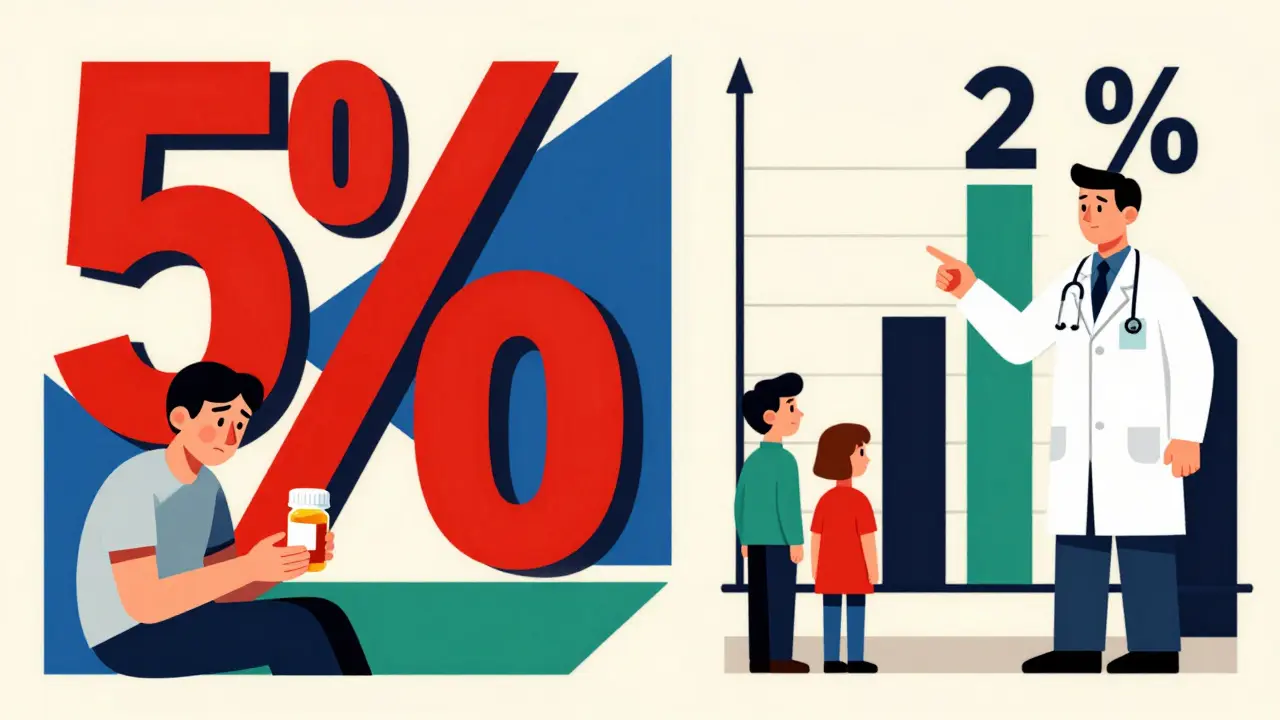
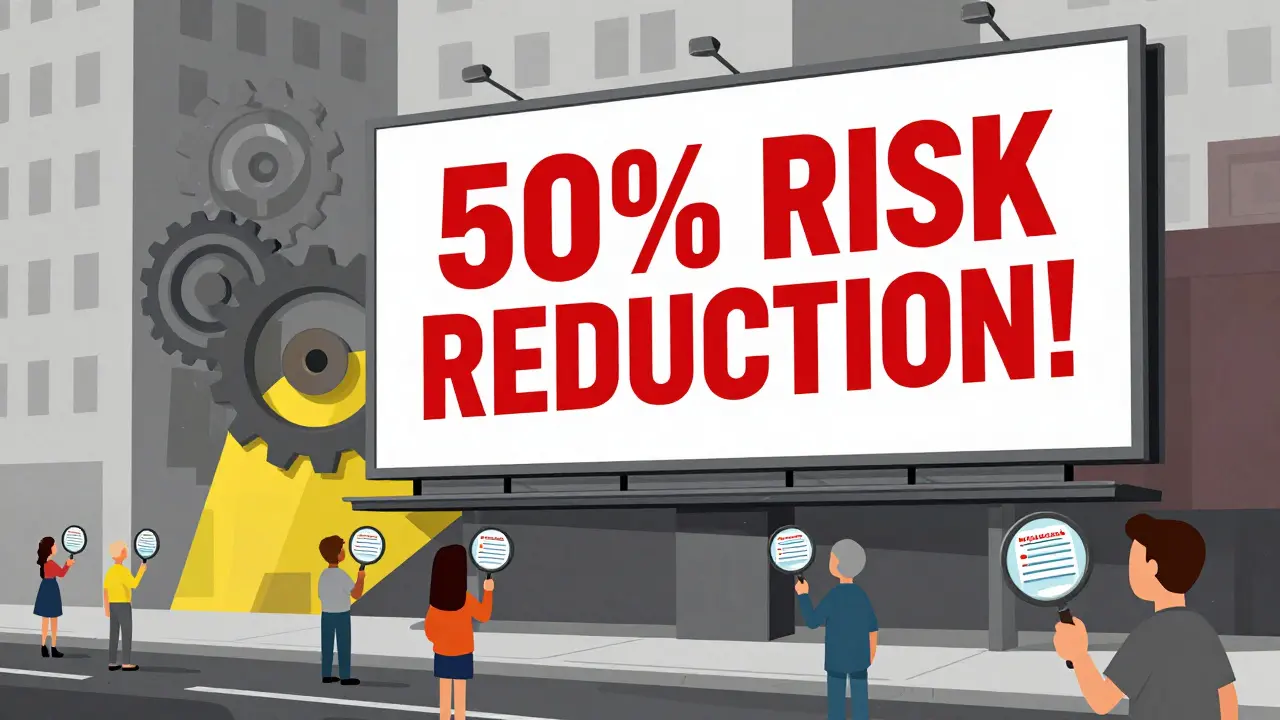
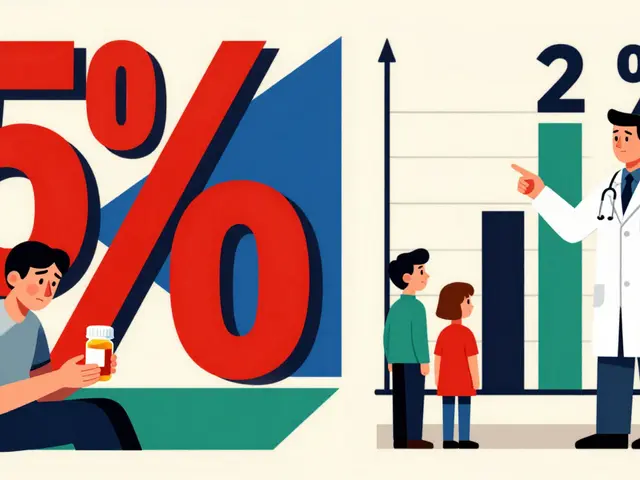
When a drug ad says it "cuts your risk of heart attack in half," you might think you’re avoiding a 50% chance of having one. But what if your actual risk was only 2% to begin with? Cutting that in half means going from 2% to 1%-a 1 percentage point change. That’s the difference between absolute risk and relative risk, and misunderstanding it can cost you your health-or your money.
What Absolute Risk Really Means
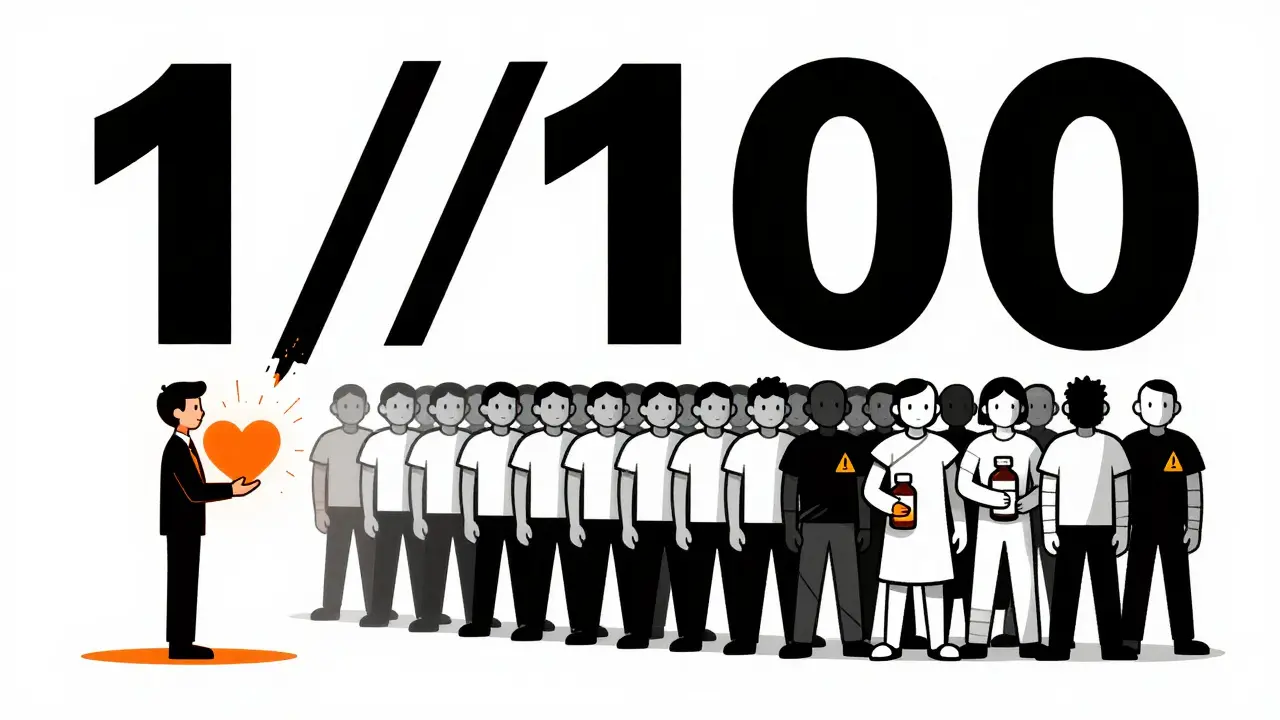
Absolute risk is the actual chance something will happen to you. It’s not a comparison. It’s your number. If 1 out of every 100 people who take a certain drug gets a serious side effect, your absolute risk is 1%. If 5 out of 1,000 get it, that’s 0.5%. Simple. Clear. Real.This is the number that matters most when you’re deciding whether to take a pill. It tells you exactly what you’re signing up for. No tricks. No math games. Just the facts: how many people like you actually experience the side effect?
Take statins, for example. A study found that over five years, 1.5% of people on statins had a major heart event, compared to 2.5% on placebo. The absolute risk reduction? Just 1 percentage point. That means if you’re one of 100 people taking statins, only 1 person will avoid a heart event because of the drug. The other 99 won’t benefit, but they still face the risk of muscle pain, diabetes, or liver issues.
How Relative Risk Tricks Your Brain
Relative risk is a ratio. It compares your risk to someone else’s. It’s useful for scientists, but dangerous for patients.Let’s say a drug reduces your risk of stroke from 2% to 1%. The absolute risk reduction is 1%. But the relative risk reduction? It’s 50%. That’s because 1% is half of 2%. The math checks out-but the message? It’s misleading.
Pharmaceutical companies know this. That’s why 78% of direct-to-consumer drug ads in the U.S. highlight relative risk reduction. They say things like "reduces heart attack risk by 50%"-without ever telling you the starting point. If your baseline risk was 0.02%, a 50% reduction means you’re now at 0.01%. That’s not a life-saving breakthrough. It’s a tiny tweak.
Here’s another example: a drug reduces the risk of a rare side effect from 1 in 100,000 to 1 in 10,000,000. The relative risk reduction? 99%. Sounds amazing, right? But the absolute risk drop? Just 0.099%. You’re still almost guaranteed not to experience it-whether you take the drug or not.
Why Both Numbers Matter
You need both. Absolute risk tells you what’s real. Relative risk tells you how the drug compares. But one without the other is incomplete-and often deceptive.Doctors who use both numbers help patients make better decisions. For instance, a patient with high blood pressure might be told: "Your chance of having a stroke in the next 10 years is 10%. This drug lowers that to 8%. That’s a 20% relative reduction, but only a 2 percentage point absolute drop. So, for every 50 people like you who take this, one stroke is prevented. The rest won’t benefit, but some may get dizziness or cough."
That’s transparency. That’s clarity. That’s what informed consent looks like.
Compare that to the ad that says: "This drug reduces stroke risk by 20%!" Without context, you assume it’s cutting your risk from 20% to 16%-not from 10% to 8%. That’s a huge difference in perceived benefit.
The Number Needed to Treat (NNT) - The Real Bottom Line
There’s one number that cuts through the noise: the Number Needed to Treat, or NNT. It’s calculated from absolute risk. NNT = 1 divided by the absolute risk reduction.If a drug reduces your risk of a heart attack from 5% to 4%, the absolute reduction is 1% (0.01). The NNT is 1 / 0.01 = 100. That means you’d need to treat 100 people for one person to avoid a heart attack. The other 99 get no benefit-and may still suffer side effects.
Here’s what NNT values mean in practice:
- NNT of 2: The drug works for almost everyone. (Rare)
- NNT of 10: Good benefit. Worth considering.
- NNT of 50: Mild benefit. Only for high-risk patients.
- NNT of 100+: Questionable benefit. Side effects may outweigh gains.
Most drugs on the market have NNTs between 20 and 100. That’s not a miracle. It’s a gamble.
How Side Effects Are Reported (and Hidden)
Side effects are often reported as relative risk increases. A drug might raise your risk of muscle pain by 2.4 times. Sounds scary. But if the baseline risk is 8.3%, and it goes up to 20%, that’s an absolute increase of 11.7 percentage points. That’s 1 in 9 people. That’s real.But if the baseline risk was only 0.5%, and it goes up to 1.2%, the relative increase is still 2.4 times-but now it’s only a 0.7 percentage point rise. That’s 1 in 143 people. Very different picture.
Here’s the problem: drug labels often list relative risk increases for side effects but rarely state the baseline risk. You have to dig for it. Or guess. Or trust the ad.
What Patients Are Really Thinking
Reddit threads and patient forums are full of stories like this:- "I refused my statin because I read it cuts heart attack risk in half. I thought it meant half of people wouldn’t have them. Turns out, I was already at 2% risk. Now I’m at 1%. I don’t need this."
- "The ad said my risk of blood clots drops by 60%. I thought that meant I’d be safe. My doctor said it went from 0.05% to 0.02%. I’m not taking it."
- "I was told the drug reduces depression relapse by 40%. I didn’t realize my chance of relapse was only 10%. Now it’s 6%. I still relapsed anyway. Felt misled."
These aren’t outliers. A 2019 JAMA study found 60% of doctors couldn’t convert relative risk to absolute terms. If clinicians are confused, patients have no chance.
How to Protect Yourself
You don’t need a degree in statistics to make smart decisions. Here’s what to ask:- What’s my baseline risk? Before any drug, ask: "What’s my chance of this problem happening without the drug?"
- What’s the absolute benefit? "How much does this drug actually lower my risk?"
- What’s the absolute risk of side effects? "How many people like me actually get this side effect?"
- What’s the NNT? "How many people need to take this for one to benefit?"
- What’s the harm? "What’s the absolute risk of the worst side effect?"
If your doctor can’t answer these, find someone who can. Or look up the trial data yourself. The FDA’s website and ClinicalTrials.gov list this information.
The Bigger Picture
This isn’t just about drugs. It’s about how medicine communicates risk. The system is built to make treatments look better than they are. Relative risk makes small benefits look huge. Absolute risk tells the truth.Regulators are catching on. In 2023, the FDA proposed new rules requiring drug ads to show both absolute and relative risk. The European Medicines Agency already requires it. But enforcement is weak. Most ads still hide the truth.
Meanwhile, medical schools are finally teaching this. Harvard added a required course on interpreting medical statistics in 2022. Before that, 68% of graduating students couldn’t explain the difference between absolute and relative risk.
It’s time you learned it too. Because your health isn’t a marketing campaign. It’s your life.


i just read this and my head exploded. like, i took a statin for 3 years and never knew my risk was only 2.5% to begin with. they said "50% reduction!" and i thought i was saving my life. turns out i was just avoiding a 0.5% chance of something that probably wouldn't have happened anyway. thanks for this.
bro this is why i stopped trusting drug ads. they’re basically gambling ads with stethoscopes. "cut your risk in half!" sounds like a lottery ticket that says "you might win a nickel!" and then doesn’t tell you the ticket cost $500 a year.
let me break this down like i’m explaining it to my uncle who thinks "percent reduction" means he’s invincible. if you’re a 60-year-old smoker with high cholesterol, your heart attack risk might be 10%. A drug drops it to 8%. That’s a 20% relative drop - sounds legit. But absolute? You’re still 8% likely to have one. And 92% of people like you won’t benefit. Meanwhile, 1 in 10 gets muscle pain so bad they can’t walk. NNT is 50. That means 49 people are suffering side effects for one person who dodges a heart attack. Is that a deal? Maybe. But you better damn well know the math before you swallow that pill.
It’s fascinating how the entire pharmaceutical-industrial complex is predicated on the cognitive dissonance of the layperson. The conflation of relative risk with absolute benefit isn’t merely a marketing tactic - it’s a structural epistemological failure embedded in the very architecture of modern medical communication. One might even argue it’s a form of epistemic violence.
so if i understand right… if my chance of getting a side effect is 0.1% and the drug makes it 0.2%, that’s a 100% increase? but i’m still way more likely to not get it? that feels weird to wrap my head around.
...so... the system is designed to make us feel like we’re fighting a war... when really we’re just adjusting a decimal point... and yet... we still reach for the pill... because fear is louder than math... and hope... is cheaper than truth... 🤔
you’re not alone. i used to think meds were magic bullets. then i started reading the tiny print. turns out, most drugs are just... nudges. like a gentle shove in the right direction. and if you’re low risk? that shove might not even move you. but you still pay for the shove. and you still feel the bruise from the side effects. ask your doc: "what’s my NNT?" if they stare blankly, find a new one. your health isn’t a sales pitch.
we were taught to trust doctors and ads. turns out both are just trying to sell us something. the truth? it’s messy. numbers don’t lie but people sure do. i stopped taking my blood pressure med after i looked up the NNT. 78 people take it for one to avoid a stroke. i’m not one of them. i walk more now. sleep better. feel better. who knew the real drug was a pair of sneakers?
why are people even taking these pills? if the benefit is so tiny, it’s just laziness. if you’re that unhealthy, maybe stop eating junk and go for a walk. the drug companies are lying and everyone’s too dumb to notice.
this is why america’s healthcare is broken. you’re telling people to do math? while big pharma spends billions on ads? meanwhile, our schools don’t teach basic stats. this isn’t a medical issue - it’s a cultural collapse. we let corporations write our health advice. now we’re surprised when we get sick from the cure.
As a physician trained in India and now practicing in the U.S., I can confirm that the disconnect between statistical literacy and patient communication is systemic. In my home country, we rarely see direct-to-consumer advertising - so patients often come with fewer preconceptions. Here, patients arrive with expectations shaped by 50% risk reductions, unaware that their baseline was 0.03%. I now begin every consultation with absolute risk and NNT. It’s uncomfortable. It’s slow. But it’s honest. And patients, once they understand, thank me. Not for prescribing - for telling the truth.