
Generic Drug Quality Issues: Manufacturing Plant Problems Explained
When you pick up a generic pill at the pharmacy, you expect it to work just like the brand-name version. But behind that simple promise lies a complex, often broken system. In 2022, nearly 4,000 drug products were recalled in the U.S. alone because of manufacturing flaws - most of them linked to generic drug plants overseas. These aren’t minor issues. They’re life-or-death failures in quality control that can turn a lifesaving medication into a dangerous one.
What Goes Wrong in Generic Drug Factories?
Generic drug manufacturers are under intense pressure to cut costs. The average price of a generic drug dropped by 18.3% between 2018 and 2022. To stay profitable, some companies skimp on quality. The result? Critical quality attributes - the measurable characteristics that make a drug safe and effective - aren’t properly controlled. One major problem is impurities. In 2018, the FDA found N-nitrosodimethylamine (NDMA), a known carcinogen, in generic blood pressure pills made from valsartan. The contamination came from a chemical reaction during manufacturing. That single issue triggered 28 recalls across 22 countries. It wasn’t an accident. It was a failure in process design and oversight. Other common failures include:- Inadequate analytical methods - 18.7% of FDA inspection observations cited labs using unreliable tests to check drug strength or purity.
- Poor packaging - 12.3% of issues involved packaging that didn’t protect the drug from moisture, light, or air, causing it to degrade before use.
- Missing stability data - 15.6% of facilities couldn’t prove their drugs would remain effective through their expiration date.
- Unreliable drug sources - 9.8% of violations involved raw materials from unapproved or untested suppliers.
Why Foreign Plants Have More Problems
Eighty percent of the active ingredients in U.S. medications come from foreign countries - mostly China and India. But the FDA inspects only 13% of these facilities each year. Why? Because inspections abroad are scheduled in advance. That gives factories time to clean up, hide problems, or even fabricate records. In contrast, U.S. facilities are inspected without notice. That difference shows up in the numbers. In 2022, foreign facilities received 28.6% more inspection violations than U.S. ones. Chinese plants had the highest rate, followed closely by Indian ones. A 2023 study found that generic drugs made in India were linked to 23.7% more severe side effects than those made in the U.S. Even worse, the FDA doesn’t routinely test the drugs once they arrive. Only 0.02% of imported shipments go through lab analysis. The agency relies on paperwork - self-reported data from manufacturers. As one former FDA deputy commissioner put it: “The system trusts the wrong people.”The Human Cost: Patients and Providers See the Damage
It’s not just statistics. Real people are affected. A 2022 survey of hospital pharmacists found that 67.3% had seen at least one case where a generic drug failed to work as expected. Over 40% of those cases involved drugs made in India. One pharmacist described a patient on generic nitroglycerin - used for chest pain - who collapsed after switching brands. The new version dissolved too slowly. The patient didn’t get the fast relief needed during a heart attack. FDA reports show 1,842 adverse event reports tied to generic drug quality between 2019 and 2022. One company, Impax Laboratories, accounted for 14.3% of those reports because their sublingual nitroglycerin tablets didn’t dissolve properly. Patients reported the medication “didn’t work at all.” Patient reviews on Drugs.com tell the same story. Generic valsartan from Zhejiang Huahai Pharmaceutical got an average 3.2-star rating - compared to 4.1 for U.S.-made versions. Nearly 30% of reviews called it “ineffective.” And then there’s the shocking inspection footage. In July 2022, FDA inspectors at an Intas Pharmaceuticals plant in Gujarat, India, caught an employee pouring acid into a trash can full of quality control documents. The documents? Records proving the drug failed tests. That wasn’t an isolated incident. It was a pattern.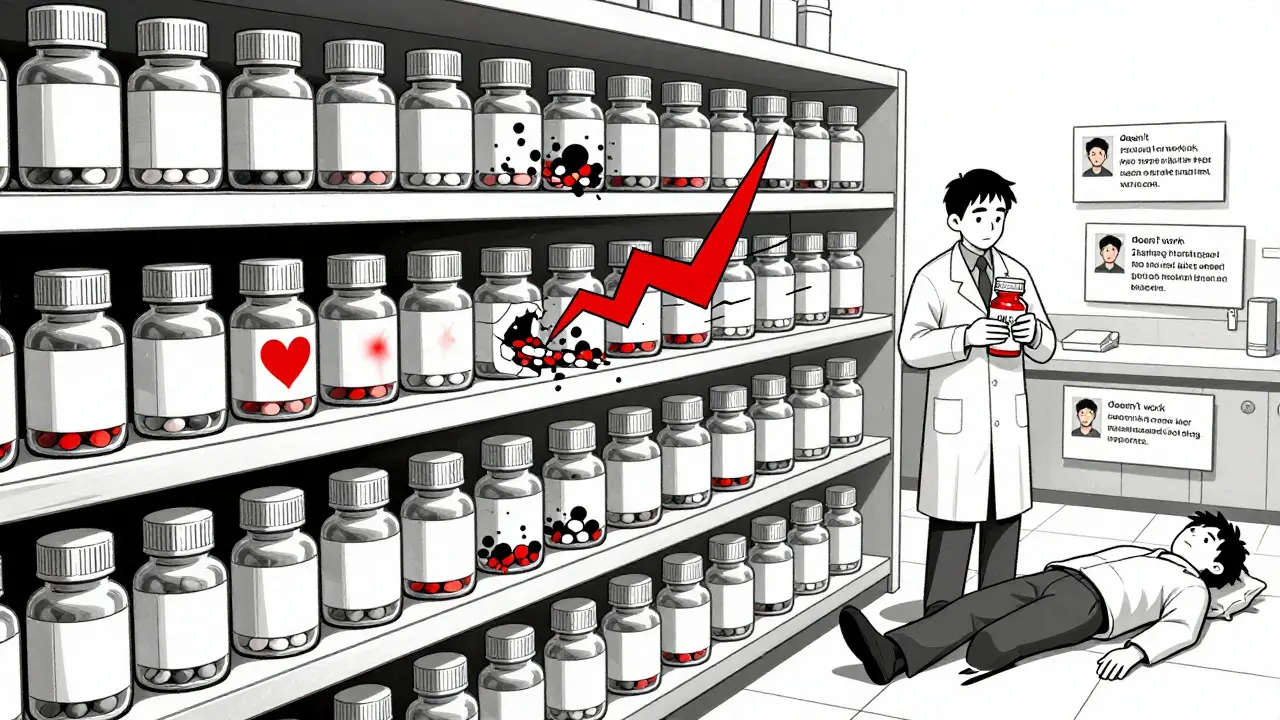
Why the System Is Broken
The problem isn’t just bad actors. It’s a system designed to fail. The Hatch-Waxman Act of 1984 made it easier to approve generic drugs - a good thing for lowering costs. But it didn’t keep pace with complexity. Today, many generics - like those for epilepsy, blood thinners, or transplant drugs - are “narrow therapeutic index” (NTI) drugs. These have a tiny margin between a safe dose and a toxic one. A 5% difference in absorption can cause seizures or organ rejection. Proving bioequivalence for these drugs now takes 37% more testing than simple generics. Yet many manufacturers still cut corners. In 2022, NTI drugs made up 37% of all complete response letters (CRLs) from the FDA - meaning the agency rejected their applications because they couldn’t prove safety. Another issue: data integrity. Nearly 78% of data problems cited by the FDA involve missing audit trails, weak passwords, or fake records. Some labs delete failed test results. Others backdate documents. One facility was caught using the same chromatography data for three different batches of the same drug.Who’s Fixing This - And Is It Working?
The FDA is trying. In 2022, they issued 147 warning letters for manufacturing violations - up 28.5% from the year before. Sixty-three percent targeted foreign plants. The 2022 FDA User Fee Reauthorization added $56.7 million to boost foreign inspections, aiming to raise them from 1,200 to 1,800 per year by 2027. The European Medicines Agency (EMA) went further. Since January 2023, they’ve done unannounced inspections on all foreign drug plants supplying the EU. The result? A 41.2% spike in critical findings. That’s proof that surprise visits work. But the FDA still lags. Their 2023-2027 plan says they’ll prioritize “high-risk” facilities. That sounds good - but what counts as high-risk? A plant that makes insulin? A drug used in chemotherapy? Or just the ones with the worst past records? And even if inspections increase, they’re still just a snapshot. A factory can clean up for a day. But if the culture of cutting corners remains, the problems come back.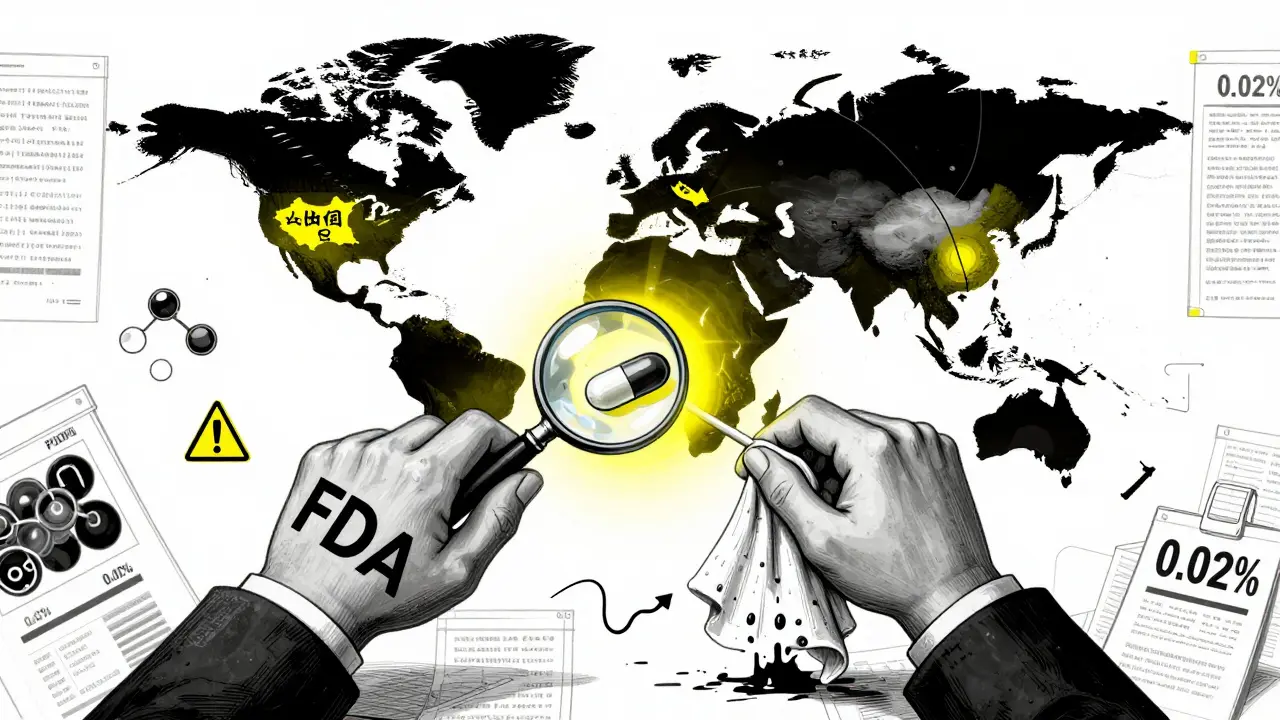
What Can Be Done?
There’s a solution - but it’s expensive and hard to adopt: Quality by Design (QbD). QbD means building quality into the drug from the start. It requires mapping every step of manufacturing, identifying what can go wrong, and setting controls to stop it. It’s not a checklist. It’s a mindset. But only 23.8% of generic manufacturers use QbD fully. Why? Because it costs $2.7 million on average per facility and takes 18 to 24 months to implement. In a market where prices keep falling, most companies won’t spend that money. The only real fix? Regulatory pressure. The FDA needs to:- Conduct unannounced inspections at all foreign facilities.
- Test at least 5% of imported shipments - not 0.02%.
- Require public reporting of all inspection findings - not just warning letters.
- Penalize companies that falsify data - not just warn them.
What You Can Do
You can’t control the factory. But you can be informed.- If a generic drug doesn’t work like it used to - especially for heart, thyroid, or seizure meds - talk to your doctor. Ask if switching brands could help.
- Check the FDA’s Drug Shortage Database. If a drug is in short supply, it’s often because of a quality issue at the plant.
- Use Drugs.com or other patient review sites. If dozens of people say a generic version “doesn’t work,” there’s likely a problem.
- Don’t assume “generic” means “same.” For critical medications, the manufacturer matters.
Why do generic drugs sometimes not work like the brand-name version?
They’re supposed to be the same - but manufacturing flaws can change how the drug is absorbed. Issues like poor dissolution, unstable packaging, or impurities can make a generic less effective or even dangerous. This is especially true for narrow therapeutic index drugs like warfarin, levothyroxine, or tacrolimus, where tiny differences in blood levels can cause serious side effects.
Are generic drugs made in India or China unsafe?
Not all of them. But data shows higher rates of violations at facilities in these countries. In 2022, Indian and Chinese plants received nearly 20-30% more FDA inspection findings than U.S. ones. Some factories have been caught destroying quality records or using fake test data. That doesn’t mean every drug from there is bad - but it means you should be more cautious, especially with critical medications.
How does the FDA catch bad generic drugs?
Mostly through inspections and reports. But inspections are scheduled in advance for foreign plants, giving manufacturers time to hide problems. The FDA also reviews company-submitted data - not independent lab tests. Only 0.02% of imported drugs are physically tested. Most problems are found after patients report side effects or pharmacists notice inconsistent results.
What’s the difference between a warning letter and a recall?
A warning letter is a notice from the FDA saying a facility violated safety rules. It doesn’t mean the drug is unsafe yet - but it’s a red flag. A recall happens when the drug is already on the market and found to be harmful, ineffective, or contaminated. Recalls are serious. Warning letters are the first sign something’s wrong.
Should I avoid generic drugs altogether?
No. Most generics are safe and effective. But for drugs where small differences matter - like blood thinners, epilepsy meds, or thyroid hormones - ask your pharmacist or doctor if switching brands could help. If a generic stops working, it’s not in your head. It could be a manufacturing issue.
Can I find out where my generic drug was made?
Yes. Look at the drug’s label - the manufacturer’s name is listed. Then search that name on the FDA’s website. You can find inspection reports, warning letters, and recalls tied to that facility. You can also ask your pharmacist. Many now track this information.


So let me get this straight: we outsource the production of life-saving drugs to countries with zero oversight, then act shocked when people die because a pill didn't dissolve properly? Brilliant. The FDA's 0.02% testing rate isn't oversight-it's a parody of governance. And yet, we still buy these generics like they're just cheaper versions of the same thing. I'd like to see the CEO of a generic pharma company swallow one of their own defective batches and then tell me it's 'bioequivalent.'
It is not merely a matter of regulatory failure, nor is it simply a question of economic incentive-it is, at its core, a metaphysical collapse of the social contract. We have entrusted our biological integrity to an industrial apparatus that prioritizes profit over personhood, and in doing so, we have surrendered the sacred duty of care to the cold calculus of supply chains and shareholder dividends. The patient who collapses because their nitroglycerin fails to dissolve is not merely a statistic-he is the human embodiment of a civilization that has lost its moral compass. The question is no longer whether we can fix the system, but whether we still believe that human life deserves protection beyond the ledger.
Hey, I just checked my blood pressure med-made in India. Didn’t even know that. Guess I’ll ask my pharmacist next time. Thanks for the heads-up! 🙏
I’ve been a pharmacist for 22 years, and I’ve seen this pattern over and over-patients come in, confused, scared, saying their ‘same’ medication isn’t working anymore. It’s heartbreaking. One woman with epilepsy switched generics and had three seizures in two weeks. The new batch? Made in Gujarat. The lab data? Backdated. The FDA? Still waiting for their next scheduled visit. We’re not talking about a headache pill here-we’re talking about drugs where 3% variation can kill. And yet, we treat it like a grocery store price tag. We need to stop pretending this is about savings. It’s about survival.
Oh, darling, it’s simply *deliciously* tragic, isn’t it? We outsource the very essence of our vitality-our pills-to a land where quality control is a folk tale told to children, and then we gasp in horror when the medicine turns to dust? How *exquisitely* postmodern. The FDA, like a Victorian gentleman politely knocking on the door of a opium den, says, ‘May I inspect your records?’ Meanwhile, the factory is burning the test results with a ceremonial candle and a flute solo. I, for one, am ready to start a cult. We’ll call it ‘The Church of Pure Bioequivalence.’
Look, I get it-costs are down, prices are low, and we all want to save money. But when your grandma’s heart med stops working, and you find out it was made in a plant where they were literally tossing documents into acid… that’s not a cost-saving measure. That’s a crime. And no, I don’t care if it’s ‘FDA-approved.’ If the system’s rigged, then the approval is just a rubber stamp on a coffin.
Okay so like, the FDA is basically just a glorified paper pusher at this point, right? I mean, how many times do we have to see the same footage of some guy throwing away test results? And then they just send a warning letter like it’s a parking ticket? And the worst part? They don’t even test the pills when they get here! Like, 0.02%?? That’s less than one in a thousand. I mean, I could flip a coin and get better accuracy. And don’t even get me started on how they schedule inspections like it’s a dentist appointment. Bro, the factory has a week to clean up, hire a bunch of actors to pretend to be quality control staff, and boom-passing grade. It’s a farce. A total farce. 😭
Umm yeah this is why you never take generics unless you're desperate. I had a friend who took a generic version of his thyroid med and ended up in the hospital. Turns out the batch was made by some guy in a garage with a blender and a dream. The FDA doesn't care. Big Pharma doesn't care. All they care about is profit. You think you're saving money? You're just buying a lottery ticket where the prize is a heart attack. Stop being naive.
As a nurse in Johannesburg, I’ve seen patients from all over the world come in with meds that don’t work-and not because they’re non-compliant. No. Because the pills are fake, degraded, or manufactured in a place where the water runs brown and the inspectors get paid in tea. I held a child once whose seizure meds were so inconsistent, her body didn’t know if it was supposed to be calm or convulsing. This isn’t about ‘cost’-it’s about dignity. We don’t treat our pets like this. Why do we treat our people like disposable data points?
bro. i just checked my generic metformin. made in india. 🤯 i thought it was the same. now i'm scared to take it. i'm gonna ask my doc for the brand. i don't care if it costs $10 more. i need to know my body isn't playing russian roulette with a pill. 🫠💊
Westerners are such hypocrites. You demand cheap drugs, then cry when the factories you forced into existence can't meet your impossible standards. India produces 40% of the world’s generics. We don’t have your luxury of 200 inspectors and $10 billion budgets. You want quality? Pay for it. Don’t demand $0.10 pills and then act shocked when they don’t cure cancer. Your greed built this system. Now you want to blame us?
Man, this whole thing is a mirror. We outsource our health because we don’t want to pay for it… but then we get mad when the system we created fails. It’s like ordering a burger from a food truck in a war zone and then yelling because it’s not five-star. We’re the problem. We’re the ones who said, ‘Just make it cheaper.’ Now we’re shocked when cheap means dangerous. We need to stop pretending we’re victims here. We’re the architects of this mess.