
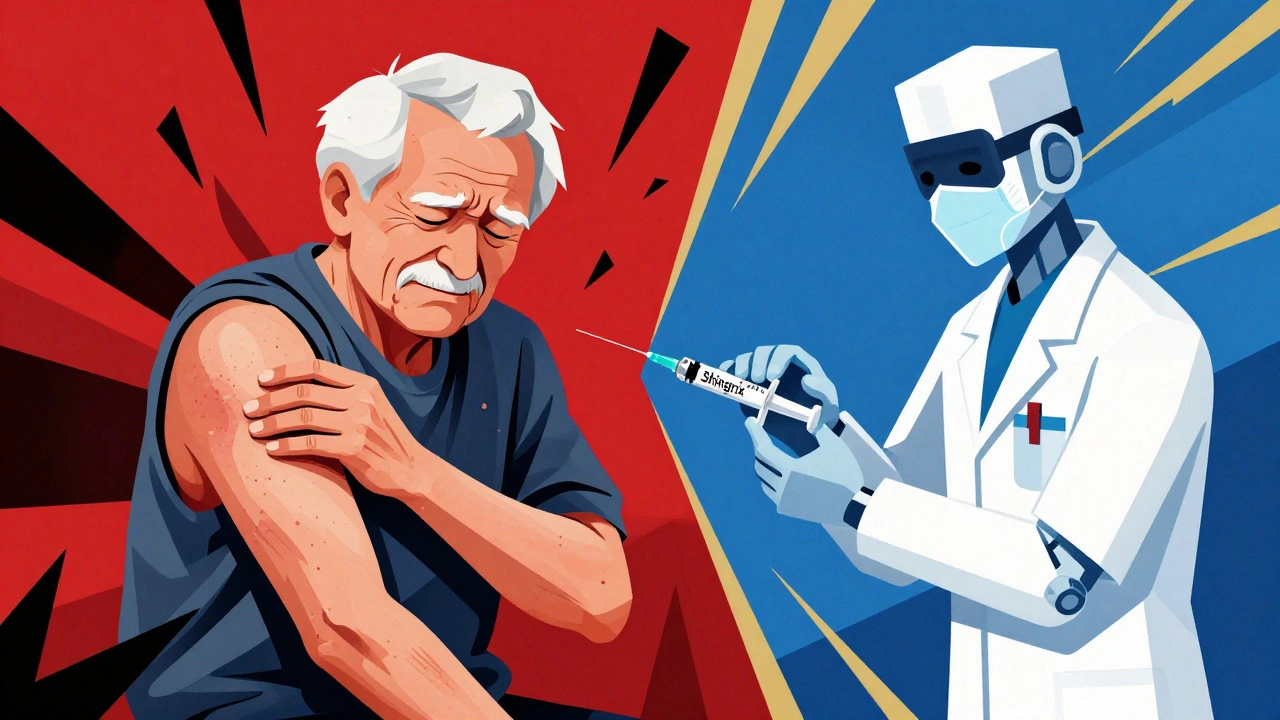
Shingles Vaccination: Who Should Get the Recombinant Zoster Vaccine
Shingles isn’t just a rash. For many people, it’s months of burning pain that won’t go away-even after the blisters heal. That lingering nerve pain, called postherpetic neuralgia, can make brushing your teeth, wearing a shirt, or sleeping impossible. And it’s not rare. About 1 in 3 people in the U.S. will get shingles in their lifetime. The good news? There’s a vaccine that works better than anything we’ve had before. It’s called Shingrix, the recombinant zoster vaccine. But who exactly should get it? And why is it so different from what was used just a few years ago?
Shingrix Is Now the Only Shingles Vaccine Available in the U.S.
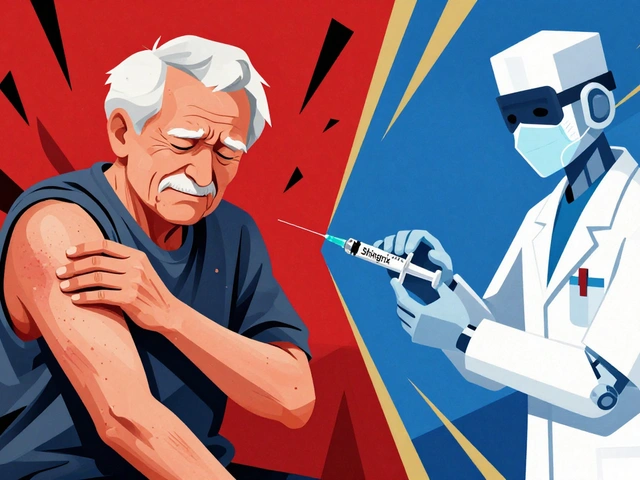
If you remember Zostavax, you’re not alone. That was the old shingles vaccine, a live virus shot given once. It was okay-about 51% effective at preventing shingles. But it had big flaws. It didn’t work well in older adults, and it was completely unsafe for people with weakened immune systems. That’s why, in November 2020, Zostavax was pulled off the market in the U.S. Today, Shingrix is the only option. And it’s not just an upgrade-it’s a revolution.
Shingrix isn’t made from a live virus. Instead, it uses a piece of the virus (glycoprotein E) plus a powerful immune booster (AS01B adjuvant). This means it’s safe for people with cancer, HIV, organ transplants, or those on immunosuppressants. It’s also far more effective. Studies show it’s over 90% effective at preventing shingles in people aged 50 and up. Even for those over 70, it still works at 91%. For preventing the long-term nerve pain, it’s 90% effective. That’s more than double what Zostavax could do.
Who Should Get Shingrix? The CDC’s Official List
The Centers for Disease Control and Prevention (CDC) is clear: if you’re 50 or older, you need two doses of Shingrix-no exceptions. You don’t need to wait until you’re 60. You don’t need to have had shingles before. You don’t even need to remember if you had chickenpox as a kid (and almost everyone did). The vaccine works whether you’ve had shingles or not. In fact, if you’ve had shingles, you’re at higher risk of getting it again. Shingrix reduces that risk too.
But here’s the part most people don’t know: if you’re 19 or older and have a weakened immune system, you should also get Shingrix. That includes people with:
- HIV/AIDS
- Cancer (especially blood cancers like leukemia or lymphoma)
- Organ or stem cell transplants
- Long-term steroid use (20 mg or more of prednisone daily)
- Autoimmune diseases on biologic drugs (like Humira, Enbrel, or Remicade)
- Chronic kidney disease
These groups were left unprotected by Zostavax. Shingrix changed that. The CDC updated its guidelines in 2018 to include them-and it’s one of the most important shifts in adult immunization in the last decade.
How the Vaccine Is Given-And Why It Matters
Shingrix isn’t a one-and-done shot. You need two doses. The second dose should be given 2 to 6 months after the first. If you’re immunocompromised, you can get the second dose as early as 1 to 2 months after the first. That’s because your immune system needs the boost faster.
Each dose is 0.5 mL and is injected into your upper arm muscle. It’s not a subcutaneous shot like some vaccines-it’s intramuscular. Providers use a 5/8-inch needle for people under 130 pounds and a 1-inch needle for heavier adults. Getting it wrong can reduce effectiveness.
The vaccine must be kept cold-at 2°C to 8°C (36°F to 46°F). Once it’s mixed, you have only 6 hours to use it. That’s why you can’t just grab it off the shelf at a pharmacy and inject it yourself. It’s given in clinics, pharmacies, and hospitals under strict protocols.
Side Effects: What to Expect (And What Not to Worry About)
Shingrix is highly effective-but it’s also more reactive than most vaccines. About 80% of people get pain, redness, or swelling at the injection site. Nearly half feel muscle aches. About 4 in 10 get tired. One in three gets a headache. One in five feels chills or a low fever. These aren’t rare side effects-they’re normal.
Most people feel unwell for 2 to 3 days. Some say it feels like the flu. But here’s the key: it’s temporary. And it’s far better than shingles. People who’ve had shingles often say, “I’d take three days of feeling awful to avoid another outbreak.”
Severe reactions are rare. Anaphylaxis happens in fewer than 1 in a million doses. If you had a serious allergic reaction to Shingrix before, don’t get it again. If you’re sick with a fever right now, wait until you’re better. But don’t skip it because you’re nervous about sore arms or fatigue. The risk of shingles is much higher.
What If You Got Zostavax Before?
If you got Zostavax years ago, you still need Shingrix. The CDC says so. Even if you got Zostavax last year, you should still get Shingrix. Why? Because Shingrix is so much better. The protection from Zostavax fades over time, and it doesn’t work well in older adults. Shingrix gives you stronger, longer-lasting protection.
Wait at least 8 weeks after your Zostavax shot before getting Shingrix. But if you got it more than 5 years ago, you’re definitely due. Many people don’t realize this. Doctors are starting to screen patients for past Zostavax shots during routine visits. If you’re 50 or older and you’re not sure what you got, ask for your records-or just get Shingrix anyway. There’s no harm in getting it after Zostavax.
Cost and Insurance: Is It Covered?
Shingrix costs about $175 for both doses. That’s less than Zostavax did when it was around. But here’s the good news: Medicare Part D covers it fully. Most private insurance plans do too. You shouldn’t pay anything out of pocket if you’re eligible. If you’re told you have a copay, ask if the provider is in-network. Some pharmacies, like CVS and Walgreens, offer it with no cost under Medicare.
If you’re uninsured, there are programs. The Vaccines for Children program doesn’t cover adults, but the 340B Drug Pricing Program and some state health departments offer free or low-cost vaccines. Don’t let cost stop you. Shingles can cost thousands in medical bills and lost wages if it leads to long-term pain.
Why So Many People Still Haven’t Gotten It
Despite all this, only about 35% of adults over 60 have gotten both doses of Shingrix. Why? Three reasons:
- People think they’re too young. But the CDC says 50+, not 60+.
- They’re scared of side effects. But the discomfort is short-term. Shingles pain can last years.
- They forget the second dose. About 1 in 3 people don’t come back for it. That means they’re only half-protected.
Doctors and pharmacists are working to fix this. Many clinics now schedule your second dose before you leave. Pharmacies send reminders. Electronic health records flag patients who need the shot. But you still have to take the first step.
What’s Next? Long-Term Protection and Future Updates
Current data shows Shingrix stays over 85% effective for at least 7 years. Some experts believe protection could last 15 to 20 years. There’s no evidence yet that a booster is needed. But researchers are watching closely. If immunity starts to drop after 10 years, a third dose could be recommended. For now, two doses are enough.
Shingrix is also being studied for use in younger adults with high-risk conditions-like those with chronic lung disease, diabetes, or kidney failure. The Global Initiative for Chronic Obstructive Lung Disease (GOLD) already recommends it for COPD patients over 50. That’s likely to expand.
What’s clear is this: shingles is preventable. The vaccine works. The side effects are manageable. And the consequences of skipping it are severe. If you’re 50 or older-or 19 and immunocompromised-talk to your doctor. Get the first dose. Schedule the second. Don’t wait until you’re in pain to act.
Do I need Shingrix if I already had shingles?
Yes. Having shingles doesn’t give you lifelong immunity. Your risk of getting it again is real, especially as you get older. Shingrix reduces the chance of a second outbreak by more than 90%. The CDC recommends it even if you’ve had shingles in the past.
Can I get Shingrix if I’m allergic to eggs?
Yes. Shingrix doesn’t contain egg proteins. Unlike flu or yellow fever vaccines, it’s not grown in eggs. Egg allergies are not a concern with this vaccine.
Is it safe to get Shingrix with other vaccines?
Yes. You can get Shingrix at the same time as flu, pneumonia, or COVID-19 vaccines. They just need to be given in different arms. No waiting period is needed between vaccines. This makes it easier to stay up to date on all your shots.
What if I miss my second dose?
Don’t restart the series. If you’re late, just get the second dose as soon as you can. You don’t need to wait 6 months. Even if it’s been a year or more, the second dose will still work. The goal is two doses-timing between them is flexible.
Can I get Shingrix if I’m pregnant or breastfeeding?
Shingrix isn’t recommended during pregnancy because it hasn’t been studied enough in pregnant women. But if you’re breastfeeding, it’s safe. The vaccine doesn’t contain live virus, so it can’t pass to your baby. Talk to your doctor if you’re pregnant or planning to become pregnant.
Does Shingrix prevent chickenpox?
No. Shingrix only prevents shingles, which is caused by the reactivation of the chickenpox virus (varicella-zoster) that’s been dormant in your body. If you’ve never had chickenpox or the chickenpox vaccine, you need the varicella vaccine-not Shingrix.
Next Steps: What to Do Today
If you’re 50 or older, call your doctor or local pharmacy. Ask if you’ve had both doses of Shingrix. If not, schedule the first one. If you’re under 50 but have a weakened immune system, ask your specialist if you qualify. Don’t wait for symptoms. Don’t assume you’re protected because you had chickenpox. The vaccine works whether you’ve had the disease or not.
Shingles is painful. It’s expensive. It’s long-lasting. And it’s entirely preventable. You don’t need to wait until you’re in agony to act. Two shots, six months apart-that’s all it takes to protect yourself from years of suffering. Get the first one. Then make sure you get the second. Your future self will thank you.



Shingrix is a game-changer for immunocompromised patients-seriously, if you're on biologics or have HIV, this isn't optional. The adjuvant system AS01B? Pure science magic. Zostavax was a Band-Aid; this is open-heart surgery for your immune system.
Got my second dose last week. Felt like I got hit by a truck for two days-but I’d take that over shingles pain any day. My grandma had it for 3 years. No thanks.
so i read this and i’m like… why is this even a debate? like… we have a vaccine that works. like, actually works. not ‘kinda’ works. but people still skip it? wild.
They’re hiding the truth. Shingrix was rushed because Big Pharma needed a new cash cow. That ‘adjuvant’? It’s just a chemical cocktail to force your immune system into overdrive. Look up the VAERS reports-
OMG YES! I work at a pharmacy and so many people say ‘I don’t need it, I’m healthy!’-then they get shingles and cry in the aisle. 😭 Just get the shot. Your future self will hug you.
I appreciate how thorough this is. One thing I’d add: if you're 50–59 and healthy, you might think you’re low-risk-but the CDC’s data shows even healthy 50-year-olds have a 1 in 10 chance of shingles by 70. The earlier you get it, the longer protection lasts. Don’t wait for a trigger event.
Also, if you’re getting other vaccines, space them in different arms. No need to delay anything else. It’s not a burden-it’s a gift to your future self.
i got both doses last year and my arm hurt for 2 days. worth it. my uncle got shingles and had to quit his job. he’s 62. don’t be him.
While the clinical data is statistically significant, one must consider the broader epistemological framework of vaccine efficacy in aging populations. The immune senescence paradigm suggests that even 90% efficacy may not translate to real-world durability beyond five years. Furthermore, the adjuvant’s long-term neuroinflammatory potential remains under-studied.
Shingrix isn’t just a vaccine-it’s a moral imperative. We have a tool that prevents years of suffering, and we’re letting people skip it because they’re afraid of sore arms? That’s not caution. That’s cowardice disguised as skepticism.
If you’re 50+, you owe it to your body, your family, and your future self to get both doses. No excuses. The science is settled.
Just got mine yesterday. Second dose. Felt like I ran a marathon. But I’m not sorry. 😊 My dad had shingles for 18 months. I’m not letting that happen to me.
Let me just say: I’m 54, got Zostavax in 2017, and got Shingrix last month. My doctor said I didn’t need it-but I read the CDC guidelines and insisted. She was shocked I knew more than her. (I’m not a doctor, but I read.)
Side effects? Yeah, I was wiped for 48 hours. But I also didn’t get shingles. So I’m calling it a win. Also-please, if you’re immunocompromised, don’t wait for your doctor to bring it up. Bring it up yourself. They’re overloaded.
And if you miss your second dose? Don’t panic. Just call. It’s not a failure. It’s a delay. Two doses still beat one. And one dose beats zero.
Also, egg allergy? Totally fine. I have one. No issues. Stop using that as an excuse.
And yes, you can get it with your flu shot. Just use the other arm. Easy. No need to schedule three appointments.
And if you think you’re too young? You’re not. The CDC says 50. Not 60. Not ‘when you feel old.’ 50. Start now.
And if you had shingles? You’re even more at risk. The vaccine cuts recurrence by 90%. That’s not a ‘maybe.’ That’s a guarantee.
And if you’re worried about cost? Medicare covers it. Most insurers do. If they say ‘copay,’ ask them to check again. I’ve seen people pay $0. Don’t let bureaucracy stop you.
And if you’re reading this and you’re 19 and on Humira? Yes, you. You need it. Your doctor might not know. I had to educate mine. You’re not too young. You’re high-risk. Get it.
This isn’t hype. It’s survival.
Why are we even talking about this? In my day, people just dealt with pain. Now we’re vaccinating everyone over 50 like they’re fragile. It’s weak. If you can’t handle a little pain, you shouldn’t be living.
But… what if the adjuvant triggers autoimmunity? What if it’s just delaying the inevitable? I’ve read studies-there’s a 0.03% increased risk of Guillain-Barré… and what if the long-term effects are worse than the disease? I mean… we don’t know… do we?
Shingrix is great but why do they make you wait 6 months? That’s so inconvenient. Just give it all at once. And why do they need to keep it cold? Can’t they fix that? It’s 2025.
As a 45-year-old with type 2 diabetes, I received Shingrix last month. The vaccine is scientifically robust. The two-dose regimen is essential. I encourage all adults with metabolic conditions to consult their physician without delay. Prevention is superior to cure.