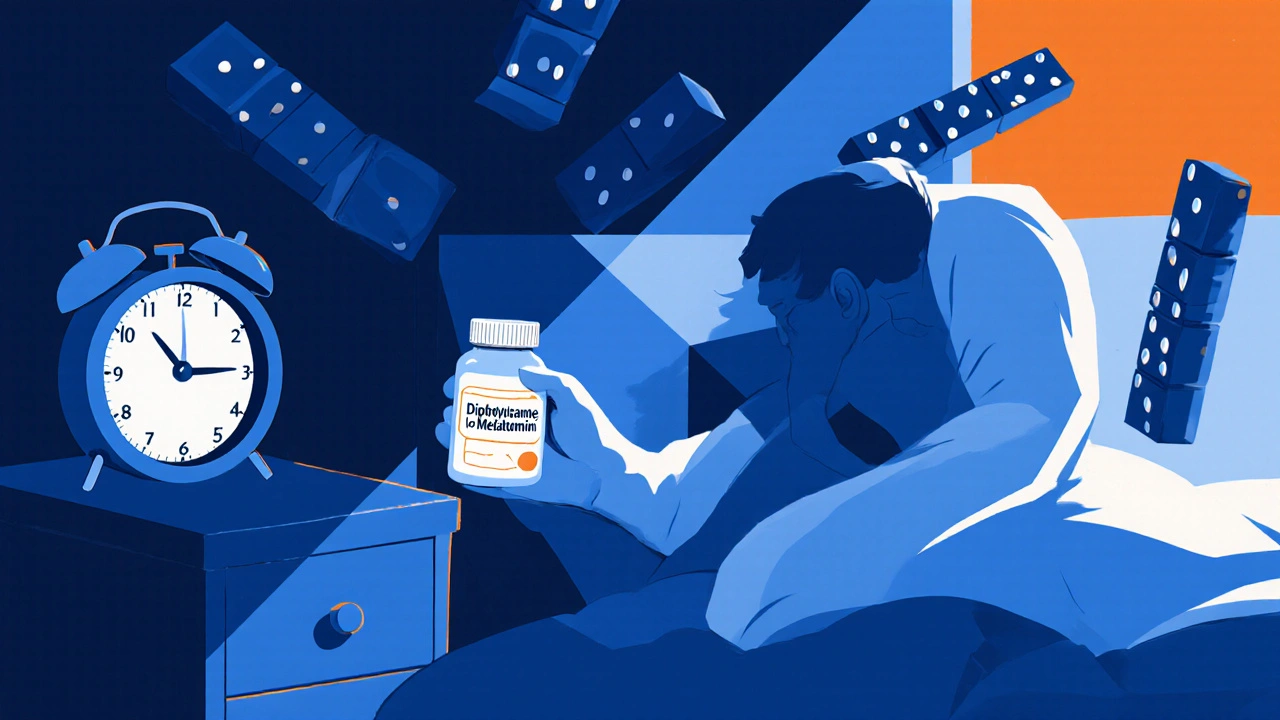
Sleep Aid Side Effects: What You Need to Know Before Taking Them
When you reach for a sleep aid, a medication or supplement used to help with falling or staying asleep. Also known as insomnia medication, it's often the go-to fix for nights when sleep won’t come. But these pills don’t just help you sleep—they change how your brain and body work, and that comes with real risks. Many people don’t realize how common side effects like drowsiness, memory issues, and even falls are, especially in older adults. The problem isn’t just the drug—it’s how long you take it and what you’re taking it for.
Not all sleep aids are the same. Over-the-counter options like diphenhydramine (found in Benadryl or ZzzQuil) cause drowsiness by blocking histamine, but they can leave you feeling foggy the next day, like you’ve had a bad hangover. Prescription drugs like zolpidem (Ambien) or eszopiclone (Lunesta) work on brain receptors to quiet activity, but they carry a higher risk of dependence. Even melatonin, often seen as harmless, can throw off your natural sleep rhythm if taken at the wrong time or in too high a dose. And here’s the thing: if you’ve been using one for more than a few weeks, you might not even realize you’re now dependent on it to fall asleep. Withdrawal can make insomnia worse than before you started.
Some side effects are silent until it’s too late. Sleep aids can cause sleepwalking, eating, or even driving while not fully awake—no memory of it the next morning. They can lower your breathing rate, which is dangerous if you have sleep apnea. Older adults are especially at risk for confusion, falls, and hip fractures after using these drugs. And while they might help you sleep tonight, they don’t fix the real problem: stress, poor sleep habits, untreated pain, or an underlying health issue like restless legs or anxiety. The longer you rely on them, the less likely you are to find a real solution.
What you’ll find below are real, practical guides from people who’ve been there—how to spot dangerous reactions, why some sleep aids are riskier than others, what alternatives actually work, and when to talk to your doctor instead of reaching for the bottle. No fluff. No marketing. Just what you need to know before you take another pill.
OTC sleep aids may help with occasional insomnia, but long-term use carries risks like dementia, falls, and rebound insomnia. Learn what's in them, who should avoid them, and what actually works better.
READ MORE