
Antibiotic Rashes: When to Stop the Drug and Call the Doctor
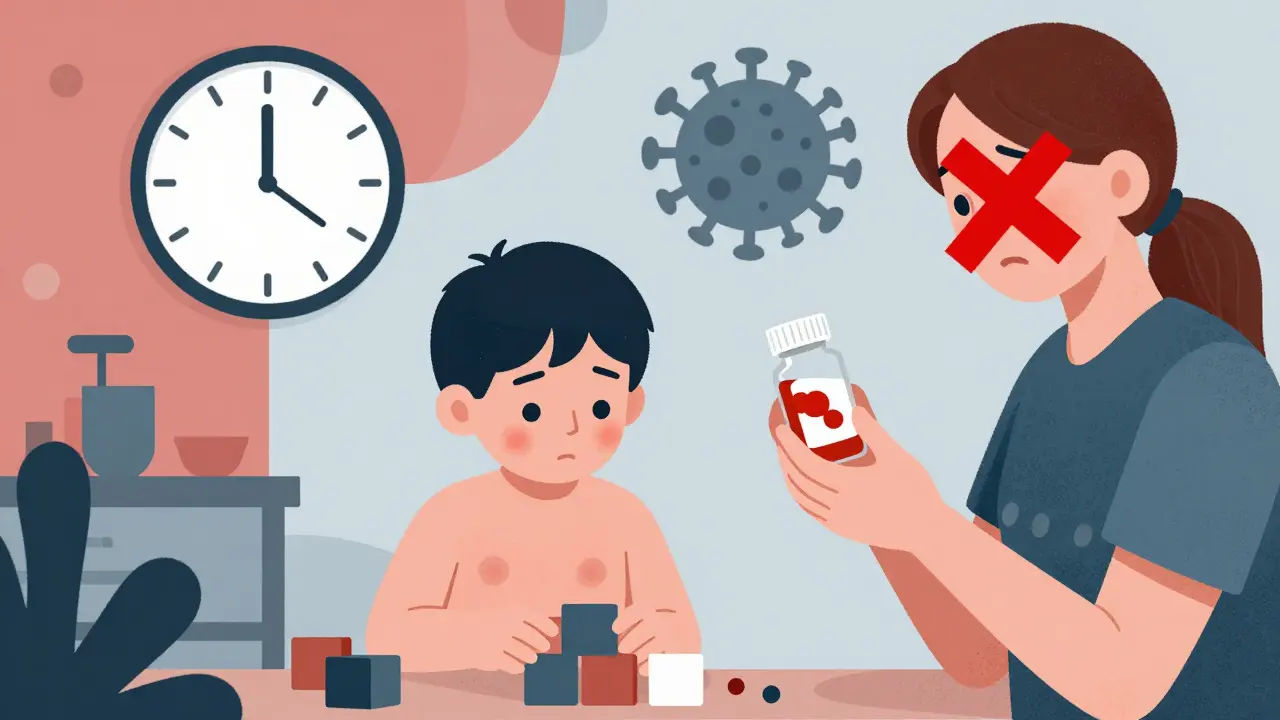
Most parents see a rash on their child after starting antibiotics and panic. They stop the medicine right away-often without calling the doctor. But here’s the truth: antibiotic rash doesn’t always mean an allergy. In fact, 9 out of 10 times, it’s not an allergy at all. And stopping the antibiotic unnecessarily can do more harm than good.
What Does an Antibiotic Rash Look Like?
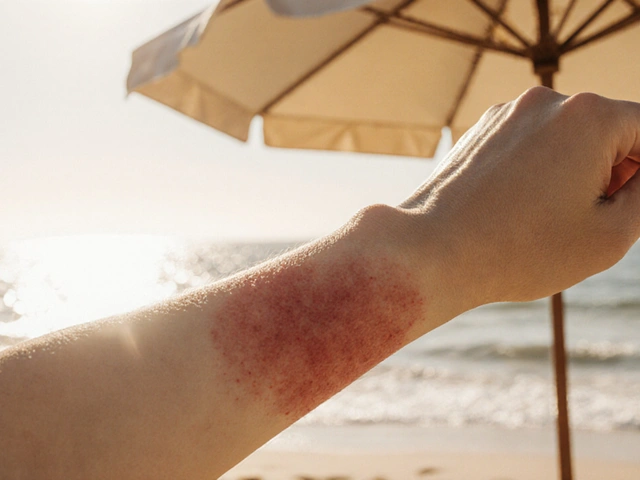
Not all rashes are created equal. If your child gets a rash while on amoxicillin or another penicillin-based antibiotic, the first thing to check is how it looks and when it showed up. A non-allergic rash-commonly called a maculopapular rash-usually appears between days 5 and 10 of treatment. It’s flat or slightly raised, spread out over the chest, back, or stomach, and often looks like small pink or red spots. It doesn’t itch much, if at all. This type of rash is especially common in kids with viral infections like mono or the flu. The virus triggers the reaction, not the antibiotic. Studies show that 5-10% of children on amoxicillin get this rash, but fewer than 1% are truly allergic. Now, contrast that with a true allergic reaction. That’s hives: raised, red, itchy welts that move around the body. They show up fast-within an hour of taking the pill. You might also see swelling of the lips, tongue, or face. Breathing trouble, vomiting, or dizziness? That’s anaphylaxis. This is rare-less than 0.4% of antibiotic users-but it’s life-threatening.When to Stop the Antibiotic
Here’s the simple rule: if it’s not hives and not life-threatening, keep taking the antibiotic. The CDC and the American Academy of Pediatrics both say: don’t stop amoxicillin just because of a non-itchy, non-moving rash. Stopping it increases the chance the infection comes back worse. One study found that 37% more kids needed stronger antibiotics after stopping amoxicillin for a rash. Those stronger drugs? They cause more diarrhea, more yeast infections, and raise the risk of C. difficile-a dangerous gut infection that can land you in the hospital. But here’s the flip side: if the rash is hives, swelling, trouble breathing, or blistering skin, stop the antibiotic immediately. Call 911 or go to the ER. That’s not a reaction to wait on. Severe reactions like Stevens-Johnson Syndrome or toxic epidermal necrolysis are rare-only 1 to 6 cases per million prescriptions-but they kill 5-50% of people who get them. Fever, mouth sores, or peeling skin? Don’t wait. Get help now.What to Do If You’re Not Sure
If you’re stuck between a non-itchy rash and a possible allergy, don’t guess. Call your doctor. Take a photo. Note the date, the timing after the first dose, and whether your child has a fever or is acting sick. Doctors use a four-point checklist:- Timing: Rash before day 3? More likely allergic.
- Morphology: Flat spots? Probably not allergic. Raised, moving welts? Probably allergic.
- Symptoms: Fever? Swollen lips? Trouble breathing? Stop the drug and seek help.
- History: Has your child had a bad reaction before? If not, it’s probably not an allergy.

How to Manage the Rash
If your doctor says it’s safe to keep going, you don’t need to do much for a non-allergic rash. It will fade on its own in 5-7 days. But if your child is uncomfortable:- Use a mild hydrocortisone cream (1%) on itchy spots-just once or twice a day.
- If itching is worse, try cetirizine (Zyrtec) or loratadine (Claritin). Dose by weight: 0.25 mg per kg, max 10 mg per day.
- Keep the skin cool and dry. Avoid tight clothes.
- Don’t use oral steroids unless a specialist recommends it. Studies show they increase complications by 22%.
What Happens After the Rash?
Once the infection is gone and the rash has cleared, you might still be labeled “allergic to penicillin” in your medical record. That’s dangerous. That label follows you for life and leads to the use of broader, costlier, and more toxic antibiotics every time you need one. Ask your doctor about penicillin allergy testing. It’s simple. A skin test takes 15 minutes. If it’s negative, you’re not allergic. New rapid tests like the PENtest are now available in many clinics. A 2023 FDA-approved test gives results in 15 minutes instead of three hours. In hospitals that use these tests, inappropriate allergy labels dropped by 39%. Even if you’ve never been tested, you can still get a challenge dose under supervision. Most people who’ve had a rash as a child pass the test without issue. And if you’re an adult who got a rash on amoxicillin in college? You’re probably not allergic either.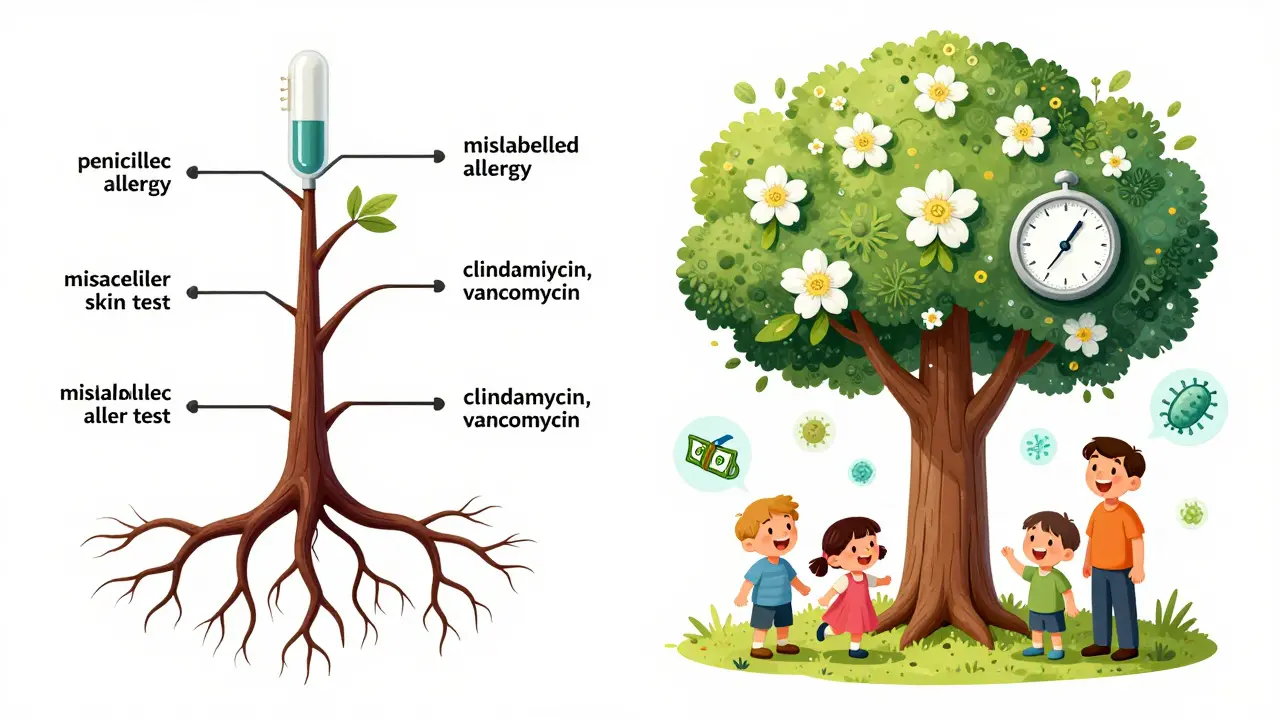
Why This Matters Beyond Your Child
Every time we overuse antibiotics like clindamycin or vancomycin because we think someone is allergic to penicillin, we feed antibiotic resistance. These drugs kill off good bacteria and let superbugs grow. The CDC lists reducing unnecessary penicillin allergy labels as one of the top seven ways to fight antibiotic resistance. Hospitals that implemented formal allergy assessment programs saw:- 28% drop in broad-spectrum antibiotic use
- 19% fewer C. difficile infections
- $1,200 to $3,500 saved per patient over five years
Real Stories, Real Consequences
One mom on Reddit stopped her daughter’s amoxicillin after a rash. Two weeks later, the ear infection returned-worse. They had to switch to clindamycin. The child got severe diarrhea for two weeks. Another parent kept the antibiotic as her pediatrician advised. The rash faded in five days. The infection cleared. No complications. Nurses who’ve seen hundreds of these cases say the same thing: “If it’s not hives, don’t panic. Don’t stop. Call your doctor.”Bottom Line
Antibiotic rashes are common. True allergies are rare. Most rashes are harmless side effects-not warnings. Don’t stop the medicine unless you see hives, swelling, trouble breathing, or blistering skin. If you’re unsure, call your doctor. Take a photo. Don’t assume. Get it checked. And if you’ve been told you’re allergic to penicillin because of a childhood rash? Ask for a test. You might be surprised.Is an antibiotic rash always an allergy?
No. Most antibiotic rashes-especially with amoxicillin-are not allergic. About 90% of rashes in children are non-allergic, often triggered by a virus. True allergic reactions involve hives, swelling, or trouble breathing and happen within an hour of taking the drug.
Should I stop the antibiotic if my child gets a rash?
Only if it’s hives, swelling, trouble breathing, or blistering skin. If it’s flat, pink spots that don’t itch much and appear after day 5, keep giving the antibiotic. Stopping it increases the risk of the infection coming back worse and forces doctors to use stronger, riskier antibiotics.
Can I treat an antibiotic rash at home?
For non-allergic rashes, no special treatment is needed. The rash will fade on its own in 5-7 days. If it’s itchy, you can use a 1% hydrocortisone cream or an antihistamine like cetirizine. Avoid oral steroids-they can make things worse. Don’t use home remedies like oatmeal baths unless your doctor says it’s safe.
What’s the difference between a maculopapular rash and hives?
A maculopapular rash is flat or slightly raised, doesn’t move, and usually doesn’t itch. It appears days after starting the antibiotic. Hives are raised, red, very itchy welts that appear within an hour and move around the body. Hives are a sign of allergy; maculopapular rashes usually aren’t.
Can I be tested for a penicillin allergy later in life?
Yes. Many people labeled allergic to penicillin because of a childhood rash are not actually allergic. A simple skin test or oral challenge can confirm this. New rapid tests take only 15 minutes. Over 90% of people who were labeled allergic pass the test and can safely use penicillin again.
Why does mislabeling penicillin allergies matter?
It leads to the use of broader, more expensive, and more dangerous antibiotics. Patients with false penicillin allergies have a 63% higher risk of antibiotic-associated diarrhea and a 30% higher risk of C. difficile infection. It also contributes to antibiotic resistance. The CDC estimates this mislabeling costs the U.S. $1.2 billion annually.

Been there. My kid got that pink spotty rash on amoxicillin-scared the hell out of me. Turned out it was just a virus riding shotgun. We kept the antibiotic, rash faded in a week, no drama. So many parents panic because they don’t know the difference between hives and a harmless blotch. This post? Lifesaver.
Let me just say-this is exactly the kind of information that needs to be shouted from the rooftops. So many parents stop antibiotics at the first sign of a rash, and then wonder why their kid gets C. diff or needs IV antibiotics two weeks later. The data is clear: non-itchy, non-hive rashes are not allergies. Please, share this with every new parent you know.
Stop the panic. Seriously. I’m a nurse, and I’ve seen too many kids get worse because their parents stopped the antibiotic too soon. If it’s not hives, don’t stop. If it’s not breathing trouble, don’t rush to the ER. Call your pediatrician. Take a photo. Wait. Observe. You’ve got this.
It is imperative to note that the statistical prevalence of non-allergic maculopapular rashes associated with amoxicillin is approximately 5–10%, whereas true IgE-mediated hypersensitivity occurs in fewer than 0.4% of cases. The misattribution of these rashes as allergic reactions leads to significant clinical consequences, including the inappropriate use of second-line antibiotics with higher rates of adverse events. This is not anecdotal; it is evidence-based medicine.
Interesting how the pharmaceutical companies never tell you this, isn't it? They push amoxicillin like candy, then when the rash shows up, they want you to think it's just a virus. But what if the drug itself is the trigger? And what about the gut flora? They don't talk about that. I've seen families lose children to antibiotics-this is all part of the system. Be careful. Test everything. Question everything.
Canadians have known this for decades. We don’t panic over rashes-we consult our family doctors, who know the difference between a viral rash and a true allergy. Meanwhile, Americans are Googling symptoms at 2 a.m. and stopping life-saving meds because they saw a TikTok video. This post is excellent. But honestly? We need better health literacy in the U.S.
I appreciate the clarity here. As someone who’s had to explain this to worried parents in my practice, I’ve seen how fear overrides logic. The key is not to dismiss the concern, but to guide it. A photo, a timeline, a calm conversation with the provider-that’s the real work. Thank you for putting this out there with such precision.
It’s fascinating, really-the way a simple rash can carry so much cultural weight. We’ve turned medical decisions into emotional battles, where fear becomes the loudest voice. But the body doesn’t lie. If the rash isn’t hives, isn’t swelling, isn’t breathing trouble-it’s just a sign that the immune system is busy, not broken. The antibiotic? It’s still doing its job. Let it finish.
amoxacilin?? i think its bad for kids. i had a cousin who got rash and then got sick again. maybe its better to use natural things. like garlic or honey. or maybe just wait and see. doctors always want to give pills.
My daughter got the exact same rash at age 4. We kept the amoxicillin. Rash faded. She’s now 16, healthy, and just got her penicillin skin test last year-negative as can be. I wish I’d known this back then. I’d have saved myself three nights of panic and a trip to urgent care that wasn’t needed. Thank you for this.
One of the most important public health messages I’ve seen in months. Mislabeling penicillin allergies doesn’t just affect one child-it echoes through the healthcare system for decades. Every time we default to vancomycin or clindamycin because of a misdiagnosed rash, we’re contributing to antibiotic resistance. Testing isn’t optional. It’s essential. And it’s accessible. Please, if you’ve been labeled allergic, get tested.
Wait, wait-so you’re saying I didn’t need to avoid penicillin my whole life because of a rash I got at 7? I’ve been scared of antibiotics for 28 years… I’m crying. I’m getting tested next week. Thank you. Thank you. Thank you.