

Clindamycin and C. difficile Risk: When to Seek Care
C. diff Risk Assessment Tool
This tool helps you assess your risk of C. difficile infection while taking or after using clindamycin. Based on CDC guidelines, it identifies critical symptoms that require immediate medical attention.
Results will appear here after you check your risk.
Risk Duration
Risk remains elevated for up to 12 weeks after your last dose of clindamycin. Most cases occur within 14 days, but symptoms can appear up to 3 months later.
Antibiotics save lives, but some come with a hidden danger. Clindamycin is one of them. If you’ve been prescribed this drug for a tooth infection, skin abscess, or other bacterial issue, you need to know the real risk: it’s the highest-risk antibiotic for triggering a dangerous gut infection called Clostridioides difficile (C. diff). Most people think diarrhea after antibiotics is just a side effect. It’s not. It could be life-threatening. Here’s what to watch for, when to act, and why waiting could cost you dearly.
Why Clindamycin Is So Dangerous
Not all antibiotics are created equal when it comes to gut damage. Clindamycin doesn’t just kill bad bacteria-it wipes out the good ones that keep your intestines balanced. This creates a vacuum. And C. difficile is waiting. It’s not new. It’s been around since the 1970s. But today, it’s more common, more deadly, and more resistant than ever.
Studies show clindamycin is up to 10 times more likely to cause C. diff than other common antibiotics. A 2019 analysis of over 150,000 patients found it ranked #1 in CDI risk. Even a single dose can be enough. The CDC calls it an “urgent threat.” Why? Because once C. difficile takes over, it releases toxins that burn holes in your colon lining. That’s not just a stomach bug. That’s internal damage.
Compare it to doxycycline or minocycline-antibiotics with the lowest CDI risk. Or even vancomycin, which is used to treat C. diff. Clindamycin’s danger comes from how long it lingers in your gut. Its half-life is 3-4 hours, meaning it keeps disrupting your microbiome longer than most drugs. And the damage doesn’t stop when you finish the pills. Risk stays high for up to 12 weeks after your last dose.
What C. difficile Actually Feels Like
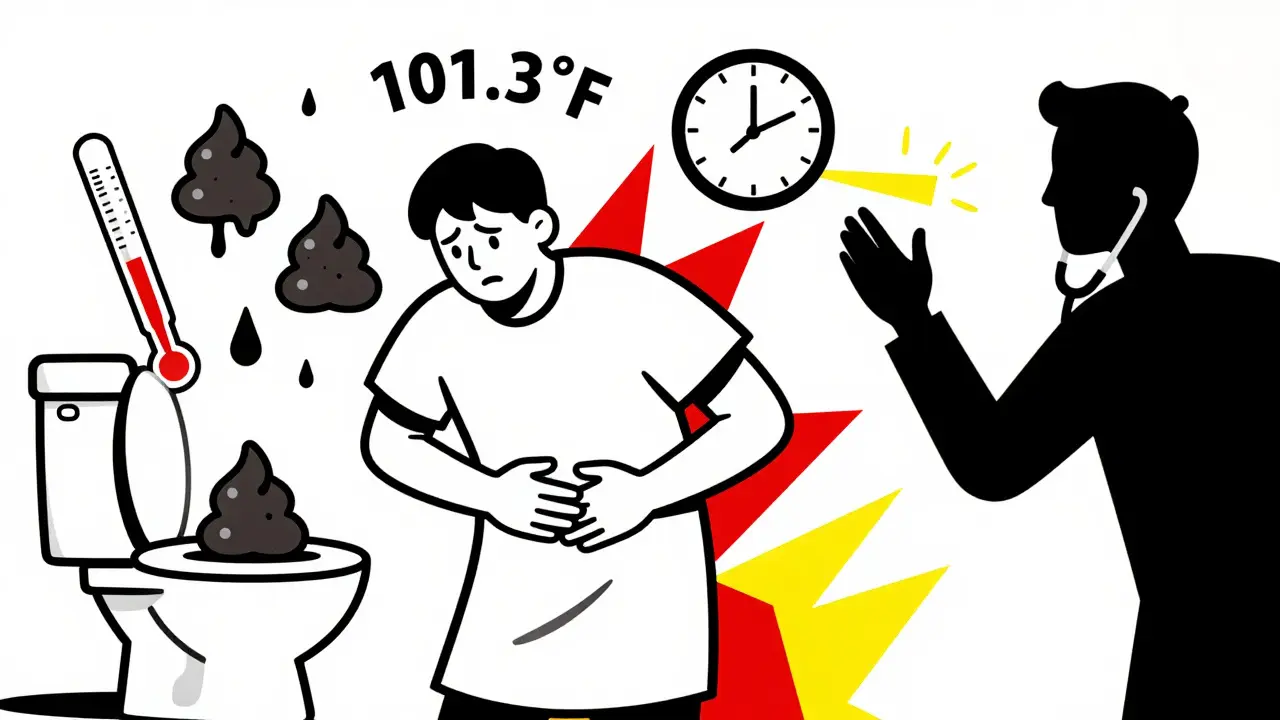
People often ignore early signs. They think, “It’s just a stomach bug.” But C. diff doesn’t start with mild discomfort. It starts with unformed stools-loose, watery, and oddly shaped. Not just frequent. Unformed. Think: stools that take the shape of the toilet bowl. That’s a red flag.
The CDC says if you have three or more loose stools in a day for two or more days while taking or within 12 weeks after taking clindamycin, you need medical attention. But don’t wait for that. If you’re over 65, have had C. diff before, are on immunosuppressants, or have kidney disease, call your doctor after just one day of unformed stools.
Other symptoms to never ignore:
- Fever over 101.3°F (38.5°C)
- Severe abdominal cramping or pain-not just gurgling, but sharp, constant pressure
- Blood or pus in stool
- Signs of dehydration: dizziness, dark urine, no urine for 8+ hours, dry mouth
Some patients develop ileus-where the bowel shuts down. That means no diarrhea at all. Just bloating, vomiting, and extreme pain. It’s rare, but deadly. If you’re on clindamycin and suddenly stop having bowel movements while feeling worse, get to an ER. This isn’t constipation. It’s a medical emergency.
When to Go to the Emergency Room
Most C. diff cases can be treated at home with antibiotics like fidaxomicin or oral vancomycin. But if it escalates, it kills. The CDC defines fulminant C. diff as:
- Low blood pressure needing IV drugs to fix
- Swollen, distended belly with no bowel sounds
- Colon dilation (toxic megacolon)
- Perforation (a hole in the colon)
Without emergency treatment, death rates jump to 35-80%. A 2022 study from the University of Michigan found patients who waited more than 72 hours to seek care had over four times the risk of dying compared to those who acted early. They also had nearly three times the chance of needing a colectomy-surgical removal of part of the colon.
Don’t wait for the pain to get “bad enough.” If you’re on clindamycin and feel worse than you ever have from a stomach bug-especially with fever or dehydration-go to the ER. It’s better to be checked and cleared than to wait and risk irreversible damage.
Who’s Most at Risk-and Why
You might think only hospitalized patients get C. diff. But nearly half of all cases now happen in the community. That’s because clindamycin is commonly prescribed for:
- Dental infections (especially in people allergic to penicillin)
- Acne or skin infections
- Minor surgical prophylaxis
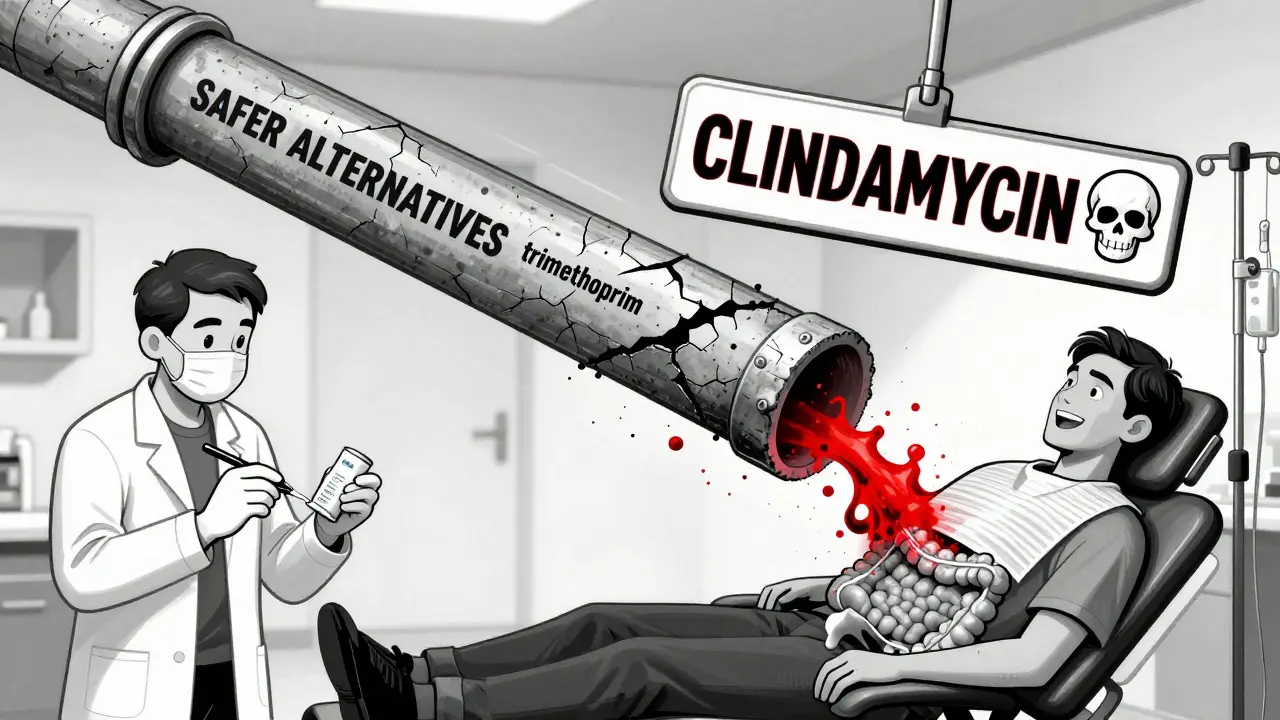
One study found 13% of community C. diff cases trace back to dental antibiotic use. And here’s the twist: many of those prescriptions are unnecessary. Guidelines say trimethoprim-sulfamethoxazole or amoxicillin are safer, equally effective alternatives for most skin and dental infections.
High-risk groups include:
- People over 65
- Those with prior C. diff infections
- People on chemotherapy or immunosuppressants
- Patients with kidney failure
- Those on proton-pump inhibitors (like omeprazole)
Even healthy people aren’t immune. A 2020 study showed 22% of clindamycin-related C. diff cases happened during the antibiotic course, and 46% occurred within one week of stopping it. The clock doesn’t reset when you finish the pills.
What Doctors Are Doing Differently Now
In 2024, new guidelines are pushing for earlier action. The Infectious Diseases Society of America is proposing that high-risk patients contact their doctor after just two unformed stools in 24 hours-not two days. Why? Because catching it early cuts complications by 63%.
Also, the FDA now requires all antibiotic labels to list C. diff risk. Clindamycin’s label says “highest risk category.” That’s not marketing. That’s science. And the CDC’s 2023 update says: Avoid clindamycin when safer alternatives exist.
There’s new hope, too. In 2023, the FDA approved VOWST-a capsule made of frozen, purified fecal bacteria spores-to prevent recurrence. It’s not a cure, but it’s a breakthrough. And new antibiotics like ridinilazole (still in trials) are showing promise with recurrence rates half that of vancomycin.
What You Should Do Right Now
If you’re currently on clindamycin:
- Know the symptoms. Don’t assume diarrhea is normal.
- Track your bowel movements. Write down frequency and consistency.
- Stay hydrated. Water, electrolyte drinks, broth-not soda or juice.
- Call your doctor immediately if you have three loose stools in a day for two days, or any fever, pain, or blood.
- Ask: “Is there a safer antibiotic for this infection?” Many times, there is.
If you finished clindamycin in the last 12 weeks and now have unformed stools, don’t wait. Call your provider. C. diff doesn’t care if you’re “just a little off.” It spreads fast. And it kills.
Can I get C. diff from just one dose of clindamycin?
Yes. Even a single dose of clindamycin can trigger C. diff in susceptible people. Case reports exist of patients developing severe infection after one oral dose for dental prophylaxis. While the absolute risk is low (around 1-2% of users), the risk is real and higher than any other common antibiotic.
Is C. diff contagious?
Yes. C. diff spreads through spores that survive on surfaces for months. If someone with C. diff doesn’t wash their hands after using the bathroom, they can contaminate doorknobs, phones, and toilet handles. You can pick up the spores and ingest them-even if you’ve never taken antibiotics. That’s why infection control matters in homes and hospitals alike.
Should I stop taking clindamycin if I get diarrhea?
Never stop an antibiotic without talking to your doctor. Stopping early can make your original infection worse. Instead, call your provider immediately. They may order a stool test for C. diff and switch you to a safer antibiotic if needed. Do not self-diagnose or self-treat.
Can probiotics prevent C. diff from clindamycin?
There’s no strong evidence that over-the-counter probiotics prevent C. diff. Some strains like Saccharomyces boulardii show modest benefit in studies, but they’re not a substitute for medical care. Don’t rely on supplements. If you’re on clindamycin, focus on hydration, symptom awareness, and prompt medical advice.
How long does C. diff risk last after clindamycin?
Risk remains elevated for up to 12 weeks after your last dose. Most cases happen within 14 days, but the CDC and IDSA-SHEA guidelines warn that symptoms can appear as late as three months after treatment. If you develop diarrhea during this window, consider C. diff until proven otherwise.
Final Thought: Don’t Assume It’s Just a Side Effect
Clindamycin is powerful. It works when nothing else does. But its price is high. Every time you take it, you’re gambling with your gut. The good news? You don’t have to roll the dice blindly. Know the signs. Act fast. Ask for alternatives. Your life might depend on it.






Clindamycin? Yeah, I took it for a tooth infection last year. Diarrhea for three days. Thought it was food poisoning. Almost didn't go to the doc. Bad call.
Turns out it was C. diff. Don't be me.
Interesting breakdown. I'm just surprised more people don't talk about this. I mean, we all get antibiotics like they're candy.
But yeah, clindamycin? Yeah, that's the one you gotta watch. My cousin got hospitalized for it after a wisdom tooth extraction. Scary stuff.
The epidemiological data presented herein is both compelling and methodologically robust. One cannot understate the significance of the microbiome disruption induced by clindamycin, particularly when juxtaposed against the comparatively benign profiles of tetracycline derivatives.
Moreover, the temporal persistence of risk beyond the therapeutic window constitutes a clinically salient phenomenon warranting heightened surveillance.
I had to explain this to my mom last month after she got clindamycin for an infected cut. She thought diarrhea was just 'how antibiotics work.' 😣
Thankfully we caught it early. She's fine now.
But y'all... if you're on this med and things feel off? Don't wait. Call. Now. 🚨
i mean like... i dont even know why drs still prescribe this? like its 2024 and we got amoxicillin and cephalexin and stuff that just... works?
and dont get me started on how many people get it for acne? like wtf?
my friend took it for a pimple and ended up in the er with a 103 fever.
and then they had to give her vancomycin which cost like 3k out of pocket.
its insane. we need better guidelines. like yesterday.
THIS IS WHY WE NEED PUBLIC HEALTH EDUCATION. 🙌
Clindamycin isn't 'just another antibiotic.' It's a gut grenade.
I've seen it. I've had patients die because they waited too long.
Every single person reading this? Share this. Tag your mom. Tag your grandpa. Tag your dentist.
We can save lives with awareness. 💪❤️
Leftist medicine at its finest. 'Avoid clindamycin' - yeah right. What's next? Ban penicillin because some people get hives?
This is fearmongering dressed up as science.
People need to stop being so fragile. My grandpa took clindamycin in '78 and lived to 92.
Stop infantilizing the public.
There's a deeper philosophical question here: if we prioritize convenience over biological integrity, are we not eroding our own resilience?
Clindamycin isn't evil - it's a tool. But our overreliance on it reflects a cultural failure to tolerate discomfort, to wait, to explore alternatives.
When did 'quick fix' become more valuable than 'right fix'?
This is all just Big Pharma fear tactics. They want you scared so you'll pay for 'VOWST' - $50,000 a dose? LOL.
Real medicine doesn't need fecal capsules.
Just take a probiotic. Drink yogurt. Stop being a hypochondriac.
And if you're over 65? Maybe you just need to stop taking so many drugs.