
Performance-Enhancing Drugs in Athletes: Health Risks and Side Effects Explained
PED Risk Assessment Tool
Select a Performance-Enhancing Drug
Risk Assessment Results
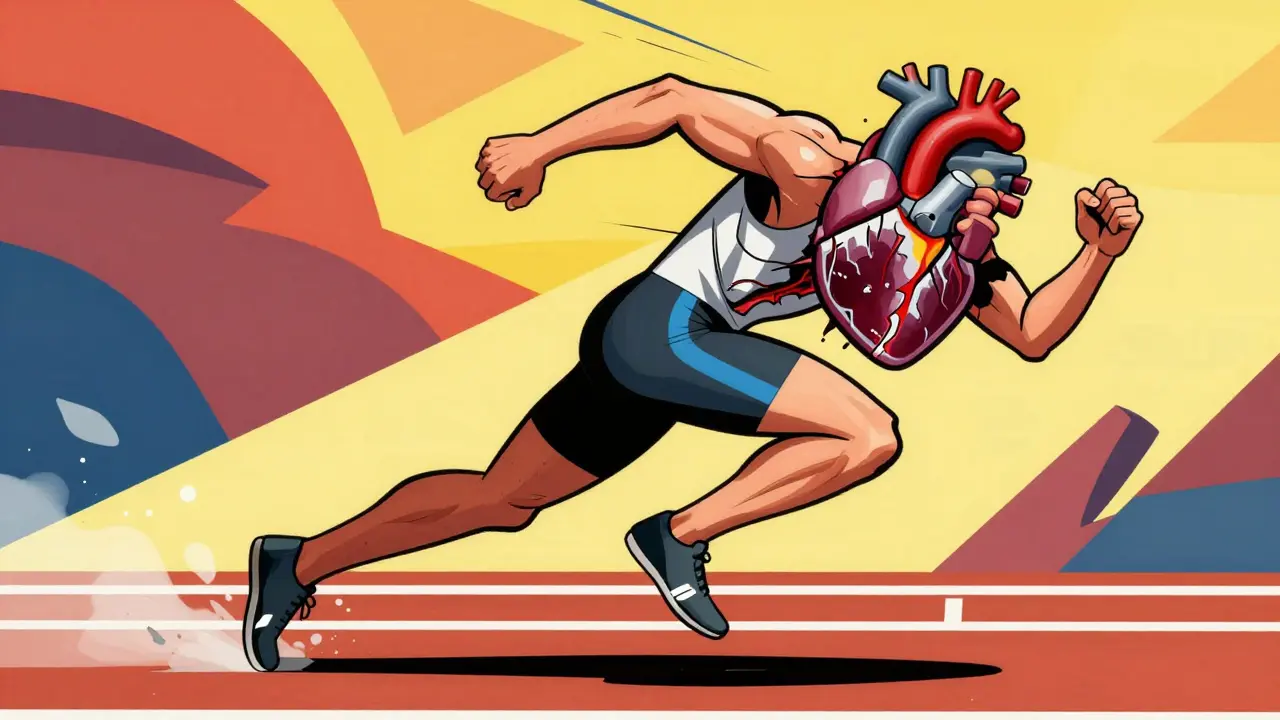
Every year, thousands of athletes risk their health for a few extra seconds on the track or a few extra pounds on the bar. But the reality is far worse than they imagine. The use of Performance-Enhancing Drugs promises quick gains but delivers devastating consequences. From heart damage to hormonal chaos, these substances don't just boost performance-they risk everything.
What Are Performance-Enhancing Drugs?
Performance-Enhancing Drugs are substances used to improve athletic performance beyond natural ability. These include anabolic steroids synthetic compounds that mimic testosterone to build muscle mass, stimulants drugs that increase alertness and energy, human growth hormone a hormone that accelerates tissue repair, blood doping agents, and newer compounds like SARMs. Originally developed for medical treatments, they've been misused in sports since the 1950s. The International Olympic Committee banned anabolic steroids in 1975, but PED use keeps evolving. Today, the World Anti-Doping Agency global organization that sets anti-doping rules (WADA) tracks over 250 prohibited substances across five categories. Surprisingly, recreational gym users now account for 60-80% of anabolic steroid misuse-far more than elite athletes.
How PEDs Work in the Body
Anabolic steroids like testosterone mimic natural hormones to boost protein synthesis. This builds muscle faster-studies show gains of 4.5 to 11 pounds in 10 weeks. Stimulants such as amphetamines increase dopamine and norepinephrine, sharpening reaction time by 8-12%. Blood doping raises red blood cell count, improving oxygen delivery and endurance. Human growth hormone (hGH) speeds tissue repair. But these mechanisms come with hidden dangers. For example, anabolic steroids bind to androgen receptors, causing irreversible changes in voice and hair patterns. Stimulants can push heart rates dangerously high. Blood doping thickens blood, increasing stroke risk.
| Drug Type | Primary Effect | Performance Gain | Major Health Risks |
|---|---|---|---|
| Anabolic Steroids | Mimics testosterone to build muscle | 4.5-11 lbs muscle in 10 weeks | Heart damage, liver toxicity, hormonal imbalance |
| Stimulants | Boosts dopamine and norepinephrine | 8-12% faster reaction time | Heart palpitations, anxiety, addiction |
| Human Growth Hormone (hGH) | Accelerates tissue repair and growth | Reduced recovery time by 30-50% | Joint pain, diabetes risk, organ enlargement |
| Blood Doping | Increases red blood cell count | 5-15% higher VO2 max | Stroke risk from thickened blood |
| SARMs | Selective androgen receptor modulators | Modest muscle gains | Unproven safety; often contain undeclared ingredients |
Top 5 Health Risks Every Athlete Should Know
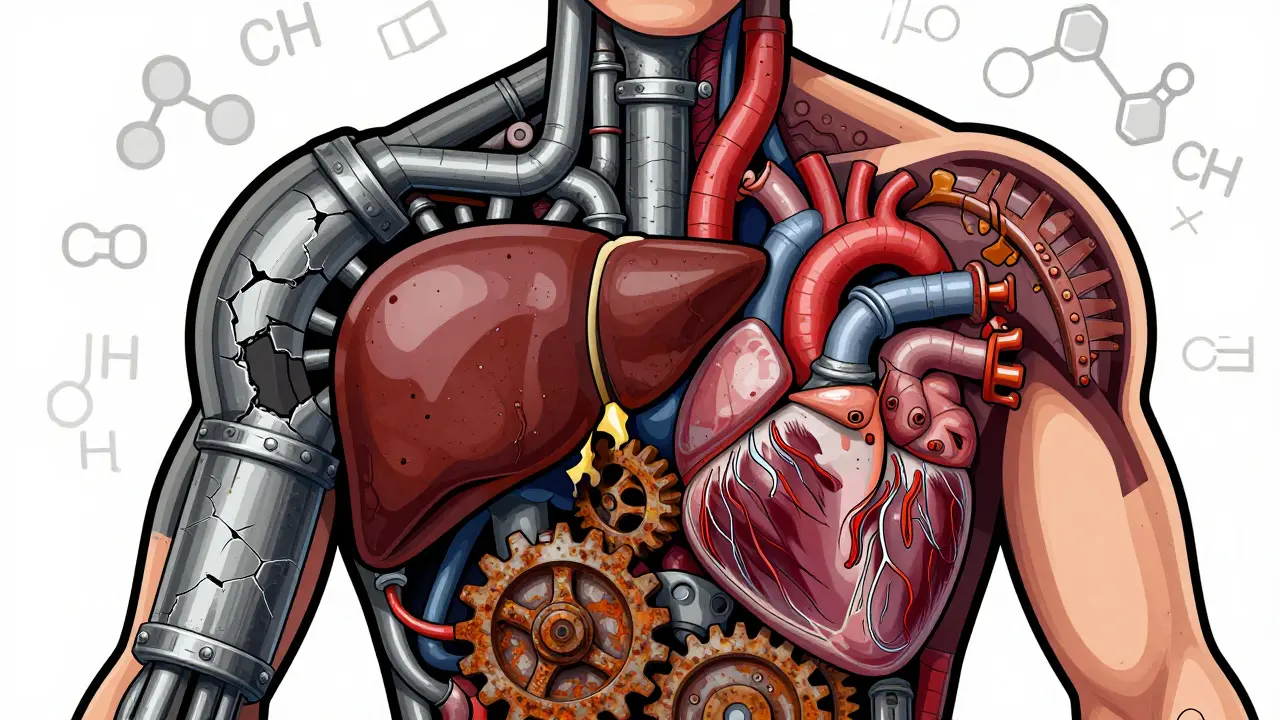
While PEDs promise gains, the health trade-offs are severe. Here are the biggest dangers:
- Heart damage: Anabolic steroid users show 27-45% greater cardiac mass than non-users. This leads to heart failure risk up to 36% higher, according to the American Heart Association. Echocardiography studies reveal decreased ventricular ejection fractions by 8-12% in chronic users, meaning the heart pumps less blood with each beat.
- Liver toxicity: Oral steroids like Dianabol cause elevated liver enzymes in 68% of users. Long-term use can lead to liver tumors or failure. The NHS reports liver damage in 68% of oral steroid users within six months.
- Hormonal chaos: Men often experience testicular shrinkage and infertility. Women may develop permanent voice deepening and facial hair growth. NHS clinical reports describe male patients with testicular volume reduced to 2-4 mL (normal is 15-25 mL) after 18 months of steroid use.
- Mental health crashes: 83% of recreational users report severe mood swings. Depression during 'off-cycles' is common, with some needing medical intervention. A 2022 survey found 67% of users experienced clinically significant depression after stopping PEDs.
- Connective tissue failure: Strength gains outpace tendon strength, leading to ruptures at 70% of normal load capacity. AAOS OrthoInfo documented athletes experiencing tendon tears during routine activities due to disproportionate muscle growth.
Real Stories: When PEDs Go Wrong
NHS clinical reports describe male patients with testicular volume reduced to 2-4 mL (normal is 15-25 mL) after 18 months of steroid use. Female athletes report clitoral enlargement exceeding 2.5 cm-irreversible in 35% of cases. Reddit users share stories like 'I gained 25 pounds of muscle in 10 weeks but lost it all in 8 weeks off-cycle while dealing with crippling depression.' A 28-year-old athlete recently suffered kidney failure due to PED use. These aren't hypothetical risks-they're real consequences happening now.
Why WADA Can't Stop Them All
Despite strict rules, PED use keeps growing. WADA tests 250,000 samples yearly but only 0.7% test positive for anabolic agents. Experts believe actual usage exceeds 10% in some recreational groups. Why? New 'research chemicals' like SARMs are hard to detect. The FDA found 78% of SARMs products contain different ingredients than labeled. Wellness clinics also contribute-65% offer 'bio-identical hormone replacement' with banned substances. Even therapeutic exemptions (TUEs) are hard to verify. Athletes must prove testosterone levels below 250 ng/dL for TUEs, but many doctors miss PED use during routine exams. AAFP reports 7 of 10 family physicians fail to recognize PED use in recreational athletes during check-ups.
What Athletes Need to Know
There's no safe way to use PEDs for performance. The Mayo Clinic states: 'Any short-term gains come with unacceptable long-term health risks, including premature cardiovascular aging equivalent to 10-15 years.' Some athletes try 'post-cycle therapy' to recover natural hormone production, but 38% of chronic users develop permanent hypogonadism requiring lifelong testosterone replacement therapy. The best advice? Focus on natural training methods. Work with sports medicine professionals. And remember: true strength comes from discipline-not drugs.
What are the most common performance-enhancing drugs used by athletes?
The top three are anabolic steroids, stimulants, and human growth hormone (hGH). Anabolic steroids like testosterone derivatives build muscle mass quickly. Stimulants such as caffeine or amphetamines improve reaction time and focus. hGH speeds up recovery and tissue repair. Blood doping and SARMs are also common but less widespread. Each has unique risks, but all are banned by WADA.
Can PEDs ever be used safely under medical supervision?
Only in specific medical cases, like hormone replacement therapy for diagnosed deficiencies. Even then, strict monitoring is required. For example, athletes with low testosterone due to injury might get approved testosterone therapy through a Therapeutic Use Exemption (TUE). However, using PEDs for performance enhancement-even with a doctor's prescription-is almost always prohibited. Most doctors won't prescribe PEDs for athletic purposes due to the high health risks.
How do anabolic steroids affect the heart?
Anabolic steroids cause the heart muscle to thicken, increasing cardiac mass by 27-45% compared to non-users. This leads to decreased ejection fraction (8-12% lower) and higher risk of heart attacks. The American Heart Association confirms a 36% increased risk of major cardiac events. These changes may be partially reversible after stopping use, but some damage like fibrosis is permanent.
Why do some athletes keep using PEDs despite the risks?
Many believe the short-term gains outweigh the risks. Some feel pressured by competition or peers. Others don't realize how severe the side effects can be. A University of Michigan study found 58% of gym-goers have no moral objection to PED use for non-competitive purposes. But the reality? The Mayo Clinic states any performance boost comes with 'unacceptable long-term health risks, including premature cardiovascular aging equivalent to 10-15 years.'
What happens when athletes stop using PEDs?
Withdrawal is tough. Muscle mass drops rapidly-up to 25 pounds in 8 weeks. Hormonal imbalances cause severe depression, fatigue, and loss of libido. Many need medical intervention to restore natural testosterone production. University of Colorado data shows 38% of chronic users develop permanent hypogonadism requiring lifelong testosterone replacement therapy. The 'post-cycle crash' isn't just physical; it's a mental health crisis too.




I've seen friends use steroids for a month and end up in the ER. Not worth it.
Oh sure, because everyone who uses PEDs is just a dumbass who can't handle the truth. Meanwhile, the real problem is the system that pushes athletes to this. But hey, keep your 'tough choice' nonsense. 😏
I think its important to remember that PEDs affect everyone differently. Some people can handle them better than others. But the risks are still there. We should be more compassionate towards those who struggle.
No safe way. Period.
You're all just delusional. The health risks are catastrophic, and people like you who downplay them are putting lives in danger. Wake up!
Hey maybe we should all take a step back. Its not about being judgmental its about understanding the real risks and helping people make informed decisions
Your 'helpful' advice is useless! We need strict enforcement, not 'understanding'! The data is clear: PEDs destroy lives. Let's stop being soft!
Wait a second... I think WADA and the FDA are in cahoots with Big Pharma to keep us scared! They want us to buy their 'safe' alternatives. It's all a scam!
That's a bit far-fetched. Let's focus on facts. The risks are real, but we can educate people without conspiracy theories.
You're right. But let's not forget the ethical side. Using PEDs is cheating. It's not fair to clean athletes. We need to uphold integrity in sports.
I agree about ethics, but cultural context matters. In some countries, PEDs are normalized. We need to address that without judgment.
While cultural differences exist, the physiological effects of SARMs and other PEDs are universal. The lack of long-term studies is alarming regardless of cultural perspective. For instance, SARMs like ostarine have shown to cause liver damage in animal studies, yet they're marketed as safe. The FDA has flagged over 70% of SARMs products as containing undisclosed substances. This isn't just about ethics; it's a public health crisis. Chronic use leads to hormonal imbalances that take years to reverse, if ever. Many users don't realize that their 'natural' gains are actually synthetic. The body's endocrine system gets hijacked, leading to infertility and cardiovascular issues. Even 'microdosing' isn't safe-there's no threshold where these compounds become harmless. The medical community is still learning about these substances, but the evidence so far points to severe risks. We need more research and education, not just blanket bans. Athletes deserve accurate information to make informed decisions. Until then, the safest choice is to avoid these substances altogether. The short-term gains simply aren't worth the lifelong consequences.