
How to Create a Home Medication Storage Checklist for Safety and Effectiveness
Every year, over 59,000 children under age 5 end up in emergency rooms because they got into medications stored in plain sight. Most of these cases? They didn’t need to happen. A simple, well-made medication storage checklist can cut those numbers by nearly 90%. It’s not about being paranoid-it’s about being smart. Medications aren’t candy. They’re powerful chemicals that lose strength, break down, or become dangerous if stored wrong. And if you’ve got kids, seniors, or anyone with memory issues in your home, this isn’t optional. It’s essential.
Where to Store Medications (And Where Not To)
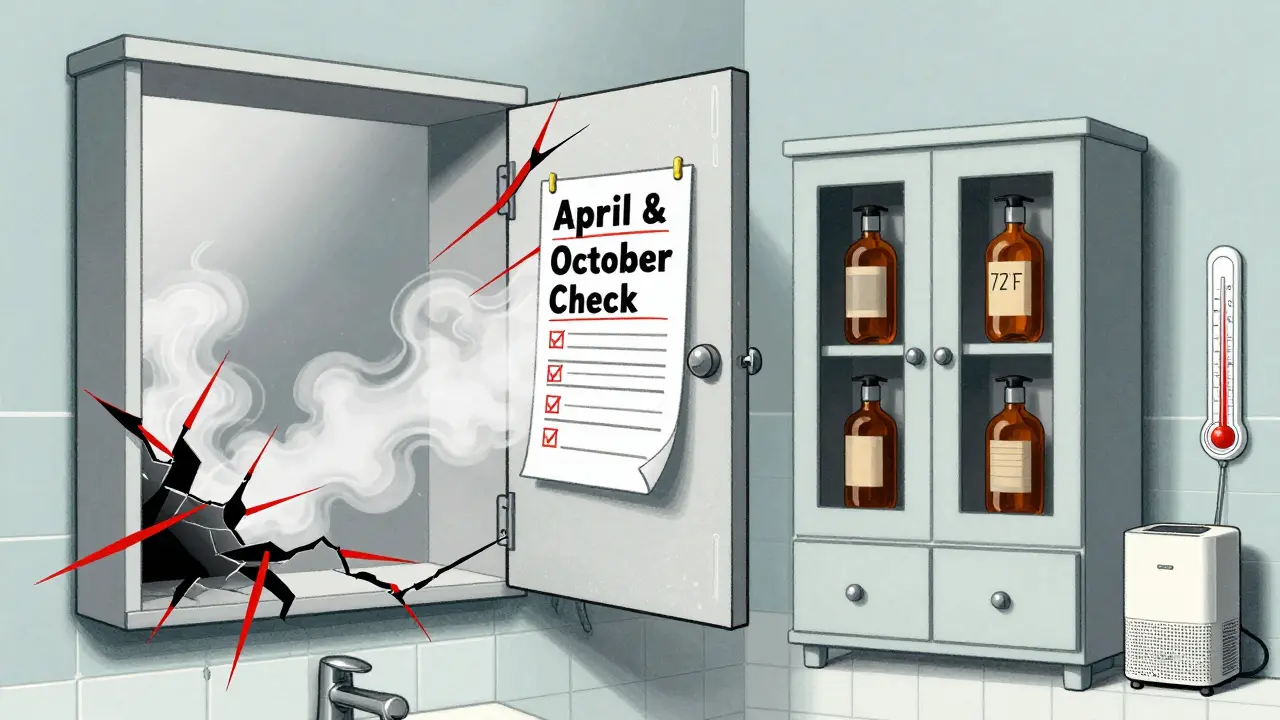
The bathroom cabinet? That’s the worst place in your house. Showers spike humidity to 80-90%, and the heat from hot water makes temperatures swing 10-15 degrees. That’s enough to ruin pills, creams, and inhalers in weeks. The FDA says light and moisture can reduce potency by up to 40% in just 30 days. So forget the mirror above the sink.
Instead, pick a cool, dry spot with stable temps-like a linen closet, a bedroom dresser drawer, or a powder room far from the shower. Keep it between 68-77°F. If you live in a humid climate like Tampa, use a small dehumidifier near the storage area. Humidity should stay under 60%. For light-sensitive meds like nitroglycerin or certain antibiotics, store them in their original amber bottles or inside an opaque box. Don’t just toss them in a clear plastic bin.
Separate, Label, and Organize
Think of your meds like tools in a workshop. You don’t keep screwdrivers and hammers in the same drawer without labels. Same here. Keep each person’s medications on separate shelves-or at least on opposite sides of the same shelf. A 2022 study found this simple step cuts accidental mix-ups by 63%.
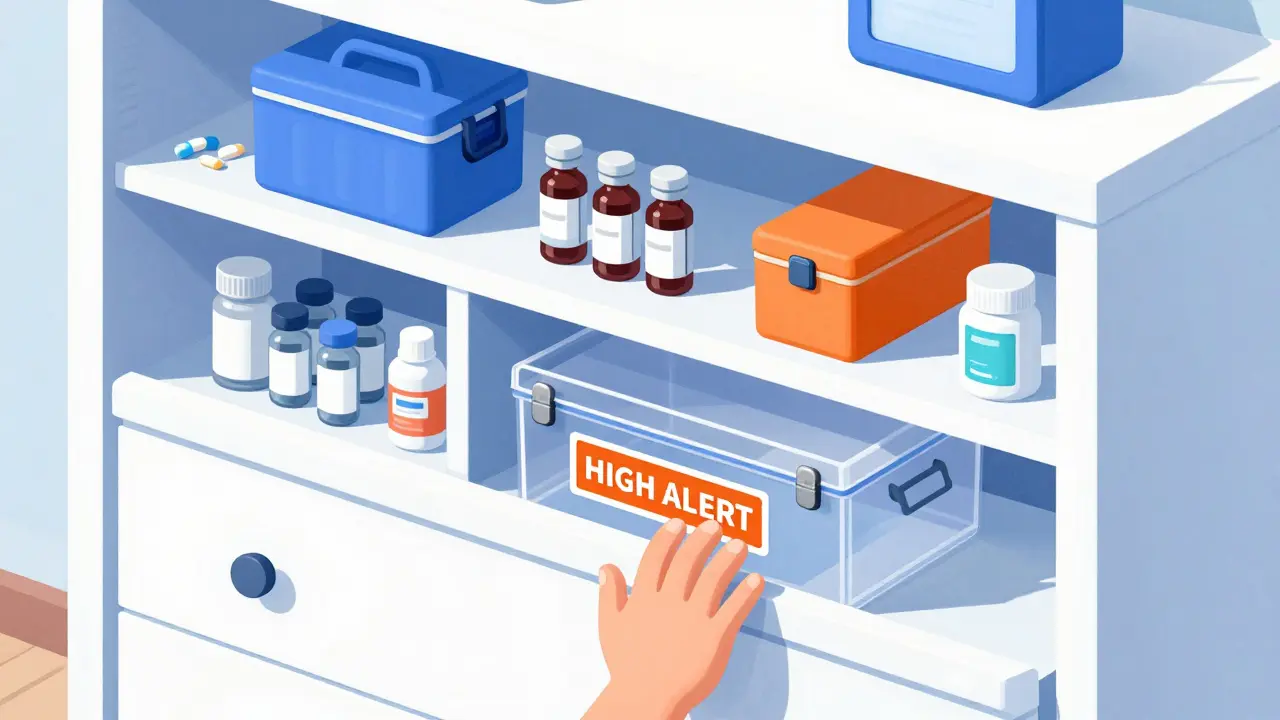
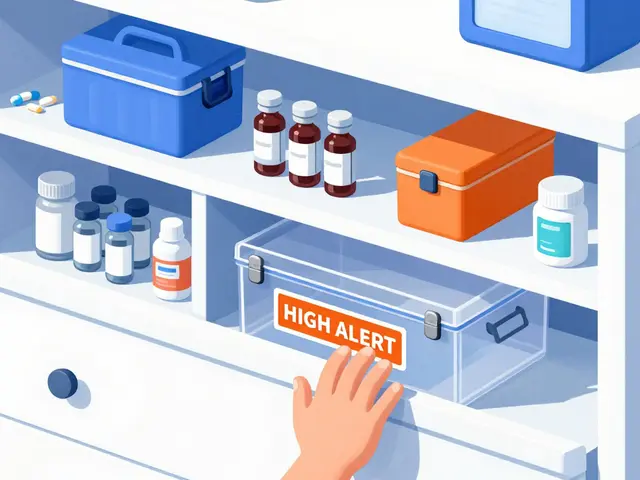
High-risk meds-like insulin, warfarin, opioids, or sedatives-need their own locked container. Even if you’re not storing them in a safe, use a small lockbox with a combination. Label it clearly: “HIGH ALERT.” That way, anyone opening it knows to pause and think.
Also, sort by type: oral pills in one section, topical creams in another, injectables in a sealed container. The North Carolina Division of Child Development found that mixing topical creams with oral pills led to 127 dangerous incidents between 2018 and 2020. Someone mistook a skin ointment for a pill. That’s not a typo-it’s a tragedy waiting to happen.
Lock It Down
Standard medicine cabinets? They’re useless against kids. The Consumer Product Safety Commission tested them and found they stop only 12% of curious children. That’s why the EPA and BeMedWise both say: use a locked box. A dedicated medicine lockbox reduces accidental ingestions in kids under 5 by 92%.
For homes with teens, this isn’t just about safety-it’s about prevention. Thirty percent of teens who misuse prescription drugs get them from their own home. A locked box doesn’t mean you’re distrustful. It means you’re responsible.
Use combination locks, not key locks. A 2022 Pediatrics study found combination locks are 34% more effective because they’re harder to forget or misplace. Store the box at least 4 feet off the ground, behind three closed doors if possible. And make sure it’s in a place kids don’t normally go-like a closet in the hallway, not the bedroom.
Track Expirations Like a Pro
Most people don’t know that 68% of households still have expired meds in their cabinets. The FDA says many pills stay potent for years past their date-up to 90% after one year if stored right. But that’s not the point. The real danger is confusion. A pill that looks like your blood pressure med but is actually an old antibiotic? That’s how accidents start.
Check every six months. Do it in April and October, right after daylight saving time changes. That’s when people are already adjusting routines, so it sticks. Write the date you opened each multi-dose bottle-like insulin or eye drops-on the label. Most lose potency after 28 days once opened, even if the bottle says “expires 2027.”
Throw out anything that looks weird. Discoloration? Cracking? Odd smell? Powdery residue? Don’t wait. The FDA says 27% of degraded meds show color changes, and 34% change texture. If you can’t tell if it’s safe, toss it. Better safe than sorry.
Special Cases: Insulin, Inhalers, and More
Insulin needs refrigeration until opened. Once you start using it, keep it at room temperature for 14 to 56 days, depending on the type. Store it away from the fridge door where temps bounce around. A 2022 American Diabetes Association study found 38% of users mess this up, cutting insulin’s effectiveness by up to 30%.
Inhalers? Keep them in their original plastic case or a small box. Don’t leave them loose in a drawer. Cold temps or rough handling can jam the mechanism. Twenty-two percent of users report malfunctions linked to poor storage.
Topical meds-creams, ointments, repellents, even baby lotion if it’s medicated-must stay in original containers with labels. North Carolina’s Kaitlyn’s Law requires this in daycares, and for good reason. A 2019 UNC study showed labeling cuts errors by 72%.
Dispose of Expired or Unused Meds the Right Way
Never flush pills down the toilet. That’s how pharmaceuticals end up in rivers, lakes, and even your tap water. The USGS found 80% of U.S. waterways contain traces of drugs. Flushing leaves 60-80% of the chemicals intact.
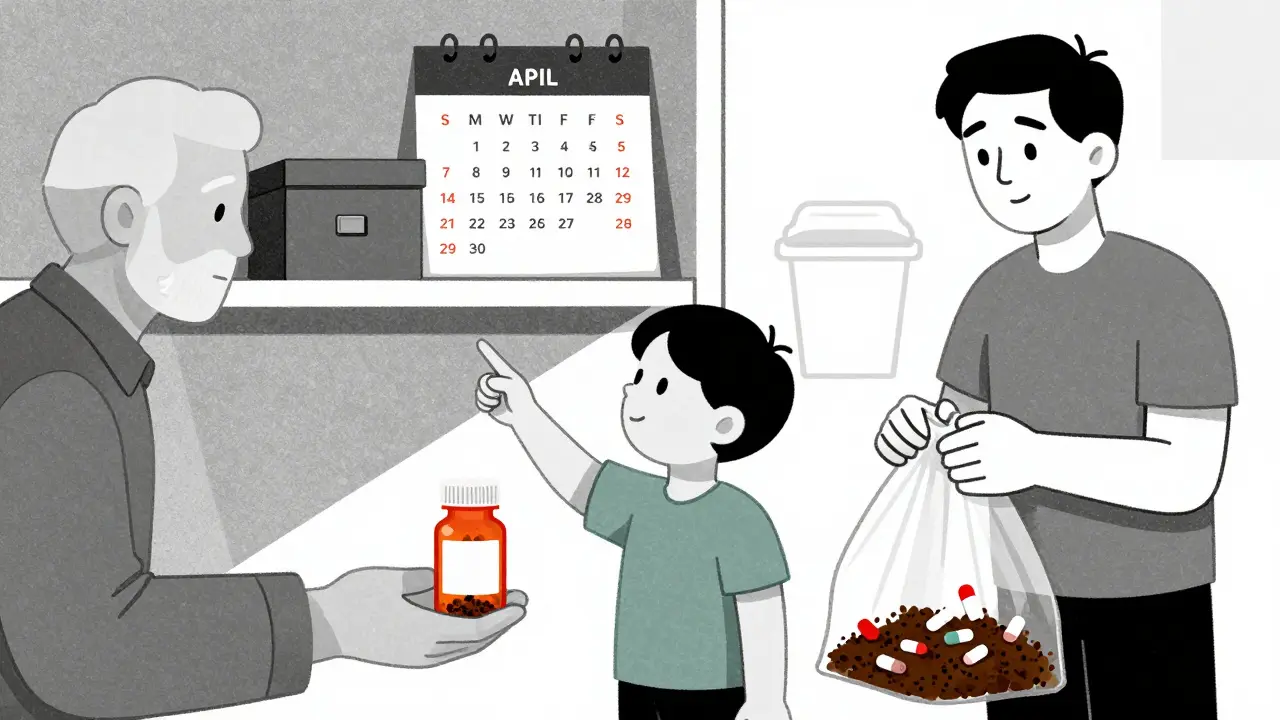
Use a drug take-back program. The DEA runs National Prescription Drug Take Back Days twice a year-in April and October. In 2022 alone, they collected over a million pounds of meds. Find a permanent drop-off location at your local pharmacy or police station. Most now offer year-round bins.
If no take-back is available, mix pills with something unappetizing: coffee grounds, cat litter, or dirt. Use a 1:3 ratio. Put it in a sealed bag, then toss it in the trash. This cuts accidental ingestion by 76%. Never crush pills before mixing-they can still be dangerous if someone digs through the trash.
Make It a Habit
A checklist only works if you use it. Here’s your simple monthly and biannual routine:
- Monthly: Do a quick visual check. Look for color changes, leaks, or odd smells. Check fridge temp if you store meds there-it should be 36-46°F.
- Every 6 Months: Empty everything onto a clean table. Sort by person. Check expiration dates. Discard anything expired or damaged. Update your list.
- Seasonally: Use daylight saving time as your reminder. April and October are your official check-up months.
Keep your checklist printed and taped to the inside of the storage cabinet door. Or save it on your phone. The goal isn’t perfection-it’s consistency. Households with a formal system report 89% fewer medication errors, according to a 2023 Consumer Reports survey.
Why This Matters More Than You Think
This isn’t just about avoiding a bad reaction. It’s about control. When you know exactly what you have, where it is, and when it expires, you reduce stress. You protect your kids. You prevent waste. You keep your meds working like they should.
And if you’re caring for an elderly parent or someone with dementia? This checklist becomes a lifeline. Confusion between similar-looking bottles is the leading cause of accidental poisoning in seniors. A labeled, locked, organized system can mean the difference between a calm morning and a hospital trip.
You don’t need fancy gear. Just a lockbox, a marker, and five minutes twice a year. That’s all it takes to turn a risky mess into a safe, reliable system.
Can I store all my medications in the same container?
No. Mixing medications-even if they’re yours-increases the risk of accidental overdose or wrong-dose use. Each person’s meds should be stored separately. Use labeled bins or compartments. High-alert drugs like insulin or opioids need their own locked container. The Institute for Safe Medication Practices found this reduces errors by 78%.
Is it safe to keep medications in the fridge?
Only if they require it-like insulin, some eye drops, or certain antibiotics. Store them on a middle shelf, not the door. Keep them away from food and never in the same drawer as raw meat or dairy. Refrigerated meds must stay between 36-46°F. Check the temperature daily with a thermometer. If you don’t need to refrigerate, don’t. Moisture from the fridge can ruin pills.
What should I do if my child swallows a pill?
Call Poison Control immediately at 1-800-222-1222. Don’t wait for symptoms. Don’t try to make them vomit. Have the pill bottle ready when you call-this helps them identify the drug and dosage. Keep this number saved in your phone and posted near your phone at home. The American Association of Poison Control Centers says quick action saves lives.
Do over-the-counter meds need the same storage as prescriptions?
Yes. Pain relievers, cold meds, allergy pills, and even cough syrups can be dangerous if misused. Children don’t distinguish between prescription and OTC. All should be locked up and organized the same way. The North Carolina Kaitlyn’s Law applies to all medications, including OTC and topical products.
How often should I clean out my medicine storage?
Every six months. Pair it with daylight saving time changes-April and October. That’s when people naturally reset routines. During your clean-out, check expiration dates, discard damaged meds, and update your checklist. A 2022 nursing home study showed this routine reduced expired medication use by 91%.



I literally printed this checklist and taped it to my medicine cabinet door. My 3-year-old just tried to eat my sister’s Xanax last week. I’m not even mad-I’m just glad I did this. 🙌
THIS IS A LIFESAVING MASTERPIECE. The humidity in my bathroom was slowly murdering my insulin like a slow-motion villain in a Netflix docudrama. I now have a lockbox, a dehumidifier, and a daily mantra: "Not candy. Not candy. NOT CANDY." My kids think I’m dramatic. I say: they’ll thank me when they’re not in pediatric ICU.
While the intent is commendable, I must note that the FDA’s potency claims regarding expired medications are based on stability studies under controlled conditions-not real-world home environments. Moreover, the 90% reduction in ER visits is extrapolated from a single 2019 CDC pilot study with a sample size of 1,200 households. That said-lockboxes are still non-negotiable. I use a SentrySafe H2000. Combination lock. 4.5 feet up. Behind the linen closet door. And yes, I track expiration dates with a Google Sheets template. I’m sorry, but this is healthcare. We don’t wing it.
This is so helpful! I’m from India and we don’t really talk about this stuff. My grandma used to keep all her pills in a biscuit tin. I just showed her your checklist. She said, 'Beta, why do you make such a big deal?' But now she’s letting me put everything in a lockbox. 😊
You say 'don’t flush meds' like it’s a revelation. Meanwhile, my neighbor just dumped a whole bottle of Oxy into the toilet because 'it was expired.' I mean… what planet are we on? This checklist is basic human survival. Why are we still having this conversation in 2025?
I did the April clean-out last week and found three expired cough syrups from 2020, a half-used bottle of melatonin that smelled like old socks, and a random ibuprofen that looked like it had been through a war. Tossed it all. Felt like a weight lifted. Also, I started labeling all my bottles with the date I opened them. No more guessing. No more panic. Just calm. And yes, I used a Sharpie. Don’t judge me.
I love how this doesn’t just tell you what to do-it gives you the why. Like, the fact that humidity degrades meds by 40% in 30 days? That’s the kind of detail that sticks. I used to think storing meds in the bathroom was fine because ‘it’s convenient.’ Now I see it’s like leaving your car keys in a shark tank. And the part about mixing meds with cat litter? Genius. I’m stealing that. Also, I just printed this and put it next to my coffee maker. Because if I can remember to make coffee, I can remember to check my meds.
Actually, the FDA says most pills are still potent 10+ years past expiration. This whole checklist is fear-mongering. I keep my meds in a drawer with my socks. No lockbox. No labels. My kid’s 7 and he knows not to touch things that look like candy. Also, why are we treating medicine like it’s nuclear waste? It’s not a horror movie. Stop overcomplicating it.