
Diverticulitis: Understanding Inflamed Pouches and Modern Treatment Methods
When you feel a sharp, constant pain in your lower left abdomen-like someone’s stabbing you with a hot knife-it’s easy to assume it’s just gas or a bad meal. But if that pain sticks around for days, comes with a fever, and makes you feel like you’ve been hit by a truck, you might be dealing with something more serious: diverticulitis.
What Exactly Are Diverticula?
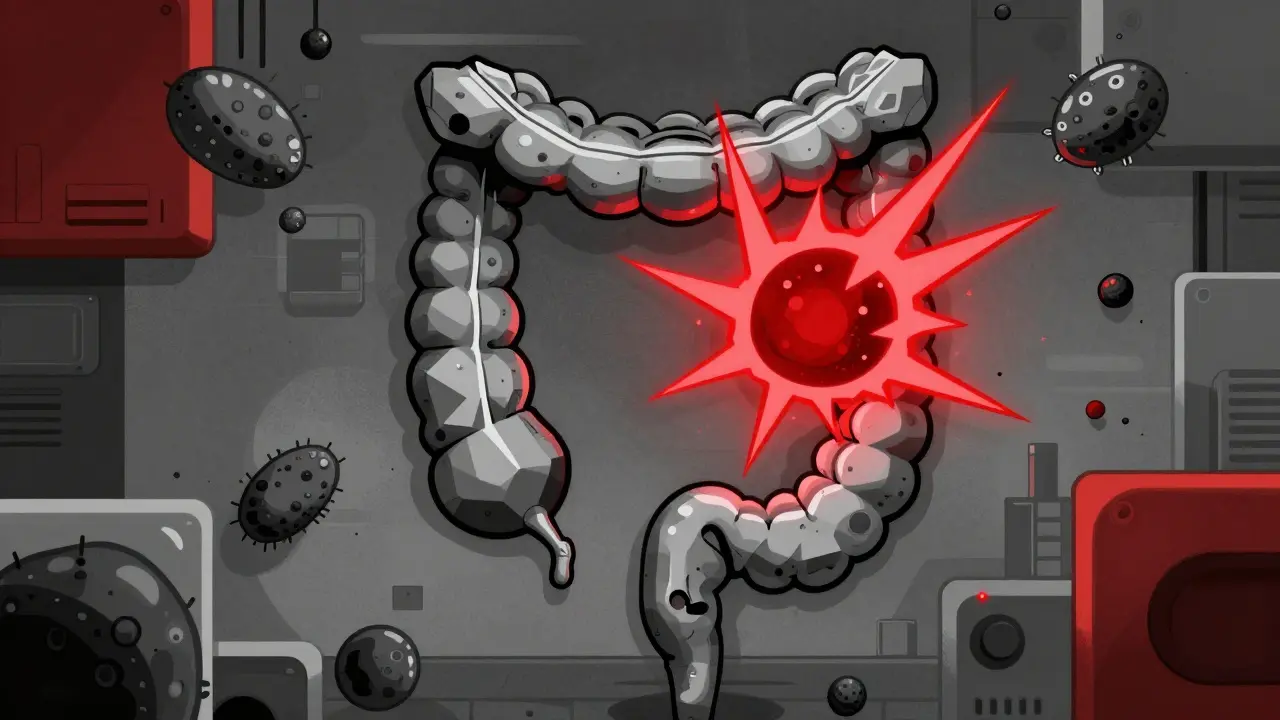
Diverticula are tiny pouches that poke out from the wall of your colon. They’re not tumors, not polyps, and not cancer. They’re more like weak spots in the colon lining that bulge outward under pressure. Think of them like a balloon with a thin spot that stretches out when you blow it up. About 35% of Americans under 50 have them. By the time you’re 60, that number jumps to nearly 60%. Most people never even know they have them. That’s called diverticulosis-just the pouches, no inflammation. Diverticulitis happens when one or more of those pouches get infected or inflamed. It’s usually because stool or bacteria get trapped inside, causing swelling and irritation. The sigmoid colon-your lower left colon-is where 95% of these pouches form. That’s why most people feel the pain on the left side. But in Asian populations, right-sided pain is more common due to differences in colon structure.How Do You Know It’s Diverticulitis and Not Something Else?
It’s easy to confuse diverticulitis with other gut problems. Irritable bowel syndrome (IBS) can cause bloating and cramps too. But IBS doesn’t come with a fever. Diverticulitis does. About 70-80% of people with diverticulitis have a temperature above 100.4°F. Your white blood cell count usually spikes too. And the pain? It’s not crampy and comes and goes like IBS. It’s steady, sharp, and often gets worse when you move. Doctors use three main clues to diagnose it: your symptoms, blood tests, and a CT scan. If you’ve got localized tenderness in your lower left belly, a fever, and elevated white blood cells, that’s a strong sign. But the CT scan is the gold standard. It shows the inflamed pouches, any abscesses, and whether there’s a perforation. Misdiagnosis is common-about 25% of people with diverticulitis are initially told they have ovarian cysts, kidney stones, or appendicitis. That delay can cost you time, money, and peace of mind.How Bad Is It? The Hinchey Scale Explained
Not all diverticulitis is the same. Doctors use the Hinchey system to grade severity:- Stage Ia: Small abscess near the colon (under 3 cm). Usually treated at home.
- Stage Ib: Larger abscess (3-5 cm). Often needs hospital care.
- Stage II: Pelvic abscess bigger than 5 cm. Requires drainage or surgery.
- Stage III: Generalized infection in the belly (peritonitis) from pus.
- Stage IV: Fecal leakage into the abdomen-this is a medical emergency.
Antibiotics: Still Necessary?
Ten years ago, every case of diverticulitis got antibiotics. That’s what doctors were taught. But things changed. The 2021 DIVERT trial shook up the medical world. Researchers gave one group antibiotics and another group just fluids and rest. Guess what? Recovery times were nearly identical. For mild cases, antibiotics didn’t speed things up. That led to a major shift in guidelines. The American Gastroenterological Association now says: Don’t automatically reach for antibiotics. So when do you still need them? If you have a fever over 101.3°F, a white blood cell count above 15,000, or signs the infection is spreading-yes, antibiotics are still critical. Common choices include amoxicillin-clavulanate (Augmentin) or ciprofloxacin with metronidazole. But if you’re otherwise healthy, eating, and not too sick? Many doctors now start with rest, hydration, and pain relief.What About Pain Relief?
Avoid NSAIDs like ibuprofen or naproxen. These drugs increase your risk of colon perforation. Instead, use acetaminophen (Tylenol). Take 500-1,000 mg every 6 hours as needed. It’s safer and just as effective for managing the pain.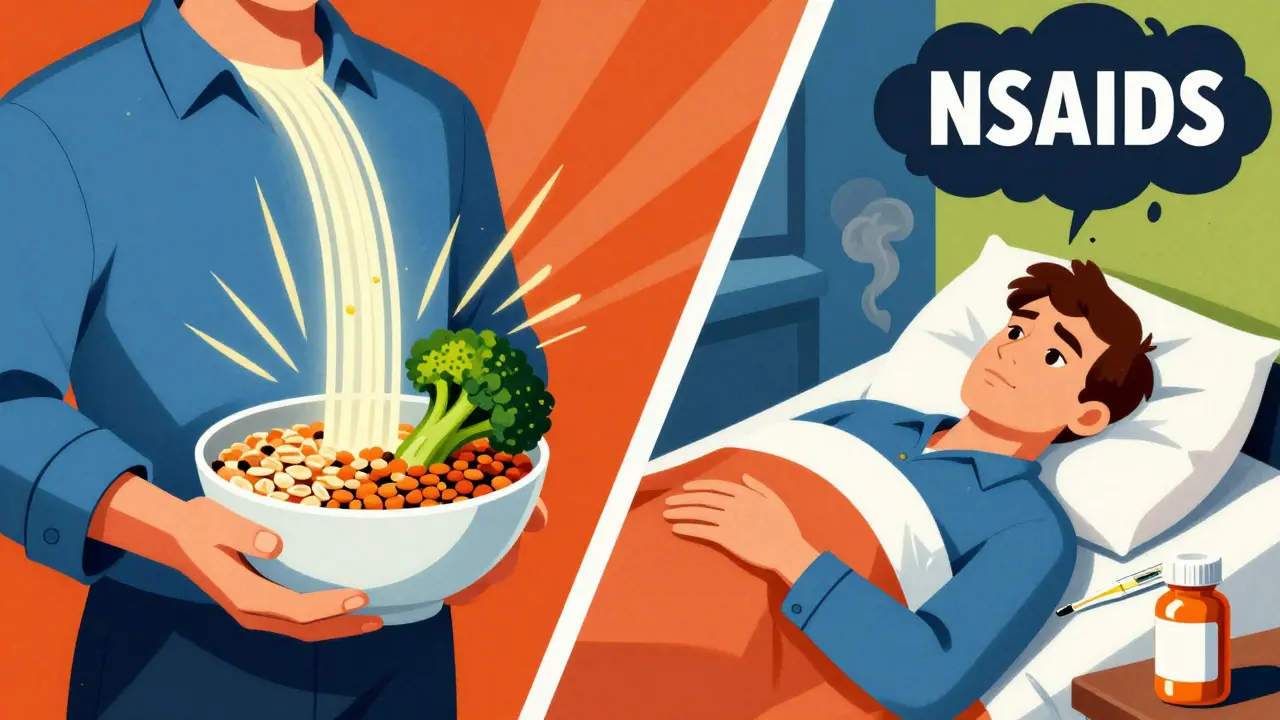
Diet: The Real Game-Changer
For decades, doctors told people with diverticulitis to avoid nuts, seeds, popcorn, and corn. The idea was that these tiny bits could get stuck in the pouches and cause inflammation. It made sense. Except-it’s not true. A massive 18-year study of 47,000 women (the Nurses’ Health Study) found no link between eating nuts, seeds, or popcorn and diverticulitis attacks. In fact, people who ate more of these foods had fewer attacks. That study, published in the British Medical Journal in 2021, ended the myth. What actually helps? Fiber. High-fiber diets reduce pressure in the colon. Less pressure means fewer pouches form and less chance they’ll get inflamed. Aim for 30-35 grams of fiber daily. That’s:- 1 cup cooked lentils (15.6g)
- 1 medium pear (5.5g)
- 1 cup oats (4g)
- 1 cup broccoli (5.1g)
- 1 slice whole grain bread (2g)
What Happens After an Attack?
Once the inflammation clears, you’ll usually need a colonoscopy 6-8 weeks later. Why? Because diverticulitis and colon cancer can look similar on scans. A 2021 JAMA study found that 1.3% of people over 50 who had diverticulitis also had colon cancer. That’s not high, but it’s high enough to check.Can It Come Back?
Yes. Between 15% and 30% of people have a second attack. And after that, the risk keeps climbing. That’s why prevention matters more than treatment. New research is showing promise for long-term prevention. Mesalazine (brand name Pentasa), a drug used for ulcerative colitis, was recently approved by the FDA for diverticulitis maintenance. In the DIVA-2 trial, people who took it daily for a year had a 31% lower chance of another attack compared to those on placebo. Also, your gut bacteria matter. People with recurrent diverticulitis often have lower levels of Faecalibacterium prausnitzii, a friendly bacterium that calms inflammation. Scientists are now testing probiotics and microbiome-targeted therapies. Early results are promising.When Is Surgery Needed?
Surgery used to be recommended after three attacks. Now, guidelines have changed. The American Society of Colon and Rectal Surgeons says: consider surgery after two attacks if you were hospitalized for either one. Why the change? Because many people live in fear between attacks. They avoid travel, skip social events, and constantly worry about the next flare-up. One patient said, “I canceled my daughter’s wedding because I was scared I’d be in the hospital.” That quality-of-life loss is real. Surgery usually means removing the affected part of the colon-often the sigmoid colon. Laparoscopic surgery (keyhole) is common now. Recovery takes 4-6 weeks. Success rates are high, especially if you’ve had complications like abscesses or perforations.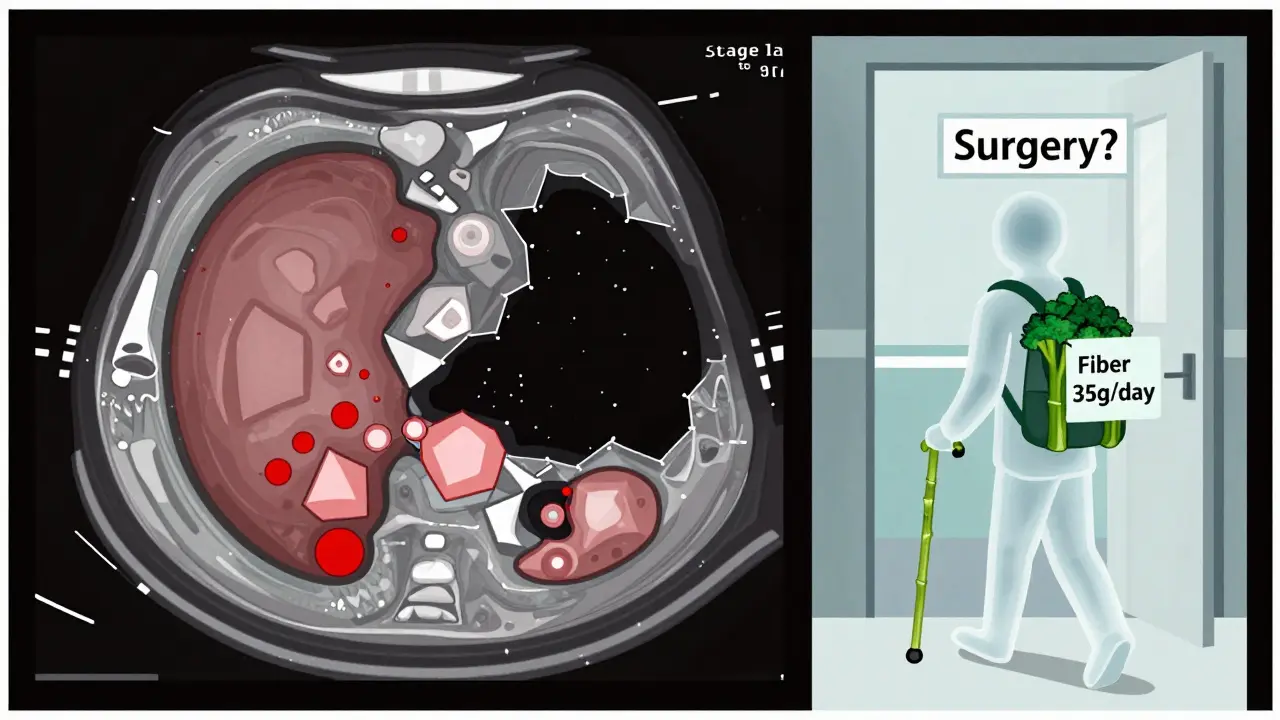
Who’s at Risk?
You don’t have to be old to get diverticulitis. In 2000, only 14% of hospitalizations were in people under 45. Now, it’s 22%. Why? Three big reasons:- Obesity: BMI over 30 doubles your risk.
- Smoking: Smokers are 2.7 times more likely to have an attack.
- Sedentary lifestyle: If you exercise less than two hours a week, your risk goes up by 38%.
What’s the Cost?
Diverticulitis isn’t just a health problem-it’s a financial one. In the U.S., it causes 200,000 hospitalizations every year. Total cost? $2.3 billion. A single CT scan runs $1,200-$1,800. If you’re misdiagnosed and get unnecessary surgery, that adds another $3,500-$5,200. Preventing attacks isn’t just better for your body-it’s better for your wallet.What Should You Do Now?
If you’ve had one attack:- Start eating more fiber-aim for 30-35g daily.
- Drink plenty of water-fiber needs water to work.
- Move more. Walk 30 minutes a day.
- Quit smoking if you smoke.
- Get a colonoscopy 6-8 weeks after recovery.
- Ask your doctor about mesalazine if you’re at high risk for recurrence.
- Don’t panic. Most cases are mild.
- Stick to clear liquids for the first 1-2 days.
- Use acetaminophen for pain.
- Don’t take NSAIDs.
- Call your doctor if fever spikes above 101.3°F or you feel worse.



Fiber doesn't cure anything. It just delays the inevitable. You're not fixing the root cause, you're just feeding the colon like it's a pet hamster. And don't get me started on mesalazine-pharma's latest cash grab.
i had this last year and honestly it was terrifying but i just ate more beans and walked every day and boom no more episodes. you got this 😊
I used to think diverticulitis was just an old person thing until my cousin, 32, ended up in the ER. Now I eat lentils for breakfast, drink water like it’s my job, and I’m not even 30 yet. This isn’t just health advice-it’s a lifestyle upgrade. Let’s normalize taking care of our guts before they revolt.
So let me get this straight. You’re telling me the medical establishment got it wrong for decades and now we’re just supposed to trust a 2021 trial? Meanwhile, the CDC still says to avoid seeds. Who do we believe-the scientists or the bureaucrats who still think margarine is healthy?
I think the government put something in the water to make us all get this. They don’t want us healthy. I saw a video on TikTok about how colonoscopies are just a way to implant trackers. And don’t get me started on antibiotics… they’re laced with microchips. 😳
In India, we call this 'bloat disease'. Many people think it's from spicy food, but actually, it's the lack of dal and roti. Fiber is the real medicine. My grandmother ate 50g of fiber daily and lived to 98. No CT scans needed.
The shift away from antibiotics is huge. I’m a nurse and I’ve seen patients recover faster with rest and hydration than with a full antibiotic course. The body’s smarter than we give it credit for. Just make sure they’re not dehydrated and eating real food.
I’ve been managing diverticulosis for 12 years. Started with 15g fiber, now I hit 40g daily. I don’t even remember the last time I had pain. It’s not magic-it’s consistency. And yes, popcorn is fine. I eat it like candy. No regrets.
I literally cried reading this. My colon has been through so much. I used to be the girl who skipped meals and drank soda like water. Now I meal prep lentils and walk at sunset like some kind of wellness guru. 🌿✨ I’m not the same person. And I’m proud.
they said no nuts but i ate em anyway and now im fine lmao
In many traditional diets, especially in South Asia, high-fiber meals are the norm, not the exception. It is no surprise that chronic diverticulitis rates remain lower in these regions despite limited access to advanced diagnostics. The body thrives on simplicity.
The DIVERT trial methodology warrants further scrutiny. The sample size, inclusion criteria, and primary outcome measures require replication across diverse populations. While the results are promising, the generalizability of the findings remains contingent upon longitudinal follow-up and stratification by BMI, smoking status, and baseline microbiome composition.
yall need to stop being scared of fiber. my mom ate bran cereal with flax and never got sick. you dont need a phd to eat better. just do it. stop overthinking. your colon will thank u
so you're telling me the answer to everything is fiber? wow. revolutionary. next you'll say water is good for you.
In Japan, diverticulitis is more common on the right side, as noted. This reflects anatomical variations in colonic structure across ethnic groups. The global medical community must move beyond Western-centric diagnostic frameworks to accommodate these differences in clinical presentation.