
GERD and Acid Reflux: How PPIs and Lifestyle Changes Work Together
When your chest burns after eating, or you wake up with a sour taste in your mouth, it’s not just indigestion-it could be GERD. Gastroesophageal reflux disease isn’t just occasional heartburn. It’s a chronic condition where stomach acid flows back into your esophagus, damaging the lining over time. About 7% of adults in the U.S. have daily symptoms, and another 20% deal with it at least once a week. Left unchecked, GERD can lead to serious problems like esophageal strictures, ulcers, or even Barrett’s esophagus-a precancerous change that affects 10-15% of long-term sufferers.
What Really Happens in Your Body?
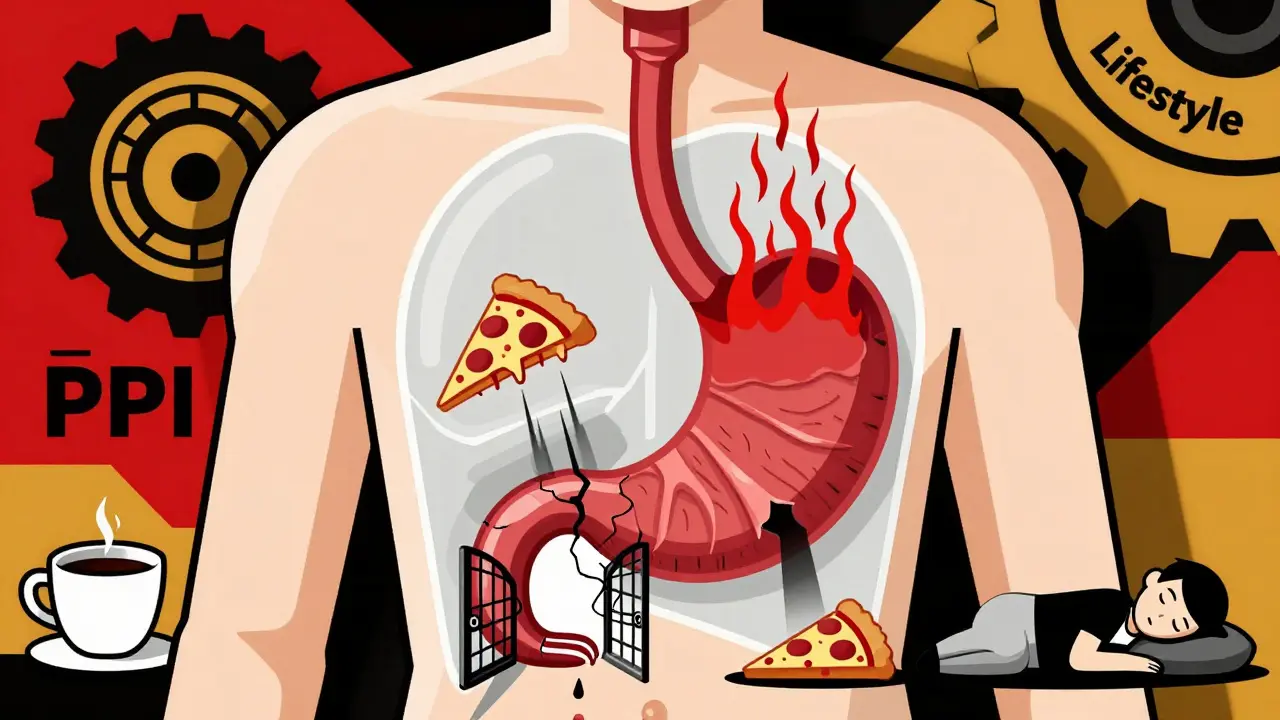
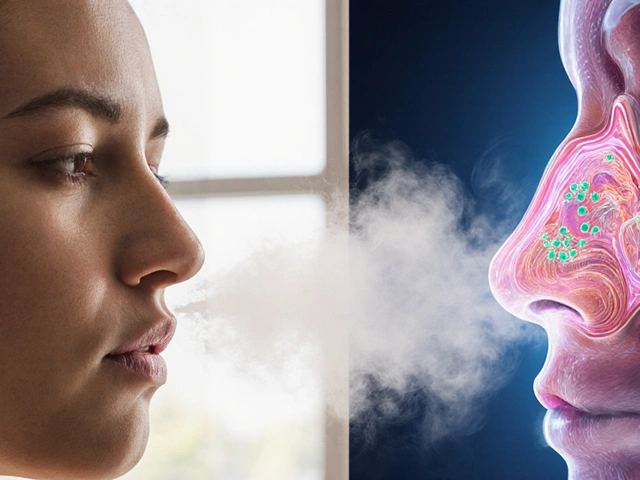
Your esophagus is a simple tube that moves food down to your stomach. It doesn’t have the thick mucus layer your stomach has to protect against acid. That’s why when the lower esophageal sphincter (LES)-a ring of muscle at the bottom of your esophagus-doesn’t close properly, acid leaks up and burns. This isn’t just about spicy food. The LES can weaken due to obesity, pregnancy, hiatal hernia, smoking, or even certain medications like calcium channel blockers. In fact, 94% of people with erosive esophagitis have a hiatal hernia. The acid itself is incredibly strong-pH 1.5 to 3.5-and even brief exposure can cause inflammation. Symptoms like chronic cough, hoarseness, or bad breath often get misdiagnosed because they don’t seem connected to digestion.Why PPIs Are the Gold Standard-But Not a Cure
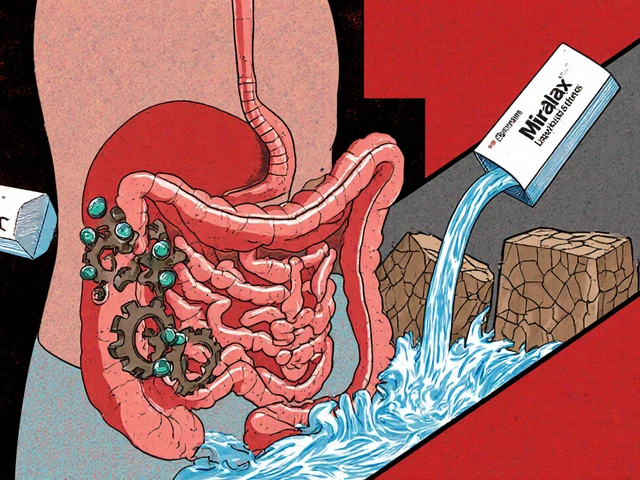
Proton pump inhibitors (PPIs) like omeprazole, pantoprazole, and esomeprazole are the most powerful acid-reducing drugs available. They work by shutting down the acid-producing pumps in stomach cells, cutting acid production by 90-98%. For people with erosive esophagitis, PPIs heal the lining in 70-90% of cases, compared to only 50-60% with H2 blockers like famotidine. That’s why doctors start here for moderate to severe GERD. But PPIs don’t fix the root problem. They just cover it up. And long-term use comes with real risks. Studies show prolonged use (over a year) increases the chance of intestinal infections, vitamin B12 deficiency, and kidney inflammation. The FDA warns that taking high doses for three or more years raises hip fracture risk by 35% in older adults. A 2021 study found 44% of people who stopped PPIs suddenly experienced rebound acid hypersecretion-meaning their heartburn got worse before it got better.Lifestyle Changes Work Better Than You Think
The truth? Many people can control GERD without drugs. Weight loss is the single most effective change. Losing just 5-10% of your body weight cuts symptoms by half. Why? Extra belly fat pushes up on the stomach, forcing acid out. One patient in Tampa lost 22 pounds over six months and stopped needing PPIs entirely. Diet matters too. Coffee, tomatoes, alcohol, chocolate, and fatty or spicy foods trigger reflux in 70-80% of patients. Cutting just coffee alone helped 73% of users in a 2022 survey. Eating within two hours of bedtime? That’s a major mistake. Lying down lets acid flow freely. Avoiding food for 2-3 hours before sleep reduces nighttime acid exposure by 40-60%. Elevating the head of your bed by 6 inches is another simple trick. Gravity keeps acid where it belongs. One Reddit user wrote, “I tried everything-PPIs, H2 blockers, supplements. Nothing worked until I raised my bed. Nighttime cough vanished in a week.”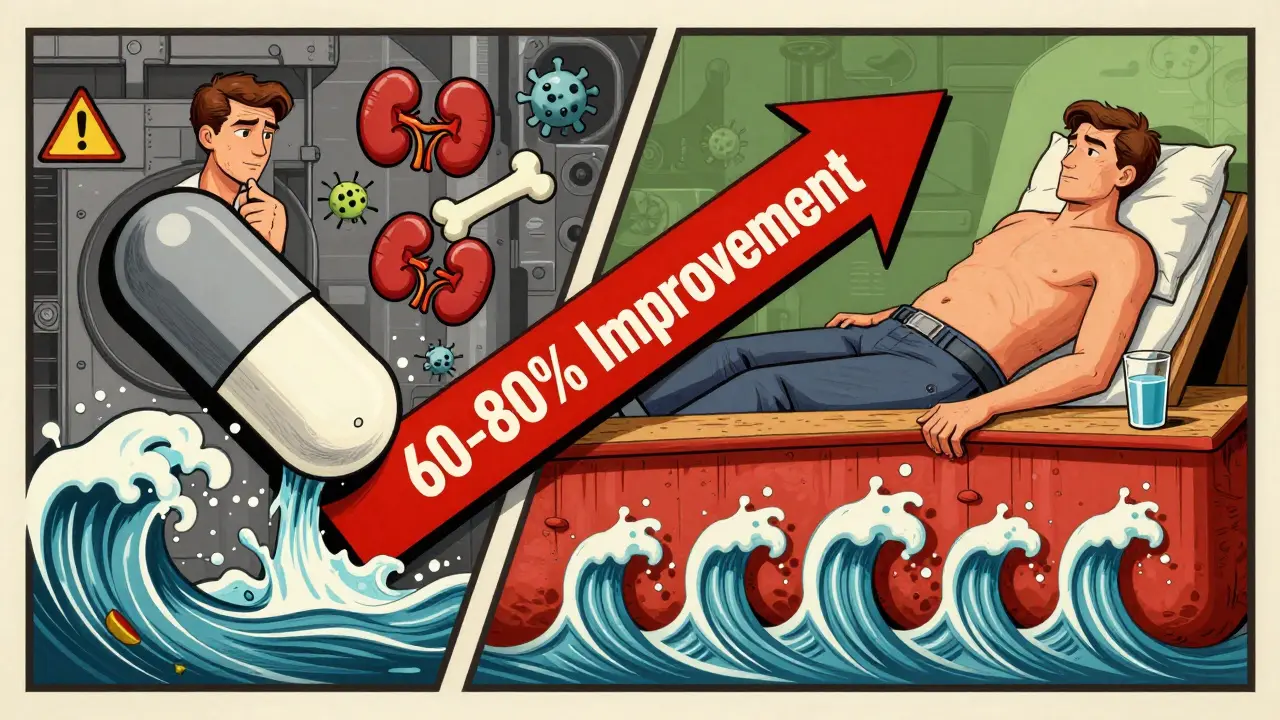
How to Use PPIs the Right Way
If you’re on a PPI, timing matters. Take it 30-60 minutes before your first meal of the day. That’s when the acid pumps are waking up. Taking it after eating? It won’t work as well. Most people only need once-daily dosing. Twice-daily is for severe cases. Don’t stay on PPIs longer than needed. The American College of Gastroenterology recommends reevaluating use every 8 weeks. Many people get stuck on them because doctors don’t follow up. A Kaiser Permanente program cut inappropriate long-term use by 35% by sending automated alerts and having pharmacists call patients to discuss tapering. If you want to stop, don’t quit cold turkey. Gradually reduce the dose over 4-8 weeks. Bridge with an H2 blocker like famotidine during the transition. Rebound acid is temporary-but it can feel like your GERD is coming back worse.The New Frontiers: What’s Changing in 2026
In 2023, the FDA approved Vonoprazan (Voquezna), the first new acid-blocking drug class in 30 years. It works faster than PPIs and may be more effective for some. Early data shows 89% healing rates in erosive esophagitis-slightly better than PPIs. New guidelines from the American Gastroenterological Association (January 2024) now say lifestyle changes should come first. PPIs should be reserved for confirmed esophagitis or severe symptoms. Johns Hopkins tested a 12-week program combining diet, sleep posture, and stress management. They got 65% of patients off PPIs entirely while keeping symptoms under control. That’s more than double the success rate of standard care. Apps like RefluxMD are helping people track triggers with 4.7/5 ratings from over 8,500 users. AI tools are learning individual patterns-IBM Watson Health’s system predicts personal triggers with 78% accuracy. And procedures like TIF (transoral incisionless fundoplication) are offering surgery without cuts. Eighty-five percent of patients say it improved their quality of life more than PPIs.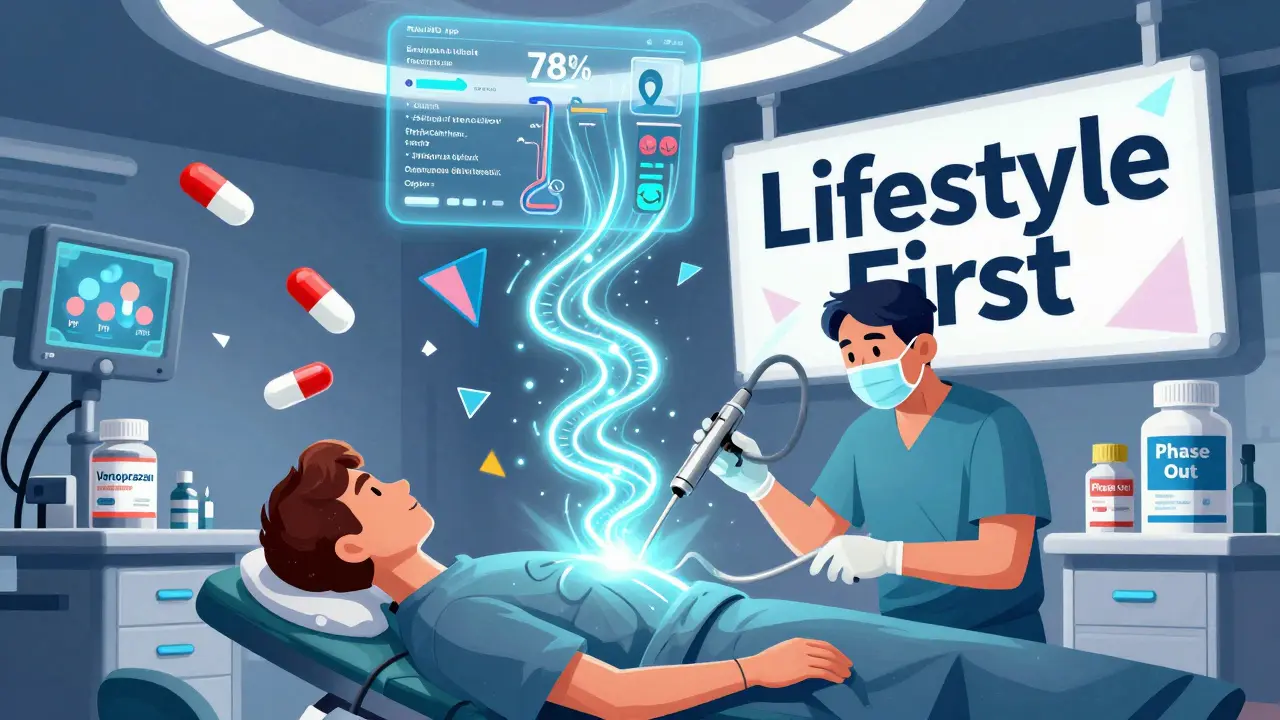
When to See a Doctor
Not all heartburn is GERD. If you have trouble swallowing, unexplained weight loss, vomiting blood, or black stools, get checked immediately. These aren’t normal. They signal complications like strictures or cancer. Also, if you’ve been on PPIs for more than a year without a doctor’s review, schedule a visit. Ask: “Is this still necessary?” “Can I try reducing it?” “Have you checked for nutrient deficiencies?”Real Talk: Why Most People Struggle
Lifestyle changes sound simple. But try telling your family you won’t eat pizza on Friday night. Or skipping wine at your anniversary dinner. Social pressure, cultural habits, and emotional eating make consistency hard. A Cleveland Clinic survey found 41% of patients couldn’t stick with diet changes long-term. The key? Don’t aim for perfection. Aim for progress. Cut out one trigger at a time. Start with bedtime eating. Then add weight loss. Then eliminate coffee. Track what helps. Use a food diary. Small wins build momentum. And remember: symptom relief doesn’t mean healing. You might feel better in a week, but your esophagus could still be damaged. Stick to the full treatment plan-even if you feel fine.Can I stop taking PPIs if I change my lifestyle?
Yes, many people can. Studies show that combining weight loss, dietary changes, and sleep posture adjustments can reduce or eliminate the need for PPIs. But don’t stop suddenly. Work with your doctor to taper off gradually-usually over 4 to 8 weeks-while using an H2 blocker like famotidine to manage rebound acid. Most patients who stick with lifestyle changes for 3-6 months can successfully discontinue PPIs.
What are the most effective lifestyle changes for GERD?
The most effective changes are: (1) losing 5-10% of body weight, (2) avoiding food 2-3 hours before bedtime, (3) elevating the head of your bed by 6 inches, (4) eliminating trigger foods like coffee, tomatoes, alcohol, chocolate, and fatty foods, and (5) quitting smoking. These five steps alone can reduce symptoms by 60-80% in many patients, sometimes eliminating the need for medication entirely.
Are PPIs dangerous if taken long-term?
Long-term PPI use (over one year) carries measurable risks: 20-50% higher chance of intestinal infections like C. diff, increased risk of vitamin B12 deficiency, kidney inflammation, and a 35% higher hip fracture risk in older adults on high doses for three or more years. These aren’t rare side effects-they’re documented in major studies published in JAMA and the FDA’s safety alerts. That’s why guidelines now recommend using the lowest dose for the shortest time possible and reevaluating use every 8 weeks.
Why do I get worse symptoms when I stop PPIs?
This is called rebound acid hypersecretion. When PPIs block acid production for weeks, your stomach compensates by making more acid-producing cells. When you stop suddenly, those cells go into overdrive, flooding your esophagus with acid. It’s temporary-usually lasts 2-6 weeks-but it feels like your GERD is returning. The fix? Taper slowly over 4-8 weeks, using an H2 blocker like famotidine during the transition. Don’t quit cold turkey.
Is surgery ever necessary for GERD?
Surgery isn’t common, but it’s an option for people who don’t respond to medication or can’t tolerate long-term PPI use. Fundoplication-wrapping the top of the stomach around the esophagus-has a 90% success rate at 10 years. Newer options like the LINX® device (a magnetic ring around the LES) and TIF (a no-cut endoscopic procedure) have 85% success rates at 5 years. These are most effective for patients with clear anatomical issues, like a large hiatal hernia, and who’ve tried and failed medical management.

PPIs are a band-aid, not a fix. The real work is in the lifestyle shifts-weight loss, sleep posture, trigger elimination. I’ve seen patients reverse erosive esophagitis in 12 weeks with zero meds. It’s not magic. It’s physiology.
Rebound acid? That’s not relapse. That’s your parietal cells screaming after being silenced for months. Taper. Use H2 blockers. Don’t panic.
And yes-elevating the head of your bed works. Gravity isn’t optional. It’s biomechanics.
Man, this post is like a love letter to your esophagus. I’ve been on PPIs for 5 years and thought I was doomed. Then I ditched coffee, lost 18 lbs, and raised my bed like a weirdo with a cinderblock under the legs. Nighttime cough? Vanished. Wine on Fridays? Still doing it. But now I eat at 6 pm sharp. No regrets. My stomach’s throwing a parade.
Okay, I need to say this out loud because I’ve been silent too long-lifestyle changes aren’t just "nice to have," they’re THE treatment. I used to think I was failing because I couldn’t quit pizza, but then I realized: progress isn’t all-or-nothing. I started with one thing-no food after 8 p.m. Then I added the bed wedge. Then I swapped soda for sparkling water. Six months later, I’m off PPIs, my B12 levels are back in range, and my doctor is shocked. It’s not about willpower. It’s about stacking micro-habits until they become your identity. You’re not giving up pizza-you’re choosing your esophagus. And honestly? It’s worth it.
no ppi = no more heartburn? try sleeping on ur back n raise ur head. its stupid simple but works. i did it n stopped meds. my doc was like wtf u did??
For those considering stopping PPIs: the 4–8 week taper is non-negotiable. Rebound hypersecretion isn’t a myth-it’s a physiological reset. H2 blockers like famotidine are underrated bridges. I’ve guided over 200 patients through this. Most don’t realize how much their symptoms were masked, not cured. The goal isn’t to feel better tomorrow. It’s to heal your esophagus so you never need the drug again.
Why are we letting Big Pharma dictate how we treat GERD? PPIs were never meant to be lifelong. But doctors? They’re trained to prescribe, not to educate. I’ve met people who’ve been on omeprazole since 2010 because no one told them to change their diet. Meanwhile, your grandma in 1980 didn’t have GERD because she didn’t eat junk food at midnight. We’ve gotten soft. Time to go back to basics. No drugs. Just food, sleep, and gravity.
I love how this post balances science with humanity. Yes, PPIs work-but they’re not the hero. You are. The person who chooses to stop eating at midnight. The one who loses 10 pounds not for looks, but for their esophagus. The one who raises their bed like a weirdo with pillows and a wooden wedge. Healing isn’t loud. It’s quiet. It’s consistency. It’s saying no to wine on your anniversary because you’ve got a future to protect. You’re not broken. You’re becoming. And that’s beautiful.
People think GERD is just "eating too much spicy food"-but it’s deeper. It’s a moral failure. You’re not just harming your body-you’re disrespecting your own health. If you can’t stop eating chocolate at midnight, what else can’t you control? Smoking? Alcohol? Laziness? This isn’t a medical issue. It’s a character issue. And if you’re too weak to change, then maybe you deserve the reflux. Just saying.
bro i was on ppi for 3 years. then i stopped. got worse. then i started eating early n raising my bed. now im fine. no drugs. just sleep n dont be a lazy pig. also stop drinking soda. its evil.