
How to Manage Overdose Risk During Heatwaves and Illness
Heatwaves Don’t Just Make You Sweat-They Can Kill People Who Use Drugs
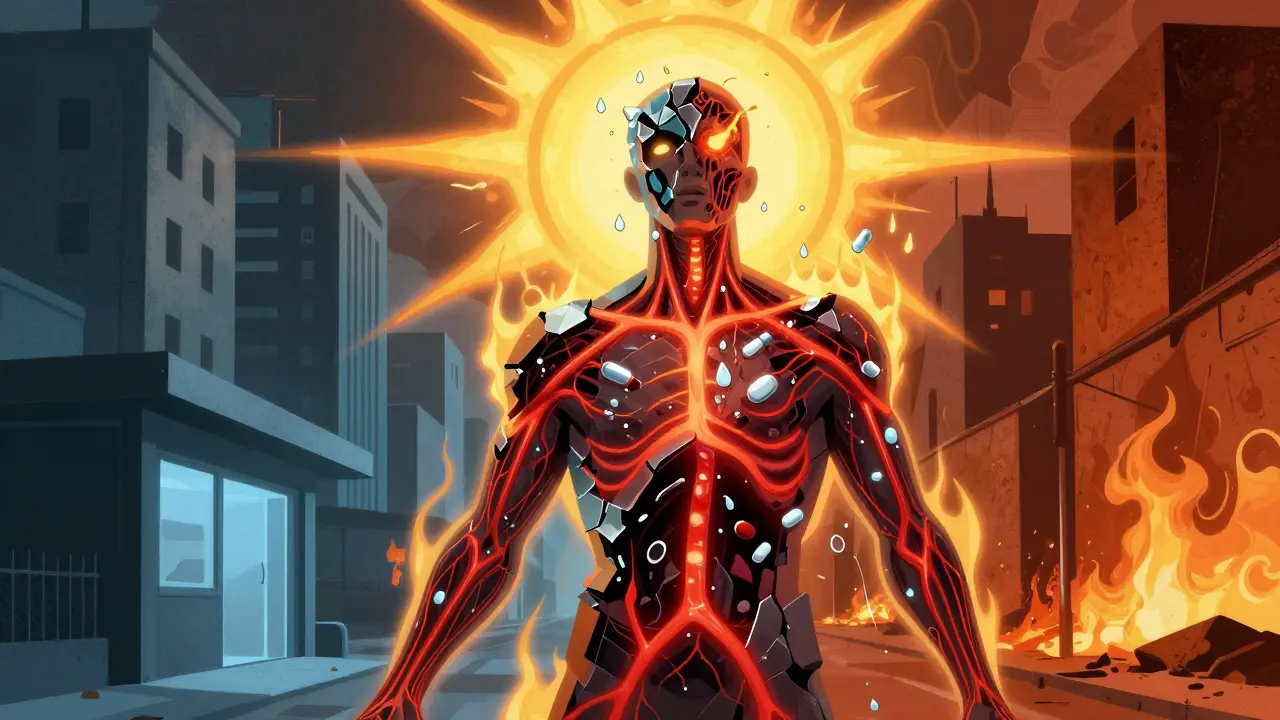
When the temperature hits 24°C (75°F), something dangerous starts happening inside the bodies of people who use drugs. It’s not just about feeling hot. It’s about your heart racing, your blood thickening, your brain fogging up-and your risk of overdose shooting up by as much as 30%. This isn’t speculation. It’s data from New York City, Colorado, and beyond. Between 1990 and 2006, researchers found that for every week the city stayed above that 24°C threshold, accidental overdose deaths climbed. And it’s getting worse. By 2050, climate models predict 20 to 30 extra days each year where this risk kicks in.
Heat doesn’t just make drugs feel stronger-it changes how your body processes them. Dehydration from sweating concentrates drugs in your bloodstream. Lose just 2% of your body weight in fluids, and drug levels can spike by 15-20%. That’s like taking a full dose when you thought you were taking half. For stimulants like cocaine or meth, heat multiplies the strain on your heart. Your resting heart rate jumps 10-25 beats per minute from the heat alone. Add stimulants, and that spike becomes 30-50%. Your heart can’t handle it. For opioids, heat weakens your body’s ability to breathe properly. Even a small rise in core temperature reduces respiratory compensation by 12-18%. You might not even realize you’re stopping breathing until it’s too late.
Why People Who Are Homeless Are at the Highest Risk
Over 580,000 people in the U.S. are homeless on any given night. About 38% of them have a substance use disorder. When the heat hits, they’re the ones sleeping on pavement, in alleys, under bridges-places where temperatures can be 5°C hotter than just a few blocks away. Urban heat islands turn cities into ovens, and the people without air conditioning, fans, or even shade are the ones who pay the price.
Shelters often turn people away if they’re actively using drugs. Some police departments have confiscated cooling supplies from outreach workers-misting towels, electrolyte packets, even water bottles-calling them "drug paraphernalia." Meanwhile, the CDC reports that 18-22% of emergency department visits during heat emergencies involve people who use drugs. Yet only 12 out of 50 U.S. states have written any official guidance into their heat emergency plans about how to protect this group. That’s not just negligence-it’s a death sentence waiting to happen.
How Heat Interacts With Mental Health Medications
It’s not just street drugs. Many people managing mental health conditions with prescription meds are also at risk. About 70% of antipsychotics and 45% of antidepressants lose effectiveness-or become more toxic-during extreme heat. Lithium, commonly used for bipolar disorder, becomes dangerously concentrated in the blood when you’re dehydrated. Benzodiazepines can cause dangerous drowsiness when combined with heat exhaustion. And if you’re on buprenorphine for opioid use disorder, your body absorbs 23% less of it when it’s over 30°C. That means withdrawal symptoms can return, triggering relapse and increasing overdose risk.
People with co-occurring disorders-mental health and substance use-are especially vulnerable. Heat impairs judgment by 25-35%, making it harder to recognize early signs of trouble. You might not realize you’re overheating until you’re confused, dizzy, or passing out. And if you’re alone, no one may notice until it’s too late.
What You Can Do: Practical Harm Reduction Steps
There are real, proven steps you can take to lower your risk during heatwaves. These aren’t theoretical. They’ve been tested in cities like Philadelphia, Vancouver, and New York.
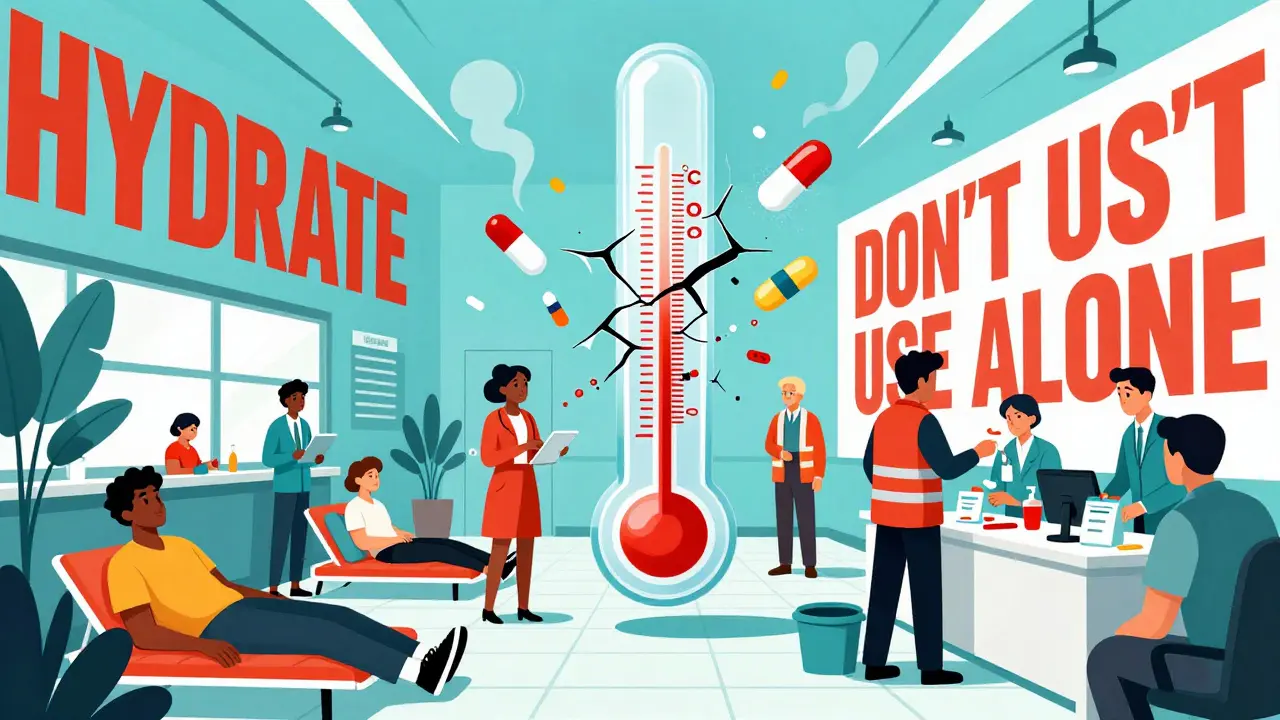
- Reduce your dose by 25-30%. Your body is already under stress. Don’t test it. Even if you’re used to a certain amount, cut back. Heat changes how your body handles drugs. What was safe last week might kill you this week.
- Hydrate like your life depends on it. Drink one cup (8 oz) of cool water every 20 minutes. Don’t wait until you’re thirsty. Thirst means you’re already dehydrated. Avoid alcohol and caffeine-they make dehydration worse. Electrolyte packets (like those in hydration salts or sports drinks) help replace what you lose through sweat.
- Find cool space. Libraries, community centers, malls, and public transit stations are often air-conditioned. Even sitting in the shade with a fan helps. If you’re in a city with a heat emergency plan, find out where cooling centers are. Some are now co-located with supervised consumption sites, so you can get help without being turned away.
- Use with someone. Never use alone. If you’re going to use, make sure someone’s nearby who knows how to use naloxone. Tell them you’re using, and that you’re worried about the heat. Have them check on you every 15 minutes.
- Carry naloxone. It’s not just for opioids. In some cases, heat-induced cardiac arrest from stimulants can be reversed if help comes fast. Naloxone is safe, free in many places, and easy to carry. Keep it in your pocket, not your bag.
What Communities and Providers Should Be Doing
Individual actions matter, but systemic change saves lives. Cities need to treat heat and overdose risk as linked emergencies.
Philadelphia started distributing over 2,500 cooling kits annually-each containing electrolytes, misting towels, water bottles, and info cards. They trained outreach workers to ask: "Are you using drugs? Are you feeling okay in this heat?" That simple question led to dozens of interventions before overdoses happened.
Vancouver opened seven air-conditioned respite centers next to supervised injection sites during the 2021 heat dome. They didn’t turn anyone away. They provided water, medical checks, and naloxone. Overdose deaths dropped by 34% compared to the previous year.
Health providers need to screen for heat risk. The Colorado Department of Public Health created a tool called CHILL’D-Out, which asks 12 key questions: Do you have a place to cool down? Are you on medications that affect your temperature? Are you drinking enough water? If you’re a clinician, ask these questions. If you’re a peer worker, carry the checklist.
And governments? They need to update their heat emergency plans. The Biden administration just allocated $50 million to make sure every state includes substance use in their heat response by December 2025. That’s a start. But it’s not enough. We need funding for cooling centers, training for first responders, and legal protection for outreach workers carrying harm reduction supplies.
What to Do If Someone Overdoses in the Heat
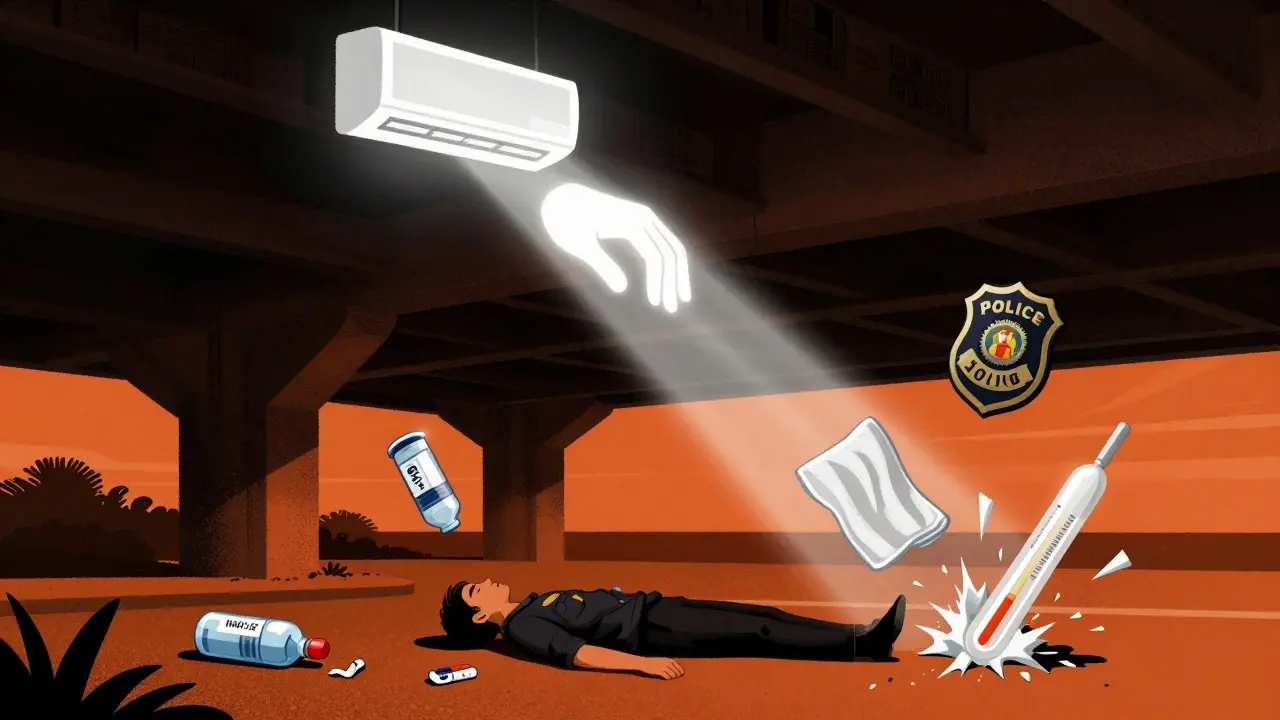
Signs of heat-related overdose: confusion, nausea, rapid heartbeat, very hot or dry skin, loss of consciousness. This isn’t just a drug overdose-it’s a medical emergency combining heat and toxicity.
- Call 911 immediately. Say: "I think someone is having a heat-related overdose. They’re using drugs." That helps responders prepare.
- Move them to shade or air conditioning. Take off excess clothing.
- Cool them down. Wet their skin with water. Fan them. Put ice packs on their neck, armpits, and groin.
- Give naloxone if you have it and suspect opioids are involved. Even if you’re not sure, it’s safe to administer.
- Stay with them until help arrives. Don’t leave them alone.
Don’t wait for someone to "look like they’re overdosing." Heat makes symptoms harder to recognize. If someone seems off, act fast.
It’s Not Just About Drugs-It’s About Justice
When we ignore overdose risk during heatwaves, we’re not just failing in public health. We’re failing in basic human dignity. People who use drugs aren’t "problems" to be managed. They’re neighbors, family members, people trying to survive. And when the temperature rises, they’re the ones left behind.
Real change means ending the stigma that keeps people out of shelters. It means protecting outreach workers from being arrested for carrying water. It means funding cooling centers that don’t require sobriety as a condition of entry. It means treating heat as a drug policy issue, not just an environmental one.
There’s no excuse anymore. We have the data. We have the tools. We have the models that work. What’s missing is the will.
Can heat really make drugs more dangerous even if I don’t use stimulants?
Yes. While stimulants like cocaine and meth are the most affected, opioids are also more dangerous in heat. Heat reduces your body’s ability to regulate breathing, which is already suppressed by opioids. Even a small rise in body temperature can push you past the safety margin. Dehydration also concentrates any drug in your blood, meaning your usual dose could become a lethal one.
Is it safe to use drugs in an air-conditioned space?
Being in a cool environment lowers your risk, but it doesn’t eliminate it. The main dangers-dehydration, impaired judgment, and unpredictable drug potency-still exist. Always reduce your dose, stay hydrated, and use with someone who knows how to respond to an overdose. Air conditioning helps, but it’s not a substitute for harm reduction.
What if I’m on medication for mental health and use drugs?
You’re at higher risk. Many psychiatric medications interact dangerously with heat. Antipsychotics, antidepressants, and lithium can become toxic or less effective. Talk to your provider before a heatwave. Ask if your dose needs adjustment. Never stop meds without medical advice, but do ask about heat risks. Carry a list of your meds and dosages with you.
Why do some shelters turn people away during heatwaves?
Many shelters have policies that exclude people who are actively using drugs, fearing liability or disruption. This is harmful and outdated. During heat emergencies, turning people away is deadly. Cities like Vancouver have shown that combining cooling spaces with harm reduction services saves lives. Shelters should not be a choice between safety and dignity.
Can I get naloxone without a prescription?
Yes. In all 50 U.S. states, naloxone is available without a prescription at pharmacies. Many harm reduction organizations and public health departments give it out for free. You can also order it online through programs like Naloxone Finder. Keep it with you, especially during heatwaves. It’s safe, simple to use, and can save a life.
Are there any apps or tools to track heat and overdose risk?
The CDC’s Heat & Health Tracker shows real-time heat risk levels by county and links to local resources. Some cities, like New York, have text alert systems that warn of high-risk days for overdose. Local harm reduction groups often send out SMS alerts during heatwaves. Ask your local needle exchange or outreach program if they offer this service.
What Comes Next
If you’re someone who uses drugs, start today: cut your dose, carry water, find a buddy, keep naloxone nearby. If you’re a friend, family member, or provider, ask the hard questions. Don’t assume someone’s okay just because they’re indoors. Heat doesn’t care about your status, your income, or your choices. It only cares about your body’s limits.
And if you’re in a position to help shape policy-whether you work for a city, a clinic, or a nonprofit-push for change. Demand that heat emergency plans include people who use drugs. Fund cooling centers that don’t require sobriety. Protect outreach workers. Because when the next heat dome hits, we won’t be able to say we didn’t know.

Just read this and cried. I never thought heat could make drugs this dangerous. My cousin used to use alone in summer and never said anything. I wish I knew then what I know now.
So now we’re giving drug users air conditioned malls? Next they’ll want free Netflix and a massage. This country’s broke because of this crap.
Hydrate every 20 mins? Yes. Cut dose by 25-30%? Yes. Carry naloxone? YES. If you’re using, do this. It’s not about judgment, it’s about staying alive. Simple as that.
The data presented is compelling and aligns with clinical observations in urban settings. Dehydration-induced pharmacokinetic shifts are well documented in toxicology literature. The integration of harm reduction into public heat response protocols is not merely advisable-it is ethically imperative.
My brother’s on buprenorphine. He told me last summer he felt like he was going through withdrawal even though he took his dose. I didn’t know heat could do that. This article saved his life. Thank you.
Hey. You’re not alone. Seriously. If you’re reading this and you’re scared, reach out. Even just text someone. Carry the naloxone. Drink the water. You matter. 🤝💧
I used to sleep under the bridge in Delhi when it hit 45°C and I was using. No one asked if I was okay. No one brought water. I almost died twice. I’m alive now because a guy from a local NGO gave me a wet towel and told me to sip water slowly. This article? It’s the same thing. Just in English. And it’s not just for America. This is global.
Stop coddling addicts. They chose this.
My uncle’s in recovery. He’s got a fan and a water bottle by his bed now. Said he didn’t know heat could mess with his meds. He’s proud of himself for learning. Small wins, right? We got this.
Heat doesn’t care if you’re rich or poor, clean or using. It just hits. And if we’re smart, we help each other survive it. Start today. One bottle of water. One friend. One naloxone. That’s how change begins.