
Quality Assurance Units: Why Independent Oversight Is Non-Negotiable in Manufacturing
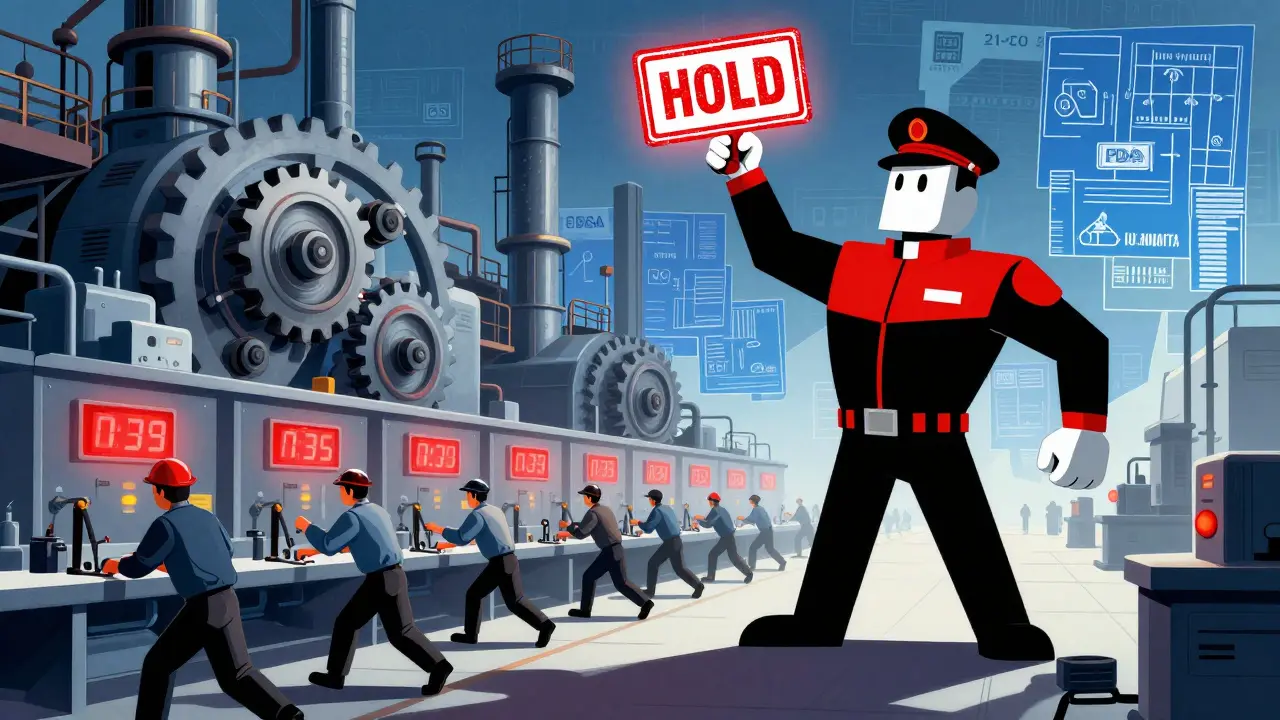
When a batch of medicine is released, it doesn’t just go out the door because someone signed off on it. There’s a system in place - one that’s designed to stop mistakes before they reach patients. At the heart of that system is the quality assurance unit. Not just a department. Not just a team. But a legally required, independent gatekeeper with the power to say no - even when production is behind schedule, when managers are pressuring for results, or when everyone else thinks it’s "close enough."
What Exactly Is a Quality Assurance Unit?
A Quality Assurance Unit (QU) isn’t the same as quality control. Quality control checks samples. The QU checks the whole system. It’s the part of the organization that has the final say on whether a product can be released. It reviews procedures, audits records, investigates deviations, and - critically - can halt production or reject entire batches. This isn’t optional. In pharmaceuticals, nuclear energy, and other high-risk industries, regulators like the FDA and EMA require the QU to be completely separate from production. Why? Because if the people who make the product also decide if it’s good enough, you’ve created a conflict of interest. Production wants to move fast. Quality wants to be sure. Those goals don’t always align. The FDA’s 2006 guidance made this crystal clear: "The quality control unit shall have the responsibility and authority to approve or reject all components, drug product containers, closures, in-process materials, packaging material, labeling, and drug products." That’s not a suggestion. That’s the law under 21 CFR 211.22.Why Independence Isn’t Just a Good Idea - It’s a Requirement
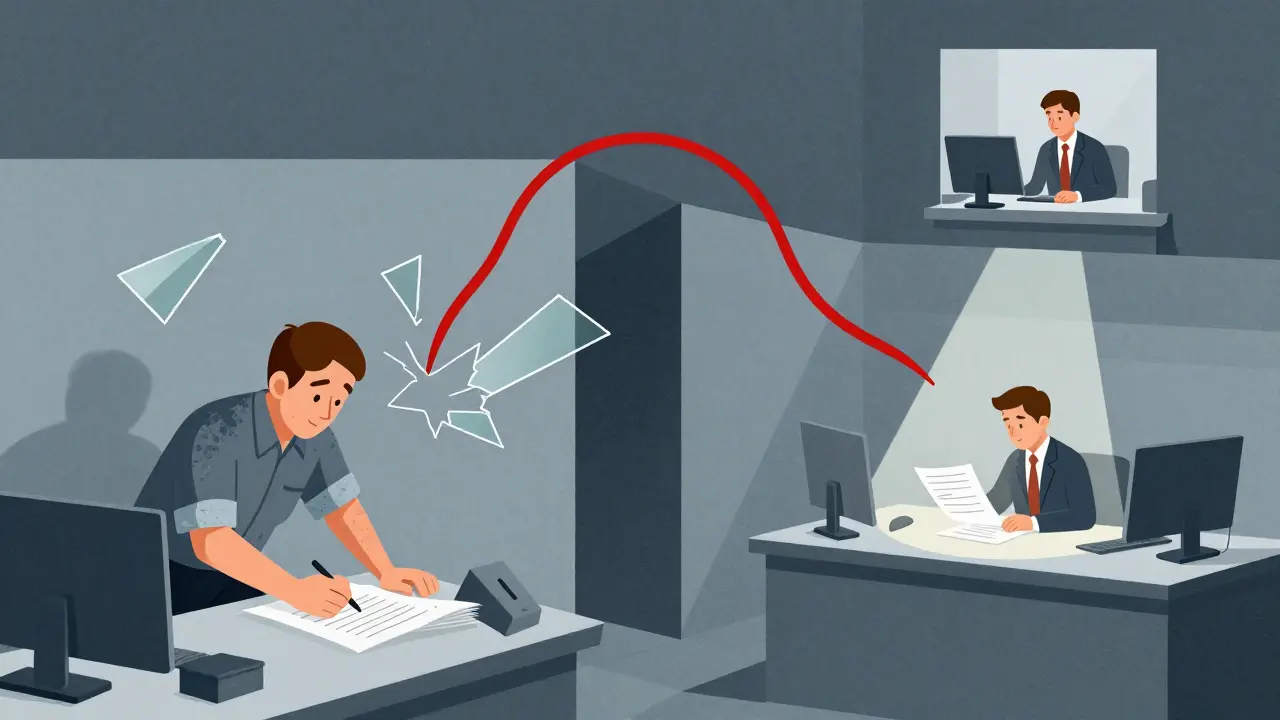
Think about it: if your production manager also runs quality, who’s going to say no when the line is running behind and the customer is waiting? Who’s going to stop the line when a sensor reads slightly out of spec? Who’s going to investigate a weird odor in a batch if the person doing the investigation reports to the same boss who’s being blamed for the delay? That’s not hypothetical. In 2024, the FDA issued warning letters to 68% of inspected facilities for failures related to QU independence. Many of these cases involved production managers overriding quality holds or quality staff being pressured to "rubber stamp" records. One Reddit user in r/PharmaEngineering shared how their company merged QA and production roles during restructuring - within three months, two critical deviations went uninvestigated before batch release. The IAEA found that organizations with true independence had 37% fewer critical compliance failures during inspections. The FDA’s own data shows that facilities with independent QUs resolved critical deviations 28% faster. Why? Because when quality has real authority, problems are surfaced early - not buried.How Independence Actually Works in Practice
Independence doesn’t mean isolation. It means separation of reporting lines. The QU should report directly to senior leadership - ideally the CEO or Board of Directors - not to the head of manufacturing. This isn’t just about structure; it’s about culture. In compliant organizations:- Quality staff have direct access to the CEO without going through production managers.
- There are documented procedures for "quality holds" that bypass the production chain.
- QU personnel are not evaluated on production metrics like output or speed.
- They have their own budget, separate from production.
How Different Industries Handle It
Pharmaceuticals take independence seriously. The FDA demands complete separation. The European Medicines Agency allows slightly more flexibility - but only if there are "effective mechanisms" to ensure quality decisions remain objective. That’s still a high bar. Nuclear facilities go even further. They use a four-layer oversight model: peer checks, senior manager reviews, independent oversight, and external audits by groups like WANO and the IAEA. In nuclear, independence isn’t just about compliance - it’s about preventing disasters. In contrast, many ISO 9001-certified manufacturers treat quality as advisory. They don’t have the legal authority to stop production. That’s fine for making furniture or electronics - but not for drugs or medical devices.The Hidden Costs of Not Being Independent
When QU independence fails, the consequences aren’t abstract. They’re real. - 63% of FDA warning letters for data integrity violations stem from integrated quality-production structures.- Facilities with fewer than 50 employees are 2.3 times more likely to fail QU independence audits.
- QU-to-production staff ratios below 1:15 lead to 3.2 times more repeat deviations.
- 57% of quality professionals report pressure to expedite batch reviews during production crunches. Small manufacturers often try to cut costs by having one person wear both hats. It’s tempting. But the data doesn’t lie: that’s where failures happen.
What Happens When You Get It Right
Organizations that nail independence don’t just avoid warning letters. They thrive. The International Society for Pharmaceutical Engineering found that companies with fully independent QUs had 31% higher first-time inspection success rates. Eli Lilly’s "quality ambassador" program - where production staff are trained by the QU but remain in their roles - improved quality culture by 40% without blurring lines of authority. One key insight: independence doesn’t mean silence. It means clarity. When the QU speaks, everyone listens - because they know the person speaking has the power to shut things down. That changes behavior. People document better. They investigate root causes. They don’t cut corners.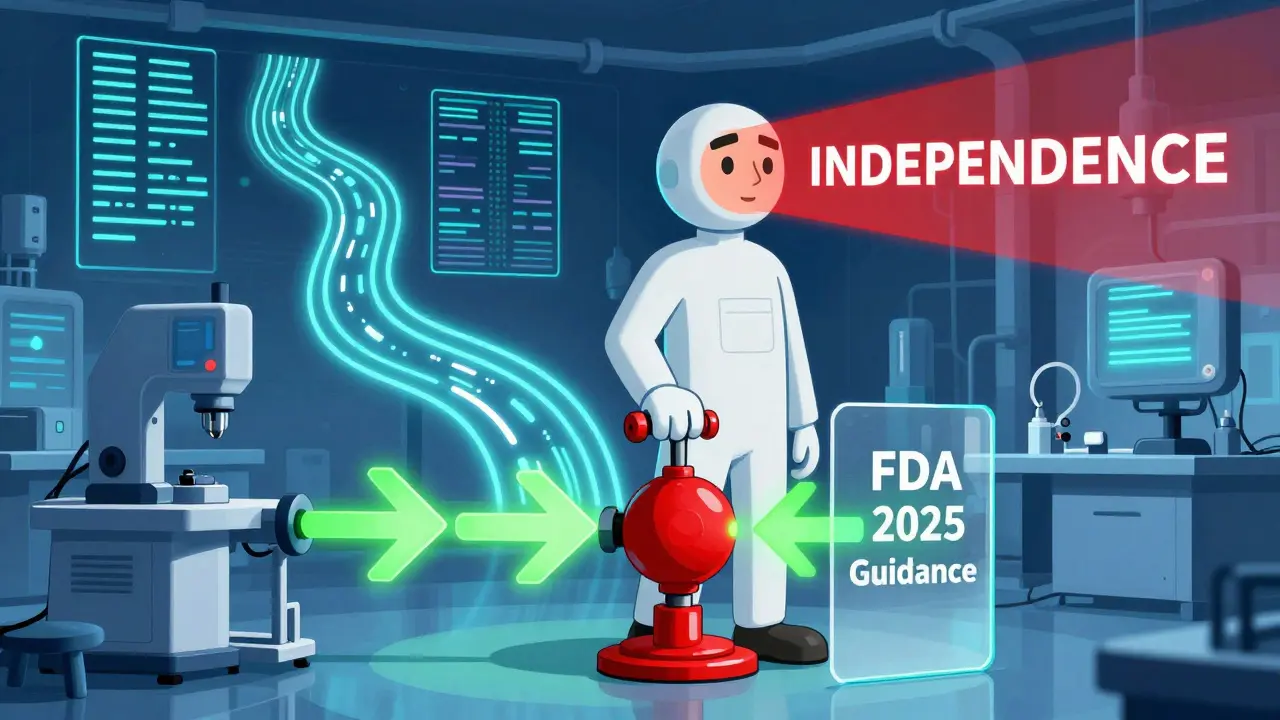
The Future of Quality Oversight
As manufacturing gets smarter - with AI-driven systems, real-time data, and automated controls - the question becomes: how do you maintain independence when decisions happen in milliseconds? The FDA’s 2025 draft guidance tackles this head-on. It’s not about keeping humans out of the loop. It’s about ensuring that algorithmic quality decisions are auditable, transparent, and separated from production optimization logic. Think of it like a self-driving car: the safety system can override the navigation system. That’s independence in code. The European Commission’s 2024 update to EudraLex made it clear: quality units "shall not be organizationally subordinate to production departments under any circumstances." That’s not changing.What You Need to Do
If you’re in manufacturing - especially in pharma, medical devices, or nuclear - here’s what matters:- Map your reporting lines. Is the QU reporting to production? If yes, fix it.
- Document authority. Do you have written procedures for quality holds? Are they signed off by leadership?
- Check your ratios. Are you trying to cover too much with too few quality staff?
- Train your team. Quality staff need more than GMP knowledge - they need conflict resolution skills.
- Protect them. If a quality engineer raises a concern, do they fear retaliation? If so, your system is broken.


Man, I’ve seen this go south so many times. One guy in my old plant was supposed to be QA but reported to production. Got a batch out with wrong labels. Kids got sick. Never forget it.
Let’s be clear: the QU isn’t a ‘department’-it’s a constitutional check on operational tyranny. 21 CFR 211.22 isn’t guidance-it’s a legal firewall. Without it, you’re not manufacturing-you’re gambling with human lives. GMP isn’t a checklist; it’s a covenant.
Wow. So we’re just gonna ignore that 80% of small pharma companies can’t afford a full independent QU? This is textbook ‘rich people’s compliance theater.’
Actually, in India, we’ve seen success with hybrid models where QA reports to both production and regulatory affairs-dual reporting. It’s not perfect, but it works if you have strong SOPs and a no-retaliation culture. Not every system needs to be FDA-perfect to be safe.
They didn’t just ‘merge’ QA and production-they committed corporate suicide. And now we’re supposed to act like this is normal? This isn’t a ‘challenge’-it’s a crime waiting for a headline.
Independence-yes-but autonomy without accountability is just bureaucracy with a badge. Who audits the auditor? Who holds the QU accountable when they reject batches without root cause? The system must be reciprocal-not hierarchical. Power without transparency is tyranny in GMP clothing.
Big Pharma loves this talk, but have you seen the QA team at some of these startups? Two people, one laptop, and a prayer. The real problem isn’t structure-it’s resources. Fix the funding, not just the org chart.
So you’re saying nuclear plants are more regulated than drug makers? Interesting. But you know what’s worse? When the FDA makes you hire a whole team of QA people just to sit around and read the same 10-page SOP for the 50th time. We’re drowning in paperwork, not safety.
And yet, every single time someone raises a quality hold, they get ‘restructured out.’ You think the system protects them? Nah. The system protects the bottom line. The QU is a sacrificial lamb dressed in a lab coat.
I get it. Independence matters. But let’s not pretend this is just about structure. It’s about culture. If your team fears speaking up, no org chart will save you. I’ve seen QA folks with zero authority but total respect-and they stopped more bad batches than any ‘independent’ unit that was ignored. It’s not the title-it’s the trust.
Wait, so if QA can stop production, who’s gonna fix the line when it breaks? You can’t just say no and walk away. Someone’s gotta fix it. Maybe we need QA and production to be the same team-just with better training. Not separation. Integration.