
How to Report Counterfeit or Tampered Medications: Step-by-Step Guide for Patients and Providers
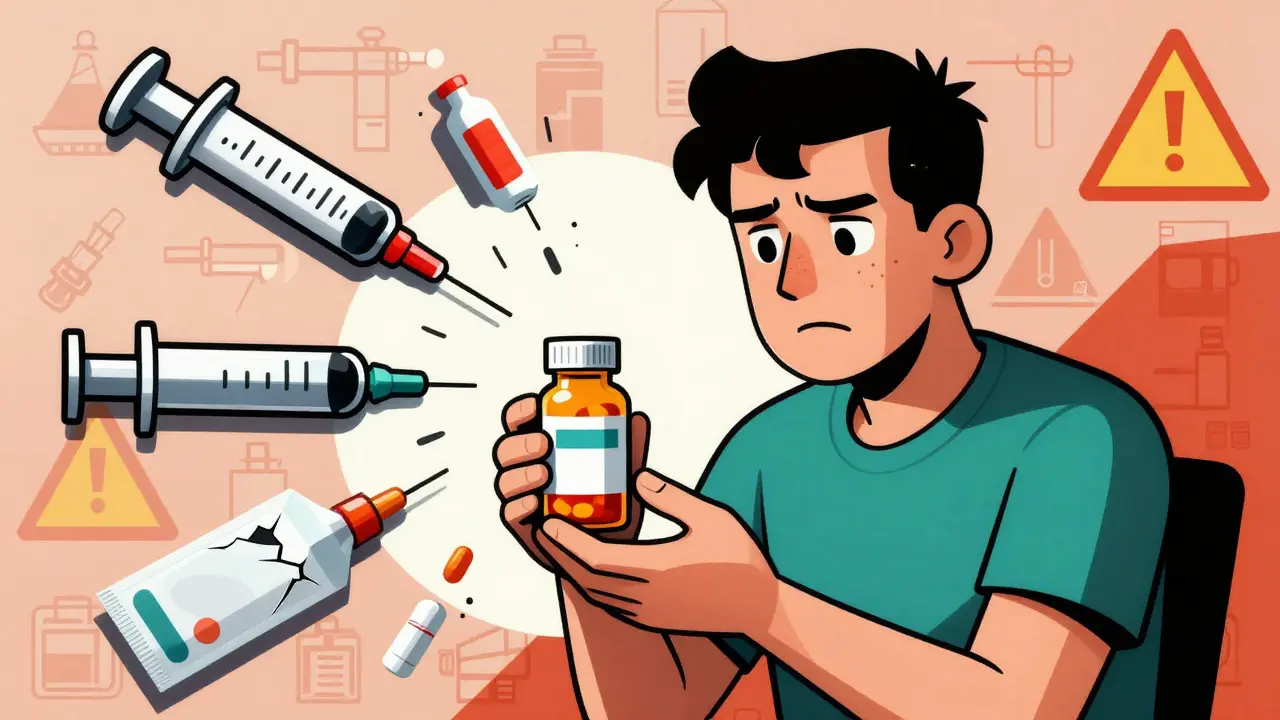
If you’ve ever opened a pill bottle and thought something looked off-the color wrong, the pills smell funny, the label blurry-you’re not imagining things. Counterfeit or tampered medications are real, and they’re more common than most people realize. In 2022, the global market for fake drugs was worth over $205 billion. These aren’t just harmless imitations-they can be deadly. A single batch of fake insulin, blood pressure medicine, or antibiotics can kill. The good news? You have the power to stop them. Reporting suspicious medication isn’t just a good idea-it’s a public health duty. And it’s easier than you think.
What Counts as a Counterfeit or Tampered Medication?
A counterfeit medicine is made to look real but isn’t. It might have the wrong active ingredient, no ingredient at all, or too much of a dangerous one. Tampered meds are real products that someone messed with after they left the factory-maybe the seal was broken and refilled, the expiration date changed, or the packaging swapped.
Here’s what to look for:
- Package looks cheap, faded, or poorly printed
- Spelling errors on the label or instructions
- Pills that are the wrong color, shape, or size compared to what you’ve taken before
- Unusual smell or taste-like chemicals or plastic
- Missing or broken tamper-evident seal
- Batch or lot number that doesn’t match your prescription history
- Online pharmacy that doesn’t require a prescription
One real case from Tampa in 2023 involved a patient who bought what they thought was generic Adderall from a website offering “50% off.” The pills were bright green and tasted metallic. After reporting it, the FDA traced the batch to a lab in China. The same batch had already been sold to over 800 people across six states.
How to Report to the FDA (MedWatch)
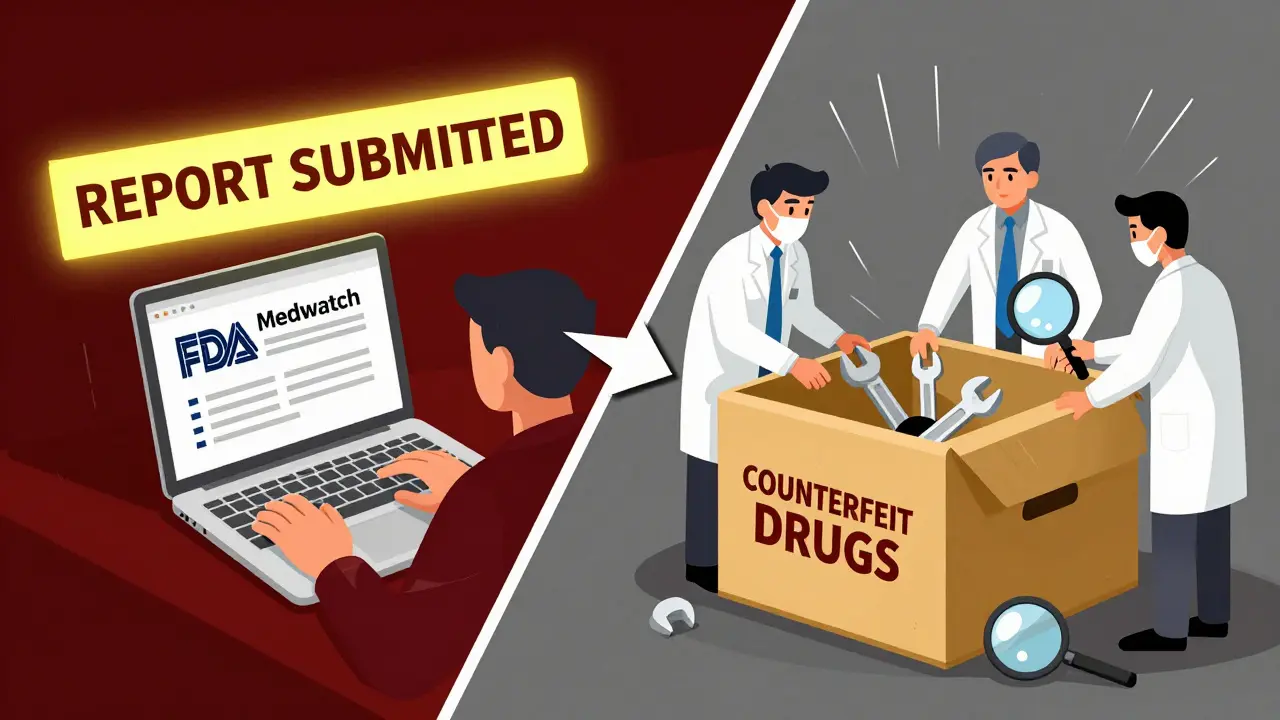
In the U.S., the main system for reporting fake or damaged meds is MedWatch, run by the Food and Drug Administration. It’s not just for doctors-patients, pharmacists, and caregivers can all file reports.
Here’s how to do it right:
- Don’t throw it away. Keep the suspicious medication, its packaging, and your receipt. Don’t handle it more than necessary.
- Take clear photos. Snap pictures of the front and back of the box, the label, the pills themselves, and any writing or logos. Use natural light. Zoom in on batch numbers and expiration dates.
- Write down the details. Note the drug name, dose, manufacturer, batch number, expiration date, where you bought it, and when.
- Report online. Go to fda.gov/medwatch and fill out Form 3500. It takes about 12-15 minutes.
- Or call. Dial 1-800-FDA-1088. A live person will walk you through it.
The FDA says reports with photos and batch numbers are 68% more likely to lead to a successful investigation. If you’re a healthcare provider, you’re legally required to report suspected counterfeit drugs under the Drug Supply Chain Security Act (DSCSA). But even if you’re not, your report matters.
What Happens After You Report?
Once the FDA gets your report, it goes into a database used by investigators. If multiple people report the same batch, it triggers a full probe. Between 2015 and 2022, MedWatch helped remove over 2,300 fake drug products from U.S. shelves.
Timeline matters. Reports filed within 24 hours lead to product removal 4.2 times faster than those filed after three days. That’s why acting fast saves lives.
But don’t expect instant results. The FDA gets thousands of reports every year. Some get acted on within days. Others take weeks. You might not hear back unless they need more info. That doesn’t mean nothing’s happening. Often, the product is pulled quietly before you get an update.
One patient in Florida reported a fake insulin pen in January 2023. Eleven days later, the FDA identified 142 affected lots and issued a nationwide alert. The patient never heard back-but thousands of others were protected because of that one report.
Other Reporting Options
MedWatch is the main channel, but you’re not limited to it.
- DEA RxAbuse Tip Line: If you suspect someone is selling fake controlled substances like opioids or Adderall, call (571) 324-6499 or report online at dea.gov. This line is anonymous and handles illegal distribution.
- Online retailers: If you bought fake meds on Amazon, eBay, or Etsy, use their “Report Counterfeit” button. Amazon alone received over 7,800 pharmaceutical reports in 2022.
- The manufacturer: Look up the drug’s maker-Novo Nordisk, Eli Lilly, Pfizer-and find their anti-counterfeiting contact page. Many have direct email lines or web forms.
- Your pharmacist: If you got the drug from a pharmacy, tell them immediately. They’re trained to spot fakes and must report to state boards and the FDA.
Canadian residents should report to Health Canada through their Office of Controlled Substances, especially for controlled drugs. In Ontario, pharmacists must email [email protected] with prescription details if they suspect forgery.
Why Your Report Matters
Most people think, “It’s just one bottle. What difference does it make?” But fake drugs don’t operate in isolation. One batch can spread across multiple states. One report can stop a supply chain.
Between 2018 and 2020, 73% of successful DEA investigations in San Diego started with a tip from a regular person. That’s not a statistic-it’s a pattern. Real people, like you, stopped real harm.
And it’s getting worse. Online pharmacies that break U.S. laws make up 96% of all sites selling prescription meds. Many look professional. Some even have fake “verified pharmacy” badges. That’s why you can’t rely on appearance alone.
The FDA spent $18.7 million in 2023 just to fight counterfeit drugs. They’ve added staff, upgraded systems, and are testing a new smartphone app that lets you snap a photo and auto-fill your report. But none of that works unless you speak up.
What Not to Do
Don’t:
- Take the pills anyway, even if they seem harmless
- Give them to someone else
- Throw them in the trash or flush them-this can contaminate water or let someone else find them
- Wait to see if others report it first
- Assume your pharmacist already knows-always tell them
And don’t assume it’s a mistake. If it looks wrong, it probably is. Even if you’re not 100% sure, report it. The FDA’s job is to sort out what’s real and what’s not.
What’s Next for Drug Safety?
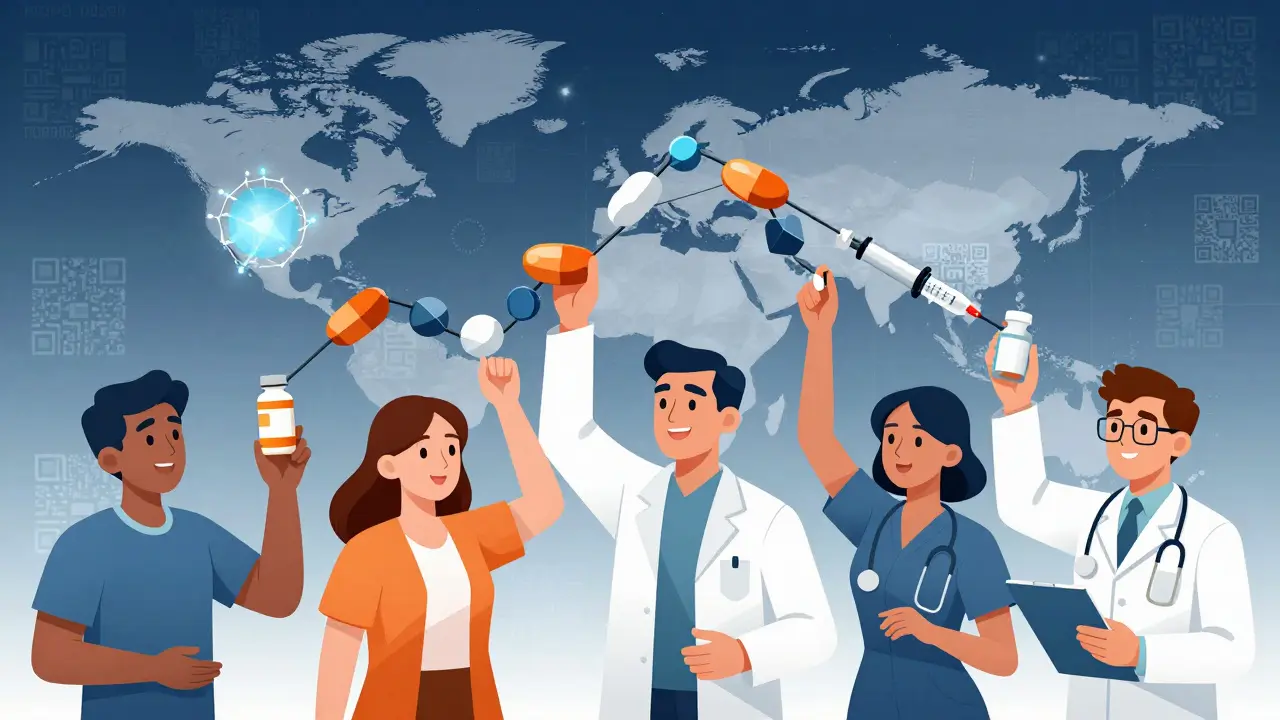
The FDA is testing blockchain verification and AI-powered image recognition to catch fakes faster. By 2027, global health agencies aim to link all reporting systems so a fake pill reported in India can trigger a warning in Florida.
For now, the system still relies on people like you. Your eyes, your phone, your willingness to speak up-that’s the first line of defense.
What should I do if I find a fake medication at home?
Don’t use it. Don’t throw it away. Keep the pill, the bottle, and your receipt. Take clear photos of the packaging and pills. Then report it to the FDA through MedWatch online or by calling 1-800-FDA-1088. You can also contact the manufacturer directly. If it’s a controlled substance like opioids or stimulants, report it to the DEA’s RxAbuse Tip Line as well.
Can I report fake meds if I bought them online?
Yes. Online pharmacies are the biggest source of counterfeit drugs. If you bought medicine from a website that didn’t require a prescription, or seemed too cheap, report it to the FDA and to the website itself. Amazon, eBay, and Etsy all have reporting tools. Also notify your pharmacist and the drug’s manufacturer. The FDA uses these reports to track illegal sellers and shut down websites.
Do I need to be a doctor to report counterfeit medication?
No. Anyone can report. Patients, caregivers, family members, and even bystanders who find suspicious pills are encouraged to report. The FDA’s MedWatch system is designed for the public. In fact, 56% of consumers who reported fake meds in 2022 were not healthcare professionals. Your report is just as valuable as a doctor’s.
How long does it take for the FDA to act after a report?
It varies. Some reports trigger action within days, especially if multiple people report the same batch. Others take weeks. The FDA doesn’t always notify the reporter unless they need more information. But if you reported within 24 hours of discovering the fake, your report is 4.2 times more likely to lead to a fast removal. Don’t wait-report immediately.
Is it safe to report anonymously?
Yes. You can report to the DEA’s RxAbuse Tip Line anonymously. For MedWatch, you can choose not to provide your name or contact info. The FDA doesn’t require personal details unless they need to follow up. Your identity is protected unless you choose to share it.
What if I reported a fake drug but never heard back?
That’s normal. The FDA receives over 100,000 reports a year. Most don’t get individual replies unless more info is needed. But your report still counts. It goes into a system that flags dangerous batches. If others report the same product, it triggers an investigation. Even silent reports help protect the public.
Can I report a fake medication from another country?
Yes. If you’re in the U.S. and bought a fake drug from overseas-whether shipped to you or brought back-you can still report it to the FDA. The agency tracks international counterfeit sources. You can also report to the World Health Organization’s Global Surveillance and Monitoring System, which collects data from 141 countries.
What should I do if I think my pharmacy sold me a fake drug?
Don’t leave without speaking up. Ask to speak to the pharmacist on duty. Show them the suspicious packaging and ask if they’ve seen anything like it. Then report it to the FDA and to your state’s board of pharmacy. Pharmacies are required to report suspected counterfeits under federal law. If they ignore it, your report helps hold them accountable.
Final Thought
You don’t need to be an expert to save a life. Sometimes, all it takes is a quick photo, a few minutes of your time, and the courage to say, “This doesn’t look right.” Fake meds thrive in silence. Your voice breaks that silence.



Okay but like... why are we trusting the FDA again? They approved opioids that killed half the country. Now they're the good guys? 🤡
This is really helpful. I work with elderly patients in India and many buy meds online because they're cheaper. I'll share this guide with them. Simple steps make a big difference.
I've seen this firsthand. My mom got fake blood pressure pills from a 'discount pharmacy' last year. She ended up in the ER. I took photos, kept the bottle, and called MedWatch. No reply, but a month later, the FDA pulled 300+ bottles from three states. Your report matters-even if you never hear back.
The article states 'the FDA spent $18.7 million in 2023 just to fight counterfeit drugs.' However, the source citation is missing. Without verifiable data, this claim undermines the credibility of the entire piece.
Feds are just trying to control us. They don’t want you to know the truth-big pharma owns them. Why do you think they don’t let you buy insulin over the counter? This whole system is rigged. 💥
I saved this post. My aunt just got back from Mexico with 'generic' diabetes meds. I'm showing her this tomorrow. 🙏
I appreciate the clear steps. I used to think reporting was pointless, but now I see it’s like calling 911 for medicine. Small action, big ripple.
It is of paramount importance that individuals, regardless of professional background, recognize their role in safeguarding the public health infrastructure. The dissemination of accurate information regarding counterfeit pharmaceuticals is not merely a civic duty-it is a moral imperative.
I mean... if a pill looks weird, is it really the fault of the system? Or are we just too lazy to learn what our meds are supposed to look like? We outsource everything-why not our health too?
One cannot help but observe with profound dismay the alarming decline in public vigilance. In my youth, one would never dream of purchasing medication without a prescription-let alone from an unverified website. This is not merely negligence; it is a societal collapse.
lol the FDA's 'app' is just a glorified barcode scanner that auto-fills your name and sends it to a server in Nebraska. Meanwhile, 90% of fake pills are coming from China and they're literally printing fake FDA logos now. This guide is cute but it's like handing out band-aids during a hurricane.
Wait, so you're telling me I should report fake meds but not tell my neighbor who buys everything off Facebook? That's not fair. She needs to know!
Sure, report it. Then what? The FDA takes 6 months. Meanwhile, the same fake pills are being sold on TikTok shops with 5-star reviews. This whole system is a joke. They don't want to fix it-they just want you to feel like you did something.