
Sertraline Gastrointestinal Side Effects: How to Manage Nausea and Diarrhea
Sertraline Side Effect Management Tool
Identify Your Symptoms
Select which gastrointestinal symptoms you're experiencing to get personalized management strategies
Select your symptoms to see management strategies
When you start taking sertraline - whether it’s for depression, anxiety, or another condition - you’re hoping for relief. But for many people, the first few weeks bring something else: nausea, stomach cramps, or loose stools. It’s not rare. In fact, about 25-30% of people experience gastrointestinal side effects when they begin sertraline. And while these symptoms usually fade, they can be bad enough to make people quit the medication altogether. About 28.7% of patients stop sertraline within the first eight weeks because of GI problems, according to research in the American Journal of Psychiatry. That’s higher than most other SSRIs.
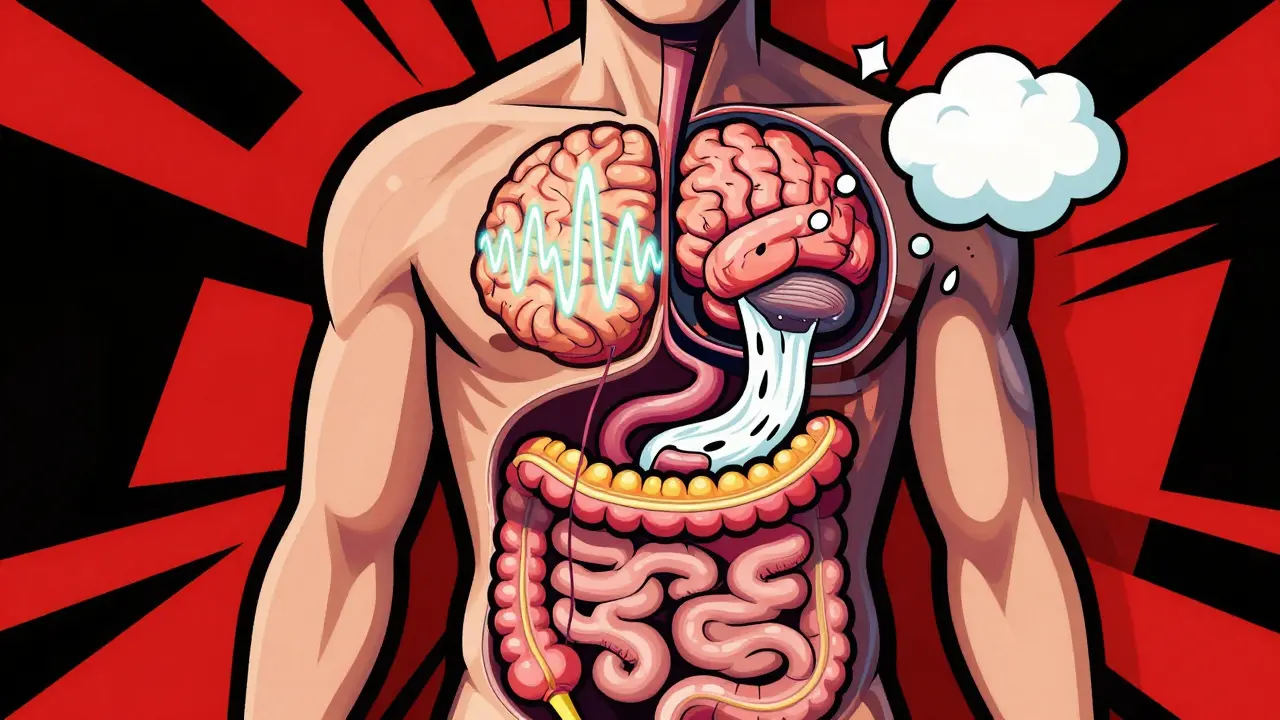
Sertraline doesn’t just affect your brain. It hits your gut too. Why? Because 95% of your body’s serotonin is in your digestive system. When sertraline increases serotonin levels, it doesn’t know the difference between brain and gut receptors. That’s why you get nausea, diarrhea, or acid stomach - even if your mood is improving. The Therapeutic Goods Administration (TGA) of Australia confirms that diarrhea occurs in at least 10% of users, and nausea affects about 25%. A 2022 network meta-analysis found sertraline had the highest probability of GI side effects among five common SSRIs, even beating out fluoxetine and paroxetine.
Why Sertraline Causes Nausea and Diarrhea
The science is straightforward. Sertraline blocks the reabsorption of serotonin, which helps lift your mood. But serotonin also controls how fast your gut moves and how much fluid it releases. Too much serotonin in the intestines = faster movement = diarrhea. Too much in the stomach = nausea, vomiting, or that sour, queasy feeling. The Mayo Clinic lists stomach cramps, gas, and heartburn as common side effects too, affecting 15-20% of users. And it’s not just discomfort - some people lose appetite or drop weight because eating feels like a chore.
What makes sertraline worse than other SSRIs? Research shows it has a stronger effect on gut serotonin receptors. A 2022 study in PMC found sertraline’s probability score for digestive side effects was 0.611, compared to 0.548 for fluoxetine. That might not sound like much, but in real terms, it means you’re more likely to feel sick on sertraline than on other antidepressants in the same class. Even escitalopram, often considered gentler on the stomach, has a lower risk - with an odds ratio of 0.56 compared to sertraline.
How Long Do These Side Effects Last?
Here’s the good news: most people get used to it. The NHS says symptoms should ease after a couple of weeks. Clinical data backs that up - 87% of users see improvement within 4 to 6 weeks. But that doesn’t mean you have to suffer through it. If you’re dealing with nausea or diarrhea, you don’t have to wait it out blindly.
Real-world evidence from patient forums tells a similar story. On Drugs.com, 68.3% of users reported nausea improved within 14 days. On Patient.info, 64.2% of those with diarrhea saw relief within three weeks - but only if they made simple changes to how and when they took the pill.
Practical Ways to Reduce Nausea
You can’t control how your body reacts to sertraline, but you can control how you take it. Here’s what actually works:
- Take it with food - not just any food, but a full meal. A 2022 study in the Journal of Clinical Psychiatry found taking sertraline with food cut nausea by 35-40%. A protein-rich meal works best - think eggs, chicken, or beans. Reddit users on r/SSRI overwhelmingly reported that taking it after dinner, especially with meat, made the biggest difference.
- Avoid spicy, greasy, or heavy meals - these irritate your stomach and make nausea worse. Stick to bland, easy-to-digest foods like toast, rice, or bananas.
- Eat smaller, more frequent meals - the Mayo Clinic recommends this. Instead of three big meals, try five small ones. It keeps your stomach from getting too empty or too full, both of which can trigger nausea.
- Suck on sugar-free hard candy - especially mint or ginger flavors. This stimulates saliva, which helps neutralize stomach acid. A 2019 meta-analysis showed this simple trick significantly improved patient-reported nausea scores.
- Try ginger - ginger tea, capsules, or even ginger ale (the real kind, not soda) helped 27% more people than placebo in a 2021 Journal of Psychopharmacology trial. Many Reddit users swear by it. One person wrote: “Two cups of ginger tea a day and I could finally eat breakfast without throwing up.”

Managing Diarrhea: What to Do and What to Avoid
Diarrhea from sertraline isn’t just inconvenient - it can be embarrassing and exhausting. But it’s manageable. The key is knowing what to cut out and what to lean into.
- Avoid caffeine - coffee, energy drinks, even chocolate can speed up your gut even more. Cut back or switch to decaf.
- Ditch alcohol - it irritates the lining of your intestines and worsens diarrhea.
- Stay away from fried and fatty foods - they’re harder to digest and can trigger loose stools. Think burgers, fries, pizza - skip them for now.
- Hydrate, but don’t overdo it - drink water, herbal tea, or electrolyte drinks. But avoid large amounts of juice or sugary drinks - they can make diarrhea worse.
- Try the BRAT diet - bananas, rice, applesauce, toast. These are bland, binding foods that help firm up stools. Many users on Patient.info reported this helped them get through the worst week.
- Watch for warning signs - if diarrhea lasts more than four weeks, gets worse, or includes blood or severe cramping, talk to your doctor. There’s a rare but real link between sertraline and microscopic colitis, an inflammatory bowel condition. The TGA and Medical News Today both warn about this possibility.
When to Talk to Your Doctor
If you’ve tried all the tips and still can’t tolerate the side effects, don’t just quit. Talk to your prescriber. There are clear clinical pathways to help you.
The American Psychiatric Association’s 2023 guidelines suggest lowering your dose to 25-50mg daily if nausea lasts beyond 2-3 weeks. Then, slowly increase it over 4-6 weeks. Many people find this works - slower doses mean less shock to the gut.
If diarrhea lasts more than four weeks, the American College of Gastroenterology recommends evaluating for microscopic colitis. This isn’t common, but it’s real. Stopping sertraline may be necessary - and switching to another antidepressant.
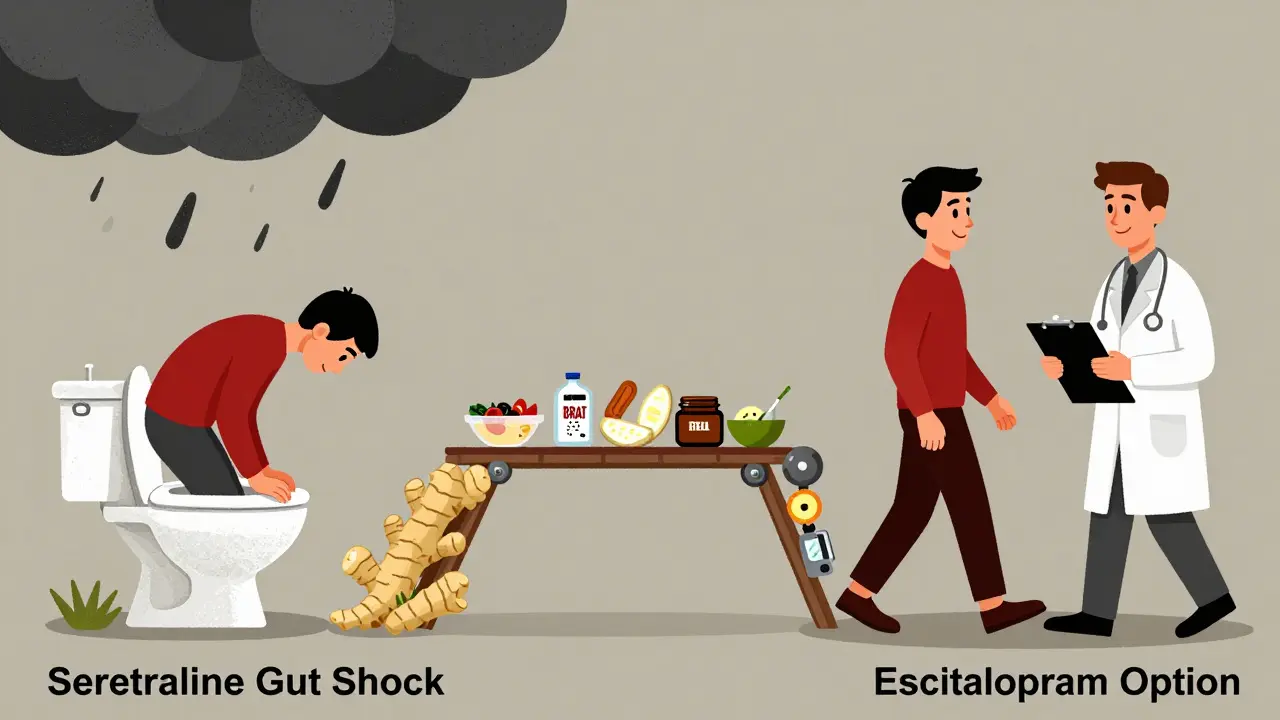
NICE UK guidelines now say: if GI side effects are problematic after two weeks, consider switching to escitalopram. It’s not just a suggestion - it’s becoming standard practice. In fact, 34.7% of primary care doctors now choose escitalopram as their first-line SSRI, up from 22.1% in 2018, largely because of better gut tolerance.
What If Nothing Works?
You’re not broken. You’re not weak. You’re just one of the people whose gut reacts strongly to sertraline. That doesn’t mean you can’t find relief.
There are alternatives. Escitalopram (Lexapro) has lower GI side effects. Fluoxetine (Prozac) is also better tolerated than sertraline in terms of stomach issues. Even venlafaxine (an SNRI) is an option for some people - though it comes with its own side effects.
And there’s hope on the horizon. A new gut-selective serotonin modulator called TD-8142 is in Phase II trials. Published in Nature Mental Health in March 2023, it reduced GI side effects by 62% while keeping the antidepressant effect. It’s not available yet, but it shows we’re moving toward treatments that help your mood without wrecking your gut.
Final Thoughts
Starting sertraline shouldn’t mean suffering through nausea and diarrhea for weeks. You have tools. You have options. You don’t have to push through pain just because it’s "common."
Take it with food. Try ginger. Avoid triggers. Give it time - but not too much time. If it’s still unbearable after three weeks, talk to your doctor. You might need a lower dose. Or a different medication. Either way, you deserve treatment that doesn’t make you feel worse than you did before.
Many people do get past this. But they didn’t just wait. They acted. And so can you.


Ugh, I took sertraline for 3 weeks and it felt like my gut was staging a rebellion. Ginger tea? Sure. But honestly? I just switched to escitalopram and life got quiet again. Why do we even prescribe this stuff if it turns your stomach into a warzone? 🤦♀️
I took it with food like they said... and still puked at 3am. 😭
It's fascinating how serotonin functions as a dual-purpose neurotransmitter-brain and gut both rely on it, but we treat them as separate systems in medicine. The body doesn't compartmentalize like our pharmaceutical guidelines do. When we flood the gut with serotonin reuptake inhibition, we're not just causing side effects-we're disrupting a deeply evolved physiological pathway. The real tragedy isn't the nausea-it's that we still treat the gut as an afterthought in psychiatric care.
The data presented here is compelling and aligns with clinical observations. A systematic reduction in dosage under medical supervision appears to be the most evidence-based approach for patients experiencing intolerable gastrointestinal effects. It is neither prudent nor sustainable to expect patients to endure significant discomfort without structured alternatives
Ginger tea changed my life. Seriously. 🍵💪 Also, taking it after a big dinner with chicken and rice? Magic. I was ready to quit until I tried this. Now I'm 6 weeks in and feeling amazing. Don't give up too soon.
I didn't believe the food thing until I tried it. Took it with a protein shake and boom-no nausea. Simple as that.
Caffeine? Gone. Fried food? Gone. Diarrhea? Gone. It's not rocket science. Just don't be lazy and follow the basics.
I wonder if the gut-brain axis is being oversimplified. Serotonin receptors in the enteric nervous system are not identical to those in the CNS. Could it be that sertraline’s affinity for specific subtypes-like 5-HT3 or 5-HT4-plays a larger role than overall serotonin elevation? The literature seems to conflate mechanism with outcome.
Let’s be real-Big Pharma doesn’t care if you’re nauseous. They’re selling pills, not comfort. The fact that sertraline has the highest GI side effect rate among SSRIs and we still make it first-line? That’s not medicine. That’s profit-driven inertia. And don’t even get me started on the ‘just wait it out’ mentality.
In India, we have a long tradition of using ginger and ajwain for digestive distress. It’s not new age-it’s ancestral wisdom. The fact that modern medicine is only now catching up to what grandmothers knew for centuries is both humbling and frustrating. Combine traditional remedies with clinical advice, not replace one with the other.
The assertion that 87% of users see improvement within four to six weeks is misleading. It ignores the 13% who do not-and for whom the damage may be irreversible. Microscopic colitis is not a footnote. It is a catastrophic risk that deserves far greater emphasis than a single line buried in a subsection. This article reads like a corporate pamphlet, not a medical warning.