CBT-I: What It Is, How It Works, and Why It’s the Gold Standard for Insomnia
When you can’t sleep night after night, pills might seem like the easy fix—but CBT-I, Cognitive Behavioral Therapy for Insomnia, is a structured, evidence-based program that reteaches your brain how to sleep without medication. Also known as Cognitive Behavioral Therapy for Insomnia, it’s not talk therapy in the traditional sense. It’s a practical, step-by-step toolkit that changes the thoughts and habits keeping you awake. Unlike sleeping pills that mask the problem, CBT-I fixes the root cause—and the effects last long after treatment ends.
CBT-I includes several key tools that work together. Sleep hygiene, the basic habits that support good sleep like avoiding caffeine after noon or keeping a dark, cool bedroom is part of it, but it’s not the whole story. The real power comes from stimulus control, a technique that trains your brain to associate the bed only with sleep and sex, not with lying awake worrying. Then there’s sleep restriction, a counterintuitive method that limits time in bed to match how much you’re actually sleeping, building up sleep pressure so you fall faster and stay asleep. And let’s not forget cognitive restructuring, which tackles the anxious thoughts like "I’ll never sleep again" that keep your mind racing at night. These aren’t guesses—they’re backed by decades of clinical research, including studies from the American Academy of Sleep Medicine.
Doctors now recommend CBT-I as the first-line treatment for chronic insomnia, before even considering medication. Why? Because it works better than pills in the long run. A 2020 study in JAMA found that over 70% of people who completed CBT-I saw major improvements in sleep quality—and kept them for a year or more. Pills? Most people relapse within months. Plus, CBT-I has zero side effects. No grogginess, no falls, no dependency. It’s not a quick fix, but it’s the only fix that lasts. If you’ve tried melatonin, valerian, or prescription sleep aids and still wake up at 3 a.m., CBT-I is the next step. Below, you’ll find real-world guides that break down how to apply these techniques, what to expect in therapy, and how to spot when your insomnia might be linked to something else—like thyroid issues, opioid use, or even antibiotic side effects. This isn’t about hoping for better sleep. It’s about building it, one habit at a time.
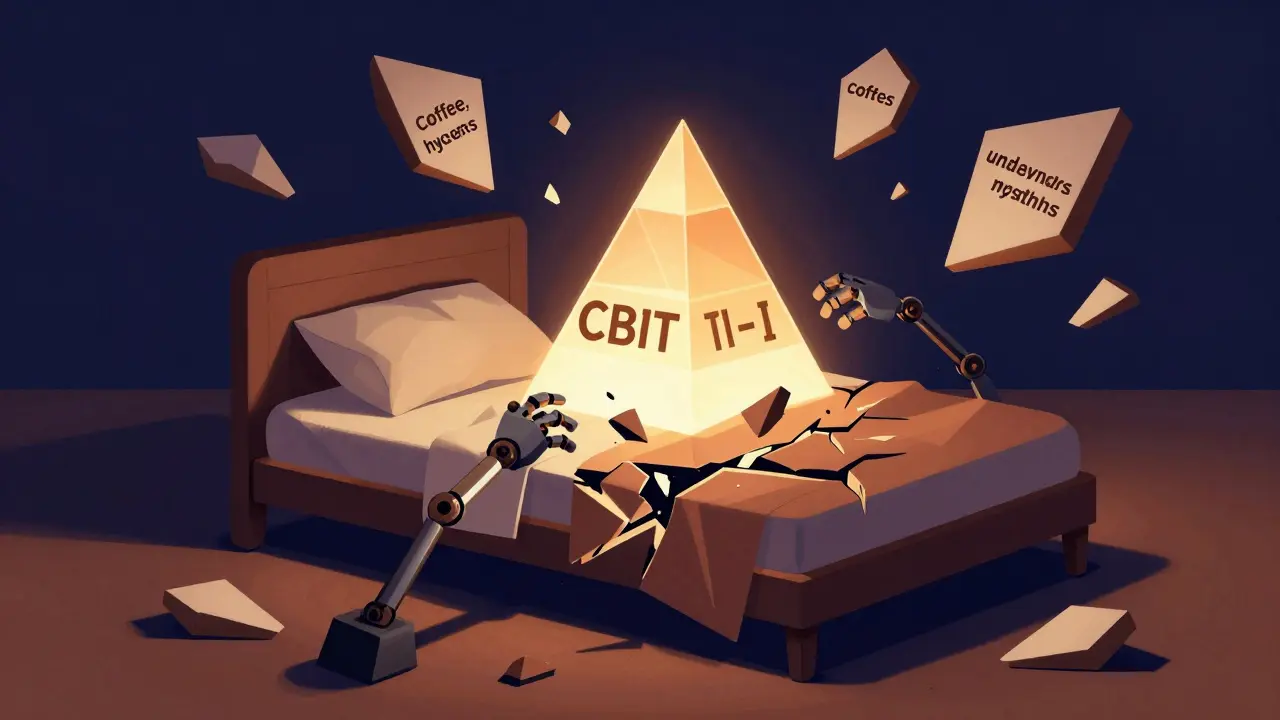
Chronic insomnia isn't solved by sleep hygiene alone. Learn why CBT-I is the only proven long-term treatment-and how to start it, even without a therapist. Evidence-based, practical, and free of fluff.
READ MORE
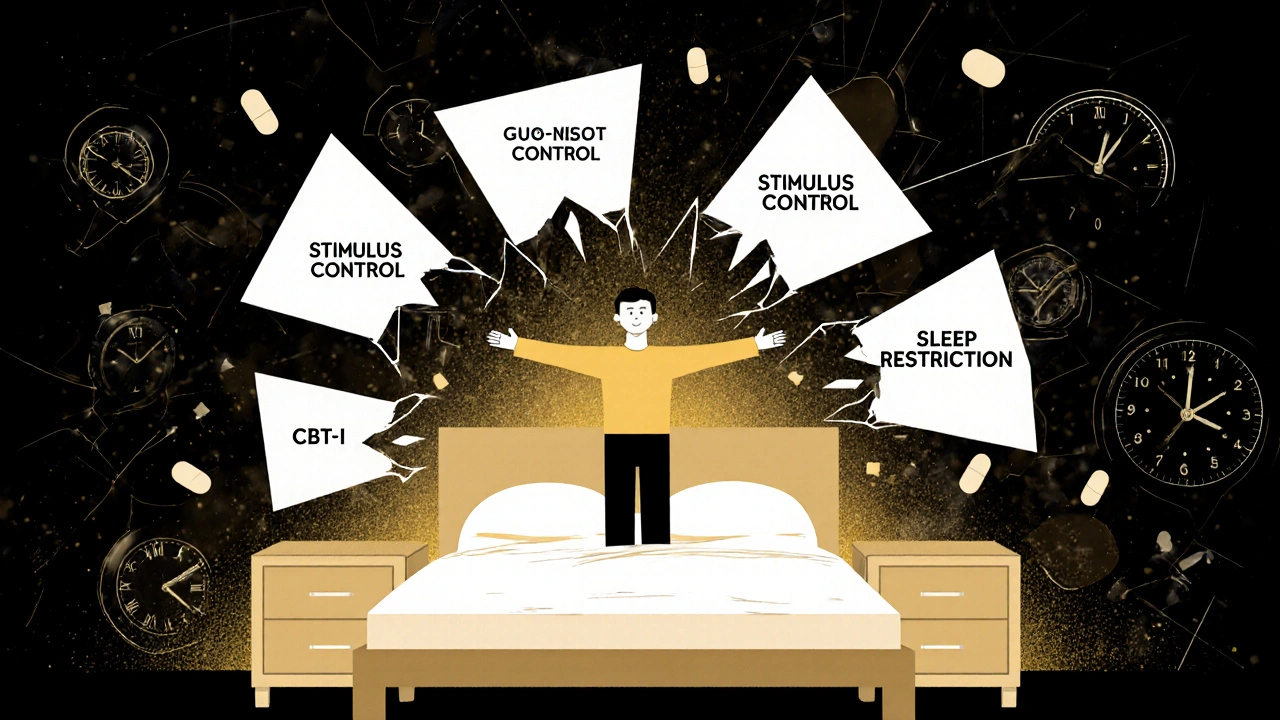
CBT-I is the most effective, drug-free treatment for chronic insomnia. Learn the science-backed techniques that retrain your brain to sleep naturally-without pills, side effects, or relapse.
READ MORE