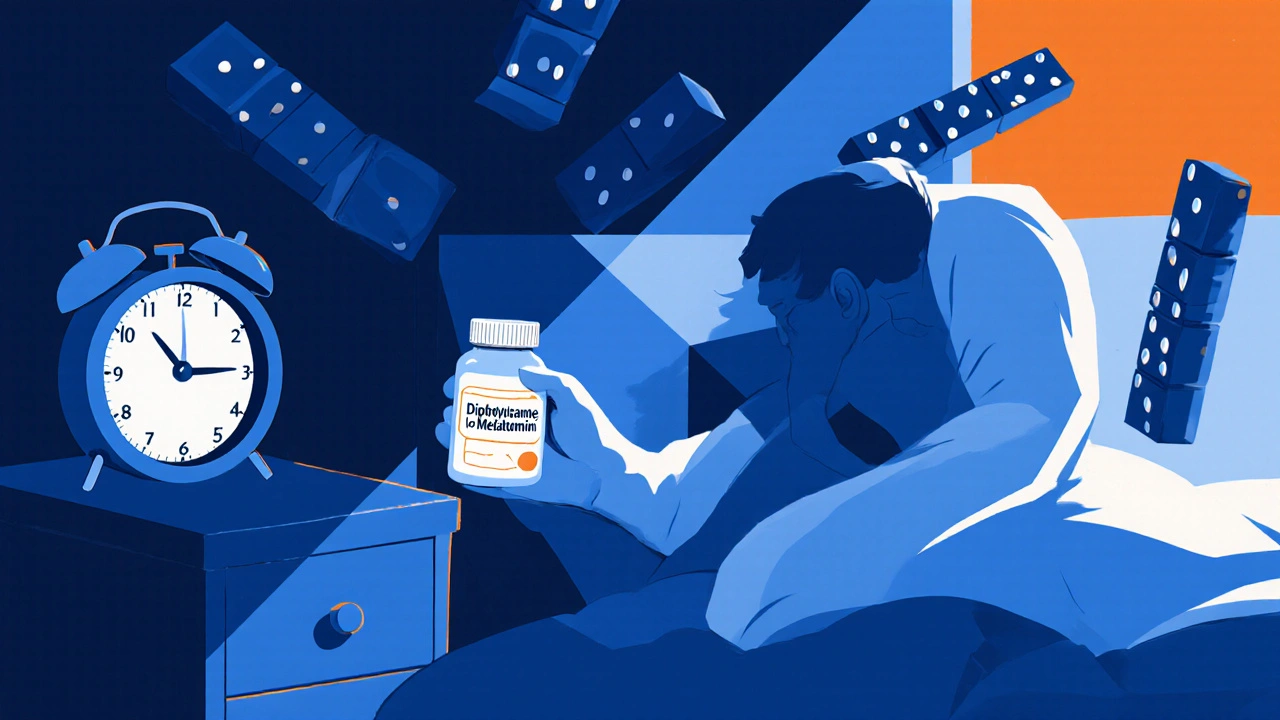
Diphenhydramine: What It Is, How It Works, and What You Need to Know
When you reach for a sleep aid or grab an over-the-counter allergy pill, you might be holding diphenhydramine, a first-generation antihistamine that blocks histamine to reduce allergy symptoms and causes drowsiness as a side effect. Also known as Benadryl, it’s one of the most widely used drugs in homes across the U.S.—but most people don’t know how deeply it affects their body beyond helping them sleep or stopping a runny nose.
Diphenhydramine doesn’t just calm allergies. It crosses the blood-brain barrier, which is why it makes you sleepy. That same property is why it’s found in nighttime cold medicines, motion sickness pills, and even some anti-nausea treatments. But it’s not harmless. Older adults are especially at risk for confusion, dizziness, and falls after taking it. Studies show regular use in people over 65 is linked to higher chances of cognitive decline over time. Even younger people can feel groggy the next day, have dry mouth, or struggle with blurred vision. It’s not a gentle sleep aid—it’s a strong sedative with a narrow safety window.
People often use diphenhydramine because it’s cheap and easy to get. But there are better options. For allergies, second-generation antihistamines like loratadine or cetirizine work just as well without the drowsiness. For sleep, melatonin or behavioral changes often do more good with less risk. And if you’re using it long-term for insomnia, you’re not fixing the problem—you’re masking it with a drug that can make things worse over time.
It’s also not safe to mix with other sedatives. Alcohol, opioids, benzodiazepines, even some muscle relaxers—combine them with diphenhydramine and you increase the chance of breathing problems, extreme drowsiness, or even overdose. The FDA has warned about this for years, yet millions still take it without knowing the risks.
What you’ll find below are real, practical guides that cut through the noise. You’ll see how diphenhydramine compares to other sleep aids, why it’s sometimes prescribed for motion sickness, how it interacts with thyroid meds and antibiotics, and when it’s better to avoid it entirely. There are posts on drug interactions, side effect red flags, and alternatives that actually work without the next-day fog. No fluff. No marketing. Just what you need to know before you take another pill.
OTC sleep aids may help with occasional insomnia, but long-term use carries risks like dementia, falls, and rebound insomnia. Learn what's in them, who should avoid them, and what actually works better.
READ MORE