Drug-Induced Arrhythmia: Causes, Risks, and How to Stay Safe
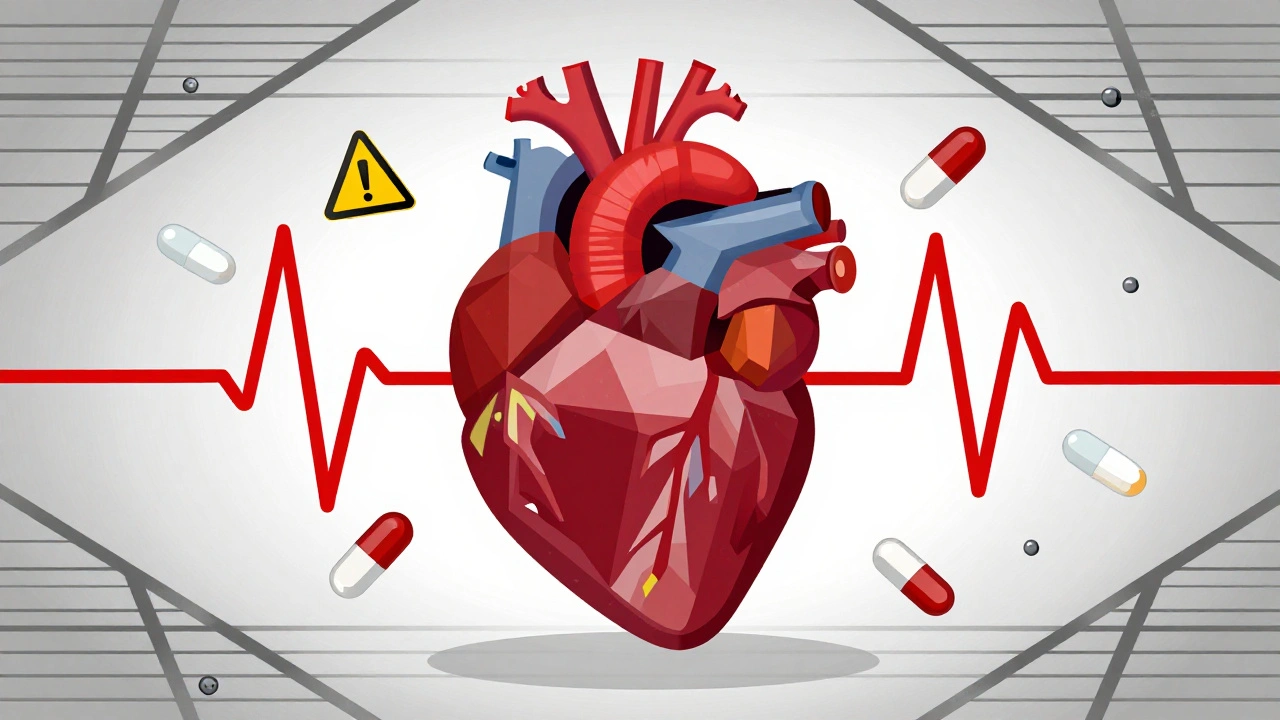
When a medication messes with your heart’s rhythm, it’s called drug-induced arrhythmia, an abnormal heartbeat triggered by a drug that disrupts the heart’s electrical signals. Also known as medication-related arrhythmia, it’s not rare—many common prescriptions, from antibiotics to anti-nausea drugs, can quietly set off dangerous heart rhythms if you’re not careful. This isn’t just a hospital problem. People taking OTC meds, supplements, or long-term pain drugs are at risk too.
One of the biggest culprits is QT prolongation, a delay in the heart’s electrical recovery phase that can spiral into Torsades de Pointes, a deadly arrhythmia. Drugs like fluoroquinolones a class of antibiotics including ciprofloxacin and levofloxacin and macrolides like azithromycin and erythromycin are known to cause this. Even some antiemetics used for nausea—like metoclopramide—can block heart signals and trigger arrhythmias, especially in older adults or those with existing heart conditions. It’s not about taking one pill. It’s about combinations, kidney function, and how long you’ve been on the drug.
Drug-induced arrhythmia doesn’t always come with warning signs. Some people feel dizzy, others get palpitations, and some collapse without warning. If you’re on any long-term medication and notice your heart skipping beats, feeling fluttery, or racing for no reason, don’t ignore it. Check your meds against known QT-prolonging lists. Ask your pharmacist if your combo is safe. And if you’ve been told you have a heart condition, ask if your meds are on the avoid list. You don’t need to stop your treatment—you just need to know the risks.
Below, you’ll find real-world guides that break down exactly which drugs to watch, how to monitor your heart while on them, and what to do if you’re at risk. From antibiotic safety to how to talk to your doctor about ECG checks, these posts give you the tools to protect your heart without guessing.
QT prolongation is a silent heart rhythm risk caused by many common medications. Learn which drugs raise arrhythmia danger, who’s most at risk, and how to prevent sudden cardiac events with simple ECG checks and smart prescribing.
READ MORE