Insulin During Illness: What You Need to Know About Dosing and Safety
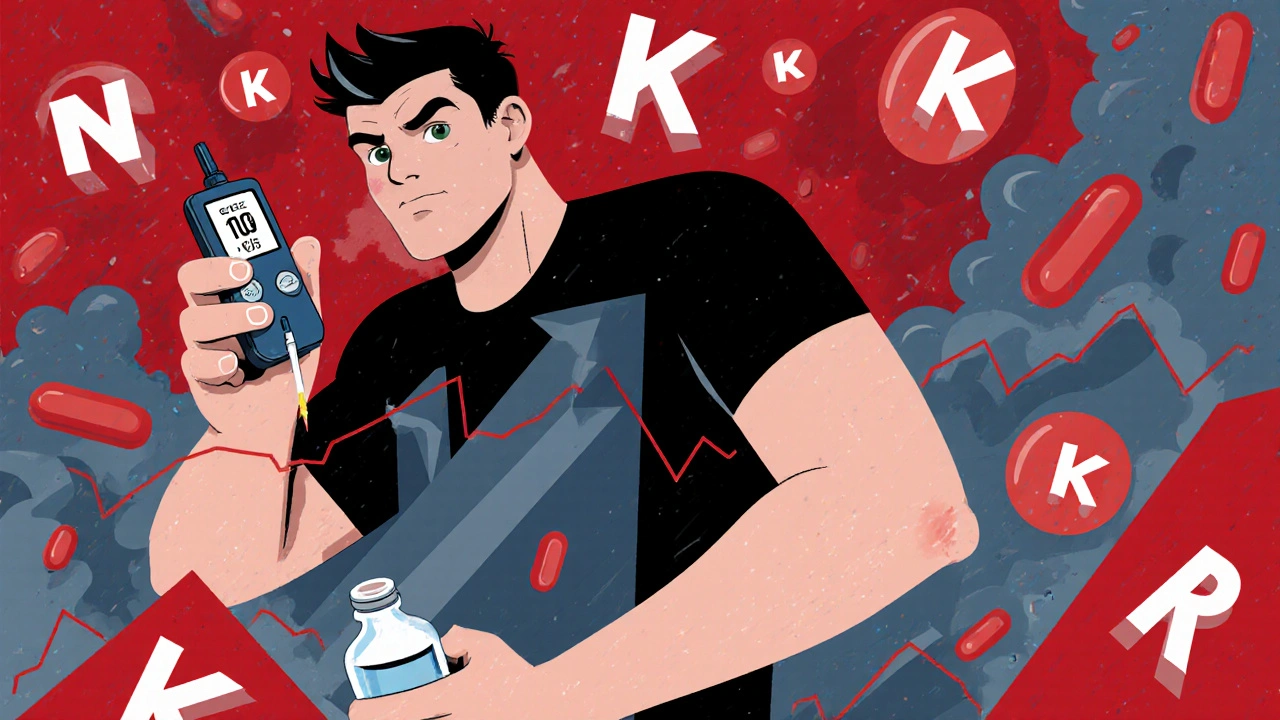
When you're sick, your body releases stress hormones like cortisol and adrenaline—these tell your liver to pump out more glucose, even if you're not eating. For people with diabetes, that means insulin during illness isn't optional—it's critical. Your usual dose might not be enough, and skipping insulin because you feel nauseous or aren't hungry can lead to diabetic ketoacidosis, a life-threatening condition. This isn't theoretical; studies show over 30% of DKA hospitalizations in type 1 diabetes start with a simple cold or flu that wasn't managed properly.
Insulin during illness, the adjusted use of insulin when the body is under stress from infection, fever, or inflammation. Also known as sick day management, it requires you to monitor blood sugar more often—every 2 to 4 hours—and never stop insulin, even if you can't eat. Your body still needs insulin to move glucose out of the blood and stop ketone production. Blood sugar control, the process of keeping glucose levels within a safe range during health changes becomes harder when you're sick because your liver overproduces sugar and your muscles can't use it well. Diabetic ketoacidosis, a dangerous buildup of acids in the blood caused by lack of insulin can develop in as little as 24 hours if insulin is withheld during illness.
Most people with diabetes are told to check for ketones when blood sugar hits 240 mg/dL or higher. But during illness, you shouldn’t wait. If you’re vomiting, have stomach pain, or feel unusually tired—even with normal blood sugar—test for ketones. Urine strips or blood ketone meters work. If ketones are moderate or high, call your doctor. Don’t try to tough it out. Some insulin types, like long-acting basal insulin, may need a 10-20% increase during illness. Rapid-acting insulin for high sugars should still be used, but doses may need to be smaller if you’re not eating. Always have a sick day plan written by your provider—it should include exact numbers for when to call for help, how much extra insulin to take, and what fluids to drink.
Hydration matters. Drink water or sugar-free fluids constantly. Even if you can’t eat solid food, try broth, gelatin, or apple juice in small sips to keep your blood sugar from crashing. If you’re on an insulin pump, don’t turn it off. If you use injections, keep your fast-acting insulin on hand. Many people panic and skip doses because they think, "I didn’t eat, so I don’t need insulin." That’s wrong. Your body is still fighting infection—and it’s burning fuel you’re not giving it. That’s when ketones build up fast.
You’ll find real-world advice below on how others have handled insulin adjustments during flu season, food poisoning, or even minor infections. Some stories show how a simple fever turned dangerous because insulin was delayed. Others show how small changes—like adding 10% more basal insulin—kept someone out of the ER. There’s no one-size-fits-all rule, but the principles are the same: never stop insulin, check often, test for ketones early, and know when to call for help. This collection gives you the tools to make smart decisions when your body is under stress—and keeps you safe when you’re too sick to think straight.
Learn the essential sick day rules for diabetes: how to manage insulin, stay hydrated, and check ketones to prevent dangerous complications like DKA. Essential guidance for Type 1 and Type 2 diabetes during illness.
READ MORE