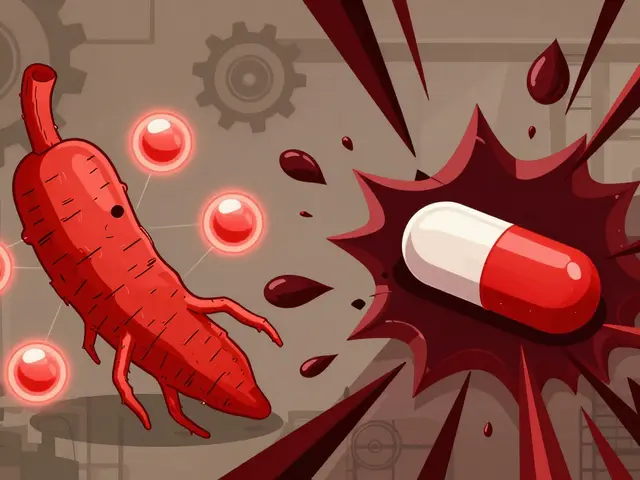
Danshen and Heart Medications: Serious Interaction Risks You Can't Ignore
Heart Medication & Danshen Interaction Checker
This tool helps you determine if your heart medication interacts dangerously with Danshen. Do not take Danshen if you're on heart medications. The interaction risks are severe and life-threatening.
What this means: Taking Danshen with can cause severe bleeding. INR levels can jump from 2.5 to over 8.4, increasing bleeding risk by 150%.
Immediate action required: Stop Danshen immediately. Contact your doctor within 24 hours. Get an INR test if you're on warfarin. Watch for symptoms like unusual bruising, nosebleeds, or blood in stool.
Why this happens: Danshen inhibits liver enzymes (CYP2C9) that break down these medications, causing dangerous accumulation in your system.
Danshen does not interact with the medication you selected. However, the FDA has not approved Danshen for use with any heart medications, and no safe combination has been established.
Recommendation: We still strongly recommend avoiding Danshen entirely if you have heart conditions. There are safer alternatives like CoQ10, omega-3 fatty acids, and lifestyle changes.
Many people assume that because something is natural, it’s safe-especially when it comes to herbs. But when you’re taking heart medications, that assumption can be deadly. Danshen, a traditional Chinese herb used for heart health, is one of the most dangerous supplements you can mix with common cardiac drugs. It doesn’t just mildly interfere-it can push your blood thinners into a life-threatening zone, causing internal bleeding you won’t see coming.
What Exactly Is Danshen?
The active ingredients-tanshinones and salvianolic acids-do real things in your body. They thin the blood by reducing platelet clumping by up to 47%. They widen coronary arteries, improving blood flow to the heart. They can even lower blood pressure. Sounds helpful, right? But here’s the catch: these effects are unpredictable. One bottle of Danshen might have 0.05% tanshinone. Another might have 5.2%. There’s no standardization. You never know what you’re actually getting.
Why Danshen Is Dangerous With Heart Medications
If you’re on a blood thinner like warfarin, rivaroxaban, apixaban, or dabigatran, Danshen is not an option. It doesn’t just add to the effect-it multiplies it.
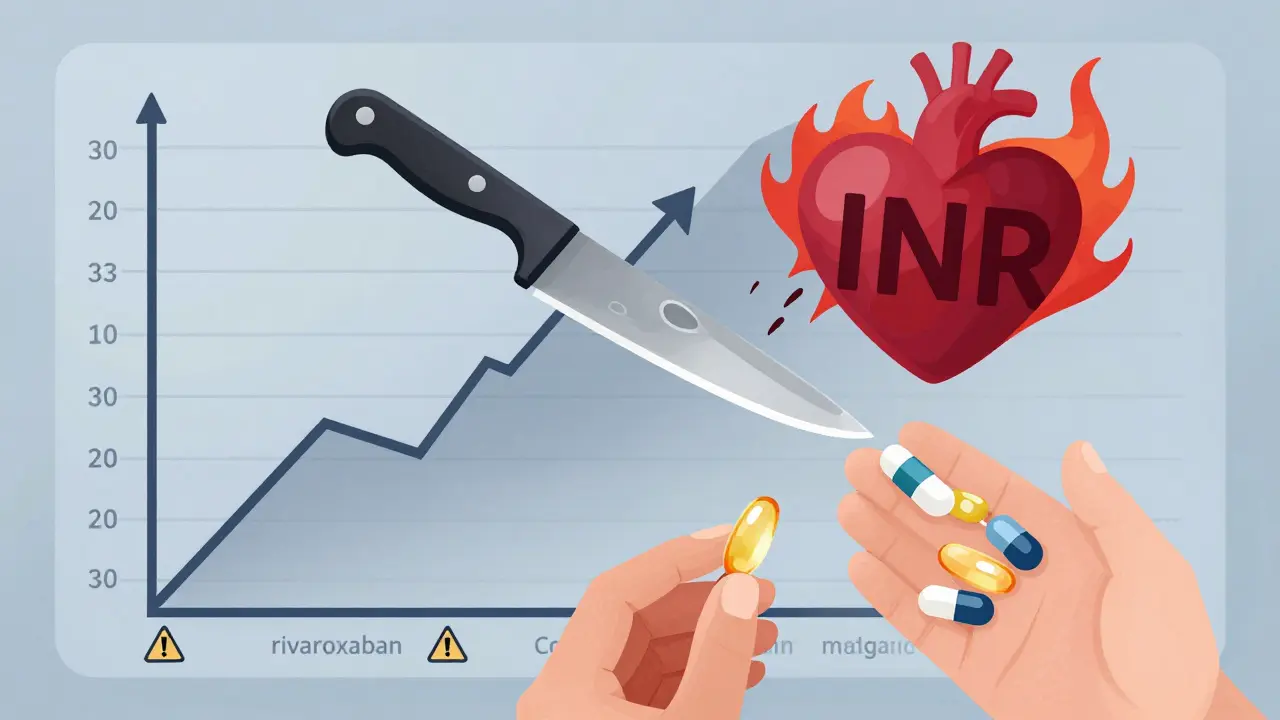
Warfarin works by blocking vitamin K, and your doctor carefully adjusts your dose based on regular blood tests (INR levels). A normal target is between 2.0 and 3.0. But Danshen inhibits the liver enzyme CYP2C9, which breaks down warfarin. When that enzyme is blocked, warfarin builds up in your system. Case studies show INR levels jumping from 2.5 to over 8.4 after just two weeks of Danshen use. An INR above 4.5 means your blood takes way too long to clot. At 8.4, even a minor bump can cause internal bleeding.
It’s not just warfarin. Danshen also interferes with newer blood thinners like rivaroxaban. A 2022 NIH study found Danshen tablets strongly inhibit the metabolism of rivaroxaban, raising the risk of bleeding without any way to monitor it. Unlike warfarin, there’s no INR test for rivaroxaban. You won’t know you’re in danger until you start bleeding.
Real Cases: People Who Got Hurt
This isn’t theoretical. There are documented cases of people ending up in the ER-or worse-because they took Danshen with their heart meds.
- A 62-year-old man with a mechanical heart valve took Danshen for two weeks. His INR shot from 2.5 to over 8.4. His hemoglobin dropped to 7.6 g/dL (normal is 13-17). He needed a blood transfusion.
- A 48-year-old woman on warfarin for atrial fibrillation started Danshen every other day. Her INR went from 3.0 to 5.6. She had to stop the herb immediately to get back to safety.
- A 66-year-old man with gastric cancer had an INR of 5.5 after taking Danshen for just three days. He was already at risk for bleeding-Danshen pushed him over the edge.
A 2020 study in Taiwan tracked 17 more cases between 2015 and 2019. Every single one saw their INR jump from an average of 2.3 to 5.8 after starting Danshen. That’s a 150% increase in bleeding risk.
Online forums like Reddit are full of similar stories: “My INR went from 2.5 to 6.0 after my TCM doctor gave me Danshen with Eliquis.” “ER visit after taking Danshen with warfarin-never again.”
Why Doctors Don’t Always Know
Here’s the scary part: most patients don’t tell their doctors they’re taking Danshen. A 2019 JAMA study found only 28% of people who use herbal supplements mention it to their physician. Why? They think it’s “just a herb.” They trust their Chinese herbalist more than their cardiologist. Or they’re afraid their doctor will judge them.
And doctors? They’re not trained to ask. Most don’t know Danshen’s name, let alone its risks. But they should. A 2022 American College of Cardiology statement says: “Routine screening for Danshen use is essential in all patients on anticoagulants, especially those of Asian descent.” That’s because 41.7% of Chinese immigrants in the U.S. use Danshen regularly-and only 32.4% talk to their doctor about it.

What About Other Heart Drugs?
Danshen doesn’t just mess with blood thinners. It can also interfere with:
- Beta-blockers (like metoprolol)-Danshen lowers blood pressure, so combining them can cause dangerously low BP.
- Calcium channel blockers (like amlodipine)-Danshen blocks calcium channels too. Together, they can over-sedate your heart.
- Statins (like atorvastatin)-Danshen inhibits liver enzymes that break down statins, raising the risk of muscle damage.
There’s no safe combination. Even if you’re not on a blood thinner, Danshen can still destabilize your heart rhythm, drop your blood pressure too far, or make your other meds too strong.
Why Is It Still Sold?
The global Danshen market is growing fast-from $1.23 billion in 2022 to an expected $1.84 billion by 2027. It’s marketed as a “natural heart tonic.” Labels say “supports circulation” or “promotes heart health.” No warnings. No contraindications.
In China, Danshen is a regulated medicine. In the U.S., it’s a supplement. That means the FDA doesn’t require safety testing before sale. The FDA has issued multiple warnings about unapproved Danshen products. The European Medicines Agency requires labels to say: “May increase bleeding risk when used with anticoagulants.” But in the U.S.? Nothing.
And here’s the kicker: the supplements you buy online or in health stores are often contaminated or mislabeled. A 2021 study found 30% of Danshen products didn’t even contain the herb they claimed to have.
What Should You Do?
If you’re on any heart medication-especially a blood thinner-stop taking Danshen. Immediately. No exceptions.
If you’re already taking it:
- Stop the supplement right away.
- Call your doctor or cardiologist. Tell them you’ve been taking Danshen.
- Get an INR test if you’re on warfarin. If you’re on rivaroxaban or apixaban, ask about bleeding symptoms to watch for.
- Don’t restart it without explicit approval from your care team.
If you’re not on meds but considering Danshen for heart health: don’t. There’s no proven benefit that outweighs the risk. Lifestyle changes-exercise, a low-sodium diet, quitting smoking-do more for your heart than any herb ever could.
The American Heart Association says it plainly: “Natural does not mean safe.” Danshen is not a gentle herb. It’s a powerful pharmacological agent with no safety net. And when mixed with heart meds, the consequences are severe, sudden, and sometimes fatal.
How to Talk to Your Doctor About Supplements
Most doctors don’t ask about herbs. You have to bring it up. Here’s how:
- Be specific: Say “I’m taking Danshen,” not “I’m taking some herbal stuff.”
- Bring the bottle: Show them the label. They need to see the ingredients.
- Ask: “Could this interact with my heart medication?”
- Use the NCCIH Herbal Supplement Questionnaire-it’s free and designed for this exact purpose.
Don’t be embarrassed. Your doctor needs this information to keep you alive.
Alternatives to Danshen
If you’re looking for natural ways to support heart health, try these instead:
- Coenzyme Q10 (CoQ10)-supports energy production in heart cells. Safe with most heart meds.
- Omega-3 fatty acids (fish oil)-reduces triglycerides and inflammation. Low dose is generally safe.
- Magnesium-helps regulate heart rhythm. Talk to your doctor about dosage.
- Regular walking, stress reduction, and sleep hygiene-these are the most effective heart protectors of all.
None of these carry the same bleeding risk as Danshen. And unlike Danshen, they’ve been studied in clinical trials with known safety profiles.
Can I take Danshen if I’m not on blood thinners?
Even if you’re not on blood thinners, Danshen can still lower your blood pressure, affect your heart rhythm, or interfere with other medications like statins or beta-blockers. There’s no safe dose established, and the product quality varies wildly. It’s not worth the risk.
How long does Danshen stay in my system?
There’s no clear answer. Because Danshen contains multiple active compounds with different half-lives, and because individual metabolism varies, it can linger for days or even weeks. If you’ve taken it and need to start a blood thinner, wait at least two weeks and get your INR checked before beginning.
Is there a safe form of Danshen?
No. Even standardized extracts used in clinical trials in China still carry interaction risks. The FDA has not approved any Danshen product for use in the U.S. as a supplement. There is no version that’s been proven safe to combine with heart medications.
Can Danshen cause liver damage?
Yes. Danshen inhibits key liver enzymes (CYP2C9, CYP3A4), which can lead to toxic buildup of other medications. There have been case reports of liver injury linked to Danshen use, especially when combined with other drugs. The risk increases with long-term use.
What should I do if I start bleeding after taking Danshen?
Stop taking Danshen immediately. If you notice unusual bruising, nosebleeds, blood in urine or stool, or severe headaches, go to the ER. There’s no antidote for Danshen’s effects. Treatment involves stopping the herb, supportive care, and possibly blood transfusions or clotting factor infusions.
Bottom Line
Danshen is not a harmless herb. It’s a potent, unregulated substance with documented, life-threatening interactions with heart medications. No doctor will tell you it’s safe to mix with warfarin, rivaroxaban, or any other cardiac drug. The evidence is clear, the cases are real, and the consequences are irreversible. If you’re taking heart medication, skip Danshen entirely. Your life depends on it.