
Soy Products and Thyroid Medications: When and How to Take Them Together
If you're taking levothyroxine for hypothyroidism and you eat soy - whether it's tofu, soy milk, edamame, or a plant-based protein shake - you're not alone. Millions of people do. But here’s the thing: soy can mess with how well your thyroid medication works. Not always. Not for everyone. But often enough that skipping a simple timing rule could mean your TSH levels creep up, your energy drops, and you start wondering why your dose feels "off."
Why Soy Interferes with Thyroid Medication
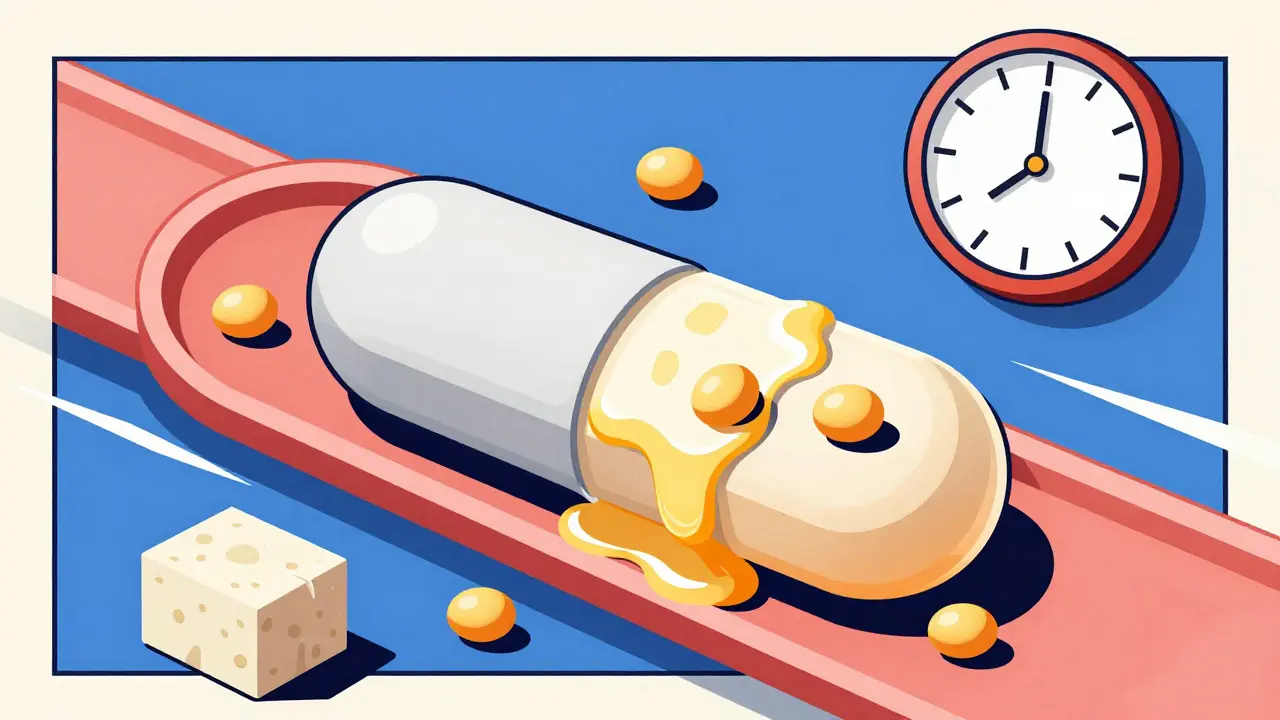
Soy doesn’t cause hypothyroidism. It doesn’t damage your thyroid. But it does bind to levothyroxine in your gut, like glue sticking to a pill. The main culprits are isoflavones - genistein and daidzein - naturally found in soybeans. These compounds attach to the hormone molecule, making it harder for your body to absorb it. Think of it like putting a blanket over your pill before it can slip into your bloodstream. Studies show this isn’t just theory. In one 2006 case, a woman taking 200 micrograms of levothyroxine daily saw her levels crash because she was drinking soy protein shakes right after her pill. Her TSH shot up. Only after she stopped consuming soy within two hours of her dose did her numbers stabilize. Other research found soy can reduce levothyroxine absorption by 9% to 30%, depending on how much you eat and when. It’s not just soy milk. Whole soy foods like tofu, tempeh, and edamame have the same effect - sometimes even stronger. Isolated soy supplements (like powders or pills) may be less problematic, but they still carry risk if taken too close to your medication.How Soy Compares to Other Interferers
You’ve probably heard about calcium, iron, and coffee messing with thyroid meds. Here’s how soy stacks up:| Substance | Absorption Reduction | Recommended Separation Time |
|---|---|---|
| Calcium supplements | 25-36% | 4 hours |
| Iron supplements | 20-30% | 4 hours |
| Soy products | 9-30% | 2-4 hours |
| Coffee | ~20% | 60 minutes |
| High-fiber foods (e.g., bran) | 10-20% | 2-3 hours |
So soy isn’t the worst offender - calcium and iron are. But it’s more impactful than coffee. And unlike coffee, which you can avoid for an hour after your pill, soy is often part of breakfast, lunch, or a snack. That’s why timing matters more than cutting it out entirely.
What the Experts Say - And Why They Disagree
There’s no single rule everyone agrees on. That’s because research keeps evolving. The American Thyroid Association says 2-3 hours between your pill and soy is enough. The Mayo Clinic updated their 2023 guidelines to match: for most adults, 2 hours is sufficient. But they still recommend 3-4 hours for kids, pregnant women, or anyone who’s had recent dose changes. Meanwhile, some doctors - like Dr. David Heber from UCLA - still advise 4 hours. Why? Because in some patients, even 2 hours isn’t enough. A 2023 study in the European Thyroid Journal showed that for people with sensitive absorption, 2 hours cut interference to nearly zero. But for others? It took 3 or even 4 hours to get stable TSH levels. And here’s the twist: not everyone is affected. A 2022 survey of 1,200 hypothyroid patients found that 42% had zero issues with soy - even when they ate it within an hour of their pill. Their TSH stayed normal. Why? Genetics, gut health, fiber intake, and even iodine levels play a role. If you’re iodine-replete and your gut moves food quickly, soy might slide right past without causing trouble.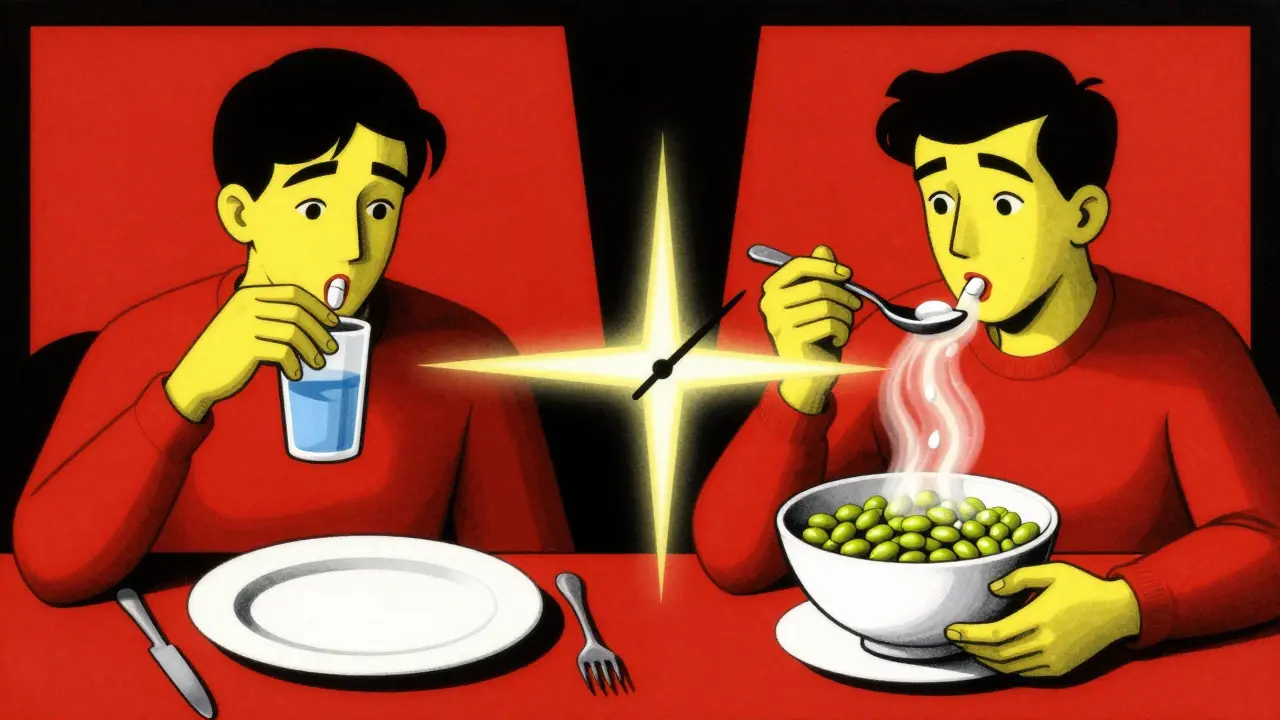
Real Stories: What Patients Have Experienced
On Reddit’s r/Thyroid, one user said: “I started drinking soy milk with breakfast. Three months later, my TSH jumped from 1.8 to 5.2. My endo upped my dose from 75 mcg to 100 mcg. I didn’t realize soy could do that.” Another said: “I’ve taken Synthroid with soy milk for 5 years. My TSH is still 1.5. My doctor says if it’s not broken, don’t fix it.” This isn’t random. It’s biology. Some people absorb soy-bound levothyroxine better than others. But you can’t know if you’re one of them unless you test. If you’ve been eating soy regularly and your TSH has crept up - even slightly - it’s worth testing whether soy is the culprit. A simple switch: take your pill at least 2 hours before soy, then recheck your TSH in 6-8 weeks. If it drops back into range? Soy was likely the issue.Best Practices: What to Do Every Day
Here’s what actually works, based on clinical guidelines and patient outcomes:- Take levothyroxine on an empty stomach with a full glass of water. No coffee, no juice, no food.
- Wait 60 minutes before eating anything - even toast or fruit.
- Wait 2-4 hours before eating soy products. For most adults, 2 hours is enough. If you’re unsure, aim for 3.
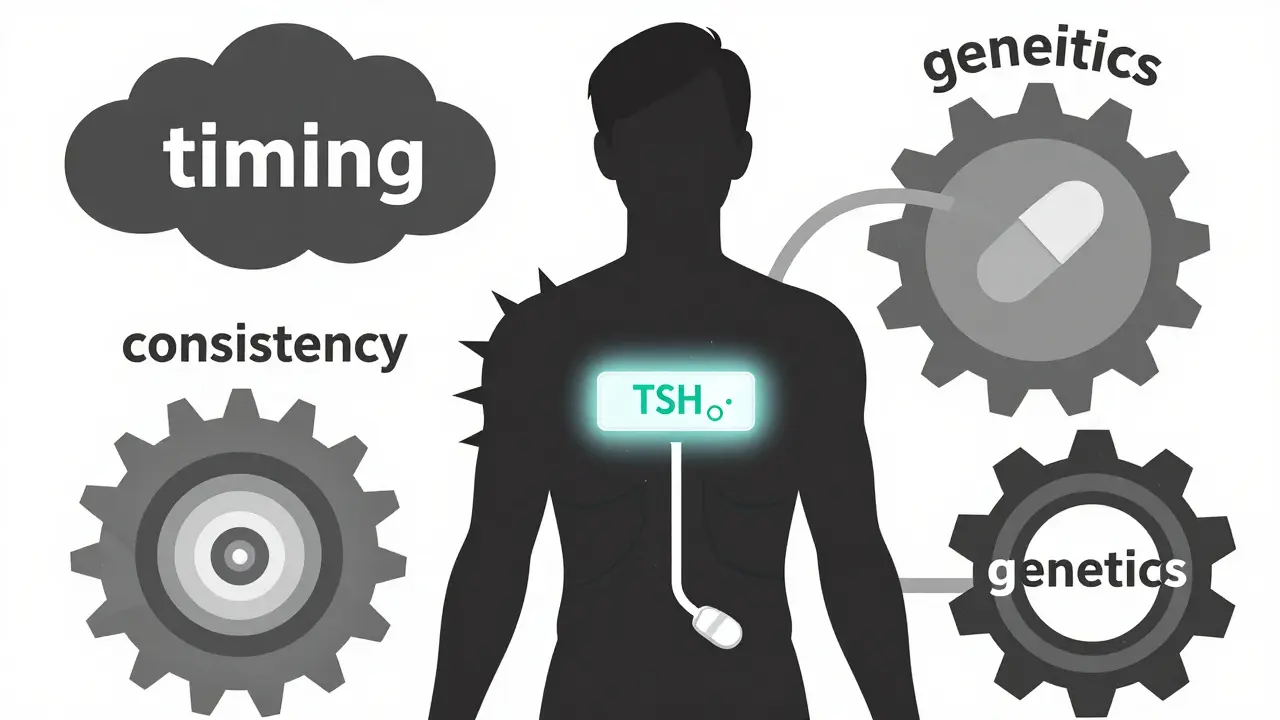
- Don’t switch timing randomly. If you take your pill at 7 a.m., keep it at 7 a.m. every day. Consistency matters more than perfection.
- Try bedtime dosing. If morning timing is too hard, take levothyroxine at night, 2-3 hours after your last meal. Many patients find this easier - and it naturally separates soy from medication.
- Read labels. Soy hides in protein bars, veggie burgers, mock meats, and even some cereals. If you’re eating soy daily, track it.
One patient I spoke with in Tampa - a vegan with hypothyroidism - switched to taking her pill at 10 p.m. and stopped eating soy after 7 p.m. Her TSH dropped from 4.1 to 1.9 in two months. She didn’t change her dose. She just changed her routine.
Who’s at Highest Risk?
Not everyone needs to stress. But if you fall into one of these groups, pay extra attention:- You’re vegetarian or vegan - soy is likely a daily staple.
- You’ve recently had a dose change or started a new brand of levothyroxine.
- Your TSH has been creeping up over time, even with no other changes.
- You’re a child, pregnant, or managing congenital hypothyroidism - absorption is more sensitive.
- You take soy supplements (powders, pills, shakes) - these deliver concentrated isoflavones.
If you’re none of these? You might be fine. But if your medication feels less effective - fatigue, weight gain, brain fog - it’s worth testing the soy connection.
What About Other Soy-Based Foods?
Not all soy is the same. Here’s a quick guide:- High risk - soy milk, soy protein powder, tofu, tempeh, edamame, soy-based meat alternatives. These contain whole soy protein and isoflavones.
- Moderate risk - soy sauce, miso, tofu skin. Lower in protein, but still contain isoflavones. Stick to small amounts and space them out.
- Low risk - soy oil, soy lecithin (in chocolate or baked goods). These are processed to remove protein and isoflavones. No need to avoid.
So if you’re snacking on dark chocolate with soy lecithin? You’re okay. But if you’re blending a soy protein shake for breakfast? That’s the problem.
What to Do If You’re Already Eating Soy Daily
You don’t have to quit soy. You just need to manage it. Start by tracking your habits for a week. Write down:- When you take your pill
- What soy products you eat
- How long after your pill you eat them
Then, try one change: move your soy to 3 hours after your pill. Wait 6-8 weeks. Get your TSH rechecked. If it improves, you’ve found your answer.
If you can’t avoid soy in the morning? Try bedtime dosing. Take your pill at night, 2 hours after dinner. No soy after dinner? Problem solved.
And if you’re still unsure? Talk to your endocrinologist. Ask them to run a TSH test before and after a 2-week soy-free period. It’s the only way to know for sure.
Final Takeaway
Soy doesn’t have to be your enemy. Levothyroxine doesn’t have to be ruined by your favorite plant-based milk. The solution isn’t restriction - it’s rhythm. Timing. Consistency.You can still eat tofu. Drink soy milk. Enjoy edamame. But do it 2-4 hours after your pill. That’s all it takes. No drastic diets. No fear. Just smart habits.
And if you’ve been doing this for years without issues? Good for you. But don’t assume everyone else is the same. Thyroid medication isn’t one-size-fits-all. What works for one person might leave another struggling. Your body is unique. So is your routine.
Can I drink soy milk with my levothyroxine?
No. Drinking soy milk with your levothyroxine can reduce how much of the medication your body absorbs - by up to 30%. Always wait at least 2 hours after taking your pill before consuming soy milk or any soy product. For safety, many doctors recommend 3 hours.
Does soy make hypothyroidism worse?
No, soy doesn’t make hypothyroidism worse. It doesn’t damage your thyroid. But it can interfere with how well your medication is absorbed, which can make your symptoms come back - like fatigue, weight gain, or brain fog - even if your dose is correct.
Should I stop eating soy if I take thyroid medication?
No. You don’t need to stop eating soy. Many people take levothyroxine and eat soy daily without problems. The key is timing. Separate your medication and soy by at least 2-4 hours. That’s usually enough to prevent interference.
Is tofu okay with thyroid medication?
Yes, tofu is fine - as long as you don’t eat it right after your pill. Tofu contains soy protein and isoflavones, which can block absorption. Wait at least 3 hours after taking levothyroxine before eating tofu or any soy-based food.
Can I take levothyroxine at night instead of in the morning?
Yes, many people do. Taking levothyroxine at bedtime - at least 2 hours after your last meal - can help avoid interactions with soy, coffee, or calcium-rich foods. Studies show nighttime dosing works just as well as morning dosing, as long as you’re consistent.


So let me get this straight - we’re now at the point where my tofu scramble is a biohacking threat? 🤡 Next they’ll tell me my kombucha is secretly plotting to lower my IQ. I’ve been eating soy with my Synthroid for 8 years. My TSH? Stable. My energy? Through the roof. Meanwhile, the medical industry just invented a new reason to make vegans feel guilty. #SoyPanic
Listen. I used to be one of those people who thought this was all hype - until I started having panic attacks every morning at 9 a.m. because my brain felt like it was wrapped in wet cardboard. I went to my endo, she said, "Try moving your soy to after lunch." I did. Three days later, I cried because I remembered what it felt like to think clearly. I had no idea soy could do this. No one told me. No one warns you. And now I’m here screaming into the void because I don’t want anyone else to suffer like I did. Please. Just wait two hours. It’s not that hard.
OMG YES I JUST FIGURED THIS OUT LAST WEEK!! 🙌 I switched to nighttime levothyroxine and stopped soy after dinner and my fatigue is GONE. I’m back to hiking and dancing in my kitchen like a maniac. Thank you for this post!! 🥳
Interesting breakdown - but I think we’re missing the bigger picture. The real issue isn’t soy. It’s the industrialization of food. Isolated soy protein powders? Those are engineered to maximize absorption - which ironically means they maximize interference. Whole foods like edamame? Much less problematic. The real villain here is the supplement industry pushing concentrated isoflavone extracts on wellness influencers who then tell their followers to "boost thyroid health" with soy shakes. It’s a perfect storm of misinformation and profit-driven nutrition. We’re treating symptoms instead of systems. And until we fix that, we’re just playing whack-a-mole with thyroid labs.
From a pharmacokinetic standpoint, the isoflavone-mediated inhibition of intestinal absorption via P-glycoprotein and UGT1A1 upregulation is well-documented. The 9–30% reduction aligns with CYP3A4 substrate competition models. However, interindividual variability in gut microbiota (particularly those expressing β-glucosidase) significantly modulates bioavailability. In patients with high fecal β-glucosidase activity, isoflavone deglycosylation is enhanced, which paradoxically increases bioavailability of aglycones - potentially exacerbating interference. Hence, stool microbiome profiling may be a more predictive biomarker than timing alone.
Honestly? I just take my pill at night. No stress. No counting hours. I eat soy for breakfast, lunch, and dinner - and I’m fine. My TSH is perfect. If it ain’t broke…
As someone who moved from Nigeria to the US and went from eating zero soy to daily tofu bowls - I didn’t realize this was even a thing. My doctor here was like, "Oh yeah, avoid soy for a few hours." I was like, "Wait, you mean my favorite food is secretly sabotaging my meds?" Now I eat soy at dinner and take my pill at 7 a.m. Works like magic. Also - if you’re vegan, don’t panic. Just move your soy. You don’t have to give it up. That’s the whole point of this post - it’s about rhythm, not restriction.
LOL. "Wait 2-4 hours." Sounds like a government pamphlet written by someone who’s never eaten a vegan burrito. I take my pill at 6 a.m., have soy milk in my oatmeal latte at 6:30, and then a tofu scramble at 7:15. My TSH? 1.2. My doctor says I’m a unicorn. Meanwhile, my cousin who "follows the rules" has a TSH of 4.8. So yeah - maybe the whole "timing" thing is just a placebo for people who need to feel in control. 🤷♂️
I hate this so much. I just wanted to eat my morning smoothie. Now I have to wait? I’m crying. I’m so tired. I just want to be normal.
Yo - I’ve been taking Synthroid for 12 years, vegan since 2015. I used to eat soy at breakfast. Then my TSH spiked to 5.9. I thought I was dying. Changed my routine: pill at 7 a.m., soy after 10 a.m. TSH back to 1.8 in 6 weeks. No drama. No supplements. Just moved my soy. It’s not hard. Don’t overthink it. Your body’s not broken - you just gotta sync up with your meds. Also - bedtime dosing is a game changer. I do it now. Zero issues. Life’s good.
So let me get this straight - you’re telling me I can’t have my morning soy latte… but I can have coffee? Bro. Coffee is literally a chemical weapon. Soy is plant-based protein. You’re telling me the thing that’s supposed to be *healthy* is the villain? I’m not buying it. If your TSH is off, maybe your dose is wrong. Not your tofu. Just saying.