Sleep Restriction: How Limiting Time in Bed Improves Insomnia
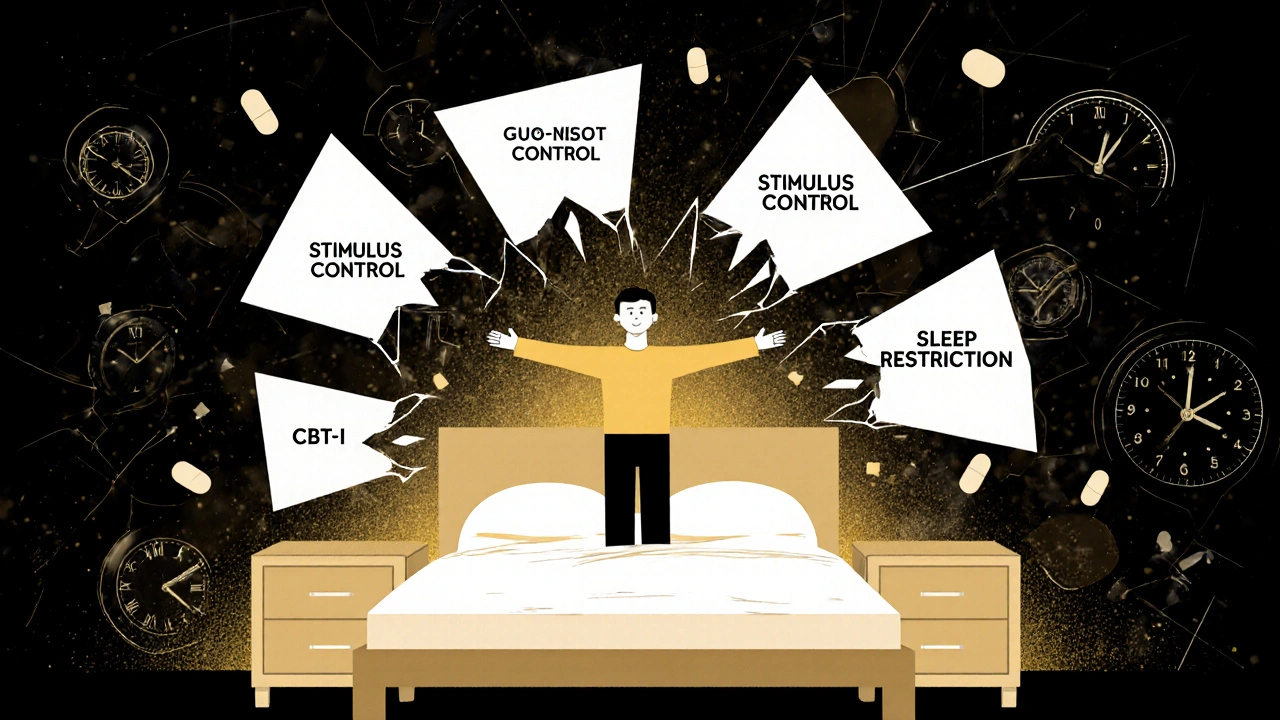
When you can’t sleep but spend hours lying awake, your brain starts linking your bed with frustration—not rest. Sleep restriction, a core technique in cognitive behavioral therapy for insomnia that limits time in bed to match actual sleep time. It’s not about forcing yourself to sleep more—it’s about making every minute in bed count. This method doesn’t add hours to your night; it takes them away. And that’s the point.
Sleep restriction works because it builds up sleep pressure. If you’re only sleeping 5 hours a night but spending 8 hours in bed, your body gets used to half-sleeping. By cutting your time in bed to 5.5 hours—say, from 1 a.m. to 6:30 a.m.—you force your brain to associate the bed with real sleep, not tossing and turning. Over days, your sleep efficiency climbs. You fall asleep faster. You wake up less. You stop checking the clock. It’s not magic. It’s biology.
This isn’t for everyone. People with severe depression, epilepsy, or untreated sleep apnea should avoid it without medical oversight. But for most adults with chronic insomnia, it’s one of the most effective tools out there. It’s often paired with sleep hygiene, a set of habits like avoiding screens before bed and keeping a consistent wake time, and sometimes with cognitive behavioral therapy for insomnia, a structured program that changes how you think about sleep. You won’t find miracle pills in this approach—just discipline, patience, and data. You track your sleep. You adjust your schedule. You stick to it even when it’s hard.
The results? People who stick with sleep restriction for 2–4 weeks often report falling asleep in under 20 minutes, sleeping through the night, and waking up feeling rested. No more OTC sleep aids. No more next-day grogginess. Just better, deeper sleep built from the ground up. Below, you’ll find real-world guides on how to apply this method safely, how it interacts with medications like melatonin or diphenhydramine, and how to avoid common mistakes that make it fail.
CBT-I is the most effective, drug-free treatment for chronic insomnia. Learn the science-backed techniques that retrain your brain to sleep naturally-without pills, side effects, or relapse.
READ MORE