
Theophylline Levels: Why NTI Monitoring Is Critical for Safe and Effective Treatment
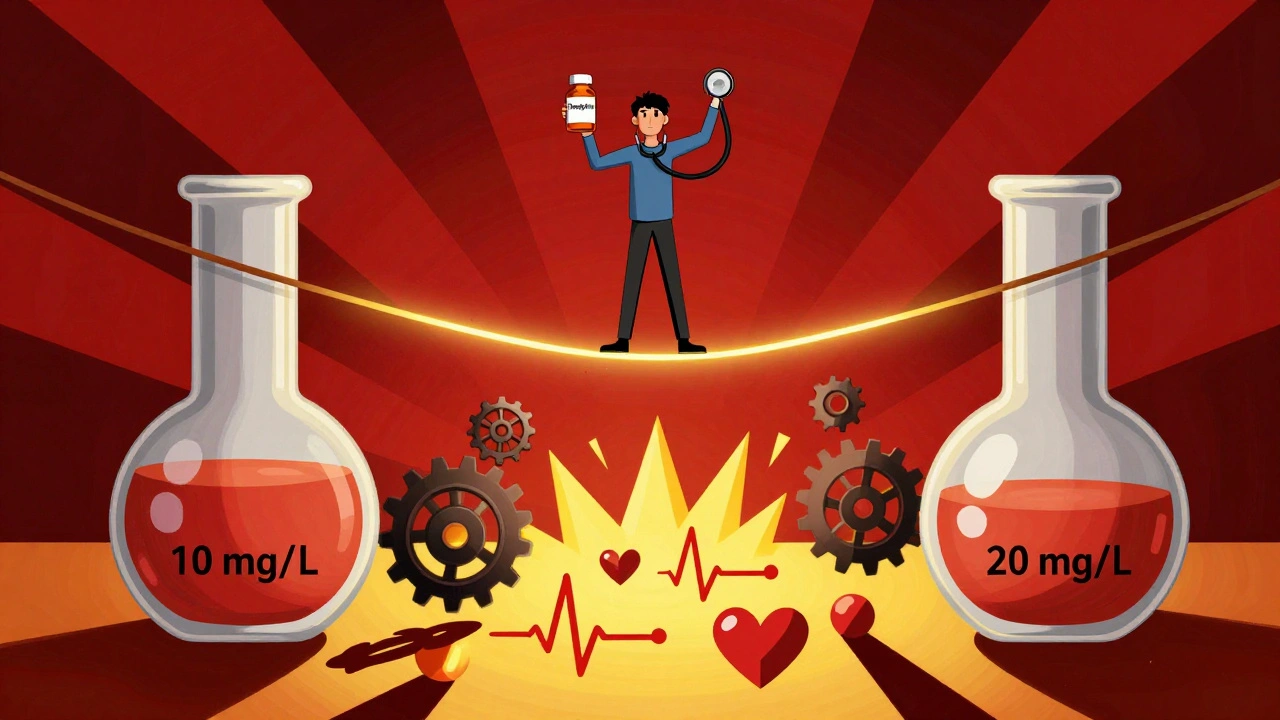
When you take theophylline for asthma or COPD, you’re not just swallowing a pill-you’re walking a tightrope. One milligram too much, and your heart could start racing. One milligram too little, and your lungs might not get the relief they need. That’s because theophylline has a narrow therapeutic index-a tiny window between working and harming you. This isn’t theoretical. It’s life-or-death. Every year in the U.S., about 1,500 people end up in the emergency room because their theophylline levels crept too high. Around 10% of those cases are fatal. And yet, many patients never get their blood tested after starting the drug. Why? Because they assume it’s just another pill. It’s not.
What Makes Theophylline So Dangerous?
Theophylline has been around since the 1930s. It’s cheap, generic, and works. But its mechanism is messy. It doesn’t just open airways-it flips switches in your cells that calm inflammation, block immune overreactions, and even restore damaged lung tissue. That’s powerful. But it’s also why the safe range is so small: 10 to 20 mg/L. Below 10, it barely helps. Above 20, you’re flirting with seizures, irregular heartbeats, vomiting, and worse. At 25 mg/L or higher, the risk spikes dramatically. And here’s the kicker: you won’t feel it coming until it’s too late.
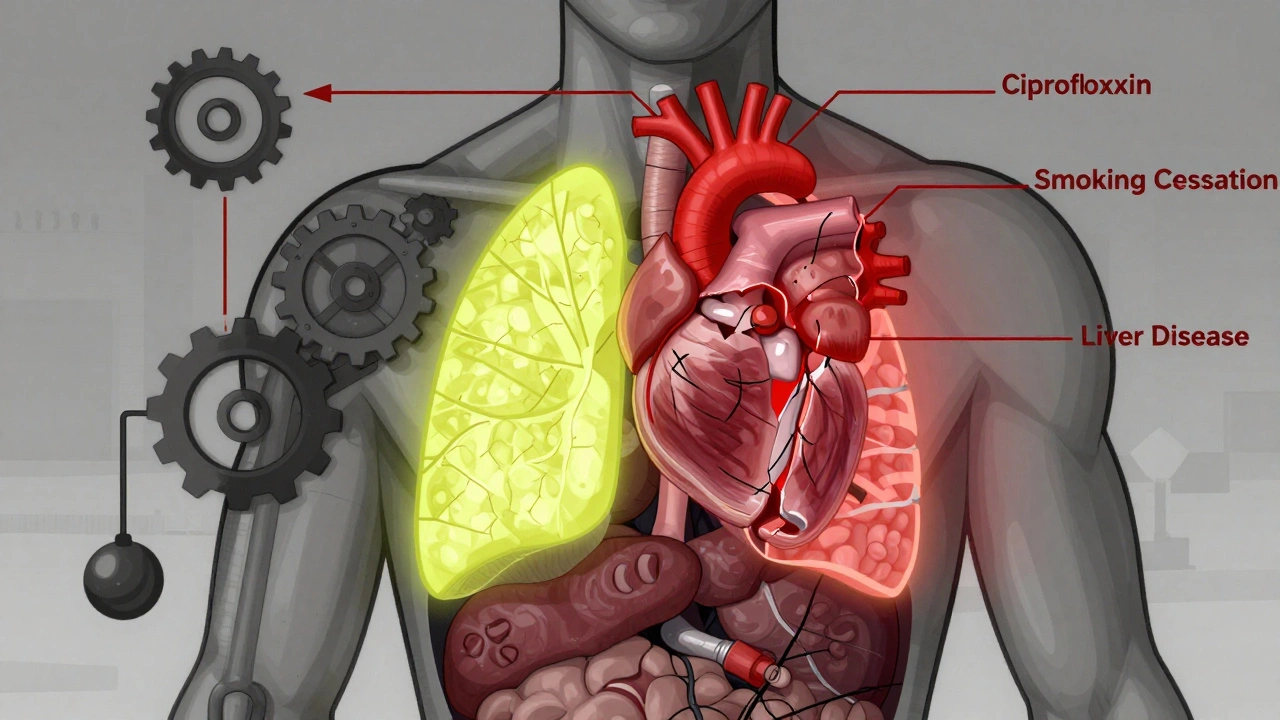
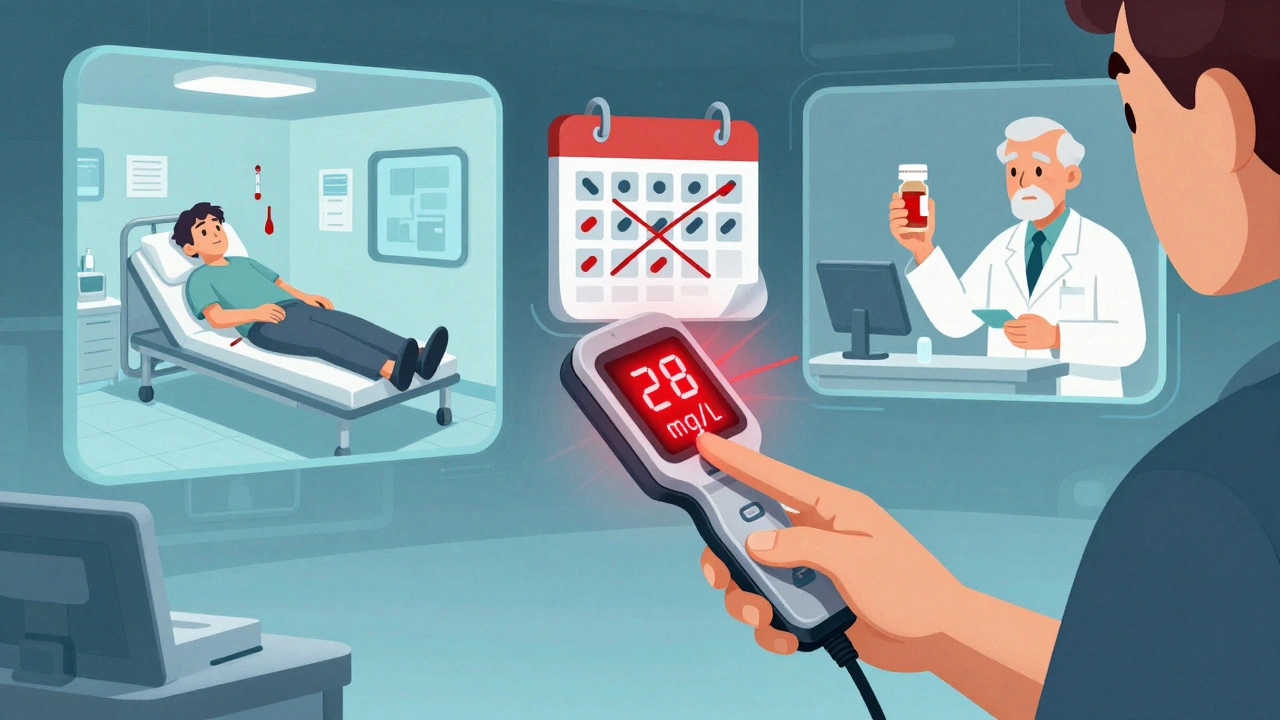
Unlike most drugs, theophylline doesn’t follow simple rules. A small dose increase can cause a massive jump in blood levels because its metabolism hits a wall-called zero-order kinetics. That means your liver can’t keep up. Even if you’ve been stable for months, a change in your diet, smoking habits, or another medication can throw everything off. One patient takes ciprofloxacin for a sinus infection and wakes up with a heart rate of 140. Their theophylline level? 28 mg/L. That’s not a coincidence. That’s a known interaction. And it happens more often than you think.
Who’s at Risk-and Why?
Not everyone metabolizes theophylline the same way. Your body’s ability to break it down depends on a dozen factors most doctors don’t even think to ask about.
- Smokers: Cigarette smoke speeds up metabolism by 50-70%. A patient who quits smoking cold turkey can see their theophylline levels double in days-without changing their dose.
- Older adults: After 60, liver function slows. Theophylline clearance drops. Monitoring every 3-6 months isn’t optional-it’s essential.
- People with heart or liver disease: Heart failure or cirrhosis can cut clearance by half. Dose reductions aren’t suggestions-they’re requirements.
- Pregnant women: In the third trimester, clearance drops by 30-50%. Monthly checks are standard.
- Those on other meds: Antibiotics like erythromycin or clarithromycin can spike levels by 50-100%. Anticonvulsants like carbamazepine can slash them by 60%. Even St. John’s Wort, a ‘natural’ supplement, interferes.
And it’s not just about what you take-it’s about when you take it. Immediate-release theophylline needs a blood draw right before your next dose. Modified-release? Wait 4-6 hours after taking it. Get the timing wrong, and the result is meaningless. Many patients are never told this. They get tested, the doctor sees ‘18 mg/L,’ and assumes all’s well. But if the sample was drawn too early, the real level could be 25. That’s not monitoring. That’s guesswork.
When to Test-and How Often
There’s no one-size-fits-all schedule. The timing depends on your risk profile.
- Start-up: Test 5 days after beginning treatment-or 3 days after any dose change. That’s how long it takes to reach steady state.
- Stable patients: Every 6-12 months. But only if you’re healthy, not smoking, and not on new meds.
- High-risk patients: Every 1-3 months if you have heart failure, liver disease, or are over 60. Monthly if you’re pregnant.
- Trigger events: Always test after starting a new antibiotic, quitting smoking, drinking heavily, or experiencing nausea, tremors, or palpitations.
And don’t forget the basics. Your doctor should also check your heart rate, potassium levels (theophylline can drain it), and blood gases. Low potassium plus high theophylline? That’s a recipe for dangerous arrhythmias. One 2023 case report showed a 68-year-old man with COPD developing ventricular tachycardia after starting ciprofloxacin. His theophylline level? 28 mg/L. He survived. Others don’t.
The Cost of Skipping Tests
Some argue that low-dose theophylline (200 mg/day) is safe without monitoring. But that’s a dangerous myth. The European Respiratory Society says no-every dose needs monitoring. Even at 200 mg, unpredictable metabolism can cause toxicity. And in the real world, it’s not just about the dose-it’s about what’s happening in your body.
A 2022 study in a community hospital showed that after implementing a strict monitoring protocol, adverse events dropped by 78%. Asthma control improved by 35%. That’s not magic. That’s data. Meanwhile, the NHS found that 15% of theophylline-related emergencies come from unadjusted doses in liver disease. Another 22% are from unmonitored drug interactions-mostly with common antibiotics.
Patients know this. In forums like Asthma UK, 82% say their symptoms improve when levels are in range. But 37% say the frequent blood tests are a hassle. That’s understandable. But here’s the truth: skipping a test doesn’t save time-it saves money for the system, not for you. One ER visit for theophylline toxicity costs over $12,000. A blood test? $50. That’s not a choice. That’s common sense.
What’s Next for Monitoring?
There’s hope on the horizon. Three companies are testing handheld devices that can measure theophylline levels in under five minutes using a finger-prick sample. These aren’t science fiction-they’re in Phase 2 trials. Imagine checking your level at home, like a glucose monitor. No more clinic trips. No more delays.
But until then? The standard hasn’t changed. The American College of Chest Physicians says it plainly: ‘Until such technologies become widely available and validated, traditional serum concentration monitoring remains the standard of care.’ That means blood draws. That means timing. That means listening to your body and telling your doctor about every new pill, every cigarette you quit, every glass of wine you drink.
Theophylline isn’t outdated. It’s underused. And it’s misunderstood. It’s not a backup drug-it’s a precision tool. And like any precision tool, it needs calibration. Your blood level is that calibration. Skip it, and you’re flying blind.
What You Can Do Today
If you’re on theophylline, here’s your checklist:
- Know your target range: 10-20 mg/L. Ask your doctor if you’re unsure.
- Get your first test 5 days after starting-or 3 days after a dose change.
- Never skip a test after starting a new antibiotic, quitting smoking, or drinking more alcohol.
- Report nausea, tremors, rapid heartbeat, or trouble sleeping immediately.
- Keep a list of every medication and supplement you take-including herbal ones.
- Ask if your dose needs adjusting if you’ve gained or lost weight, or if your health has changed.
This isn’t about being paranoid. It’s about being informed. Theophylline can give you back your breath. But only if you treat it like the powerful, unpredictable drug it is.
What is a narrow therapeutic index (NTI), and why does it matter for theophylline?
A narrow therapeutic index means the difference between a helpful dose and a toxic one is very small. For theophylline, that window is just 10-20 mg/L. Below 10, it doesn’t work well. Above 20, you risk seizures, heart rhythm problems, or even death. This tiny margin makes regular blood tests non-negotiable. Even a small change in your body or medications can push you out of the safe range.
How often should theophylline levels be checked?
It depends. Start with a test 5 days after beginning treatment or 3 days after any dose change. For stable, healthy adults: every 6-12 months. For people over 60, with heart or liver disease, or pregnant: every 1-3 months. Always test after starting new medications, quitting smoking, or experiencing symptoms like vomiting or rapid heartbeat.
Can I skip blood tests if I’m on a low dose of theophylline?
No. Even low doses (like 200 mg/day) can become toxic due to changes in metabolism. Your liver’s ability to process the drug varies based on age, health, smoking, and other medications. The European Respiratory Society and other major guidelines say all theophylline therapy requires monitoring-no exceptions. A 2024 study suggesting low doses are safe is controversial and not widely accepted.
What drugs interact with theophylline?
Many common drugs affect theophylline levels. Antibiotics like erythromycin and ciprofloxacin can raise levels by 50-100%. Drugs like carbamazepine, rifampin, and St. John’s Wort can drop levels by 30-60%. Even alcohol and smoking change how fast your body clears it. Always tell your doctor about every medication, supplement, or lifestyle change.
What are the signs of theophylline toxicity?
Early signs include nausea, vomiting, headache, tremors, and insomnia. More serious signs are rapid heartbeat (over 100 bpm), palpitations, confusion, and seizures. If you experience any of these, get your blood tested immediately. Toxicity can escalate quickly-even in people who’ve taken the drug for years without issues.
Is there a home test for theophylline levels?
Not yet. While three companies are developing handheld devices that could measure theophylline from a finger prick in under five minutes, they’re still in clinical trials. Until they’re approved and widely available, blood tests at a lab remain the only reliable method. Don’t rely on symptoms alone-they’re too late.




I’ve been on theophylline for 8 years now, and I can’t believe how many people treat it like aspirin. My doctor made me get tested every 3 months after I quit smoking-my levels went from 12 to 24 in two weeks. I almost ended up in the ER. Don’t be that person who ignores the warnings until your heart’s racing. This isn’t hype-it’s survival.
Let’s be real-pharma doesn’t care if you live or die. They make billions off cheap generics like theophylline because they know you won’t bother with blood tests. The system wants you dependent, not informed. That’s why they bury the risks under 10 pages of fine print. You think this is about medicine? It’s about profit. Wake up.
Okay but what if the blood tests are wrong? I read this guy on a forum who said his levels were 28 but he felt fine-and turns out the lab mixed up his sample with someone else’s. What if all this monitoring is just a scam to keep people coming back for more tests? I’m not getting poked for $50 when I’ve been stable for 5 years. Someone’s got a spreadsheet somewhere counting our blood.
Just wanted to say thanks for laying this out so clearly. I’m a respiratory therapist and I see this all the time-patients on theophylline who don’t know why they’re coughing or why their heart’s racing. It’s not laziness-it’s lack of education. If your doc doesn’t explain this stuff, find a new one. You deserve better than guesswork.
NTI pharmacokinetics are non-linear, zero-order metabolism, hepatic CYP1A2 polymorphism-dependent-this isn’t some ‘pill you swallow’-it’s a precision instrument requiring therapeutic drug monitoring as per FDA Class I risk classification. Ignoring serum concentration benchmarks constitutes malpractice-level negligence. Your ‘I feel fine’ is statistically irrelevant. You’re not a patient-you’re a data point.
so like… i took theophylline for like 3 months and never got tested and i’m still alive?? also my cousin’s dog takes it and he’s chill?? maybe the whole thing is just fearmongering?? also i think my doctor is lazy??
They don’t want you to know this-but theophylline was originally developed as a weapon. Cold war research. The side effects? Too perfect. Too predictable. They kept it around because it works… but they don’t want you to understand how dangerous it is. Why? Because if you knew, you’d demand better. And they can’t have that.
It’s astonishing how many individuals still operate under the delusion that pharmaceuticals behave with the linear predictability of over-the-counter analgesics when in reality theophylline’s pharmacokinetic profile is governed by a complex interplay of enzymatic saturation kinetics, genetic polymorphisms in cytochrome P450 isoforms, and environmental modulators such as tobacco smoke and dietary purines-all of which necessitate rigorous serum concentration surveillance to prevent catastrophic adverse events. The notion that ‘low dose equals safe’ is not merely incorrect-it is lethally irresponsible.
OMG I’m so done with this. I hate blood tests. I hate doctors. I hate how everyone acts like I’m going to die if I miss one test. I’m 24, I smoke but I’m ‘fine’ 😭 why does everyone act like I’m a walking time bomb? I’m not going to get poked for $50 when I feel great. I’m just trying to breathe. 🤷♀️
America’s healthcare system is broken but this? This is exactly why we need to stop outsourcing medical decisions to bureaucrats and start trusting patients. If I’ve been on the same dose for 7 years without incident, why should I be forced into a lab every 3 months? This isn’t science-it’s bureaucratic overreach. Other countries don’t do this. Why are we so paranoid?