
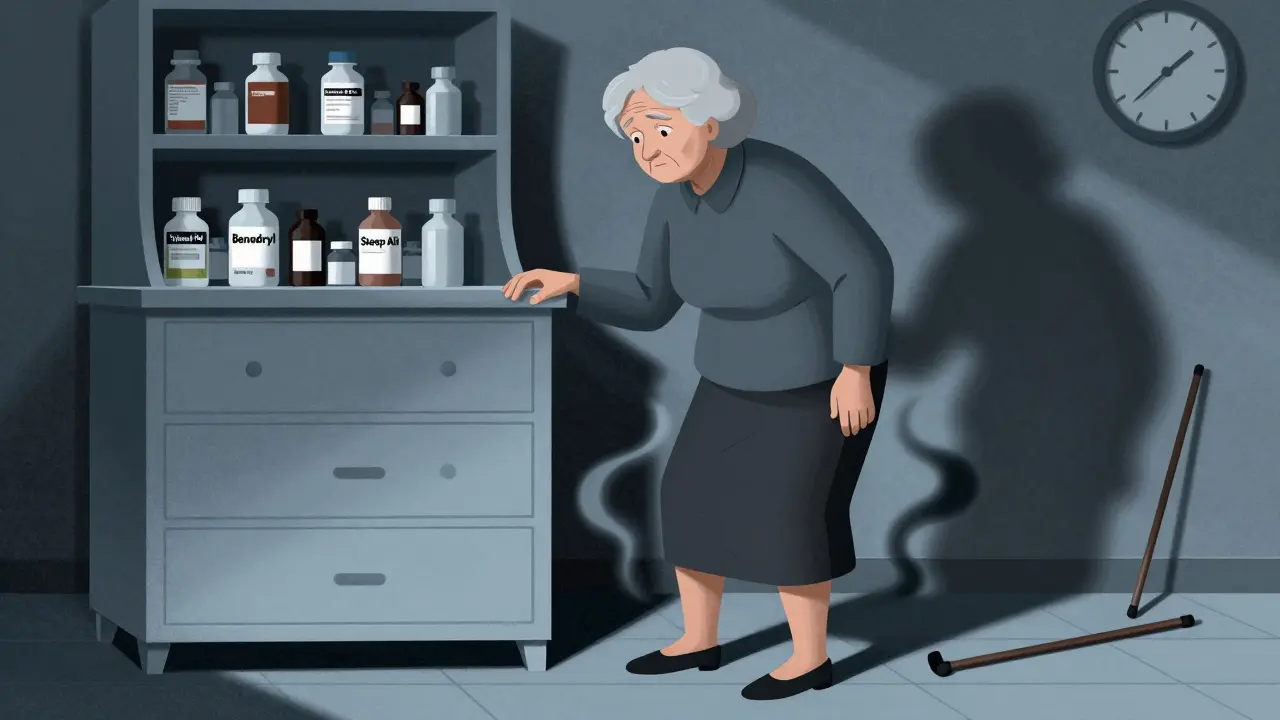
Fall Risk in Older Adults on Sedating Antihistamines: Prevention Strategies
Sedating Antihistamine Risk Checker
Assess Your Fall Risk
Select your antihistamine to see the fall risk level and safety recommendations for older adults.
Your Risk Assessment
Recommendation:
Every year, over 36 million older adults in the U.S. fall. About 32,000 of them die from those falls. Many of these falls aren’t just bad luck - they’re linked to something many seniors take without thinking: over-the-counter allergy or sleep meds like diphenhydramine. It’s in Benadryl, Tylenol PM, and dozens of other products. But for people over 65, this common drug isn’t just a quick fix - it’s a hidden danger.
Why Sedating Antihistamines Are Dangerous for Seniors
First-generation antihistamines - like diphenhydramine, chlorpheniramine, and brompheniramine - were designed decades ago to block histamine and stop sneezing or itching. But unlike newer versions, they easily slip into the brain. Once there, they mess with signals that control balance, reaction time, and alertness. The result? Dizziness, slow movements, blurred vision, and confusion - all perfect conditions for a fall. Older bodies process these drugs differently. A healthy 30-year-old might metabolize diphenhydramine in about 8.5 hours. For someone over 65? That time jumps to over 13 hours. That means the drowsiness doesn’t fade after a few hours - it lingers all day. A 2025 study in the Journal of the American Geriatrics Society found that 8% of seniors who filled a prescription for one of these drugs fell and needed medical care within 60 days. That’s not rare. That’s predictable. The American Geriatric Society calls these drugs “potentially inappropriate” for older adults. Why? Because they don’t just cause sleepiness. They trigger anticholinergic effects - dry mouth, constipation, memory fog, and even delirium. One hospital study showed seniors on these meds were 2.3 times more likely to go into delirium during a hospital stay. That’s not just uncomfortable - it’s deadly when combined with mobility issues.Second-Generation Antihistamines: A Safer Choice
Not all antihistamines are created equal. Second-generation drugs - like loratadine (Claritin), cetirizine (Zyrtec), and fexofenadine (Allegra) - were made to stay out of the brain. They work just as well for allergies but cause far less drowsiness. A 2025 analysis found that while first-gen antihistamines raised fall risk by 87%, second-gen drugs showed no significant increase at all. Here’s how they compare:| Antihistamine | Generation | Drowsiness Rate | Anticholinergic Burden | Fall Risk Increase |
|---|---|---|---|---|
| Diphenhydramine (Benadryl) | First | 15-20% | 3-4 (High) | 54% higher risk |
| Chlorpheniramine (Chlor-Trimeton) | First | 12-18% | 3-4 (High) | 52% higher risk |
| Cetirizine (Zyrtec) | Second | 14% | 1 (Low) | Minimal |
| Loratadine (Claritin) | Second | 6-8% | 0 (None) | No increase |
| Fexofenadine (Allegra) | Second | 6% | 0 (None) | No increase |
Fexofenadine is the safest bet. It causes almost no drowsiness and has zero anticholinergic activity. Loratadine is nearly as safe. Cetirizine is okay for some, but even it causes drowsiness in about 1 in 7 older adults. If you’re taking an antihistamine for allergies, switching from diphenhydramine to fexofenadine cuts your fall risk by about 42%.
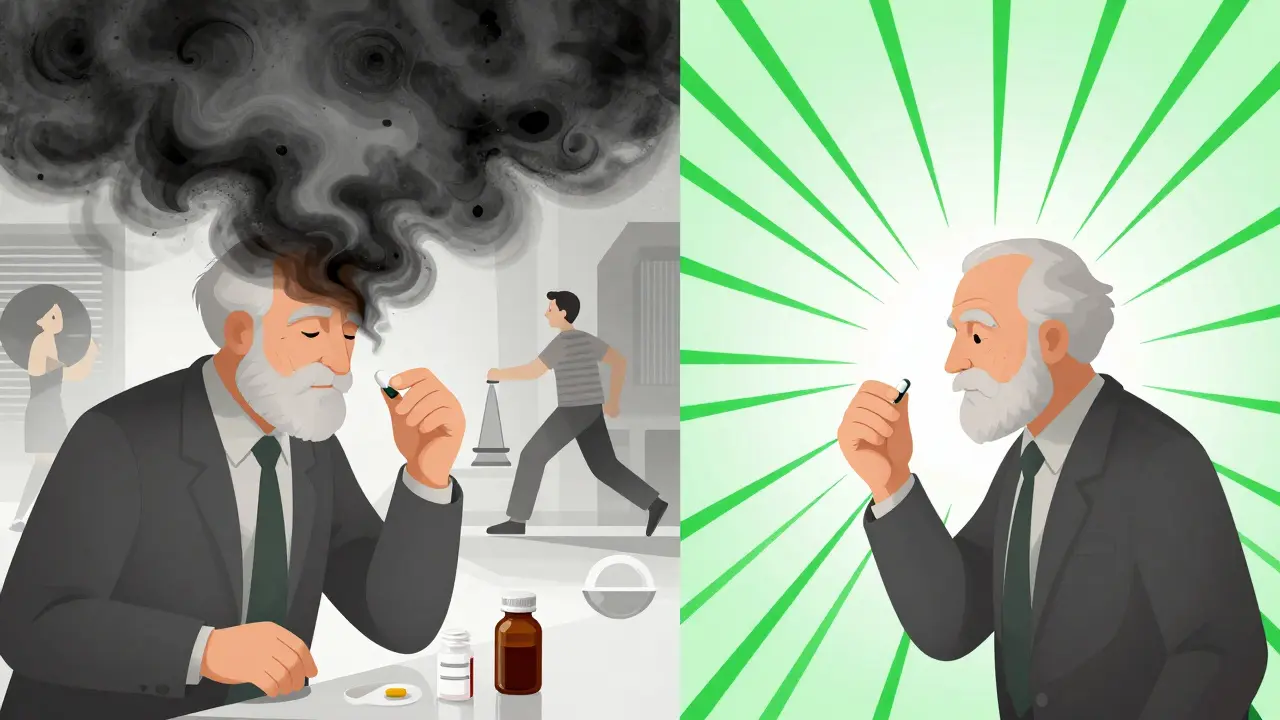
What You Should Do: Three Simple Steps
The CDC’s STEADI program gives clear advice: STOP, SWITCH, REDUCE. Here’s how to apply it:- STOP - If you’re taking diphenhydramine for sleep, stop. It’s not a safe long-term fix. Studies show it worsens memory and increases dementia risk over time. Ask your doctor about sleep hygiene instead: keep a regular bedtime, avoid screens before bed, and keep your room cool and dark.
- SWITCH - If you need an antihistamine for allergies, switch to fexofenadine or loratadine. These are available over-the-counter and cost about the same. Don’t assume “natural” or “herbal” allergy remedies are safer - many contain hidden antihistamines.
- REDUCE - If you must use a first-gen antihistamine, use the lowest dose possible. For diphenhydramine, that’s 12.5 mg instead of 25 mg. Take it at night, not in the morning. And never combine it with alcohol, benzodiazepines, or opioids - that’s a recipe for disaster.
Non-Medication Alternatives That Actually Work
You don’t need pills to manage allergies or sleep. Simple, low-cost changes make a big difference.- Nasal saline rinses - Used daily, they reduce allergy symptoms by 35-40%. A 2022 JAMA Otolaryngology study confirmed they’re as effective as antihistamines for many people.
- Allergen-proof bedding - Dust mites trigger 70% of indoor allergies. Using special pillowcases and mattress covers cuts exposure by 83%.
- HEPA air filters - These remove 99.97% of airborne allergens. One filter in the bedroom can cut nighttime symptoms dramatically.
- Environmental fixes - Install grab bars in the bathroom (lowers fall risk by 28%), add motion-sensor nightlights (reduces falls by 32%), and clear clutter from hallways and stairs.
These changes don’t cost much. Many are covered by Medicare or Medicaid under home safety grants. Talk to your doctor or pharmacist - they can help you find local programs.
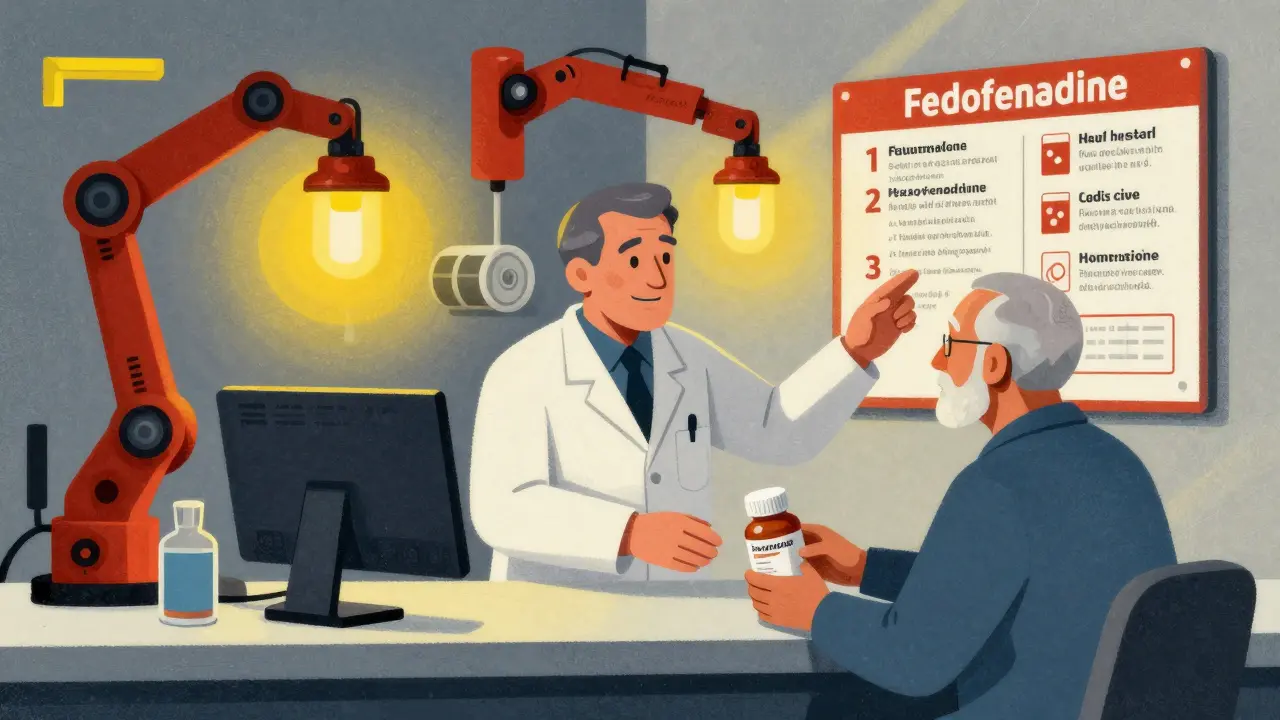
How to Talk to Your Doctor or Pharmacist
Most seniors don’t realize their OTC meds are risky. Doctors often don’t ask. Pharmacists are your best ally here.- Bring all your meds - pills, creams, supplements, even herbal teas - to your next appointment. This is called a “brown bag review.”
- Ask: “Is this medication safe for someone my age? Could it make me dizzy or increase my fall risk?”
- Request a medication review during your Annual Wellness Visit. Since 2024, Medicare requires this check for all beneficiaries.
- If you’re taking diphenhydramine for sleep, ask for a plan to stop it gradually. Withdrawal can cause rebound insomnia, so don’t quit cold turkey.
Pharmacist-led reviews cut fall risk by 26%. That’s not a small number. That’s life-changing. Community pharmacies now offer free medication reviews - no appointment needed. Just walk in with your pill bottles.
The Bigger Picture: Why This Keeps Happening
Even with all the evidence, diphenhydramine is still the third most bought OTC sleep aid in the U.S. - with 28.7 million units sold yearly to people over 65. Why? Because labels don’t warn enough. The FDA added a few warnings in 2020, but they’re buried in fine print. No one tells seniors: “This could make you fall.” Doctors still prescribe it. Pharmacies still sell it. Families still buy it. It’s cheap. It’s familiar. It’s easy. But it’s not safe. New antihistamines are coming. Two drugs in Phase II trials (AGS-2025-01 and FEX-AGE-101) show 89% less drowsiness than diphenhydramine. But they’re years away. Meanwhile, we have safer options right now - and we need to use them.The goal isn’t to eliminate all meds. It’s to remove the ones that put lives at risk. For older adults, falling isn’t just an accident - it’s often a preventable medical event. And the first step to stopping it? Looking at the medicine cabinet.
Is it safe for seniors to take Benadryl occasionally?
No - even occasional use carries risk. A single dose of diphenhydramine can impair balance for 6-8 hours in older adults. Studies show fall risk rises within 24 hours of use. There’s no safe threshold. The American Geriatrics Society advises avoiding it entirely in people over 65, even for short-term use.
Can I switch from diphenhydramine to Zyrtec on my own?
You can switch for allergies - Zyrtec (cetirizine) is available over-the-counter and is safer than diphenhydramine. But if you’re using it for sleep, don’t just swap pills. Zyrtec can still cause drowsiness in 14% of seniors. The best move is to stop the medication entirely and use sleep hygiene techniques instead. Talk to your doctor first, especially if you’ve been taking it long-term.
Why don’t more doctors warn patients about this?
Many doctors aren’t trained to screen for OTC risks. A 2019 study found first-gen antihistamines were prescribed at similar rates for older and younger patients - despite clear guidelines. Also, patients rarely mention OTC meds during visits. If you don’t bring it up, your doctor might not know you’re taking it. Always list everything you use - even “just a pill for sleep.”
Are herbal sleep aids safer than diphenhydramine?
Not necessarily. Many herbal sleep aids - including those with valerian root or melatonin - are combined with diphenhydramine in the same pill. Always check the “Inactive Ingredients” list. If you see diphenhydramine, chlorpheniramine, or doxylamine, it’s just as risky as Benadryl. Natural doesn’t mean safe for seniors.
What should I do if I’ve already fallen after taking an antihistamine?
Tell your doctor immediately. A single fall is a major warning sign. Your doctor should review all your medications, check your balance and vision, and consider a fall risk assessment. You may also qualify for a home safety evaluation through Medicare. Don’t wait for the next fall - act now.


Man, I had no idea Benadryl was this dangerous for older folks. My grandma swears by it for sleep, but now I’m gonna sneak her meds and swap ‘em for Zyrtec. She’ll hate me at first, but when she stops face-planting in the hallway? She’ll thank me. This post is a godsend.
These western doctors are too soft. In India we use diphenhydramine for everything. If your balance is bad, you need to strengthen your legs, not whine about a pill. This is why your healthcare costs are insane. No discipline, no respect for tradition.
Hey, I’m 71 and I’ve been on diphenhydramine for 15 years. I didn’t know it was making me foggy and wobbly. I thought it was just aging. But reading this? It’s like someone flipped on a light in my brain. I’m gonna talk to my pharmacist tomorrow. And maybe start yoga. Not because I’m scared, but because I wanna feel alive again. Thanks for writing this.
This is the most important public health revelation since the tobacco reports. We are literally poisoning our elders with over-the-counter candy. Diphenhydramine is a chemical lobotomy in a bottle. And the FDA? They’re asleep at the wheel. Pharmacies should be required to post neon signs: ‘THIS DRUG CAN KILL YOU.’ I’m not exaggerating. This is a national disgrace.
you guys are overreacting. i took benadryl for years. never fell. my dad took it til he was 88. lived fine. its not the drug, its the lazy people who dont walk enough. just get off your butt and move. also zyrtec is overpriced. i buy generic. its the same.
I’ve been using saline rinses for my allergies since 2020. No more sneezing, no drowsiness. Honestly, it’s cheaper than meds and way better. My wife tried it too. Now she won’t touch antihistamines. Simple stuff works. Why make it complicated?
I’m a geriatric nurse. I’ve seen too many falls caused by these meds. One patient, 84, fell after taking ‘just one’ Benadryl for a cold. Broke her hip. Never walked again. The scary part? She didn’t even know it was in her nighttime cold tablet. Always check the label. Even if it says ‘natural sleep aid.’ That’s often diphenhydramine in disguise. Talk to your pharmacist. They’re the real heroes here.
I switched from diphenhydramine to fexofenadine after reading this, and honestly, it changed my life. No more that heavy, groggy feeling in the afternoon. I started gardening again. Took my grandkids to the park. I didn’t realize how much I’d been holding back because I was always half-asleep. And the cost? Same as before. I wish I’d known this 10 years ago. I’m telling everyone I know. If you’re over 65 and taking anything for sleep or allergies, please, please, please check what’s in it. Your body will thank you.
Wow. A whole article about a drug that’s been around since 1946. Someone really needed to write this. Truly groundbreaking. I’m sure the FDA is sweating bullets. /s
My mom used to take Benadryl for sleep. I didn’t know it was dangerous until she fell and broke her wrist. Now she uses melatonin and a white noise machine. She sleeps better. And she’s not scared to walk to the kitchen at night anymore. I’m so glad we switched. Always check the ingredients, even if it’s labeled ‘herbal.’ Some of those teas? Loaded with diphenhydramine. Don’t trust the front label.
OMG. I just checked my medicine cabinet. I’ve been taking Tylenol PM for years. I thought it was just acetaminophen and… wait. IT HAS DIPHENHYDRAMINE. I’M GOING TO THE PHARMACY TOMORROW. I’M TELLING MY SISTER. I’M TELLING MY BOOK CLUB. THIS IS A LIFESAVER. I’M CRYING. THANK YOU.