NSAID Sensitivity and Asthma: Managing NERD and Aspirin Reactions
Imagine taking a simple over-the-counter pain reliever for a headache, only to find yourself struggling to breathe within an hour. For most of us, ibuprofen or aspirin are harmless staples of the medicine cabinet. But for about 7% of people with asthma, these drugs can trigger a severe, potentially life-threatening respiratory attack. This isn't a typical allergy; it's a complex biochemical reaction known as NSAID sensitivity is a condition where nonsteroidal anti-inflammatory drugs trigger severe asthma symptoms and nasal congestion in susceptible individuals , often referred to by doctors as NERD (NSAID-Exacerbated Respiratory Disease) or AERD (Aspirin-Exacerbated Respiratory Disease).
| Key Feature | Details |
|---|---|
| Who it affects | ~7% of asthma patients; higher in those with nasal polyps |
| Primary Triggers | Aspirin, Ibuprofen, Naproxen, Diclofenac |
| Common Symptoms | Severe wheezing, chest tightness, nasal blockage, runny nose |
| Typical Onset | 30 minutes to 3 hours after ingestion |
Why Some Asthma Patients React to Painkillers
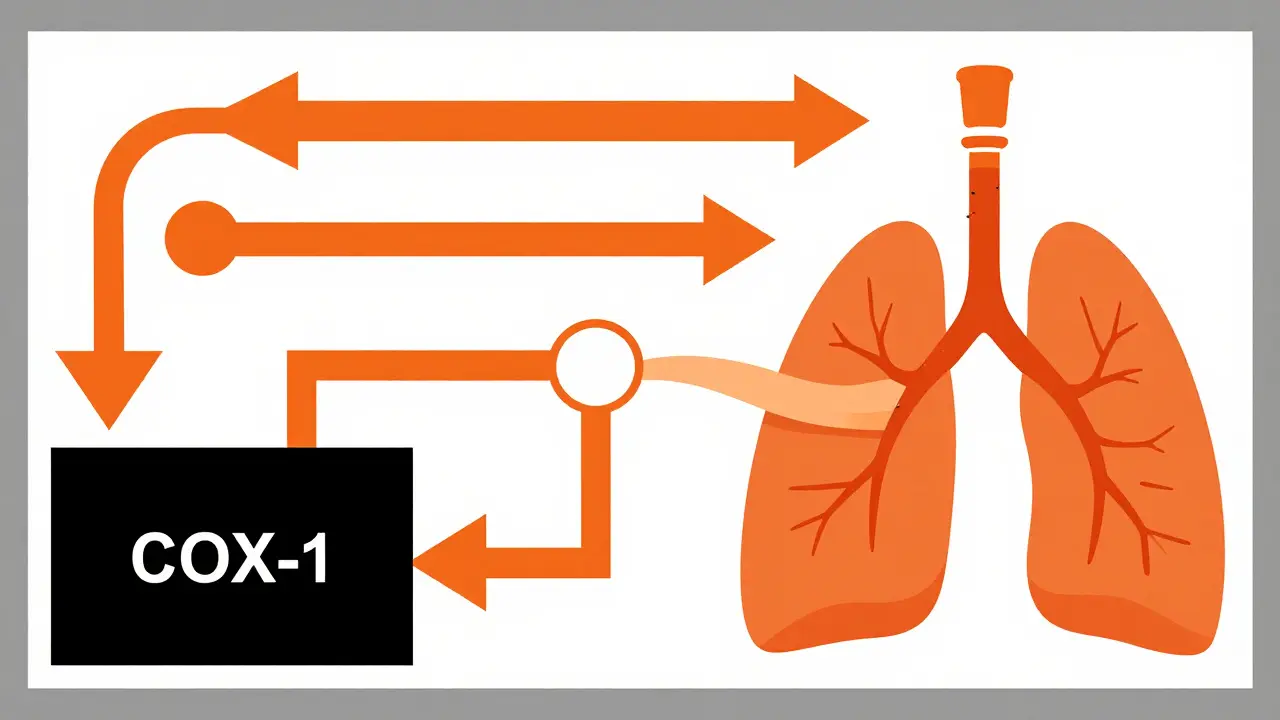
To understand why this happens, we have to look at how your body handles inflammation. Normally, your system uses enzymes called COX-1 is an enzyme that converts arachidonic acid into prostaglandins, which help regulate inflammation to keep things in balance. When someone with NERD takes an NSAID, the drug blocks this enzyme. Instead of the inflammation stopping, the body "shunts" the chemical process down a different path-the 5-lipoxygenase pathway.
This detour causes a massive overproduction of leukotrienes is pro-inflammatory chemicals that cause the airways to tighten and produce excess mucus . At the same time, the body loses the protective, anti-inflammatory prostaglandins it usually relies on. The result is a "perfect storm" in the lungs and sinuses: the bronchial tubes constrict, mucus pours in, and the patient experiences an acute asthma exacerbation.
Spotting the Warning Signs
NERD doesn't usually show up in childhood. Most people are diagnosed in their 30s or 40s, and it's significantly more common in women. One of the strangest things about this condition is that it often starts in the nose before it hits the lungs. Many patients spend years dealing with constant nasal blockage or congestion-what doctors call chronic rhinosinusitis is a long-term inflammation of the sinuses often accompanied by nasal polyps -before they ever realize their asthma is linked to pain relievers.
If you have nasal polyps is soft, painless growths on the lining of the nasal passages , your risk jumps dramatically. In fact, up to 50% of people with chronic rhinosinusitis and polyps also have NSAID sensitivity. Typical red flags include:
- A sudden, severe asthma attack shortly after taking a common painkiller.
- Intense nasal congestion or a "dripping" nose (rhinorrhea) following drug use.
- Chest tightness and severe shortness of breath that doesn't respond quickly to usual rescue inhalers.
- A history of severe asthma that seems difficult to control despite standard medication.
The "All or Nothing" Rule of NSAIDs
One of the most critical things for patients to understand is that this is not a selective sensitivity. If you react to aspirin, you will almost certainly react to all other NSAIDs. You cannot simply switch from aspirin to ibuprofen or naproxen; they all work by inhibiting the same enzyme pathways.
This includes a wide range of medications. It's not just the pill you take for a headache. Many cold and flu multi-symptom remedies contain hidden NSAIDs. If you are sensitive, you must treat the entire class of drugs as a danger zone. Even low doses-like a baby aspirin (75mg)-can trigger a reaction in some people, though for others, it only happens with larger doses.
Safe Alternatives for Pain Management
Living with NERD doesn't mean you can't manage pain; it just means you have to be strategic. Most people with this sensitivity can safely use Acetaminophen is a non-opioid analgesic and antipyretic that does not inhibit the COX-1 enzyme in the same way as NSAIDs (Tylenol). Because it doesn't trigger the leukotriene cascade, it's the gold standard for safe pain relief in this group, provided the dose stays under 1000mg.
For those who need stronger anti-inflammatory action, Celecoxib is a COX-2 selective inhibitor that targets a different enzyme, avoiding the respiratory trigger associated with COX-1 inhibition is often a safe alternative. Unlike traditional NSAIDs, COX-2 inhibitors don't typically cause the same dangerous shift in arachidonic acid metabolism. However, these should only be used under a doctor's supervision to ensure they don't interfere with other health conditions.

Advanced Treatment and Long-Term Control
For some patients, avoiding the drugs isn't enough because their asthma remains severe. In these cases, specialists might suggest aspirin desensitization. This is a medical process where a patient is given tiny, increasing doses of aspirin under strict clinical supervision. Surprisingly, once the body is "trained" to tolerate the drug, aspirin can actually help reduce the size of nasal polyps and improve overall asthma control.
Beyond desensitization, modern medicine is looking at new ways to stop the leukotriene storm. Some doctors prescribe leukotriene receptor antagonists to block the chemicals that cause the airways to close. Recent research is also exploring the use of LXA4 (lipoxins) to counteract the inflammatory cascade and potentially offer a new way to treat the underlying deficiency in prostaglandins that makes NERD patients so reactive.
Can I take Ibuprofen if I'm allergic to Aspirin?
No. If you have NSAID-Exacerbated Respiratory Disease (NERD), you will likely react to ibuprofen, naproxen, and other NSAIDs just as you would to aspirin. These drugs belong to the same class and trigger the same chemical reaction in your body.
How long does it take for a reaction to happen?
Most reactions occur within 30 minutes to 3 hours after taking the medication. However, some people are extremely sensitive and may react faster, while others might not notice the symptoms until a few hours later.
Is Tylenol safe for people with NERD?
Yes, acetaminophen (Tylenol) is generally safe because it does not inhibit the COX-1 enzyme in the same way NSAIDs do. However, a small percentage of patients (about 5-10%) may still react to very high doses, so it's best to stay within the recommended limit of 1000mg per dose.
Why do I have nasal polyps if I have this condition?
There is a strong biological link between the two. The same imbalance of prostaglandins and leukotrienes that causes asthma attacks also leads to chronic inflammation in the sinuses, which promotes the growth of nasal polyps. This is why 40-50% of people with polyps also have NSAID sensitivity.
Can I ever take aspirin again?
Only if you undergo a formal desensitization process administered by an allergist or immunologist. Attempting this at home is extremely dangerous and could lead to a fatal bronchospasm.
Next Steps for Your Safety
If you suspect you have a sensitivity, the first step is to document every medication you've taken before a respiratory flare-up. Check the labels of your "cold and flu" powders and syrups-many contain aspirin or ibuprofen without shouting it in the main title. Bring these labels to your next doctor's appointment.
If you are high-risk (meaning you have severe asthma and nasal polyps), avoid all NSAIDs until you can get a confirmed diagnosis from a specialist. They can perform a supervised challenge test if necessary to determine exactly which medications are safe for you. For those already diagnosed, keeping a "safe list" of medications (like acetaminophen or celecoxib) in your phone or wallet can be a lifesaver during an emergency room visit where doctors need to know what to administer for pain.