
Opioid Reactions: Itching vs. Allergy and What to Do
When someone gets itchy after taking an opioid like morphine, they’re often told they’re "allergic." But here’s the truth: in most cases, they’re not. Itching from opioids isn’t a true allergy - it’s a common side effect that gets mislabeled as one, and that mistake can cost patients better pain control, more money, and even unnecessary suffering.
Why Opioid Itching Isn’t an Allergy
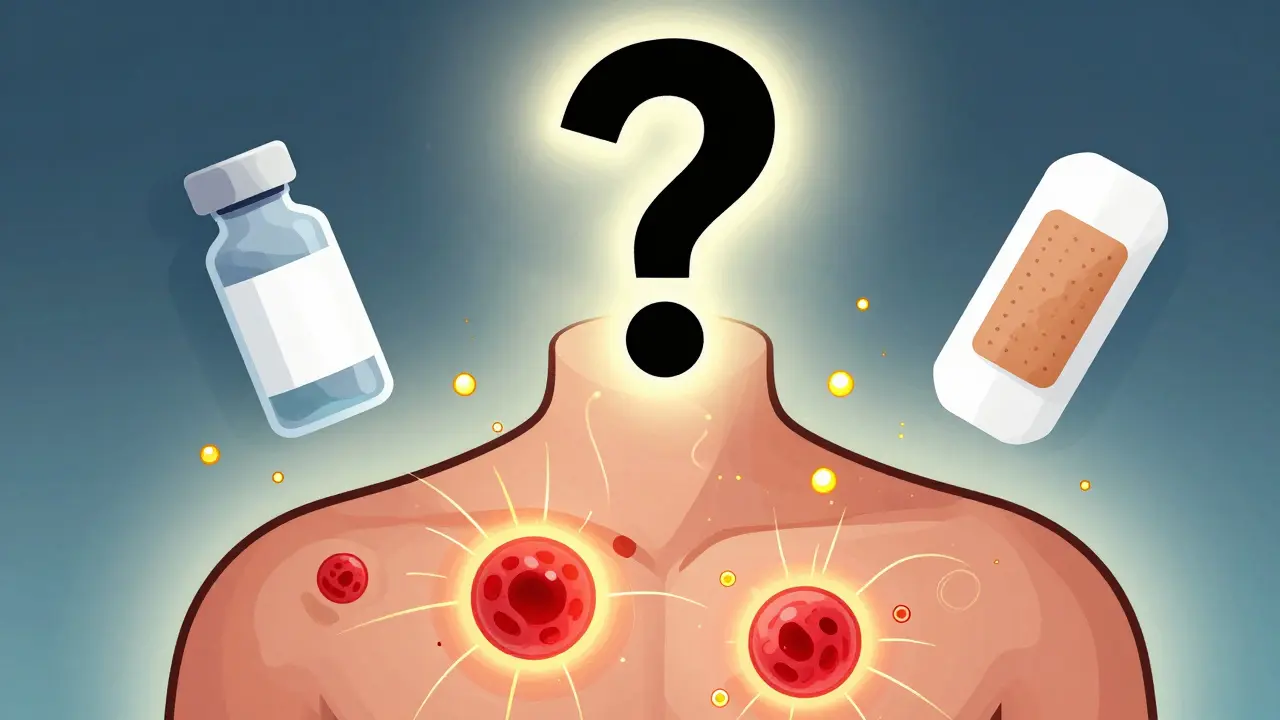
Most people who say they’re allergic to opioids are actually experiencing a pseudoallergic reaction. This isn’t caused by the immune system attacking the drug. Instead, opioids like morphine and codeine directly trigger mast cells in the skin to dump histamine - the same chemical released during hay fever or a bee sting. That histamine causes itching, flushing, and sometimes mild sweating. It’s uncomfortable, but it’s not dangerous.
True opioid allergies? They’re rare. Only about 0.1% to 0.3% of people who take opioids have a real IgE-mediated immune response. That means their body produces antibodies against the drug, leading to hives, swelling of the throat, low blood pressure, or trouble breathing. These reactions happen fast - often within minutes - and can be life-threatening. But they’re not what most patients experience.
Here’s the kicker: over 80% of reported "opioid allergies" are actually pseudoallergic reactions. A 2022 study from the University of Michigan looked at 1,247 patients who claimed opioid allergies. Eighty-seven percent of them only described itching, nausea, or dizziness - all classic side effects, not signs of an immune response.
The Science Behind the Itch
Not all opioids cause itching the same way. Morphine is the biggest offender. It releases 3 to 4 times more histamine than an equivalent dose of hydromorphone. That’s why patients on morphine report itching up to 40% of the time, while those on fentanyl or methadone see it in only 5% to 10% of cases.
Why? It comes down to chemistry. Morphine and codeine have a specific molecular structure - a tertiary amine group - that directly activates mast cells. Fentanyl and methadone lack that structure. They don’t trigger histamine release nearly as much. That’s why switching from morphine to fentanyl often stops the itching cold.
But there’s another layer. In some people, the itch isn’t even from histamine. Research from Washington University in 2007 showed that opioids activate a different pathway - gastrin-releasing peptide receptors (GRPR) in the spinal cord. These receptors send itch signals directly to the brain, bypassing the skin entirely. That’s why antihistamines like Benadryl sometimes don’t help at all.
What’s the Real Danger?
The biggest risk isn’t the itching - it’s what happens when doctors assume it’s an allergy.
If a patient is labeled "allergic to opioids," they’re often switched to weaker painkillers like NSAIDs or acetaminophen. That leaves cancer patients, post-surgery patients, and people with chronic pain under-treated. A 2020 study in JAMA Internal Medicine found that mislabeling opioid "allergies" costs the U.S. healthcare system about $1,200 per patient in extra medication and care.
And it’s not just money. Patients who can’t get proper pain relief are more likely to use emergency rooms, develop depression, or even turn to illegal drugs. One 2021 study from MD Anderson Cancer Center found that 78% of cancer patients labeled "opioid allergic" were able to tolerate alternative opioids after using antihistamines. Only 5% had true allergic reactions.
How to Tell the Difference
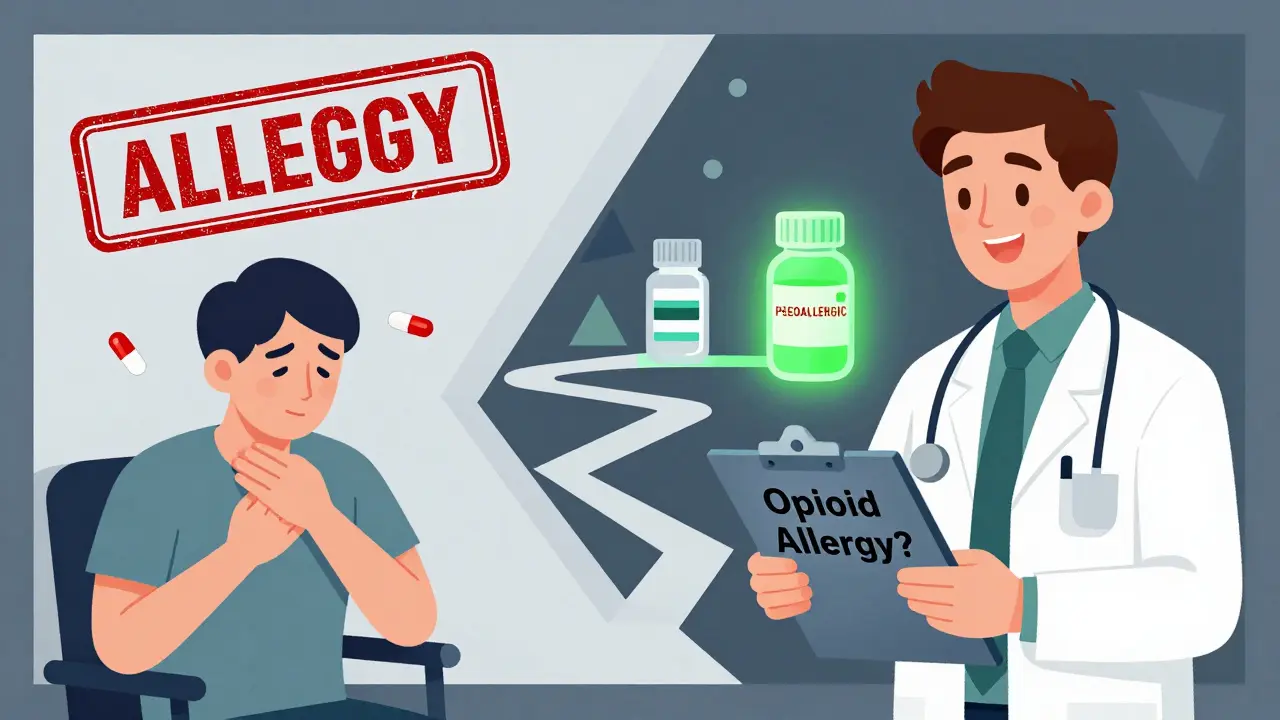
Here’s how to tell if it’s a side effect or a real allergy:
- Itching alone? Almost certainly pseudoallergic.
- Itching + hives, swelling, or trouble breathing? Could be a true allergy.
- Symptoms start within minutes? More likely immune-related.
- Symptoms get worse with higher doses? Classic pseudoallergy - histamine release is dose-dependent.
- Did it happen on the first dose? True allergies usually need prior exposure to develop. If it happened on the very first time, it’s probably not immune-based.
Doctors have tools to help. The Opioid Allergy Assessment Tool, developed at MD Anderson, correctly identifies pseudoallergies in 92% of cases by asking about timing, dose, and whether antihistamines helped.
What to Do If You’re Itchy
If you’re itchy after an opioid:
- Don’t stop the medication. Unless you’re having swelling, trouble breathing, or dizziness, don’t assume it’s an allergy.
- Ask for an antihistamine. A single dose of diphenhydramine (Benadryl) 25-50 mg IV or oral 30 minutes before your next opioid dose helps in 80-90% of cases.
- Try a lower dose. Reducing the opioid by 25-50% often cuts itching without losing pain control.
- Switch opioids. Move from morphine or codeine to fentanyl, methadone, or hydromorphone. Fentanyl patches are especially good - they release the drug slowly, reducing histamine spikes.
For example, a patient on morphine for chronic back pain who gets itchy might switch to a fentanyl patch. The pain relief stays the same, but the itching disappears. That’s not a miracle - it’s science.
When You Really Need to Avoid Opioids
True allergies are rare, but they exist. If you’ve had:
- Swelling of the lips, tongue, or throat
- Wheezing or trouble breathing
- Drop in blood pressure
- Hives with nausea or vomiting
...after taking an opioid, you should avoid that drug - and possibly others in the same class. Morphine, oxycodone, and hydrocodone are all phenanthrene opioids and can cross-react. But fentanyl and methadone? They’re structurally different. Studies show less than 5% cross-reactivity.
Desensitization is possible for patients who truly need opioids. A 2021 study showed a 95% success rate using a 12-step IV morphine protocol over 4-6 hours. But this should only be done in a controlled setting with emergency equipment on hand.
What’s New in 2026
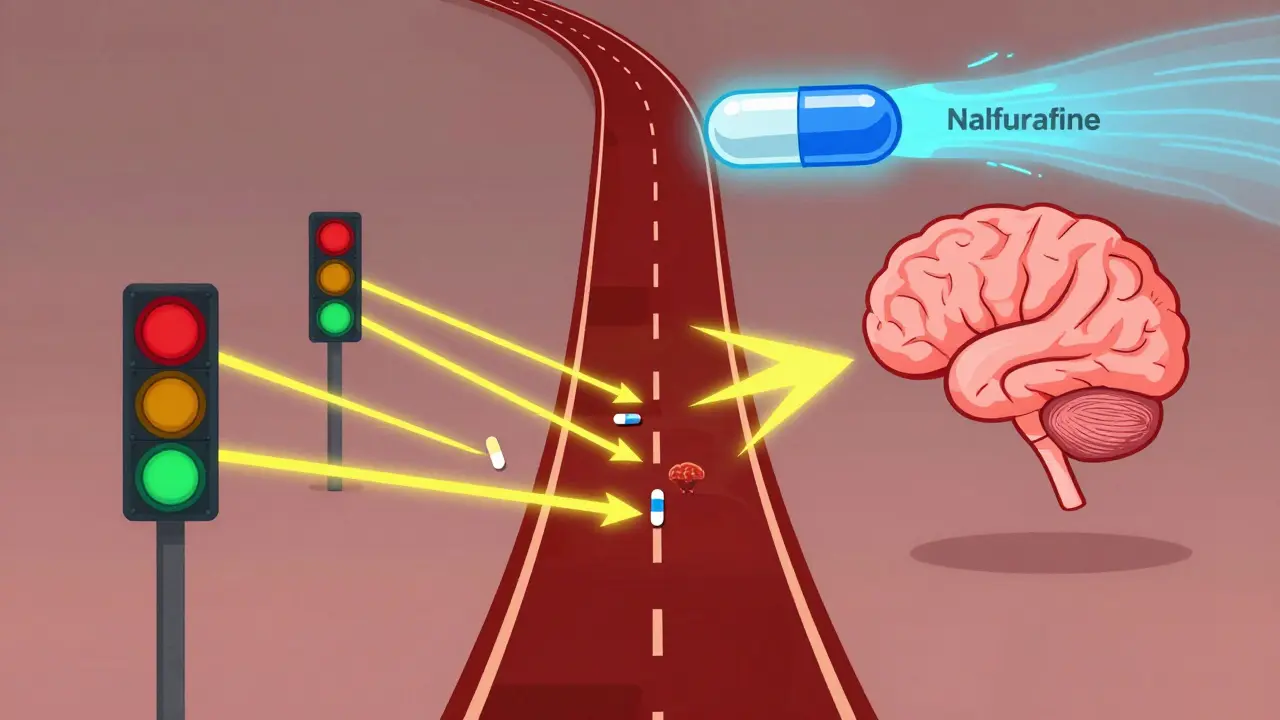
Research is moving fast. A new drug called nalfurafine - approved in Japan since 2009 and in Phase 3 trials in the U.S. - targets the spinal itch pathway directly. In 2023, a Nature Neuroscience study showed it reduces opioid-induced itching by 70% without dulling pain. It’s not FDA-approved yet, but it’s coming.
Genetic testing is also on the horizon. Some people have variations in the HTR7 gene that make them more likely to release histamine from opioids. In the next few years, a simple blood test could predict who’s at risk.
And hospitals are catching on. Epic’s electronic health record system now flags whether a reaction was "itching" or "anaphylaxis," helping doctors avoid mislabeling. One hospital system cut false allergy labels by 45% after implementing this.
What Patients Should Know
If you’ve been told you’re allergic to opioids because you got itchy:
- You’re not alone - 87% of patients with "opioid allergies" only had itching.
- You can probably take another opioid safely.
- Ask your doctor about switching to fentanyl or methadone.
- Request antihistamines before your next dose.
- Don’t let a label keep you from pain relief.
And if you’ve had a real allergic reaction - swelling, breathing trouble - make sure your records say so. But don’t assume every itch means you’re allergic. That’s the myth that’s hurting people more than the side effect itself.
Bottom Line
Opioid itching isn’t an allergy. It’s a predictable, manageable side effect. Treating it like an allergy doesn’t make you safer - it makes your pain worse. The best thing you can do is learn the difference, ask the right questions, and push back if you’re being denied effective pain treatment. You don’t have to suffer in silence. And you don’t have to live with a label that doesn’t fit.





Finally someone breaks this down in plain English. I’ve seen so many patients get denied morphine just because they got a little itchy after surgery - and then they’re stuck with NSAIDs that barely touch the pain. It’s insane how often this gets mislabeled. The science here is crystal clear.
Wait wait wait - so you’re saying the medical system is just making up allergies because they don’t want to deal with the real problem? That’s not science - that’s corporate laziness. They’d rather keep patients in pain than admit they don’t know how to manage side effects properly. I’ve seen this happen to my cousin. They called her allergic and then she ended up on a fentanyl patch anyway - and it worked. But now her record says "anaphylaxis."
There’s a dangerous oversimplification here. While pseudoallergic reactions are common, dismissing all itching as non-allergic ignores individual variability. Some people have latent immune sensitivities that only manifest under stress, polypharmacy, or chronic inflammation. This article reads like an opioid industry pamphlet. The real danger isn’t the itch - it’s the institutional refusal to do proper challenge tests or refer patients to allergists.
I work in hospice. We had a patient who swore she was allergic to opioids because she got itchy. We gave her a tiny dose of hydromorphone with Benadryl pre-treatment. She cried - not from pain, but relief. "I haven’t slept in three weeks." That’s the real story. Stop letting fear rob people of dignity.
As someone from Australia where opioid access is tightly controlled, I’ve seen this play out differently. Here, the fear of addiction overshadows everything. But this breakdown is spot-on. Switching from morphine to fentanyl isn’t just a workaround - it’s a clinical upgrade. The pharmacology is fundamentally different. It’s not about tolerance - it’s about molecular structure.
Interesting how we’ve turned a physiological side effect into a moral crisis. Itching isn’t a betrayal - it’s biology. And yet, we treat patients like they’re lying or weak if they complain. The real tragedy? The people who don’t speak up because they’ve been told "you’re allergic" so many times they’ve internalized it. This article should be mandatory reading for every med student.
Let’s zoom out. This isn’t just about opioids. It’s about how medicine conflates discomfort with danger. We label anything unfamiliar as an "allergy" because it’s easier than learning nuance. The same thing happens with antibiotics, statins, even vaccines. We need a cultural shift - from fear-based medicine to evidence-based medicine. And yes, that means training doctors to listen more than they prescribe.
Remember when we used to call migraines "hysteria"? Now we have triptans. Remember when we thought ulcers were caused by stress? Now we have H. pylori antibiotics. This opioid itch thing? Same pattern. Science is catching up. The real revolution isn’t nalfurafine - it’s the slow death of lazy diagnostic labels. The next generation of docs won’t even believe we used to call itching an allergy.
My dad had back surgery last year. Got itchy on morphine. They switched him to oxycodone and said "it’s fine." He got itchy again. We didn’t push back because we trusted the hospital. He ended up with a fentanyl patch after two weeks of suffering. Why didn’t anyone just say "try Benadryl first"? This info needs to be on every discharge sheet.
I’m a nurse who’s seen this too many times. A patient gets itchy, we give Benadryl, they say it helps - but we still document "opioid allergy" because the chart says so. It’s systemic. We need to change the EHR defaults. If someone says "itching," the dropdown shouldn’t have "allergy" as the first option.
Let me be clear: this is not medical advice. But if you’ve been told you’re allergic to opioids because you got itchy - go back to your doctor. Ask for a referral to an allergist for a graded challenge. It’s safe. It’s evidence-based. And it could change your life. You don’t have to live with untreated pain because someone mislabeled a side effect.
Human beings have always feared what they don’t understand. Pain is invisible. Itching is visible. So we pathologize the visible. We call it allergy. We call it weakness. We call it addiction. But the truth? It’s just chemistry. The body reacts. The system panics. The patient suffers. This article is a whisper in a hurricane. But whispers become shouts when enough people hear them.
So what? You’re telling me people should just keep taking opioids even if they’re itchy? What about quality of life? Maybe they don’t want to be itchy. Maybe they’d rather be in mild pain than constantly scratching. You’re dismissing their experience like it’s irrelevant. This isn’t science - it’s coercion.