Drug Facts vs Supplement Facts: What You Really Need to Know
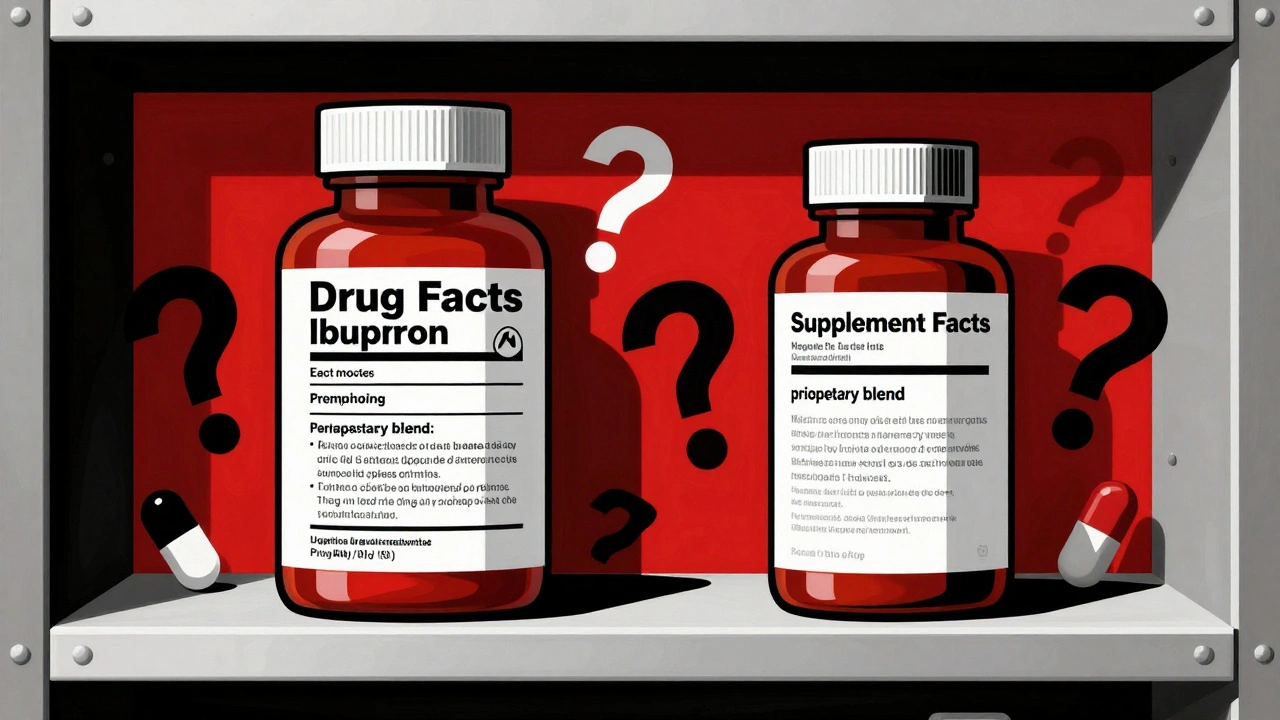
When you pick up a bottle of aspirin or a vitamin D pill, both have labels that look almost the same: a box with ingredients, dosages, and warnings. But Drug Facts, the standardized label format required by the FDA for over-the-counter medicines and Supplement Facts, the label format used for dietary supplements under less strict rules are governed by two entirely different systems. One is tightly controlled. The other? Not so much. This isn’t just about formatting—it’s about safety, effectiveness, and who’s really checking what’s inside.
Drug Facts labels, used on things like Tylenol or Claritin, must prove the product works, list exact active ingredients with doses, and show side effects backed by clinical trials. Every claim has to be reviewed by the FDA. Supplement Facts labels? They don’t need to prove anything works before hitting shelves. The manufacturer decides what to put in, and the FDA only steps in if something goes wrong—after the fact. That means you could be taking a supplement with no real evidence it helps, or worse, one that contains hidden drugs. We’ve seen cases where weight-loss supplements had hidden stimulants, and joint pain pills contained prescription steroids. The label won’t tell you.
Even the wording on the label is misleading. Drug Facts say "Uses," "Warnings," and "Inactive Ingredients." Supplement Facts say "Serving Size," "Ingredients," and "Other Ingredients." But here’s the catch: "Other Ingredients" on supplements can include fillers, binders, and dyes with zero oversight. Meanwhile, Drug Facts must list every inactive ingredient by name. And while drug manufacturers must report adverse events to the FDA, supplement makers don’t have to report anything unless it’s life-threatening—and even then, many don’t.
Then there’s the dosage problem. A Drug Facts label says exactly how much active ingredient is in each pill—say, 500 mg of acetaminophen. A Supplement Facts label might say "500 mg of Turmeric Extract," but that doesn’t tell you how much curcumin—the actual compound that might help—is in there. It could be 2%, or 20%. You won’t know. And because supplements aren’t required to prove bioavailability, what you swallow might not even get absorbed.
Some people think supplements are safer because they’re "natural." But natural doesn’t mean harmless. St. John’s Wort can mess with antidepressants. Kava can damage your liver. And if you’re on blood thinners, ginkgo or garlic supplements can raise your risk of bleeding. None of that is clearly warned on the label the way it would be on a prescription or OTC drug.
What you’re really comparing isn’t just labels—it’s accountability. Drug Facts come with legal consequences if they’re wrong. Supplement Facts come with a shrug. That’s why people with chronic conditions, older adults on multiple meds, or anyone managing a health issue should treat supplements like unregulated wildcards. Always check with your pharmacist or doctor before mixing them with anything else. And if you’re trying to save money by skipping a proven drug for a "natural" alternative, you might be risking more than you’re saving.
Below, you’ll find real-world breakdowns of what happens when these two systems collide—from dangerous interactions with thyroid meds and antibiotics, to how generic drugs can behave differently than brand names, and why your pill bottle’s label might look different every time you refill. These aren’t theoretical concerns. They’re everyday risks people face because they don’t know the difference between a Drug Fact and a Supplement Fact—and what that gap can cost them.
OTC vitamin and supplement labels look like medicine labels, but they hide critical safety info. Learn what the Supplement Facts panel doesn't tell you-and how to protect yourself from hidden risks.
READ MORE