GLP-1 Nausea: Why It Happens and How to Manage It
When you start a GLP-1 agonist, a class of medications used for weight loss and type 2 diabetes that mimic the natural GLP-1 hormone to slow digestion and reduce appetite. Also known as GLP-1 receptor agonists, these drugs include semaglutide, liraglutide, and dulaglutide—popular brands like Ozempic, Wegovy, and Saxenda. One of the most common reasons people quit them? Nausea. It’s not rare—it affects up to half of users in the first few weeks. And it’s not just mild discomfort. For some, it’s constant, disruptive, and makes them question whether the weight loss is worth it.
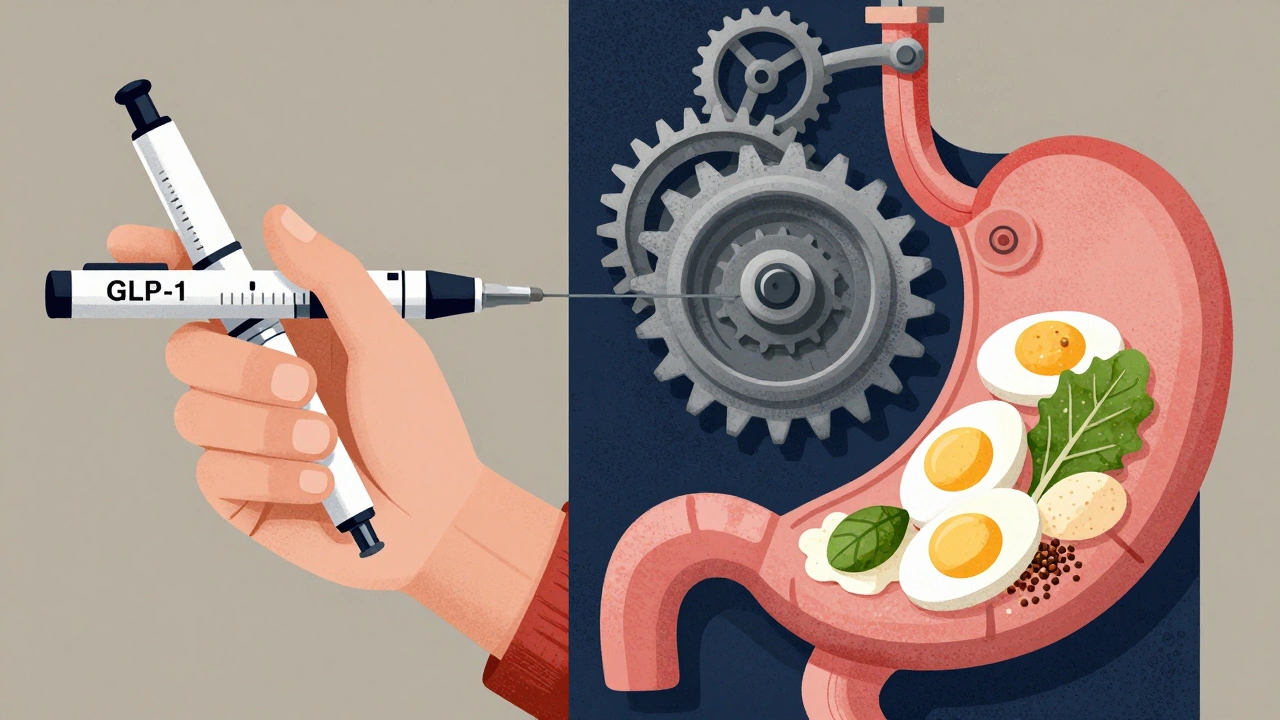
Why does this happen? GLP-1 agonists, slow down stomach emptying to keep you full longer. This is great for controlling blood sugar and reducing food intake, but it also means food sits in your stomach longer, triggering nausea signals to your brain. It’s not an allergy. It’s not a sign you’re doing something wrong. It’s a direct effect of the drug’s mechanism. And it’s not the same for everyone. People with slower digestion, those who eat large meals, or those who start at a high dose are more likely to feel it. The good news? Most people’s bodies adjust within 4 to 8 weeks. But that doesn’t mean you have to suffer through it.
Dulaglutide, a once-weekly GLP-1 agonist. Also known as Trulicity, it tends to cause less nausea than daily options like liraglutide. And dose titration, the process of slowly increasing the medication dose over time. Also known as gradual dosing, it’s the single most effective way to reduce nausea. Starting low and going slow isn’t just a suggestion—it’s science. Many people skip this and jump to the highest dose right away. That’s when nausea hits hardest. Also, eating smaller meals, avoiding greasy or spicy foods, and staying upright for 30 minutes after eating helps. Some patients find relief with ginger tea or peppermint oil—simple, low-risk tools that don’t interfere with the drug.
Don’t reach for over-the-counter anti-nausea pills like dimenhydrinate without talking to your doctor. Some antiemetics block dopamine, which can make Parkinson’s symptoms worse or interfere with how your body responds to GLP-1 drugs. There are safer options, like domperidone in some countries, but they’re not available everywhere. The best strategy? Work with your provider to adjust your dose, timing, and diet. Most people who stick with it—using these small, smart tweaks—find their nausea fades. And when it does, the benefits—better blood sugar, real weight loss, lower heart risk—start to show up.
Below, you’ll find real patient experiences, clinical tips for managing nausea without quitting your medication, and comparisons of how different GLP-1 drugs stack up in terms of side effects. No fluff. Just what works.
Learn how to manage GLP-1 GI side effects like nausea and bloating with smart meal planning and personalized dose titration. Reduce discontinuation risk and stay on track with proven, real-world strategies.
READ MORE