OIC Treatment: What Works, What Doesn't, and How to Choose
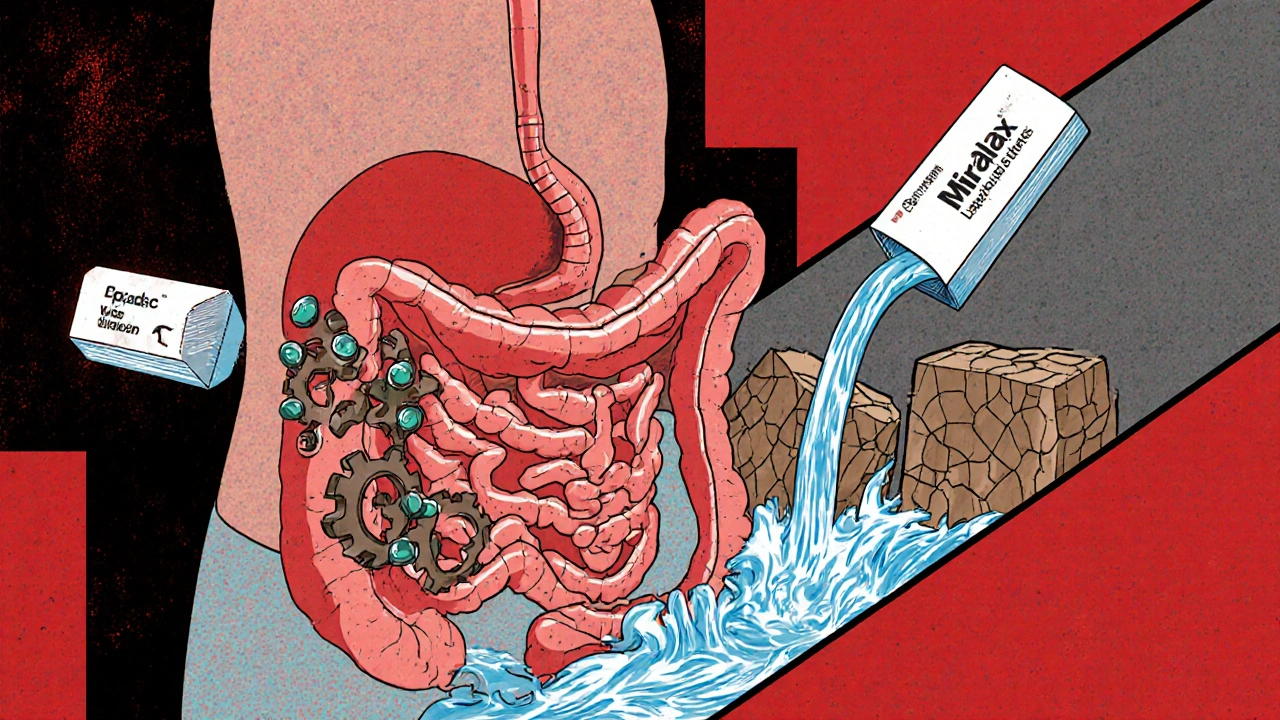
When you're taking opioids for pain, OIC treatment, the management of opioid-induced constipation, a common and often overlooked side effect of long-term opioid use. Also known as opioid-induced bowel dysfunction, it's not just about being backed up—it's about nausea, bloating, and feeling like your body is shutting down. And no, drinking more water or eating more fiber won't fix it for most people.
That's because opioids slow down your gut by binding to receptors in the intestines. Standard laxatives like senna or magnesium hydroxide might give you a quick push, but they don't touch the root cause. That’s where naloxegol, a peripherally acting mu-opioid receptor antagonist designed specifically to reverse constipation without affecting pain relief comes in. It blocks opioid effects in the gut while leaving brain receptors alone. Then there's methylnaltrexone, another targeted treatment given as an injection for patients who can't swallow pills or need fast relief. Both are FDA-approved for OIC, but they’re not cheap, and they’re not for everyone. If you’re on a tight budget, your doctor might try lubiprostone or linaclotide first—these work differently, pulling fluid into the intestines to soften stool.
What most people don’t realize is that OIC treatment isn’t just about pills. It’s about timing, diet, and movement. Sitting all day makes it worse. Skipping meals or eating too much processed food makes it worse. Even stress can throw off your gut rhythm. The best outcomes come from combining medication with small, daily habits: walking 20 minutes, drinking a glass of warm water in the morning, and avoiding dairy if it triggers bloating. And if your current treatment isn’t working after two weeks? That’s not normal. It’s time to ask for a different approach.
Below, you’ll find real-world comparisons of OIC treatments—what works for one person might fail for another. We break down the costs, side effects, and practical tips from people who’ve been there. No fluff. Just what you need to talk to your doctor with confidence.
Opioid-induced constipation affects 40-60% of patients on long-term pain meds. Learn how to prevent it with early laxative use and when to switch to prescription PAMORAs for real relief.
READ MORE