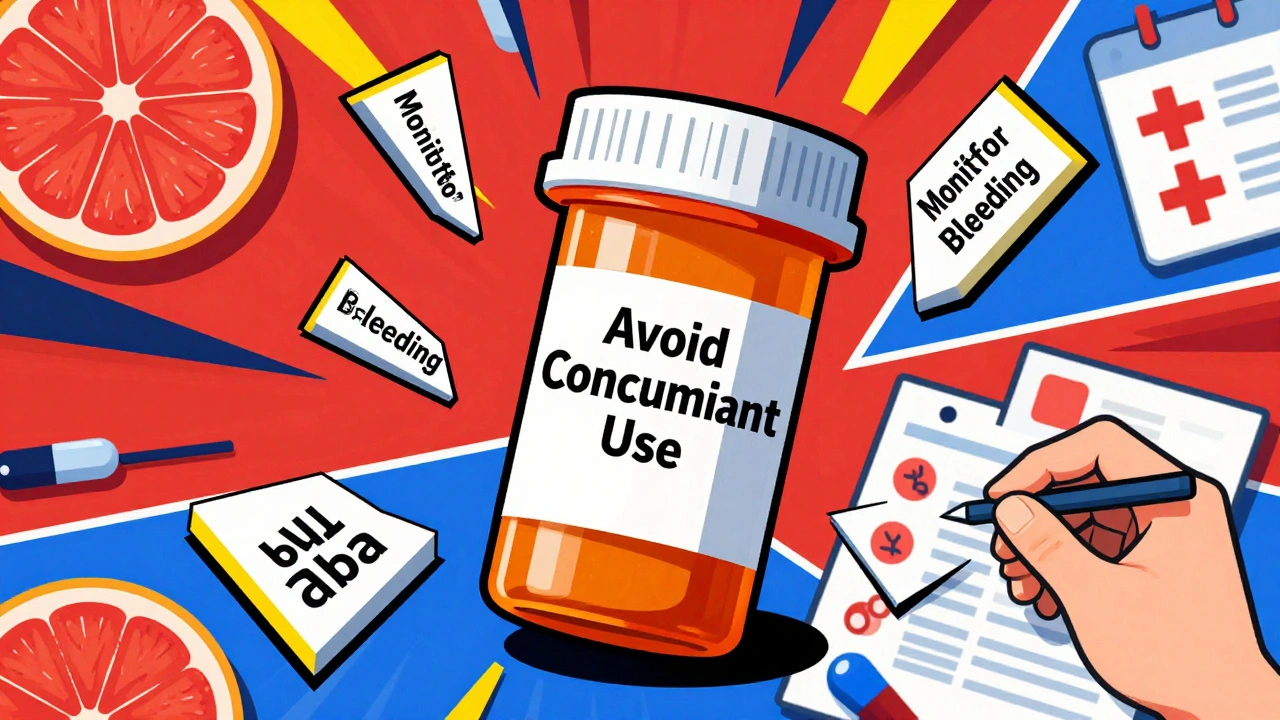
Prescription Warnings: What You Need to Know Before Taking Any Medication
When you pick up a prescription, you’re holding more than pills—you’re holding prescription warnings, critical safety alerts built into medication use that prevent harm, overdose, or deadly interactions. Also known as medication safety alerts, these warnings are often buried in fine print, ignored by patients, or misunderstood by even well-meaning pharmacists. Many people assume their doctor or pharmacist has already checked for risks. But the truth? Thousands end up in emergency rooms every year because someone didn’t connect the dots between their blood pressure pill, their supplement, and their new antibiotic.
One of the biggest blind spots is drug interactions, when two or more medications change how each other works in your body. For example, taking an anti-nausea drug like metoclopramide with Parkinson’s meds can make tremors worse. Or combining certain antibiotics with heart meds can trigger a dangerous heart rhythm called QT prolongation, a silent electrical problem that can lead to sudden cardiac arrest. These aren’t rare cases—they’re common, and they’re preventable.
Then there’s therapeutic drug monitoring, the practice of checking blood levels of drugs that have a very narrow safety margin. Medications like theophylline or phenytoin can go from healing to deadly with just a small change in dose or diet. If your doctor doesn’t mention blood tests, ask. You wouldn’t drive a car without checking the fuel gauge—why take a drug without knowing if it’s in the safe zone?
And don’t forget drug allergies, especially penicillin, which most people think they have—but actually don’t. Over 90% of people who say they’re allergic to penicillin can safely take it after a simple skin test. Carrying around an unnecessary allergy label means you get stronger, pricier, and sometimes riskier antibiotics instead. That’s not just a personal risk—it affects the whole healthcare system.
Prescription labels look different every time you fill a script because there’s no national standard. One pharmacy puts the warning in bold, another hides it under a barcode. That’s why knowing what to look for matters more than ever. Is your pill bottle missing a warning about magnesium blocking your thyroid med? Did your new antibiotic come with a note about heart rhythm risks? If not, it doesn’t mean it’s safe—it means you need to ask.
These aren’t abstract concerns. They’re daily realities for people managing diabetes, asthma, chronic pain, or heart conditions. A missed interaction can mean a trip to the ER. A wrong dose of a narrow-window drug can mean seizures or toxicity. A misunderstood allergy can mean years of avoidable suffering. The system isn’t perfect. But you don’t have to be passive in it.
Below, you’ll find real, practical guides that cut through the noise. Learn how to read supplement labels that hide dangerous combos. Spot the quiet heart risks in common antibiotics. Understand why your pill bottle looks different every time—and what to do about it. Find out how to wear a medical alert bracelet that actually saves lives. And discover how to ask the right questions so your next prescription doesn’t become a warning you wish you’d seen sooner.
Learn how to read prescription label warnings to avoid dangerous drug interactions that can lead to hospitalization. Find out where to look, what phrases mean, and how to protect yourself from hidden risks with supplements and OTC meds.
READ MORE