

Cardiac Risk Calculators: Using ASCVD Scores to Make Better Heart Health Decisions
When you walk into a doctor’s office for a routine checkup, they might ask about your blood pressure, cholesterol, and whether you smoke. But what they’re really trying to figure out is this: How likely are you to have a heart attack or stroke in the next 10 years? That’s where the ASCVD risk calculator comes in. It’s not magic. It’s math. And it’s one of the most important tools doctors use today to decide whether you need medication, lifestyle changes, or both to protect your heart.
What Is the ASCVD Risk Calculator?
The ASCVD Risk Estimator - short for Atherosclerotic Cardiovascular Disease - is a tool developed by the American College of Cardiology and the American Heart Association. It uses data from over 60 years of heart disease research, including studies like the Framingham Heart Study and the Multi-Ethnic Study of Atherosclerosis. These studies followed tens of thousands of people over decades to see who developed heart attacks, strokes, or died from heart disease, and what factors were common among them. The calculator takes nine simple pieces of information:- Age (must be between 40 and 79)
- Sex
- Race (White, Black, Hispanic, or Asian)
- Total cholesterol
- HDL (good) cholesterol
- Systolic blood pressure
- Whether you’re taking blood pressure medicine
- Whether you have diabetes
- Whether you currently smoke
What Do the Numbers Mean?
The risk categories are simple:- Low risk: Under 5% chance in 10 years
- Borderline: 5% to 7.4%
- Intermediate: 7.5% to 19.9%
- High risk: 20% or higher
Why It’s Not Perfect - And Why That’s Okay
Here’s the hard truth: the ASCVD calculator wasn’t built on data from everyone. The original studies mostly included White and Black Americans. That means it doesn’t always get it right for other groups. For example:- It tends to underestimate risk for American Indians, South Asians, and Puerto Ricans - sometimes by 15% to 25%.
- It can overestimate risk for East Asians and Mexican Americans by 10% to 20%.
The Game-Changer: Coronary Artery Calcium Scoring
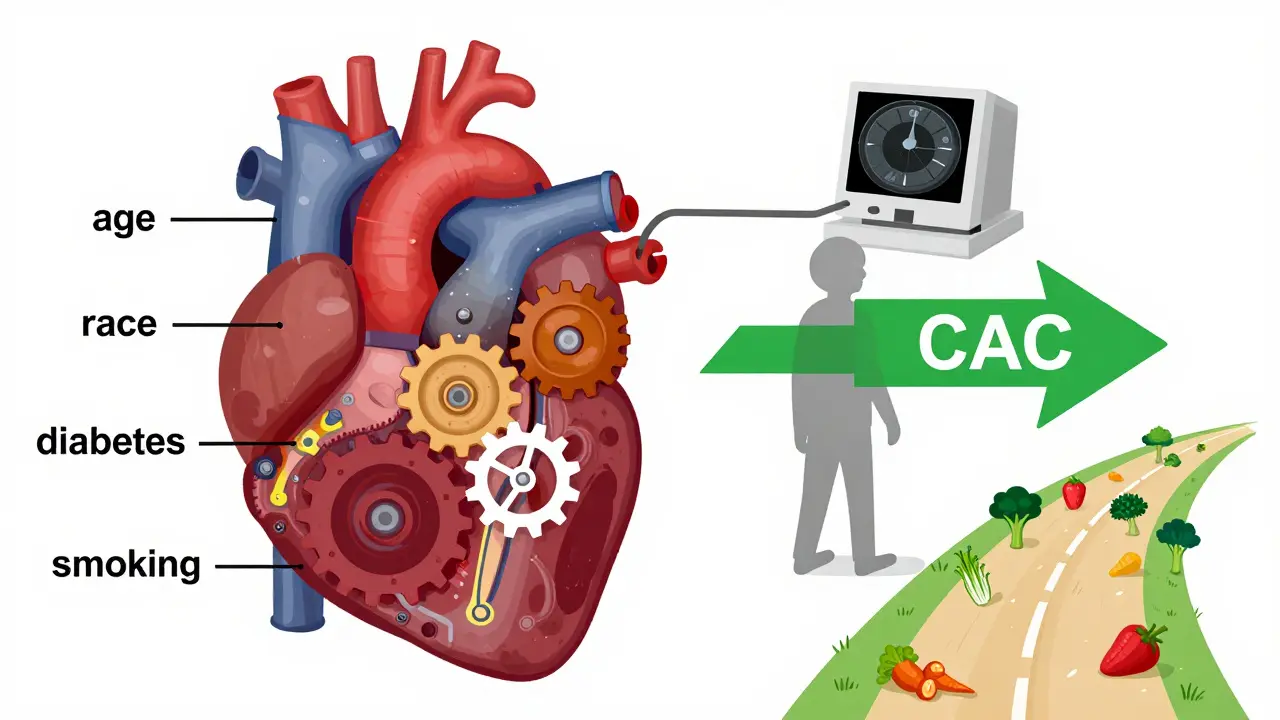
A CAC scan is a quick, non-invasive CT scan that measures calcium buildup in your heart’s arteries. Calcium = plaque = risk. Simple. If your ASCVD score says you’re intermediate risk - say, 12% - but your CAC score is zero? You’re likely in the low-risk group. No statin needed. Just keep eating greens and walking. But if your CAC score is high - say, over 100? You’re probably in the high-risk group, even if your calculator said otherwise. That’s why the American College of Cardiology now recommends CAC testing for anyone in the intermediate-risk group. Studies show it changes treatment decisions in more than half of those cases. The Cleveland Clinic found that adding CAC scoring reclassifies 52% of intermediate-risk patients into either low or high risk. That’s huge. It means fewer people get statins they don’t need - and more people who need them actually get them.What About Other Calculators?
You might hear about the Framingham Risk Score or the Reynolds Risk Score. Both were popular before the ASCVD calculator. But here’s the thing: the Framingham study itself now says to use the ASCVD calculator instead. The Reynolds Score adds two things: a blood test for inflammation (hsCRP) and whether a parent had a heart attack before age 60. It’s more accurate for some people - especially women - but it doesn’t work if you have diabetes. The MESA Risk Score uses CAC scores directly. It even gives you a “coronary age.” So if you’re 55 but your arteries look like a 78-year-old’s, your coronary age is 78. That’s a wake-up call. But none of these are as widely used in U.S. clinics as the ASCVD calculator. Why? Because it’s built into the guidelines. It’s in the EHRs (electronic health records). It’s what your doctor’s software auto-calculates when you enter your numbers.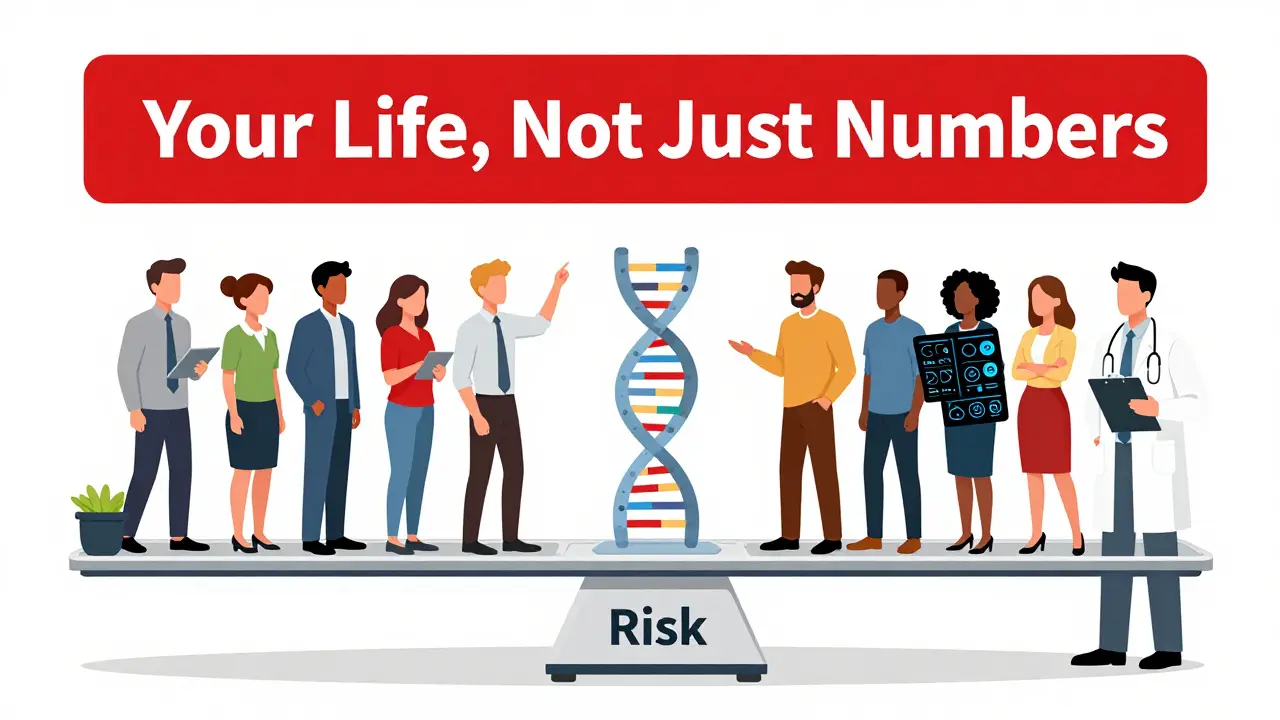
How Doctors Use It in Real Life
Most people think the calculator tells the doctor what to do. But that’s not how it works. In reality:- 35% to 40% of patients aged 40 to 75 fall into the intermediate-risk zone - the gray area.
- Doctors use the score to start a conversation: “Your 10-year risk is 14%. That’s not low. But you’re not on medication yet. What are you willing to change?”
- They look at your lifetime risk. Someone under 55 with a 10-year risk of 8% might have a 40% lifetime risk. That’s serious. You can’t wait until you’re 60 to act.
- They check if your blood pressure was measured correctly. A bad reading can throw off the whole score.
- They ask if you’re really a non-smoker. Studies show 22% of patients misreport smoking status.
What’s Next? The Future of Risk Assessment
The ASCVD calculator is evolving. In 2023, the American Heart Association launched PREVENT Online - a next-gen tool that adds social factors:- Neighborhood poverty level
- Access to fresh food
- Stress from discrimination
- Income and education level
What Should You Do?
If you’re between 40 and 79:- Ask your doctor for your ASCVD score. Don’t assume they’ll bring it up.
- If you’re borderline or intermediate, ask about a CAC scan. It’s often covered by insurance.
- Don’t panic if your score is high. Use it as a wake-up call, not a sentence.
- If you’re under 40, focus on the basics: don’t smoke, move daily, eat real food, and manage your blood pressure and sugar.
- Know that your risk isn’t just about numbers - it’s about your life.
What is the ASCVD risk calculator used for?
The ASCVD risk calculator estimates your 10-year chance of having a heart attack, stroke, or dying from heart disease. It helps doctors decide whether you should take a statin, make lifestyle changes, or both. It’s not a diagnosis - it’s a guide for prevention.
Who should use the ASCVD risk calculator?
It’s designed for adults aged 40 to 79 who don’t already have heart disease, don’t have very high LDL cholesterol (over 190 mg/dL), and aren’t already on statins. If you’re under 40 or over 79, other tools or clinical judgment are used instead.
Can the ASCVD calculator be wrong for some races?
Yes. Studies show it underestimates risk for American Indians, South Asians, and Puerto Ricans by 15% to 25%, and overestimates risk for East Asians and Mexican Americans by 10% to 20%. That’s why doctors now use it along with other tests - like CAC scoring - and personal history to make better decisions.
What is a CAC scan, and why is it important?
A coronary artery calcium (CAC) scan is a low-dose CT scan that measures plaque buildup in your heart’s arteries. If your ASCVD score is borderline or intermediate, a CAC score of zero means your risk is likely low. A high score means you’re at higher risk than the calculator suggests. It’s the most useful next step for refining risk.
Should I get a statin if my ASCVD score is 10%?
The guidelines say to consider a statin if your 10-year risk is 7.5% or higher. But it’s not automatic. Your doctor will look at your age, family history, CAC score, blood pressure, and lifestyle. Some people with a 10% score can lower their risk with diet and exercise alone. Others need medication. The decision is personal.
Is the ASCVD calculator used outside the U.S.?
Mostly no. Other countries use different tools. For example, Europe uses the SCORE2 system, which is tailored to European populations. The ASCVD calculator was built on U.S. data and is primarily used in American clinical practice. Global health systems are developing their own versions.







This calculator is a joke. I'm 52, healthy, no diabetes, non-smoker, but my score says 18% because my dad had a heart attack. So now I'm supposed to take a statin? My cholesterol is perfect. My BP is 110/70. They're treating me like a statistic, not a person. I'll take my greens and walk, thanks.
i just got my ascvd score and its 12%... but im from india and we all know the calc is totally off for us. my grandpa had 4 bypasses by 50. my uncle died at 48. but the tool says 'borderline'?? what the hell. why dont they add south asian data??
Thank you for this incredibly well-researched breakdown. As a primary care provider, I can confirm that the ASCVD calculator is one of the most valuable tools we have - not because it's perfect, but because it creates a structured, evidence-based starting point for conversations that are otherwise too subjective. The real magic happens when we combine it with CAC scoring and patient values. It's not about the number - it's about the dialogue.
i asked my doc for the calc and she said 'youre fine' without even running it. so i looked it up myself. 14%. now she's like 'oh we can talk about statins next visit'. ugh. why do they make it so hard??
As a medical professional from India, I must emphasize that the ASCVD calculator’s limitations for South Asian populations are not merely statistical - they are clinical emergencies in disguise. We have among the highest rates of premature coronary disease globally, yet our risk is systematically downplayed. I urge all clinicians to adopt CAC scoring as standard for patients of South Asian descent, regardless of calculator output. Prevention cannot wait for better data - we must act with what we know now.
Let’s be real - this whole system is a pharmaceutical scam. Statins are overprescribed because Big Pharma owns the guidelines. My cousin’s dad died from muscle failure after 5 years on a statin. He was 14% risk. Meanwhile, the real causes - processed food, stress, pollution - are ignored. You think your doctor cares about your neighborhood food desert? No. They care about ticking the box. This isn’t medicine. It’s a revenue stream.
I love how this post highlights CAC scoring. My doctor didn’t mention it until I brought it up after reading this. My ASCVD was 9% - 'borderline' - but my CAC was 0. Zero. He said, 'You’re not a candidate for statins.' I cried. Not because I was scared, but because for once, someone looked at me as a whole person, not a number. This is what healthcare should look like.
the ascvd calc is okay but if you're under 40 and you got a family history? dont wait. my bro got a cacscan at 35 because his dad died at 42. score was 380. he started statins. now he's 38 and feels great. don't wait for the system to catch up - be proactive.