
Fall Risk in Older Adults: Medications That Increase Injury Potential
Fall Risk Medication Checker
Medication Risk Assessment
Identify medications that may increase your fall risk based on CDC and Beers Criteria guidelines.
Your Results
Select medications and click Calculate to see your risk level.
Every year, one in three adults over 65 falls. Many of these falls aren’t accidents-they’re side effects of medications. It’s not about being clumsy or getting older. It’s about what’s in the medicine cabinet.
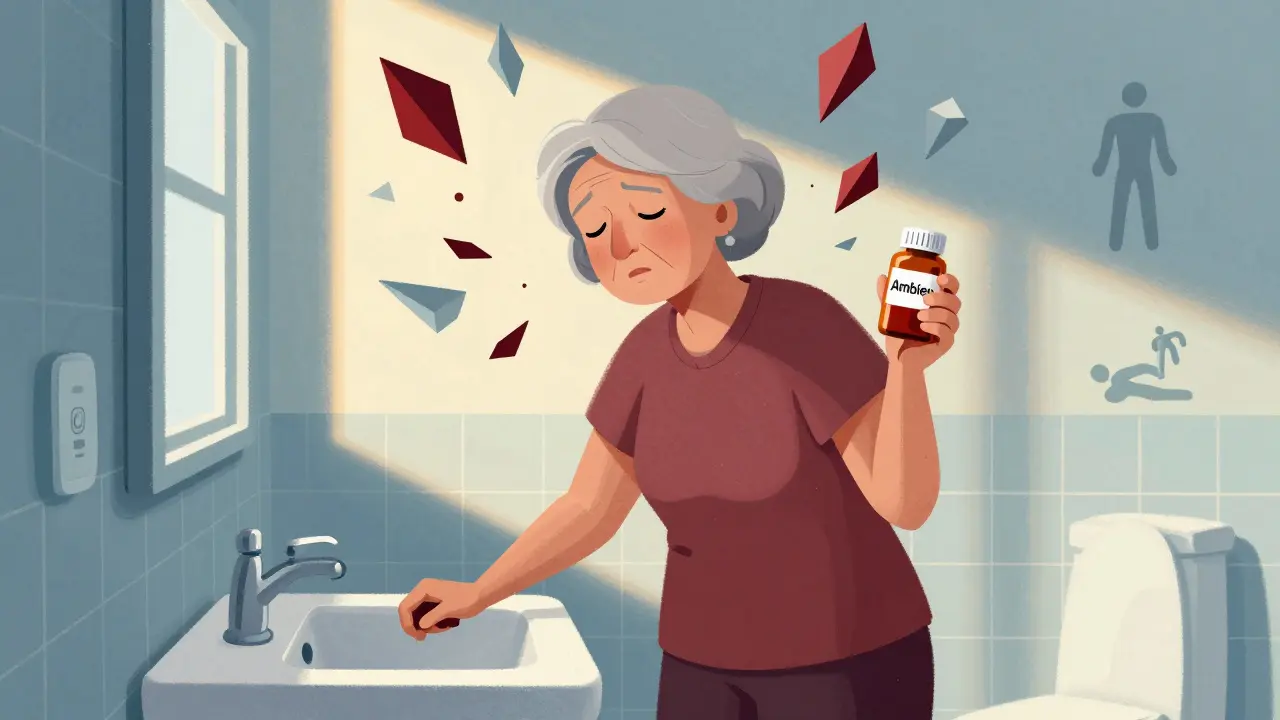
Take a 78-year-old woman who started sleeping better after her doctor prescribed Ambien. Three months later, she fell in the bathroom, broke her hip, and spent six weeks in rehab. Her doctor didn’t warn her about the dizziness. She didn’t know the pill could make her unsteady even the next morning. This isn’t rare. It’s routine.
Why Medications Make Older Adults Fall
Falls aren’t just bumps and bruises. They lead to fractures, brain injuries, long-term care, and death. In 2023, over 36,000 older Americans died from fall-related injuries. That’s more than car crashes. And a big part of that number? Medications.
Older bodies process drugs differently. Liver and kidney function slow down. Muscle mass decreases. Balance systems weaken. So even a normal dose of a drug can hit like a double dose. The result? Dizziness, confusion, slow reflexes, low blood pressure when standing up-everything that makes you lose your footing.
The Top 9 Medication Classes That Raise Fall Risk
Research from the American Geriatrics Society and CDC’s STEADI program has identified nine major drug classes linked to higher fall risk. Some are obvious. Others? Surprising.
- Antidepressants - Especially tricyclics (like amitriptyline) and SSRIs (like sertraline). These affect balance centers in the brain. Studies show they carry the strongest link to falls among all drug classes.
- Benzodiazepines - Xanax, Valium, Ativan. These calm anxiety but also calm your reflexes. Long-term use (beyond 2 weeks) doubles fall risk. Even short-term use can leave you groggy the next day.
- Sedative-hypnotics - Ambien, Lunesta, Sonata. These are marketed as “sleep aids,” but they don’t just help you sleep-they can make you sleepwalk, confuse you, and leave you wobbly in the morning. The CDC calls them one of the most dangerous classes for seniors.
- Antipsychotics - Even when used for non-psychotic conditions like agitation in dementia. First-generation types like haloperidol carry a 40% higher fall risk than newer ones.
- NSAIDs - Ibuprofen, naproxen. These painkillers don’t just hurt your stomach. They can lower blood pressure, especially when combined with other meds, causing sudden dizziness when standing.
- Opioids - Oxycodone, hydrocodone, tramadol. The higher the dose, the higher the risk. High-potency opioids increase fall risk by up to 80%. Dizziness, slow reaction time, and confusion are common.
- Diuretics - Water pills like furosemide. They make you pee more, which can lead to dehydration and low blood pressure. Standing up fast? You might black out.
- Antihypertensives - Blood pressure meds like beta-blockers and ACE inhibitors. They’re meant to lower pressure-but sometimes they lower it too much, too fast. Orthostatic hypotension (a sudden drop when standing) is a silent killer in older adults.
- Anticholinergics - Used for overactive bladder, COPD, allergies. Drugs like diphenhydramine (Benadryl) and oxybutynin cause dry mouth, blurred vision, and brain fog. Many seniors don’t realize their allergy pill is making them unsafe on their feet.
Who’s at Highest Risk?
It’s not just about taking one risky drug. It’s about taking multiple.
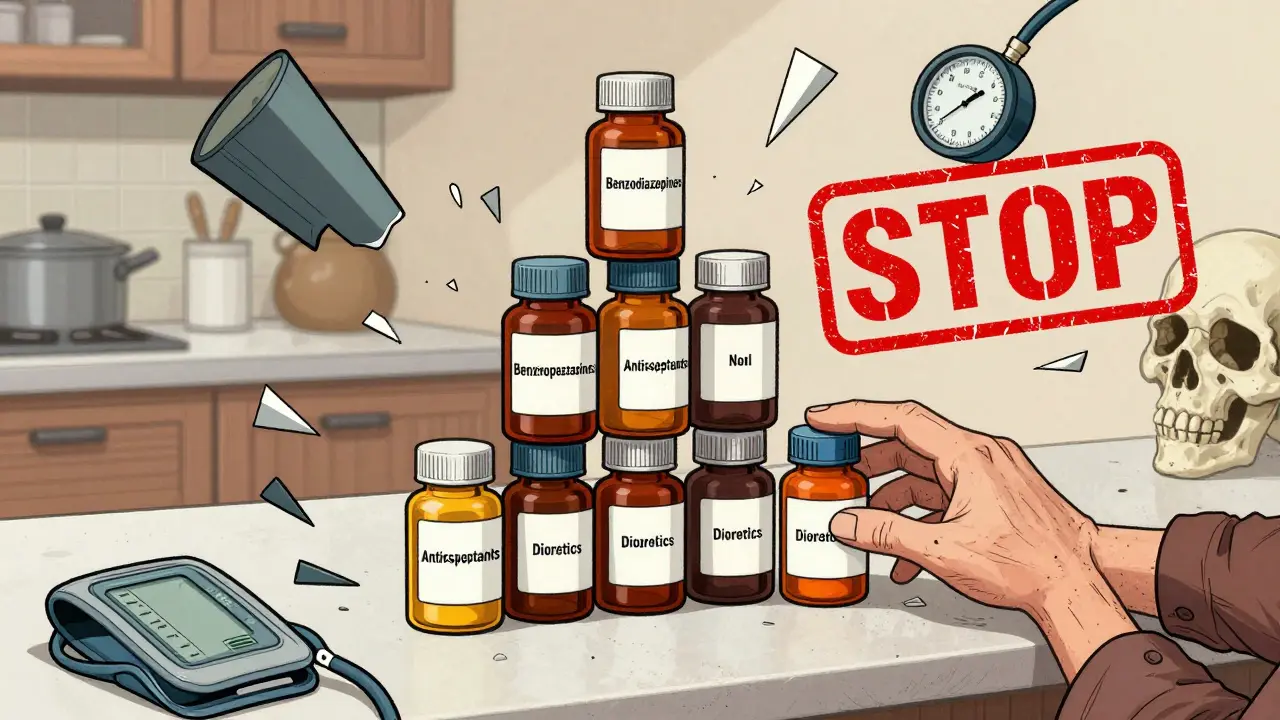
More than 40% of older adults take five or more prescription drugs. That’s called polypharmacy. And when you stack drugs that all affect the brain or blood pressure? The risk multiplies.
For example: A senior on a benzodiazepine for anxiety, an SSRI for depression, and a diuretic for high blood pressure has a 70% higher chance of falling than someone on just one of those. Add an NSAID for arthritis pain? The risk jumps again.
And here’s the kicker: 63% of seniors taking multiple high-risk meds don’t even know they’re at risk. No one told them. No one asked.
Real Stories, Real Consequences
On Reddit, a caregiver wrote: “My mom started Ambien after her husband died. She fell three times in two months. The third time, she broke her hip. The doctor said, ‘It’s just aging.’ But it wasn’t. It was the pill.”
A 72-year-old man on Xanax for years said: “I didn’t realize I was so unsteady until I fell in the shower and cracked my skull. I had to install grab bars everywhere. I didn’t need the Xanax anymore-I just needed to be safe.”
These aren’t outliers. A CDC survey found 28% of older adults who fell blamed their medications. But only 15% ever talked to their doctor about it.
What Can Be Done?
You don’t have to live with the fear of falling. You don’t have to keep taking drugs that make you unsafe.
The CDC’s STEADI program gives clear advice: STOP, SWITCH, REDUCE.
- STOP drugs that aren’t necessary. For example: Sleep meds for occasional trouble sleeping? Try sleep hygiene first.
- SWITCH to safer alternatives. For anxiety, cognitive behavioral therapy (CBT) works better than benzodiazepines-with no fall risk. For insomnia, CBT-I has a 70-80% success rate, according to the American Academy of Sleep Medicine.
- REDUCE doses. Sometimes, half a pill is enough. Lowering the dose of an opioid or antidepressant can cut fall risk without losing benefit.
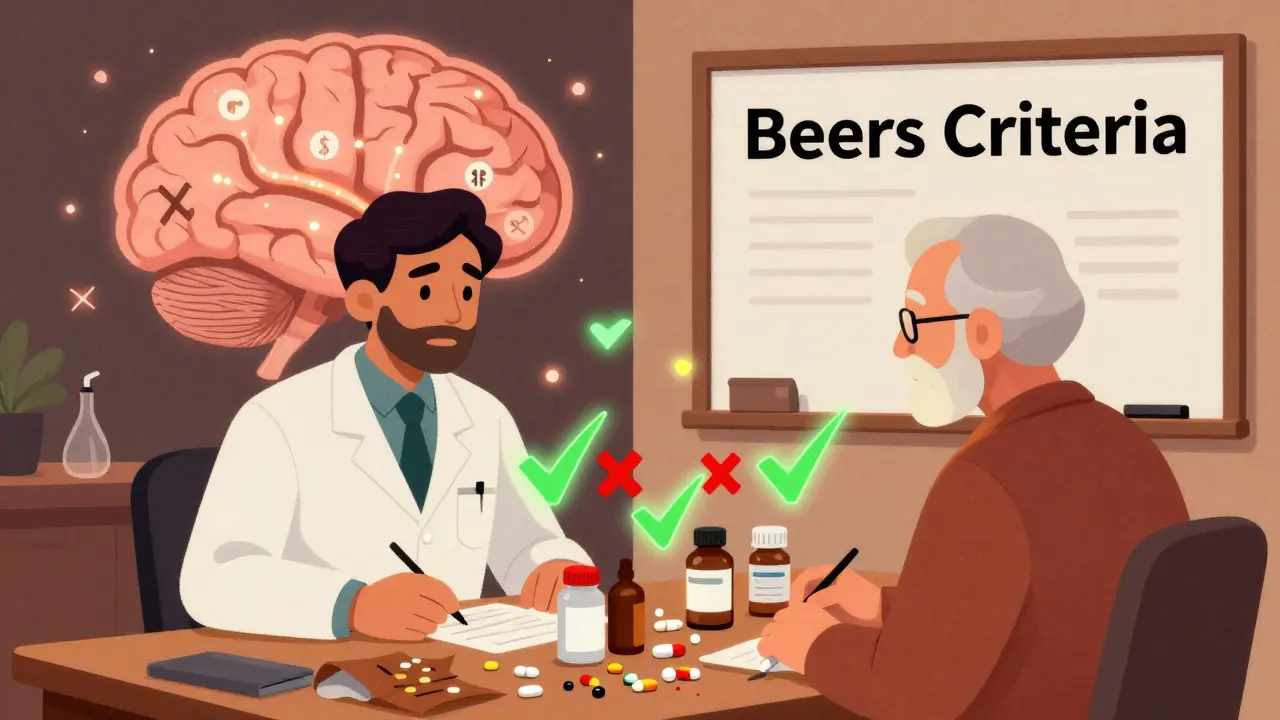
Pharmacists are key here. A pharmacist-led review cuts fall risk by 22%. Bring all your meds-prescription, over-the-counter, vitamins, herbal stuff-to your next appointment. Use the “brown bag method.” Lay it all out. Ask: “Which of these could make me fall?”
What to Ask Your Doctor
If you or a loved one is over 65 and on any meds, ask these questions:
- Is this medication still necessary? Could we stop it?
- Is there a safer alternative with less fall risk?
- Could we lower the dose?
- Is this drug on the Beers Criteria list for older adults?
- Have you checked for interactions with my other meds?
Don’t wait for your annual checkup. If you’ve fallen-or even felt dizzy-ask now. Don’t let fear of “bothering” your doctor cost you your independence.
The Bigger Picture
Falls cost the U.S. healthcare system $50 billion a year. About $11 billion of that comes from medication-related falls. Medicare is starting to track this. Doctors who overprescribe risky drugs could lose reimbursement.
There’s progress, too. AI tools now scan medication lists and flag fall risks with 89% accuracy. Newer anxiolytics are being developed that don’t cause dizziness-but they cost $450 a month, while generic Xanax is $30. Cost matters. Safety matters more.
The National Institute on Aging just invested $15 million in deprescribing research. That’s a signal: this is a crisis we’re finally starting to fix.
But change starts with you. Not with new drugs. Not with fancy tech. With a conversation. With a question. With the courage to say: “I don’t want to fall. What can we do?”
Which medications are most likely to cause falls in older adults?
Antidepressants, benzodiazepines, sedative-hypnotics (like Ambien), antipsychotics, and opioids carry the highest risk. Antidepressants have the strongest link to falls overall, according to multiple studies. Benzodiazepines and sleep meds increase risk by 50% or more, especially with long-term use. Even common drugs like NSAIDs and diuretics can cause dizziness or low blood pressure that leads to falls.
Can stopping a medication reduce fall risk?
Yes. Studies show that carefully reducing or stopping high-risk medications can cut fall risk by up to 30%. For example, tapering off benzodiazepines over 8-12 weeks reduces dizziness and improves balance. Stopping unnecessary sleep aids or anticholinergics often leads to immediate improvements in stability. Never stop a medication cold turkey-work with your doctor to taper safely.
Are over-the-counter drugs a risk too?
Absolutely. Many seniors don’t realize that common OTC meds like Benadryl (diphenhydramine), sleep aids with antihistamines, and even some cough syrups contain anticholinergics. These cause confusion, blurred vision, and dry mouth-all of which increase fall risk. Even a single dose can be dangerous for older adults. Always check labels and talk to your pharmacist.
What’s the Beers Criteria, and why does it matter?
The Beers Criteria is a list of medications that are potentially inappropriate for older adults because they carry high risks of side effects like falls, confusion, or kidney damage. Updated annually by the American Geriatrics Society, it’s used by doctors and pharmacists to guide safer prescribing. If a drug on your list is flagged in the Beers Criteria, ask if there’s a safer option.
How often should older adults review their medications?
At least once a year, but more often if they’ve fallen, feel dizzy, or started a new drug. The CDC recommends annual medication reviews for everyone 65 and older. If you’re taking five or more medications, consider a review every six months. Bring all your pills-even vitamins and supplements-to your appointment. This is called the “brown bag method” and is one of the most effective ways to catch risky combinations.


Yeah, I’ve seen this too. My uncle was on five meds and kept falling. Doctor just shrugged and said ‘old age.’ No one ever asked if they could cut something.
This is the exact reason I started doing medication reviews with my elderly patients. I don’t care if it’s ‘just a sleep aid’ or ‘a little Xanax’-if it’s making them wobbly, it’s not worth it. I’ve had patients regain their balance within weeks after tapering off benzos. It’s not magic, it’s just common sense. And yes, pharmacists are your secret weapon. Bring your brown bag. Do it now.
So we’re blaming pills now? Funny how nobody mentions the fact that most seniors don’t walk anymore. Just sit. Then wonder why they fall. Maybe try standing up more than once a day?
I took my mom to the pharmacist last month. We brought everything-her pills, her gummies, her CBD oil. The pharmacist pointed out three things she didn’t even know were risky. One was Benadryl. She’d been taking it for ‘allergies’ since 2008. She cried. We stopped it. She hasn’t stumbled since.
Of course you’re gonna fall if you’re popping Ambien like candy and still trying to get up at 3am to pee. People think meds are harmless because they’re prescribed. Newsflash: doctors are humans. They miss stuff. And you? You’re not entitled to every pill your body can handle.
It is imperative to acknowledge that the pharmacokinetic and pharmacodynamic alterations inherent in geriatric populations necessitate a comprehensive reevaluation of therapeutic regimens. The diminished hepatic metabolism, reduced renal clearance, and altered receptor sensitivity in elderly individuals render standard dosing protocols potentially hazardous. Moreover, the synergistic effects of polypharmacy, particularly when combining CNS depressants with antihypertensives and diuretics, significantly elevate the risk of orthostatic hypotension and consequent falls. It is therefore incumbent upon clinicians to conduct periodic, evidence-based medication reconciliation utilizing standardized tools such as the Beers Criteria and the STOPP/START guidelines to mitigate iatrogenic harm.
I didn't realize my dad's dizziness was from his blood pressure pill until he almost fell down the stairs. He's been on the same dose for 10 years. We asked the doctor if they could try lowering it. He said yes. Two weeks later he said he felt like he was 60 again. I wish we'd done this sooner
my mom took benadryl for years and never knew it was making her confused. she thought it was just ‘getting older’ but after she stopped she remembered names again. i wish doctors would just say ‘this might make you dizzy’ instead of assuming we know
Let me be clear: the epidemic of medication-induced falls among our elderly is not merely a medical issue-it is a moral failure of our healthcare system. We have allowed convenience to override caution. We have normalized polypharmacy as a default, not as a last resort. We have failed to educate our seniors, to empower them, to listen to them. The Beers Criteria exists. The STEADI program exists. Yet, millions remain unaware. This is not negligence-it is abandonment. And it is time we hold every prescriber accountable. Every pill prescribed without scrutiny is a step toward a broken hip, a hospital bed, and a lost life.
It’s funny… we spend so much time trying to fix the body, but we forget the mind. The fear of falling makes people move less. Move less, and you lose strength. Lose strength, and you fall more. It’s a loop. And meds? They just make the loop tighter. Maybe the real question isn’t ‘what drug caused this’… but ‘what did we stop giving them instead?’